TL;DR:
- An HVAC system is an integrated network of heating, ventilation, and air conditioning equipment that maintains indoor comfort and air quality year-round. Proper understanding of each component and system operation enables homeowners to make informed decisions on installation, maintenance, and energy efficiency. Regular inspection, filter changes, and awareness of system age help ensure optimal performance and long-term reliability.
An HVAC system is defined as an integrated network of heating, ventilation, and air conditioning equipment that regulates indoor temperature, humidity, and air quality for year-round comfort and health. HVAC stands for Heating, Ventilation, and Air Conditioning. The system works as a single coordinated unit, not as three separate appliances running independently. For homeowners and property managers in climates like Colorado Springs, where temperatures swing from freezing winters to warm summers, understanding what an HVAC system does and how it works is the foundation for every smart decision about installation, maintenance, and energy costs.
The core components you will encounter in a residential HVAC system include a furnace or heat pump for heating, a central air conditioner or heat pump for cooling, ductwork for air distribution, a thermostat for control, and air filters for indoor air quality. Each of these parts plays a specific role, and the performance of the whole system depends on how well they work together. When one component underperforms, the rest of the system compensates, which drives up energy bills and accelerates wear. Knowing the basics puts you in a far stronger position when a contractor presents options or when something stops working as expected.
How does an HVAC system work?
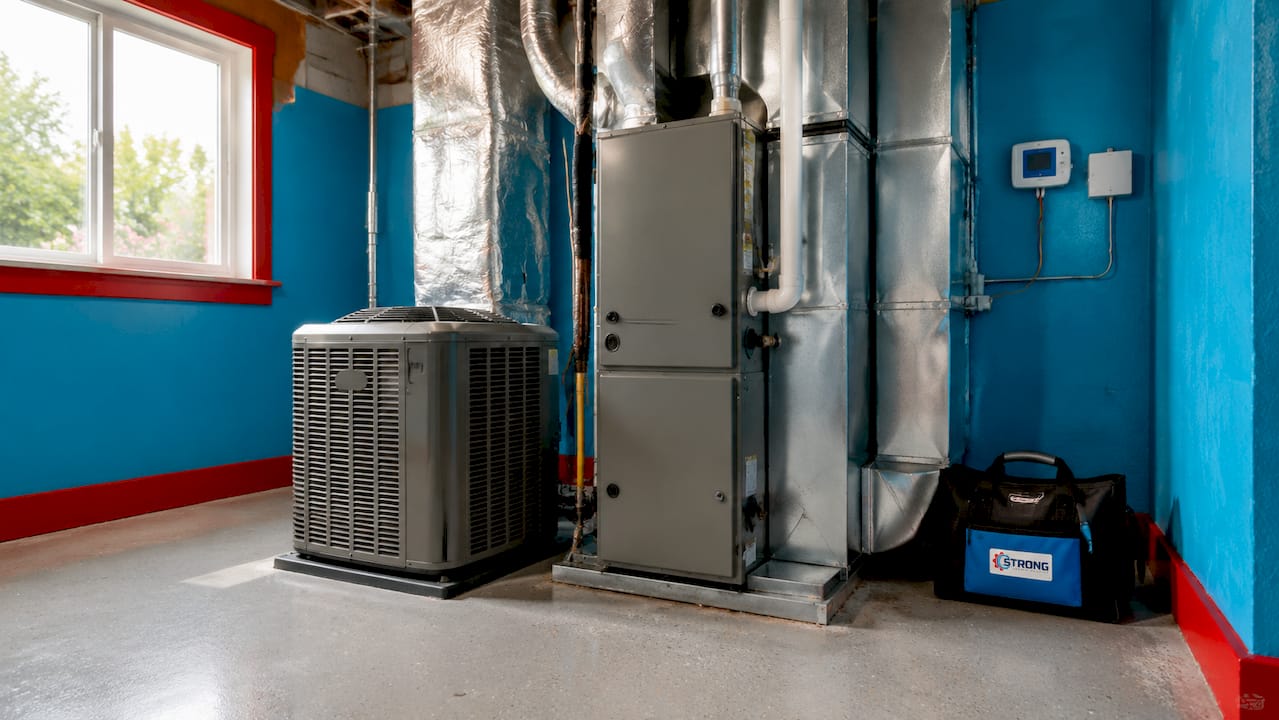
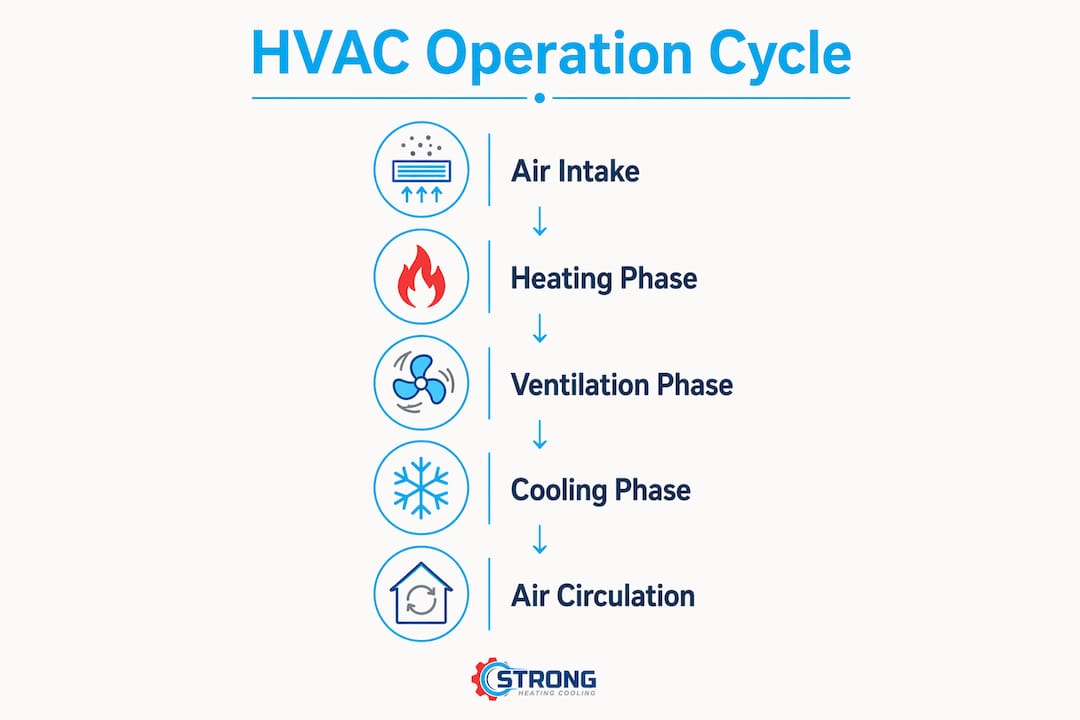
An HVAC system operates as a continuous loop: indoor return air is drawn in through return vents, conditioned by heating or cooling equipment, filtered, and then redistributed through supply vents back into the living space. The thermostat acts as the brain of this loop, signaling the system to activate when the indoor temperature drifts above or below the set point. Once the target temperature is reached, the thermostat signals the system to shut off, completing one cycle.
How heating works in the cycle
During heating, a furnace burns natural gas or propane to generate heat, which transfers to the air passing over the heat exchanger. That warmed air then moves through the duct system and into each room. Heat pumps take a different approach: they move heat rather than generate it, extracting heat energy from outdoor air even in cold conditions and transferring it indoors. In colder climates, heat pumps are often paired with a gas furnace in a dual-fuel configuration, where the furnace takes over when outdoor temperatures drop too low for the heat pump to operate efficiently.
How cooling works in the cycle
Cooling is frequently misunderstood. An air conditioner does not create cold air. It removes heat and moisture from indoor air and transfers that heat outside using refrigerant and an evaporator coil. Warm indoor air passes over the cold evaporator coil, the refrigerant absorbs the heat, and the now-cooled air returns to the living space. The moisture that condenses on the coil drains away, which also dehumidifies the air. This is why a properly functioning air conditioner makes a room feel more comfortable even before the temperature drops significantly.
The role of ventilation in the loop
Ventilation is the component most homeowners overlook, yet it directly affects both air quality and system efficiency. Mechanical ventilation uses fans and air handling units to exchange stale indoor air with fresh outdoor air, removing moisture, odors, carbon dioxide, and airborne pollutants. Modern homes built to tight energy codes often have very little natural air infiltration, which means mechanical ventilation is not optional. It is the primary mechanism keeping indoor air breathable. Proper residential airflow management also prevents pressure imbalances that can cause doors to slam, drafts near windows, or uneven temperatures between rooms.
Pro Tip: Set your thermostat fan to “On” rather than “Auto” for 20 minutes each morning to circulate and filter air throughout the home, even when no heating or cooling cycle is running.
What are the main HVAC system components?
Residential HVAC systems consist of a furnace or heat pump, air conditioner, ductwork, thermostat, and air filters working together to condition and move air. Understanding what each component does helps you communicate clearly with contractors and recognize when something is not performing as it should.
The heating side of the system includes:
- Furnace: burns fuel (natural gas, propane, or oil) to heat air directly
- Heat pump: extracts heat from outdoor air or the ground and transfers it indoors
- Boiler: heats water that circulates through radiators or radiant floor systems
The cooling side includes:
- Central air conditioner: uses refrigerant and an outdoor condenser unit to remove heat from indoor air
- Heat pump (in cooling mode): reverses its refrigerant cycle to act as an air conditioner during warmer months
The distribution and control components include:
- Ductwork: the network of metal or flexible channels that carries conditioned air to each room
- Air handler: the indoor unit that houses the blower fan, evaporator coil, and filter
- Vents and registers: the openings in walls, floors, or ceilings where air enters and exits rooms
- Thermostat: the control device that reads indoor temperature and signals the system to heat or cool
- Air filters: remove dust, pollen, pet dander, and other particles before air recirculates
Ducted systems are the most common in American homes and use the duct network described above. Ductless mini-split systems, by contrast, deliver conditioned air directly to individual rooms through wall-mounted units connected to an outdoor compressor. Mini-splits work well for additions, older homes without existing ductwork, or spaces where zoned comfort control is a priority.
Pro Tip: Check your air filter every 30 days and replace it when it looks gray and dense. A clogged filter forces the blower motor to work harder, shortening its lifespan and raising your energy bill.
The residential HVAC maintenance guide from Strongheatingandcooling covers filter schedules, coil cleaning, and seasonal checkups in practical detail for Colorado Springs homeowners.
| Component | Primary function |
|---|---|
| Furnace | Generates heat by burning fuel and transferring it to circulating air |
| Air conditioner | Removes heat and moisture from indoor air using refrigerant |
| Heat pump | Provides both heating and cooling by moving heat rather than generating it |
| Ductwork | Distributes conditioned air throughout the building |
| Thermostat | Controls system cycles based on indoor temperature readings |
How do commercial HVAC systems differ from residential ones?
A commercial HVAC system is defined as a larger, more complex climate control system designed to condition multi-zone spaces with higher occupancy loads, stricter code requirements, and more demanding operational schedules than residential systems. Commercial HVAC handles larger loads, more complex zoning, and may require special configurations per code. This distinction matters for property managers who oversee mixed-use buildings or commercial spaces alongside residential units.
The differences go beyond size. A residential system typically conditions one zone with a single thermostat. A commercial system may serve dozens of zones, each with independent temperature controls, dedicated air handlers, and variable air volume (VAV) boxes that adjust airflow to each area based on occupancy and load. Restaurants, medical offices, and retail spaces each have different ventilation requirements driven by building codes and the activities happening inside.
Commercial systems also introduce equipment types rarely seen in homes:
- Rooftop units (RTUs): self-contained heating and cooling units mounted on the roof, common in retail and light commercial buildings
- Chilled water systems: large-scale cooling systems that circulate chilled water through coils in air handling units, used in office towers and hospitals
- Variable refrigerant flow (VRF) systems: highly efficient multi-zone systems that adjust refrigerant flow to individual indoor units based on real-time demand
- Building automation systems (BAS): software-based controls that monitor and adjust HVAC, lighting, and other building systems from a central interface
Energy codes for commercial buildings, including ASHRAE Standard 90.1, set minimum efficiency requirements for equipment, controls, and duct insulation that go beyond typical residential standards. For property managers, this means that equipment selection and installation must account for compliance, not just comfort. Hiring a licensed HVAC contractor with commercial experience is not a preference in these situations. It is a practical requirement for code compliance and long-term system reliability.
What are the benefits of HVAC systems for homeowners?
A properly installed and maintained HVAC system delivers year-round thermal comfort, improved indoor air quality, humidity control, and measurable energy savings. These benefits compound over time when the system is sized correctly and serviced on a regular schedule.
HVAC systems improve indoor air quality by filtering dust, allergens, and airborne particles while controlling humidity levels. This matters most for households with allergy sufferers, young children, or elderly residents, where poor air quality translates directly into health consequences. A system with a high-efficiency filter, such as a MERV 11 or MERV 13 rated filter, captures fine particles that standard fiberglass filters miss entirely.
Humidity control is a benefit that often goes unrecognized until it is absent. In Colorado Springs, dry winter air can drop indoor relative humidity below 20%, which causes dry skin, irritated sinuses, and damage to wood floors and furniture. A whole-home humidifier integrated into the HVAC system maintains relative humidity in the 35 to 50 percent range recommended by the American Society of Heating, Refrigerating and Air-Conditioning Engineers (ASHRAE). In summer, the cooling cycle removes excess moisture, preventing the mold and mildew growth that thrives above 60% relative humidity.
Energy efficiency is directly tied to system condition and age. Modern HVAC equipment carries SEER2 ratings (Seasonal Energy Efficiency Ratio) for cooling and AFUE ratings (Annual Fuel Utilization Efficiency) for heating. A furnace with a 96% AFUE rating converts 96 cents of every dollar of fuel into usable heat, compared to 80 cents for an older standard-efficiency unit. Pairing high-efficiency equipment with proper duct sealing and a programmable or smart thermostat produces the largest reductions in monthly utility costs. Green home construction guides, including resources from Bayfair Custom Homes, identify HVAC efficiency as one of the four defining features of a sustainable home.
Property value is also a measurable benefit. An updated, well-maintained HVAC system is a selling point that real estate agents and home inspectors note in every transaction. Buyers factor in the age and condition of heating and cooling equipment when making offers, and a system approaching the end of its service life often becomes a negotiating point that reduces the final sale price.
Key takeaways
An HVAC system is only as effective as the sum of its components, and understanding how each part contributes to the whole is the most practical foundation for any installation, replacement, or maintenance decision.
| Point | Details |
|---|---|
| HVAC is an integrated system | Heating, ventilation, and air conditioning work as one loop, not three separate appliances. |
| Ventilation is non-negotiable | Mechanical ventilation maintains breathable air quality in modern tight-construction homes. |
| Commercial systems differ by complexity | Commercial HVAC involves zoning, code compliance, and equipment types not found in residential setups. |
| Filtration protects health and equipment | Regular filter changes improve air quality and prevent blower motor strain. |
| Efficiency ratings guide smart purchases | SEER2 and AFUE ratings quantify energy performance and directly affect long-term operating costs. |
What experience has taught me about HVAC systems
After more than four decades of combined experience working on heating and cooling systems across Colorado Springs, the most consistent observation is this: homeowners and property managers who understand their HVAC system as a single integrated unit make far better decisions than those who treat it as a collection of separate appliances. The furnace, the air conditioner, the ductwork, and the thermostat are not independent. They are interdependent. Replacing a furnace without evaluating the duct system, for example, often produces disappointing results because poor ductwork causes uneven heating and cooling regardless of how efficient the new equipment is.
The second thing experience teaches is that ventilation is the most neglected part of the system. Most homeowners think about their furnace when it stops heating and their air conditioner when it stops cooling. Almost no one thinks about ventilation until there is a moisture problem, persistent odors, or a spike in allergy symptoms. By that point, the issue has usually been building for months. Scheduling an annual inspection that specifically includes duct condition, air handler performance, and ventilation rates catches these problems before they become expensive.
The third observation is about timing. Many homeowners wait until a system fails completely before considering replacement, which forces a rushed decision under pressure. Understanding when system age signals replacement gives you the time to compare options, evaluate financing, and choose equipment that fits your home’s actual needs rather than whatever is available for quick installation. A planned replacement almost always produces a better outcome than an emergency one.
— Owner
Trusted HVAC services for Colorado Springs homeowners
Strongheatingandcooling has served Colorado Springs and surrounding communities for over 40 years, providing heating and cooling installation, replacement, repair, and maintenance with honest pricing and licensed technicians.

Whether you need a new furnace installed before winter, a cooling system that keeps up with Colorado summers, or a scheduled maintenance plan that extends the life of your current equipment, Strongheatingandcooling has the experience to get it right. The team offers heating services in Divide and residential cooling solutions across the region, backed by a commitment to quality workmanship and transparent communication. Scheduled maintenance through Strongheatingandcooling protects your investment and keeps your system running at peak efficiency year-round.
FAQ
What does HVAC stand for?
HVAC stands for Heating, Ventilation, and Air Conditioning. The term describes the combined system that controls indoor temperature, humidity, and air quality in residential and commercial buildings.
How long does a residential HVAC system last?
Most residential HVAC systems have a service life of 15 to 20 years with proper maintenance. Furnaces tend to last toward the longer end of that range, while air conditioning units typically reach the 15-year mark before efficiency declines significantly.
What is a commercial HVAC system?
A commercial HVAC system is a larger, more complex climate control system designed for multi-zone buildings with higher occupancy and stricter code requirements than residential systems. Commercial configurations often include rooftop units, chilled water systems, and building automation controls.
How often should HVAC filters be replaced?
Standard 1-inch filters should be replaced every 30 to 90 days depending on household conditions such as pets, allergies, and dust levels. Thicker media filters rated MERV 11 or higher can last up to six months but should be checked monthly.
What is the most important HVAC maintenance task?
Replacing the air filter on schedule is the single most impactful maintenance task for most homeowners. A clean filter protects the blower motor, maintains airflow, and keeps indoor air quality at acceptable levels between professional service visits.
Recommended
Need expert HVAC help?
Colorado Springs' veteran-owned heating & cooling team — Mon–Sat, 8 AM–7 PM. Same-day service when available.