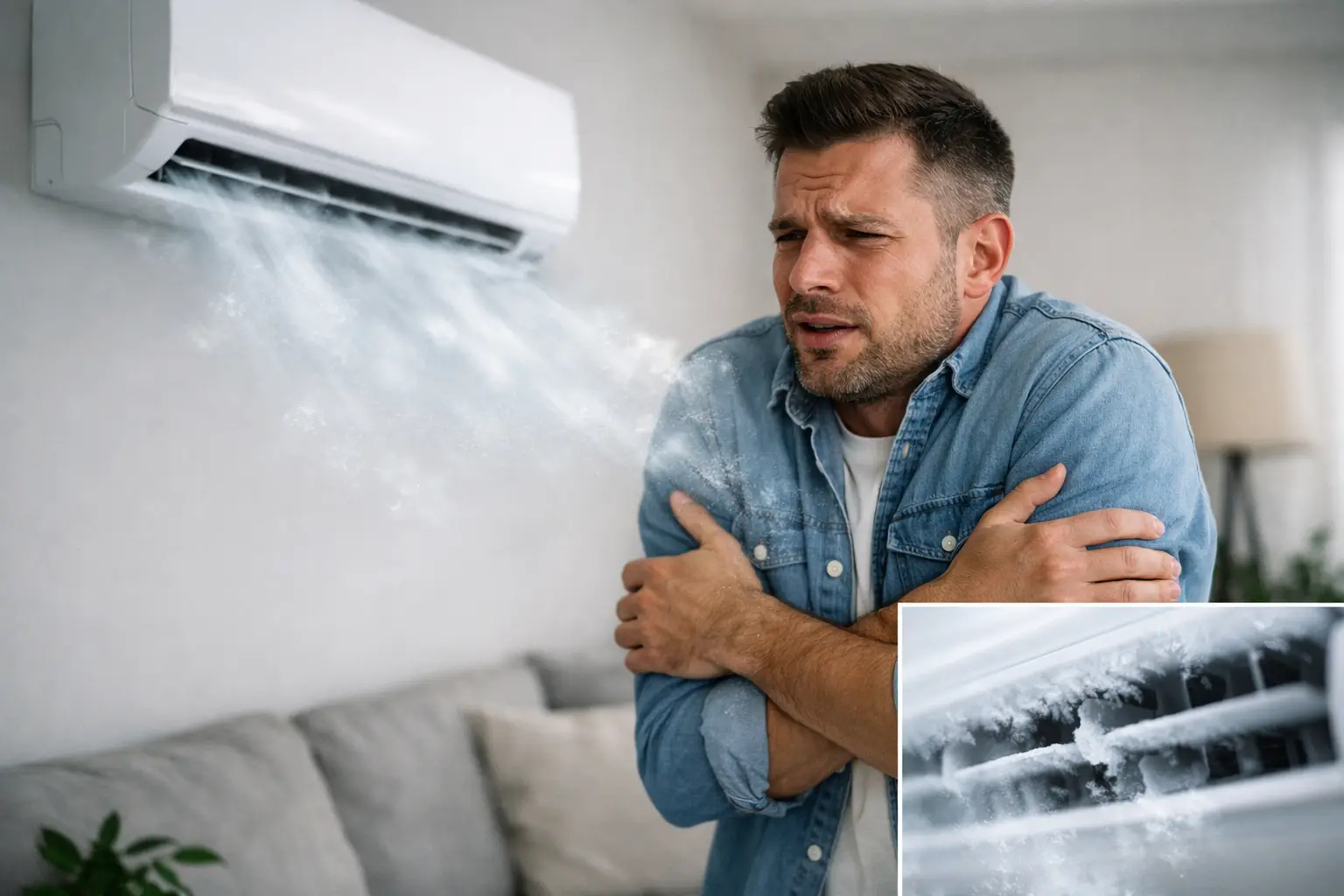
It's the first 90-degree afternoon of the Colorado Springs summer, you set the thermostat to cool, and the vents are pushing nothing but lukewarm air. Few things are more frustrating. The instinct is to start poking around the outdoor unit yourself, but most of the real causes of an AC that won't blow cold are electrical, mechanical, or refrigerant problems that are genuinely unsafe and illegal to handle without a license.
Here's what's usually going on, why it matters, and why this is a call-a-pro situation rather than a weekend project.
The common reasons an AC stops cooling
When warm air comes out of the vents, the system is often still running — it just isn't removing heat anymore. The most frequent culprits we see across the Front Range include a low refrigerant charge from a slow leak, a failed capacitor or contactor, a frozen evaporator coil, a dirty condenser coil that can't shed heat, or a compressor that's struggling at altitude. A blocked filter or a thermostat set to "fan" instead of "cool" can also masquerade as a cooling failure.
The tricky part is that several of these look identical from the outside. A frozen coil and a refrigerant leak both produce weak, warm airflow, but the fix — and the cost — is completely different. Guessing wrong wastes money and can damage the compressor, which is the single most expensive part of the system.
Why this isn't a DIY fix
Refrigerant is regulated by the EPA, and handling it without certification is against the law. Topping off refrigerant also does nothing if there's a leak — it just leaks out again while the underlying problem gets worse. Capacitors store a dangerous electrical charge even when the power is off, and a misdiagnosed electrical fault can ruin the compressor. In short, the parts that fail on a non-cooling AC are exactly the parts that require training and tools to touch safely.
A licensed technician can measure refrigerant pressures, test electrical components under load, and confirm the actual fault before replacing anything. That diagnosis is what protects you from paying for the wrong repair.
What you can safely check before you call
There are a couple of harmless things worth confirming first: make sure the thermostat is set to "cool" and a few degrees below room temperature, and replace the air filter if it's visibly dirty. If the system was struggling and now blows warm, turn it off — running a frozen or low-charge system can cause far more expensive damage. Beyond that, it's time for a professional.
Repair or replace?
If your AC is under 10 years old and the issue is a single failed part, a repair usually makes sense. If it's older, has needed refrigerant before, or the compressor is failing, replacement is often the smarter long-term value — especially given how hard older units work at our elevation. You can get a quick, no-pressure estimate using our HVAC pricing calculator, and if a new system is the right call, our financing options keep it manageable.
Want to understand the warning signs before they leave you sweating? Read our guides on whether it's time to upgrade your AC and why correct AC sizing matters.
Don't wait out the heat
A system that won't cool only gets worse the longer it runs damaged. If your AC is blowing warm during a Colorado Springs heat wave, our team can diagnose it fast and explain your options clearly — visit our cooling services page or schedule service today. Check our current coupons before you book to save on the visit.
What Does This Mean for Colorado Springs Homeowners?
Living in Colorado Springs presents unique challenges and opportunities when it comes to maintaining a comfortable home, especially concerning your air conditioning and heating systems. The local environment significantly impacts how HVAC equipment performs and ages, making professional expertise even more crucial when your AC isn't cooling properly.
Altitude and Equipment Performance
At elevations roughly between 6,000–7,500 feet, the air is thinner, with about 20% less oxygen. This affects gas appliances, requiring altitude-correct setup to operate safely and efficiently. For AC units, this can mean equipment loses some capacity compared to sea-level ratings. If your system is struggling, a technician understands how to diagnose issues within these local conditions, ensuring any repair or replacement is correctly configured for our specific environment. This also explains why older units might work harder and show wear faster, as mentioned in the main post.
Weather Extremes and System Durability
Colorado Springs experiences significant day-night temperature swings, a dry climate with low humidity, and a long heating season, which all put a strain on HVAC systems. Moreover, hail storms are a common occurrence and can severely damage outdoor AC coils. When considering repair versus replacement, the potential for weather-related damage on an older unit, coupled with the daily stress of our climate, weighs heavily on its lifespan and efficiency. A new system offers modern durability against these elements.
PPRBD Permits and Local Rebates
For any significant HVAC work, especially replacements, homeowners in Colorado Springs need to be aware of local regulations. The Pikes Peak Regional Building Department (PPRBD) typically requires a permit for HVAC replacements. Strong Heating And Cooling, with its owner Jeff Jennings holding PPRBD license #26745, ensures all work complies with these local codes. Additionally, replacing an aging or failing AC unit can be more affordable thanks to local incentives:
- Colorado Springs Utilities offers rebates for qualifying furnaces ($900), heat pumps under 3 tons/ENERGY STAR ($1,500), NEEP heat pumps 3+ tons ($3,000), boilers ($1,200), and smart thermostats ($50).
These local rebates, verified through September 2026, can significantly offset the cost of upgrading to a new, more efficient system that is better suited to Colorado Springs' unique conditions. Be sure to check our HVAC rebates page for more details.
If your AC is struggling in Colorado Springs, don't sweat it. Our veteran-owned team is here to help. Call us at (719) 960-7208 or request service through our contact page today.
Need expert HVAC help?
Colorado Springs' veteran-owned heating & cooling team — Mon–Sat, 8 AM–7 PM. Same-day service when available.