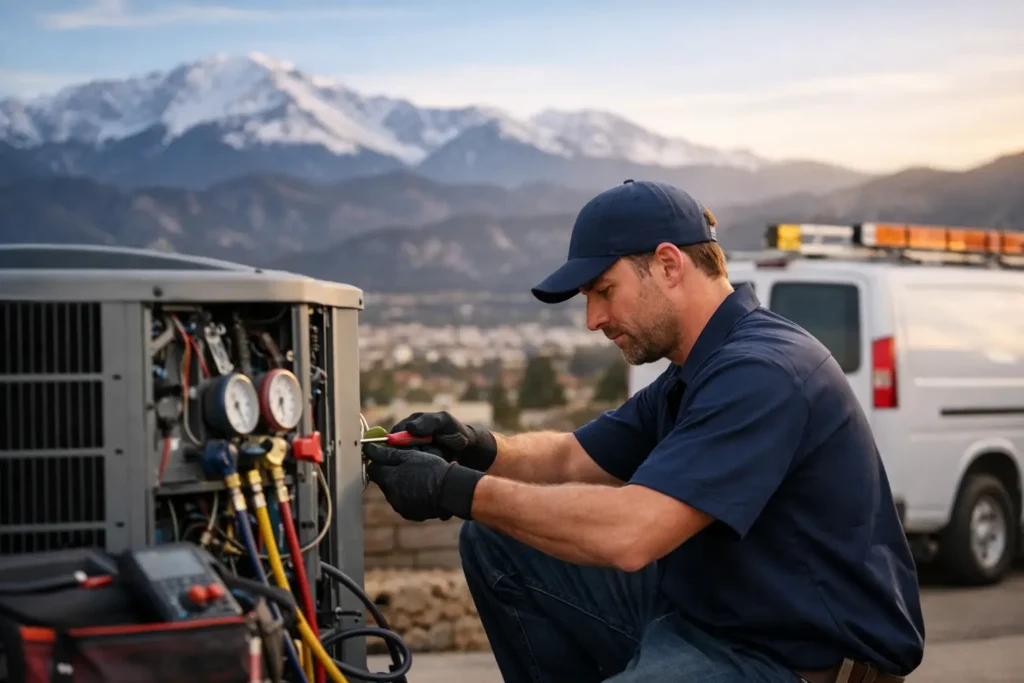
A cheap HVAC fix can get expensive fast when the work is wrong, the permit is skipped, or the system fails again a month later. That is why licensed HVAC contractor benefits matter more than many home and business owners realize. Licensing is not just a line on a truck or website. It is one of the clearest signs that you are hiring someone qualified to work on equipment that affects comfort, safety, energy use, and long-term costs.
In Colorado homes and commercial buildings, HVAC systems do a lot of heavy lifting. They keep indoor spaces livable through hot summer afternoons, freezing winter nights, and everything in between. When you hire a licensed contractor, you are not only paying for labor. You are paying for verified knowledge, accountability, and a much better chance of getting the job done right the first time.
Why licensed HVAC contractor benefits go beyond credentials
A license tells you the contractor has met legal and professional requirements to perform HVAC work. That matters because heating and cooling systems are not simple appliances. They involve electrical components, gas lines, refrigerant handling, ventilation, combustion safety, drainage, controls, and local code requirements.
When a contractor is licensed, there is usually a higher level of oversight and responsibility tied to the work. That does not mean every licensed company is equal, and it does not mean every unlicensed person lacks technical skill. But if you are trying to reduce risk, licensing gives you a more dependable starting point.
For homeowners, that can mean fewer installation mistakes, fewer surprise repairs, and better warranty protection. For commercial clients, it can mean less downtime, cleaner project documentation, and better alignment with building requirements. In both cases, the benefit is practical: fewer avoidable problems.
Safer work on systems that can create real hazards
One of the biggest licensed HVAC contractor benefits is safety. Furnaces, boilers, heat pumps, rooftop units, and water heaters all involve components that can become dangerous when handled incorrectly. Gas leaks, carbon monoxide issues, electrical faults, and poor ventilation are not minor risks.
A licensed contractor is more likely to understand how to test for proper operation, verify airflow, check combustion, confirm venting, and identify code issues before they turn into serious problems. That matters during both repairs and installations. Replacing a failing furnace is not only about reconnecting equipment. It is about making sure the full system operates safely under real conditions.
This is especially important in older homes and mixed-use commercial properties, where previous work may not have been done correctly. A licensed professional is better positioned to spot those problems before they cause damage or create a safety concern.
Better code compliance and fewer permit issues
Code compliance is not the most exciting part of HVAC work, but it matters when equipment is installed, replaced, or significantly modified. Mechanical work often needs to meet current local standards, and some jobs require permits and inspections.
Hiring a licensed contractor helps reduce the chance that corners will be cut. If a system is installed without proper permitting or does not meet code, the problem usually shows up later, often when you sell the property, file an insurance claim, or deal with a performance issue.
For business owners and property managers, code problems can create delays, liability concerns, and tenant complaints. For homeowners, they can lead to failed inspections and costly rework. Paying less upfront for unlicensed work can be a false economy if the job has to be redone.
Stronger workmanship and better system performance
Good HVAC work is not just about making the unit turn on. It is about system performance over time. A licensed contractor is more likely to size equipment correctly, match components properly, verify duct and airflow conditions, and commission the system with attention to how it actually runs.
That affects comfort more than many people expect. Oversized air conditioners can short cycle and leave humidity problems behind. Poor furnace setup can reduce efficiency and create uneven heating. Bad duct connections can waste conditioned air and drive up utility costs.
One of the most overlooked licensed HVAC contractor benefits is that quality workmanship protects the investment you are making in the equipment itself. Even a high-end system will disappoint if it is installed carelessly. A more qualified contractor improves the odds that your equipment will perform as intended.
Warranty protection and clearer accountability
Manufacturers often have warranty terms tied to proper installation, product registration, and professional service. If the work was not completed correctly, or if the installer cannot support the paperwork and requirements, you may have a harder time getting warranty coverage when a part fails.
That is another reason licensing matters. A licensed contractor is generally operating within a formal business structure, which gives customers a clearer path for follow-up service, documentation, and accountability. If something needs to be corrected, you are dealing with an established company rather than someone who may be hard to reach once the invoice is paid.
This matters for larger projects in particular. Whether you are replacing a residential system, upgrading a boiler, or installing a commercial rooftop unit, you want confidence that the contractor will stand behind the work.
More accurate diagnostics can save money
A common frustration in HVAC service is paying for repeated visits without solving the actual problem. Sometimes the issue is a failed part. Sometimes it is an airflow restriction, a control problem, poor installation, or a larger system mismatch.
Licensed contractors tend to bring stronger diagnostic discipline to the job. They are more likely to evaluate the whole system instead of swapping parts based on guesswork. That can save money because the repair addresses the cause, not just the symptom.
There is a trade-off here. A licensed professional may not always be the cheapest option on the front end. But lower-quality service can cost more when the same failure comes back, the equipment is stressed by improper operation, or the repair misses a bigger issue.
Better options for energy efficiency and long-term value
When people think about HVAC savings, they often focus on the sticker price of a new system. In reality, long-term value usually comes from system selection, proper installation, and how efficiently the equipment runs year after year.
Licensed contractors are better equipped to recommend energy-efficient solutions that fit the building, not just the sale. That might mean a heat pump for one property, a mini split in an addition, a high-efficiency furnace for another, or targeted repairs instead of full replacement when the system still has life left.
A trustworthy contractor should explain the trade-offs. Higher efficiency equipment can lower operating costs, but the best choice depends on budget, usage, building layout, and existing infrastructure. Practical guidance is part of the value. So is honest advice when a repair makes more sense than a replacement.
Why this matters for commercial properties too
Commercial HVAC carries its own pressures. Equipment failures can affect staff, tenants, customers, inventory, and operating hours. In those settings, licensed HVAC contractor benefits often show up in reduced downtime, stronger documentation, and better planning for repairs or replacements.
Commercial systems also tend to be more complex. Rooftop units, boilers, zoning controls, and larger water heating systems require technical range and a clear process. The right licensed contractor can help business owners prioritize urgent issues, plan around operations, and avoid short-term fixes that create bigger expenses later.
For facilities managers and property owners, reliability often matters as much as price. A contractor who communicates clearly, shows up when promised, and provides transparent recommendations can make ongoing system management much easier.
How to judge the value behind the license
Licensing matters, but it should not be the only thing you check. The best hiring decision comes from looking at the full picture. Ask whether the contractor is properly licensed and insured. Ask how they handle permits when needed. Pay attention to whether they explain the problem clearly, provide transparent pricing, and offer realistic repair or replacement options.
You should also look at service range and responsiveness. A contractor who can handle furnaces, air conditioners, heat pumps, mini splits, boilers, swamp coolers, water heaters, and commercial systems can often provide more consistent support as your needs change. In a place like El Paso County, where weather can turn quickly, timely service matters just as much as technical skill.
Strong Heating and Cooling built its reputation around that combination of licensing, dependable workmanship, and straightforward service because customers need more than a quick fix. They need confidence that the system keeping their home or business comfortable is in capable hands.
The real value of hiring a licensed HVAC contractor is peace of mind you can measure. It shows up in safer operation, fewer surprises, better performance, and work that holds up when the season gets demanding.