Hot and cold spots are not just annoying. They usually mean the airflow residential home systems depend on is out of balance. When air is not moving the way it should, your HVAC system works harder, some rooms stay uncomfortable, and your energy bills can climb without delivering better comfort.
For most homeowners, airflow problems show up long before the equipment actually fails. One bedroom feels stuffy. The upstairs never cools evenly. A back room is freezing in winter and warm in summer. You may even hear whistling vents, notice weak air coming from certain registers, or find that your system seems to run longer than it used to. These are not random issues. They are clues that air distribution needs attention.
Why airflow matters in a residential home
Your heating and cooling system does more than create warm or cool air. It has to move that air through the home at the right volume and speed. If that movement is restricted, leaking, or poorly balanced, the system cannot do its job efficiently.
Good airflow supports three things homeowners care about most: comfort, operating cost, and equipment life. If airflow is right, temperatures stay more consistent from room to room, humidity is easier to manage, and the system does not have to run as long to meet the thermostat setting. If airflow is wrong, even a newer furnace or air conditioner can feel like it is underperforming.
That is why replacing equipment alone does not always solve comfort complaints. A high-efficiency unit connected to undersized ducts, a clogged filter, or poorly placed returns can still leave you with uneven temperatures.
What affects AIRFLOW in a residential home
Several parts of the system influence airflow, and most issues are more connected than they seem.
The air filter is one of the first places to look. A dirty filter can choke off airflow and put stress on the blower motor. This is a simple issue, but it causes a surprising number of service calls. If you want a refresher on replacement timing and filter selection, Furnace Filter Basics Every Owner Should Know covers the essentials.
Ductwork also plays a major role. Air can be lost through leaks, slowed by crushed flex duct, or restricted by poor design. In some homes, the duct system was never properly sized for the layout. In others, additions or remodels changed the demand in ways the original system was not built to handle.
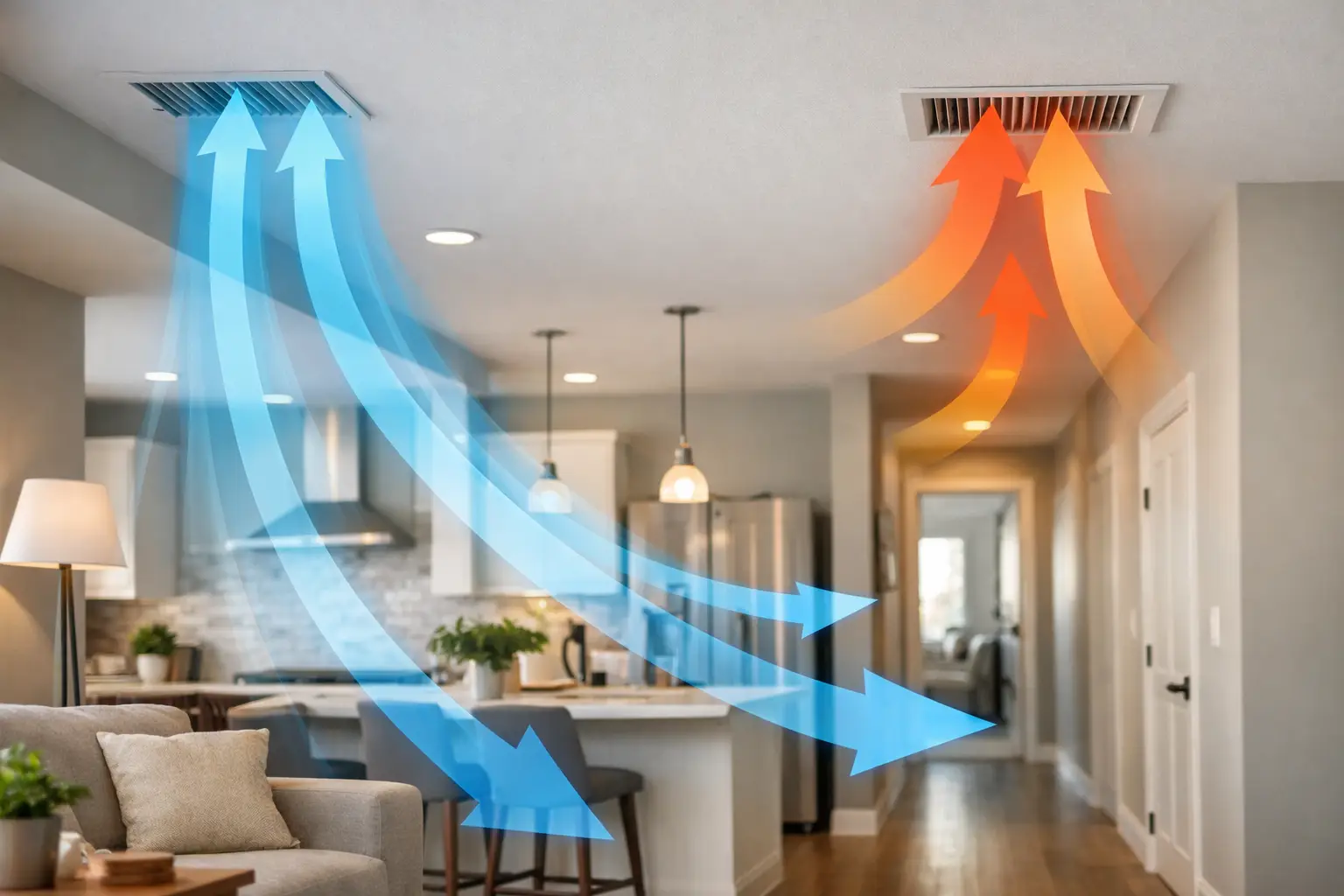
Supply and return vents matter too. Supply vents push conditioned air into rooms. Return vents pull air back to the system so it can be reheated or recooled and sent out again. If furniture blocks a return, bedroom doors stay closed all the time, or vents are shut in an attempt to force air elsewhere, the whole system can get thrown off.
Then there is the blower itself. If the indoor fan is not operating correctly, or if the settings are not matched to the system, airflow can suffer. This is especially important with newer variable-speed systems, heat pumps, and multi-stage equipment, where setup affects performance as much as the equipment brand.
Common signs your home has an airflow problem
Some symptoms are obvious, while others get mistaken for aging equipment or insulation issues.
Uneven temperatures are the most common sign. If one floor is consistently warmer or colder, airflow imbalance should be part of the conversation. Weak air from certain vents is another red flag, especially if other vents in the home feel strong.
Excess dust can also point to duct leaks or return-side issues. So can rooms that feel stale or humid even when the system is running. In cooling season, poor airflow may contribute to an evaporator coil freezing up. In heating season, it can cause the furnace to cycle in ways that reduce efficiency and wear parts faster.
Noise is worth paying attention to as well. Whistling, rattling, booming, or a vent that sounds like it is struggling can indicate pressure problems in the duct system. A system should be noticeable, but it should not sound strained.
Why Colorado homes can make airflow trickier
In El Paso County, homes deal with wide seasonal swings, dry air, and a mix of older and newer construction styles. That means airflow issues do not always come from one simple cause.
A tightly built newer home may have different pressure and ventilation considerations than an older home with duct leakage and insulation gaps. A split-level home may naturally struggle with temperature differences between floors. Finished basements, bonus rooms over garages, and sun-exposed upper rooms often need more careful air distribution than the standard layout allows.
Altitude and climate also put more pressure on HVAC systems to perform correctly. When temperatures shift quickly, homeowners notice airflow issues faster because comfort changes faster.
The fixes that actually help
There is no single repair that solves every airflow problem. The right fix depends on where the restriction or imbalance starts.
Sometimes the answer is basic maintenance. Replacing a clogged filter, cleaning a dirty blower assembly, or reopening blocked vents can improve circulation right away. If your system has not had regular service, airflow issues may be part of a larger maintenance problem. Preventive care often catches these issues before they turn into a no-cooling or no-heat call.
Other times, the problem is in the ductwork. Sealing leaks, correcting sagging runs, resizing sections, or adding return air capacity can make a major difference. Homeowners are often surprised by how much comfort improves when the duct system is addressed instead of just the equipment.
Balancing adjustments may help when some rooms get too much air and others do not get enough. This is more technical than simply closing vents. Proper balancing takes measurements and system knowledge. Done correctly, it can improve room-to-room consistency without hurting total system performance.
In some homes, the system itself may not be the best fit for the layout. Zoned systems, ductless options, or heat pump upgrades can improve airflow and comfort in hard-to-condition spaces. If you are comparing solutions for specific areas of the home, Mini Split vs Central Air: Which Fits? can help you think through the trade-offs.
What homeowners should not do
It is tempting to close vents in unused rooms, cover registers with rugs or furniture, or keep adjusting the thermostat in hopes of evening things out. These habits usually make airflow worse, not better.
Closing too many vents can increase system pressure and reduce overall performance. Blocking returns can starve the system of the air it needs to circulate. Constant thermostat changes do not fix distribution problems and often just lead to longer run times.
Another common mistake is assuming the unit needs full replacement before anyone checks airflow. Sometimes replacement is the right call, especially with older or failing equipment. But if the airflow side of the system is ignored, the new installation can inherit the same comfort problems. That is one reason proper design and setup matter so much during a new AC or furnace install. AC Install: What to Expect and What Matters explains what should be evaluated before and during replacement.
When to call an HVAC professional
If airflow problems are limited to a dirty filter or a blocked vent, that is a straightforward homeowner fix. But if you have persistent hot and cold spots, weak airflow in multiple rooms, unexplained dust, short cycling, or higher utility bills without clear reason, it is time for a closer look.
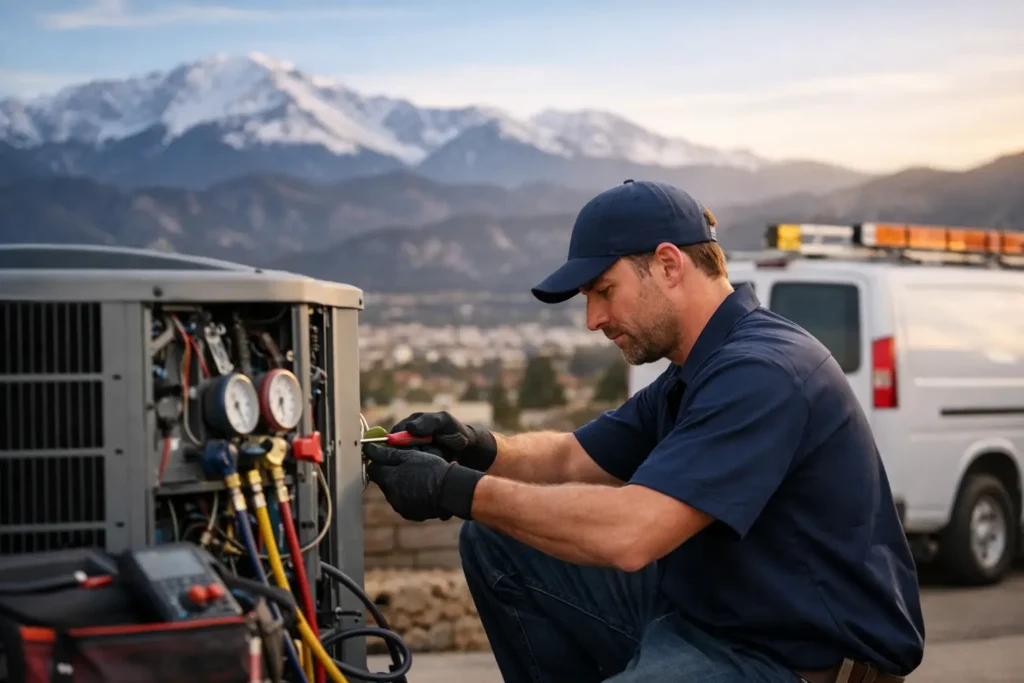
A trained technician should inspect more than the equipment cabinet. They should evaluate filter condition, blower operation, static pressure, duct layout, return air capacity, and whether the system is sized and configured appropriately for the home. That bigger picture matters because airflow is not one part. It is how the whole system works together.
For homeowners who want more predictable performance year-round, regular maintenance also matters. A professional tune-up can catch restrictions, airflow loss, and setup issues before they grow into expensive repairs. Strong Heating and Cooling sees this often in homes where the equipment is still sound, but the comfort problems have been building quietly for months.
Better airflow usually means better comfort
When homeowners talk about wanting a home to feel comfortable, they are usually talking about airflow whether they realize it or not. They want the back bedroom to match the rest of the house. They want the upstairs to cool down. They want the system to stop running so hard without delivering results.
That is why airflow deserves attention. It affects how your HVAC system performs every day, not just when something breaks. If your home has rooms that never feel right, strange vent behavior, or an HVAC system that seems to be working harder than it should, the issue may not be the temperature setting. It may be the way air is moving through the home.