Emergency Heat Source Options to Keep Your Home Safe
When the power goes out in the middle of a Colorado winter, your safest immediate moves are layering clothing and blankets, moving your household to a single interior room, and using a vented or installed heating appliance if you have one. If you don’t, battery-powered devices and personal warming strategies are your next best options. What you must never do: use a gas stove or oven, burn charcoal indoors, or run a generator inside your home or garage. Ready.gov and the CDC are unambiguous on this point — those choices kill people every year.
Your emergency heat source options range from zero-risk personal warming methods all the way to whole-house generator setups, and the right combination depends on how long the outage lasts, who is in your home, and what equipment you already have. The sections below walk through each option in order of safety and practicality, starting with what you can do right now.
- Layer clothing immediately: wool base layers, hats, and gloves indoors retain body heat more effectively than most people expect.
- Gather emergency supplies: flashlights, battery-powered lanterns, a first-aid kit, medications, and water.
- Move everyone to a single interior room, preferably one with the fewest exterior walls.
- Use battery-powered heated blankets or hand warmers if available.
- Check on neighbors, especially the elderly, young children, or anyone with a medical condition.
Safety callout: CPSC warns that generators are a leading source of carbon monoxide (CO) deaths and that portable heaters are involved in a significant number of fires each year. CO alarms with battery backup belong on every level of your home before an outage happens, not after.
Table of Contents
- What you should do in the first 24 hours of an outage
- Fume-free options carry the lowest CO and fire risk
- Portable fuel-burning heaters: propane, kerosene, and catalytic
- Installed and vented systems work best when the power goes out
- How to use a generator safely and power your existing furnace
- Passive solar and renewable alternatives for outage warmth
- How to choose the right emergency heat strategy and prepare now
- When to call a licensed HVAC pro for outage preparedness
- Key Takeaways
- What technicians actually see after outages
- Strongheatingandcooling is ready when your heating system needs professional attention
- Useful sources and further reading
- FAQ
What you should do in the first 24 hours of an outage
Your three priorities in order are: keep everyone physically safe, maintain warmth for vulnerable household members (young children, elderly adults, anyone on oxygen or temperature-sensitive medications), and preserve food and critical medicines. Everything else is secondary.
- Know your relocation threshold — If indoor temperatures fall below 55°F and you cannot maintain warmth, relocate to a community warming center, a hotel, or a neighbor with heat. The CDC recommends this step for households with infants or elderly adults especially.
Pro Tip: Hang heavy blankets or moving blankets over doorways to your heated room. They act as a thermal barrier and can reduce heat loss through the doorway by a meaningful margin without any tools or permanent changes.
Fume-free options carry the lowest CO and fire risk
The safest short-term heating methods produce no combustion byproducts, which means no CO risk and no open flame. The honest trade-off is that most of them cannot heat an entire house — they are personal or small-room solutions.
- Extra blankets and layering are the most reliable zero-risk option. A quality sleeping bag rated to 20°F can keep an adult comfortable even when room temperatures drop significantly.
- Microwavable heat packs and hot water bottles provide localized warmth for hands, feet, and core. They work well for short periods and cost almost nothing.
- Battery-powered heated blankets and heated clothing (vests, gloves, socks) are increasingly practical. Many run on standard 18V tool batteries or USB power banks and can provide hours of warmth per charge.
- Portable battery stations powering small infrared or ceramic heaters are a growing category. The EPA favors battery and solar options as fume-free alternatives for indoor air quality, but notes clearly that most portable battery stations lack the capacity to run heavy-load heating appliances for extended periods.
On run-time and sizing: a 1,000-watt infrared panel heater draws roughly 1 kWh per hour. A 1,000 Wh battery station would run it for about one hour at full draw. Realistically, you would use the heater in short bursts to warm the room, then switch it off — a strategy that can stretch a mid-size battery station through several hours of intermittent use. For electric heater safety, Energy.gov recommends plugging directly into a wall outlet rather than an extension cord, and choosing units with a UL listing and tip-over protection.
The CPSC staff assessment on portable electric heaters identifies extension cords and proximity to combustibles as the two most common causes of heater fires — both avoidable with simple placement habits.
Portable fuel-burning heaters: propane, kerosene, and catalytic
These heaters deliver real heat output and can warm a room quickly, but they carry CO and fire risks that demand strict discipline. Treat them as a last resort when vented or electric options are unavailable, and follow manufacturer instructions without exception.
Portable propane heaters designed for indoor use (look for models with an oxygen depletion sensor, or ODS) will automatically shut off if oxygen levels drop to a dangerous threshold. The Mr. Heater Buddy series is a widely recognized example of an ODS-equipped indoor-rated propane heater. Even with an ODS, these units require ventilation — crack a window an inch in the room where the heater operates.
Kerosene heaters burn hotter and longer per fill than most propane units, but they produce more particulate matter and a stronger odor. Some jurisdictions restrict or prohibit indoor kerosene heater use; check with your local fire department before purchasing one as a backup option.
Catalytic heaters use a chemical reaction rather than an open flame, which reduces fire risk compared to conventional burners. They still produce CO, however, and the same ventilation rules apply.
Safety callout: CPSC estimates roughly 1,600 portable heater fires per year. The most preventable causes are placing heaters too close to curtains or bedding and leaving them unattended.
Clear rules for any fuel-burning portable heater:
- Never refuel while the unit is running or still hot.
- Maintain at least 3 feet of clearance from all combustibles (curtains, furniture, bedding).
- Never use an unvented unit in a sealed room; crack a window.
- Install a CO alarm with battery backup on the same level as the heater.
- Never leave a fuel-burning heater running while you sleep.
- Store fuel in approved containers, away from the heater and away from living areas.
Pro Tip: When choosing a propane heater for indoor emergency use, look specifically for the ODS (oxygen depletion sensor) label and a UL or CSA certification. An uncertified heater may cost less upfront but has no automatic shutoff if air quality deteriorates.
Installed and vented systems work best when the power goes out
Properly installed, vented appliances provide the safest whole-house or room heating during an outage. They vent combustion gases outdoors, they don’t require electricity to operate in many cases, and they’re built to run for hours without the supervision that portable units demand.
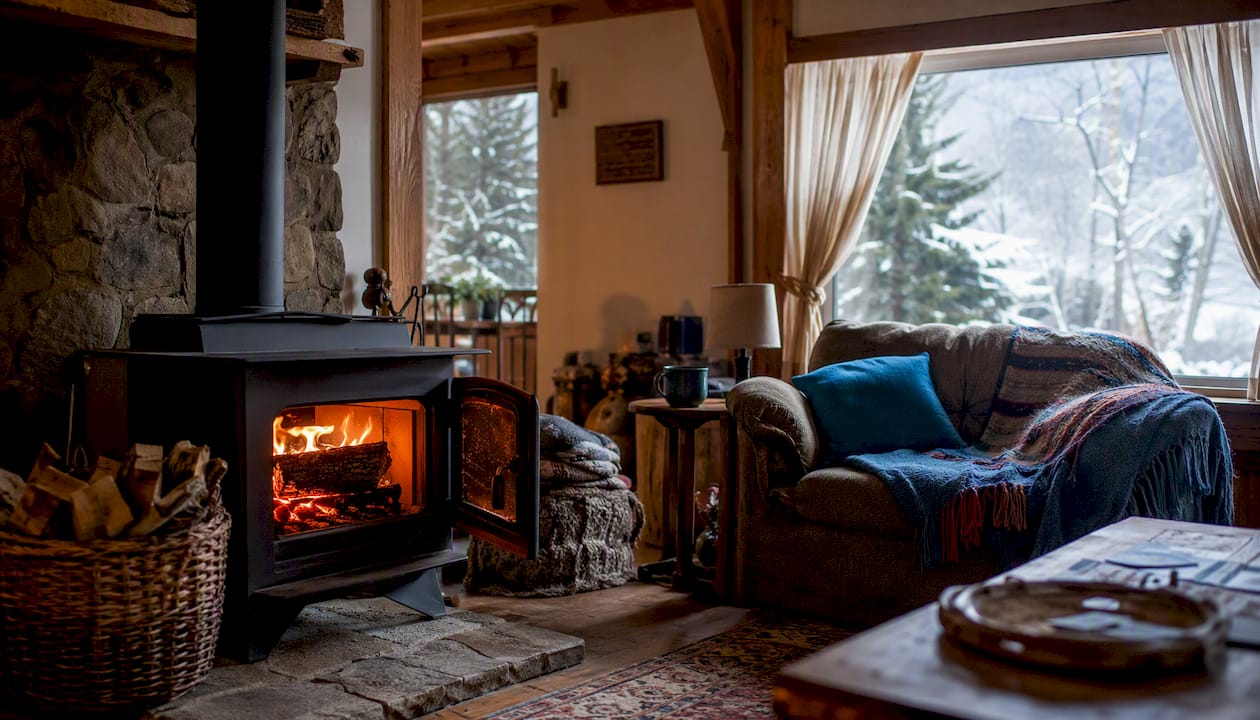
Wood stoves are the most outage-proof option in this category. A properly installed, EPA-certified wood stove with a clean, inspected chimney can heat a significant portion of a home without any electricity. Fuel storage is straightforward: seasoned firewood stacked in a dry location. The limitation is installation cost and the need for a proper chimney or flue — this is not a DIY project.
Pellet stoves burn compressed wood pellets at high efficiency, but most models require electricity to run the auger (fuel feeder) and blower. Without power, they stop working unless paired with a battery backup or generator. That dependency makes them less reliable as a standalone outage solution than a wood stove.
Sealed-combustion gas appliances and direct-vent inserts draw 100% of their combustion air from outdoors through a sealed pipe, which means they don’t deplete indoor oxygen or pull warm air out of the house the way older unvented gas heaters do. Many direct-vent gas fireplace inserts can operate on a standing pilot or a small battery pack, making them functional during outages. They’re a strong upgrade for homeowners who want reliable backup heat without managing firewood.
- Annual inspection of any vented appliance is not optional — CPSC recommends professional service before each heating season to catch cracked heat exchangers, blocked flues, and deteriorated seals.
- Chimney cleaning removes creosote buildup, which is a leading cause of house fires in wood-burning systems.
- Gas appliance connections and venting should be inspected by a licensed technician, not self-diagnosed.
Pro Tip: If you’re considering a direct-vent gas insert as a backup heat source, ask your installer about models with a millivolt ignition system. These operate entirely without electricity — no circuit board, no blower dependency — which makes them genuinely outage-proof.
Strongheatingandcooling installs and inspects sealed-combustion systems, gas inserts, and furnaces throughout Colorado Springs and surrounding communities. A pre-season inspection is the most cost-effective way to confirm your primary and backup systems are ready before an outage forces the question.
| Feature | Wood Stove | Pellet Stove | Direct-Vent Gas Insert |
|---|---|---|---|
| Electricity required | No | Yes (auger/blower) | No (millivolt models) |
| Fuel storage | Firewood | Pellet bags | Natural gas/propane line |
| CO/fire risk | Moderate (chimney) | Low | Low (sealed combustion) |
| Professional install required | Yes | Yes | Yes |
| Outage reliability | High | Low without backup power | High (millivolt) |
How to use a generator safely and power your existing furnace
Powering your existing furnace with a properly sized generator, connected through a transfer switch, is usually the safest and most efficient whole-house solution during an extended outage. Your furnace already has the ductwork, thermostat, and heat exchanger in place — you’re just restoring its power supply rather than improvising a new heat source.
The critical sizing mistake most homeowners make is calculating generator capacity based on the furnace’s running watts rather than its starting watts. A furnace motor can draw several times its running wattage for the two to three seconds it takes to start. Extension guidance from the University of Missouri recommends calculating generator needs based on starting wattage, not running wattage, and sizing up accordingly. A soft-start device can reduce motor startup surge if your generator is borderline.
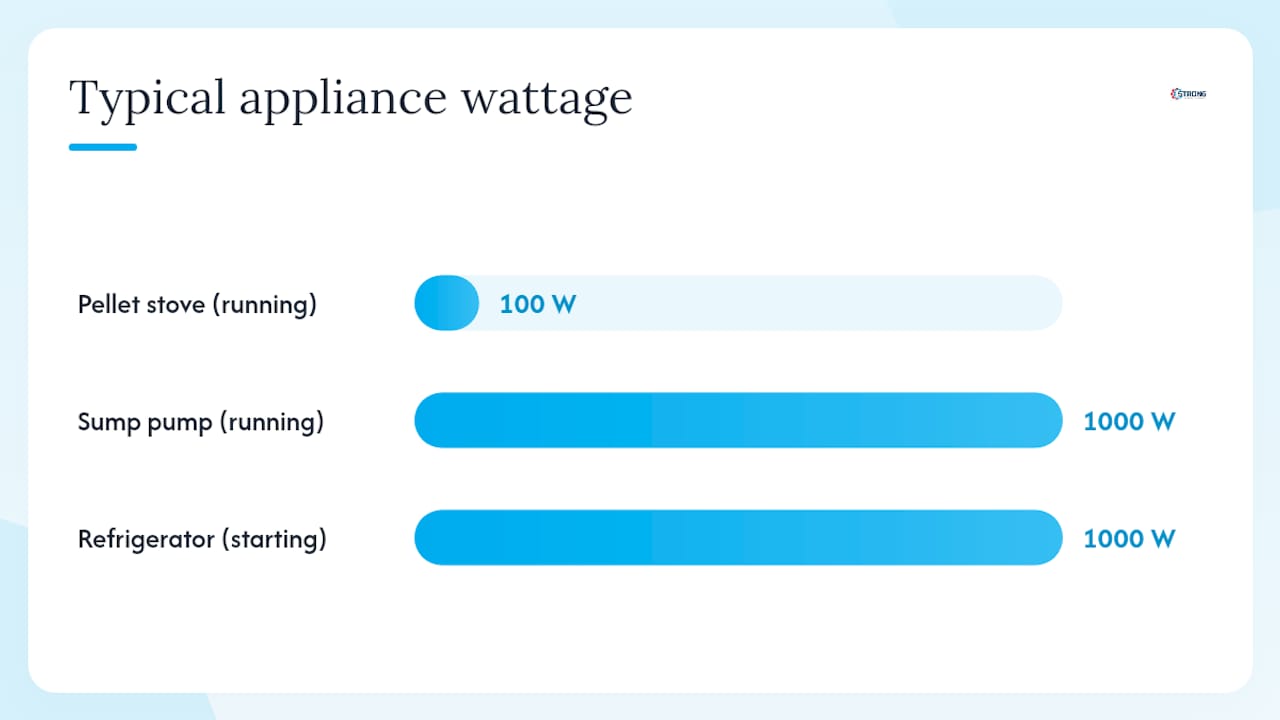
| Component | Starting watts (typical) | Running watts (typical) |
|---|---|---|
| Pellet stove (auger + blower) | — | 100 W |
| Sump pump (if needed) | — | 1000 W |
| Refrigerator | 1000 W | — |
Generator safety rules — these are not suggestions:
- Place the generator at least 20 feet from your home, with the exhaust directed away from windows and doors. Ready.gov and CPSC both specify this distance. Opening a window does not prevent fatal CO accumulation.
- Never run a generator in an attached garage, even with the door open.
- Connect the generator to your home’s electrical panel only through a properly installed transfer switch or interlock kit. Backfeeding power into the grid without a transfer switch is illegal and can electrocute utility workers.
- Use heavy-duty, outdoor-rated extension cords rated for the load if you’re not using a transfer switch.
- Install CO alarms with battery backup on every level of the home, including near sleeping areas.
- Refuel only when the generator is off and cooled down.
A licensed electrician or HVAC contractor should install the transfer switch. This is a one-time investment that makes every future outage significantly safer and simpler to manage.
Passive solar and renewable alternatives for outage warmth
Passive solar strategies and PV-plus-battery systems are low-risk, low-maintenance ways to maintain warmth or power small devices during outages, but they require planning and, for PV systems, meaningful upfront investment.
Passive solar basics work with what you already have:
- Open south-facing curtains and blinds during daylight hours to let solar gain warm the room, then close all window coverings at dusk to retain that heat.
- Thermal mass materials (tile floors, brick walls, concrete) absorb daytime heat and release it slowly overnight — useful if your home already has them.
- Draft-sealing around windows and doors with weatherstripping or temporary foam tape reduces heat loss significantly at minimal cost.
PV-plus-battery systems (rooftop solar paired with a home battery like a Tesla Powerwall or similar) can power lights, fans, a small infrared heater, and critical medical devices during an outage. What they typically cannot do is run a central furnace or electric resistance heating for an entire home without a much larger battery bank than most residential installations carry. The EPA confirms that battery and solar options are preferable for indoor air quality but notes their capacity limits for heavy heating loads.
Pro Tip: Pairing a PV battery backup with a small, efficient 120V infrared panel heater (750–1,000 watts) in a single room is a practical middle ground. The heater draws far less than a furnace, the battery can sustain it in cycles, and you avoid any combustion risk. Check local permitting requirements before adding battery storage to an existing solar system.
For homeowners considering small wind or solar installations as part of a broader backup strategy, the planning, permitting, and installation commitment is significant. These are long-term investments, not quick outage fixes.
How to choose the right emergency heat strategy and prepare now
The right combination of backup heating methods depends on four factors: household size and layout, who lives there (young children, elderly adults, anyone with medical needs), how long outages typically last in your area, and what fuel or equipment you can realistically store and maintain.
- Install CO and smoke alarms first. Every level of the home needs a working CO alarm with battery backup before you bring any fuel-burning device indoors.
- Inspect your primary heating system before winter. A furnace with a cracked heat exchanger or a blocked flue is a liability during an outage, not an asset.
- Plan your generator connection. If you want to power your furnace, schedule a transfer switch installation with a licensed contractor before the heating season.
- Stock fuel and battery backups. Keep at least one full propane cylinder or a charged battery station on hand. Fuel availability drops quickly during regional outages.
- Map your designated heated room. Decide in advance which room you’ll use, what supplies go there, and how you’ll seal it off.
- Check certifications before buying any portable heater. Look for UL listing, ODS on propane units, and tip-over protection. PGMA and UL 2201 standards apply to portable gas heaters; UL 1278 covers portable electric heaters.
Red flags to avoid:
- Uncertified heaters with no UL or CSA marking.
- Any plan to use a gas range or oven for heat.
- Placing a generator within 20 feet of the home or in any enclosed space.
- Relying on a single fuel-burning device in a sealed room without ventilation.
Pro Tip: Review your emergency HVAC response plan before an outage, not during one. Knowing your furnace’s model number, the location of your gas shutoff, and your HVAC contractor’s emergency line takes about 15 minutes to document and can save hours of stress when temperatures are dropping.
For temporary heating solutions during a furnace breakdown, Strongheatingandcooling has a practical resource that covers short-term options while a repair is scheduled.
When to call a licensed HVAC pro for outage preparedness
Call a licensed HVAC technician when the solution involves your home’s electrical panel, gas lines, venting, or any permanent appliance installation. Specifically, contact a pro for:
- Generator-to-furnace integration via a transfer switch or interlock kit.
- Sealed-combustion or direct-vent appliance installation or conversion.
- Annual furnace inspection and heat exchanger check before heating season.
- CO and smoke alarm placement verification as part of a system inspection.
- Emergency furnace repair when the outage ends and your system won’t restart.
Strongheatingandcooling brings over 40 years of combined HVAC experience to Colorado Springs and the surrounding communities, including Monument, Divide, Security-Widefield, and Ellicott. The team handles emergency HVAC repair with fast dispatch, along with full heating installation and replacement for homeowners planning a permanent upgrade. For a furnace emergency checklist you can reference right now, that resource is available on the Strongheatingandcooling website.
- Licensed, locally based technicians familiar with Colorado’s climate and code requirements.
- Transparent pricing with no surprise fees.
- Service available for both emergency calls and scheduled pre-season inspections.
Pro Tip: Schedule your annual furnace inspection in September or early October, before the first hard freeze. Technicians are less booked, and you’ll have time to address any issues before you actually need the system.
| Service | Why it matters for outage preparedness |
|---|---|
| Transfer switch installation | Safe generator-to-furnace connection; prevents backfeed |
| Annual furnace inspection | Catches heat exchanger cracks and blocked flues before outages |
| Sealed-combustion appliance install | Provides outage-reliable backup heat with no indoor air risk |
| Emergency HVAC repair | Restores heat quickly when the outage ends and the system won’t start |
| CO/smoke alarm check | Confirms placement and function before a fuel-burning device is used |
Key Takeaways
The single most important rule for any emergency heat source is this: never use combustion appliances indoors without proper venting, and always place a CO alarm with battery backup on every level of your home before an outage begins.
| Point | Details |
|---|---|
| Prioritize vented systems | Installed, vented appliances (wood stoves, direct-vent gas inserts) are the safest whole-house options during outages. |
| Generator sizing matters | Calculate generator capacity on starting watts, not running watts; furnace motors can draw several times their running load at startup. |
| Never use stove or grill indoors | Gas ovens, ranges, and charcoal grills produce CO and must never be used as heat sources indoors. |
| Fume-free options for short outages | Battery-powered heated blankets, infrared panels on battery stations, and layering are safe for short-term personal warmth. |
| Strongheatingandcooling for pro work | Transfer switch installation, sealed-combustion appliance service, and emergency furnace repair are available across Colorado Springs and surrounding areas. |
What technicians actually see after outages
The most common mistake technicians find after a winter outage is not a broken furnace — it’s a CO alarm with a dead battery, or no CO alarm at all, in a home where a fuel-burning device was used indoors. The second most common is a generator that was run in the garage “just for a few minutes” with the door open. Both situations have caused fatalities, and both are entirely preventable.
What experienced technicians recommend based on what they see on service calls: test your CO alarm monthly, replace the battery every year whether it needs it or not, and place the alarm within 10 feet of every sleeping area. When inspecting a vented appliance after an outage, check that the flue cap or termination point is clear of ice, snow, or debris before relighting — a blocked vent on a gas appliance is a CO hazard even when the appliance itself is in perfect condition.
The homeowners who come through extended outages with the least disruption are almost always the ones who prepared before the season: a serviced furnace, a charged battery station, a stocked supply of firewood or propane, and a CO alarm that actually works. The gear matters less than the habit of checking it.
Strongheatingandcooling is ready when your heating system needs professional attention
When an outage exposes a gap in your home’s heating readiness — a furnace that won’t restart, a generator with no safe connection to your electrical panel, or a vented appliance that hasn’t been inspected in years — the right next step is a call to a licensed HVAC contractor who knows your local climate and code requirements.
Strongheatingandcooling serves Colorado Springs, Monument, Divide, Security-Widefield, Ellicott, and surrounding communities with emergency HVAC repair, heating installation, and pre-season inspections. With over 40 years of combined experience and a straightforward pricing policy, the team focuses on getting your system running safely and efficiently without unnecessary upsells. If you’re planning a permanent upgrade — a sealed-combustion insert, a new high-efficiency furnace, or a generator transfer switch — financing options are available to make the investment manageable. For immediate help, schedule emergency HVAC repair or request a pre-season inspection through the Strongheatingandcooling website today.
Useful sources and further reading
These are the primary authoritative sources used throughout this article. Each one covers a specific aspect of emergency heating safety and is worth bookmarking for reference.
- Keep Warm and Safe This Winter: Tips for Using Generators, Furnaces and Space Heaters | CPSC.gov
- Power Outages | Ready.gov
- Power outages and indoor air quality (IAQ) | EPA
- GH5117 (extension.missouri.edu)
- Small space heaters | energy.gov
- CPSC Staff Assessment on Portable Electric Heaters (PDF)
- Protect yourself during a power outage | CDC
- Power Outage Preparedness: How to Safely Use Alternative Heating and Lighting Sources (extension.usu.edu)
- Installing and maintaining small wind electric systems | energy.gov
For Strongheatingandcooling service pages and local resources:
- Emergency HVAC Repair in Colorado Springs — fast dispatch for heating emergencies.
- Emergency heating alternatives guide — introductory safety-first overview from Strongheatingandcooling.
- Gas boiler safety and servicing — practical guidance on inspecting and maintaining gas heating appliances safely.
- Winter plumbing tips for homeowners — protecting pipes and plumbing systems during cold-weather outages.
This article provides general safety information, not professional advice for your specific home or system. Verify current safety codes and regulations with your local fire department, a licensed HVAC contractor, or the relevant primary sources listed above.
FAQ
What is the best emergency heat source for a home?
The safest and most efficient whole-house option is powering your existing furnace with a properly sized generator connected through a transfer switch. For smaller spaces or shorter outages, a vented wood stove or direct-vent gas insert provides reliable heat without electricity.
How can you heat a house without electricity?
A wood stove, a millivolt direct-vent gas fireplace insert, or a properly ventilated ODS-equipped propane heater can all provide heat without grid power. Personal warming strategies — layering, sleeping bags, and a single heated room — extend comfort significantly when appliance options are limited.
Is there a heater that doesn’t need to be plugged in?
Yes. ODS-equipped portable propane heaters (such as indoor-rated catalytic or radiant models) and wood-burning stoves operate without electricity. Both require proper ventilation and CO alarm monitoring when used indoors.
What should you never do to heat your home during an outage?
Never use a gas stove, oven, or charcoal grill to heat indoor spaces, and never run a generator indoors or in an attached garage. Ready.gov and the CDC both identify these as leading causes of CO poisoning and fire deaths during outages.
When should you call an HVAC professional during or after an outage?
Call a licensed technician when your furnace won’t restart after power is restored, when you need a generator transfer switch installed, or when you’re planning to add a vented backup appliance. Strongheatingandcooling offers emergency HVAC repair across Colorado Springs and surrounding communities.
Recommended
Need expert HVAC help?
Colorado Springs' trusted, veteran-owned heating & cooling team — emergency service.