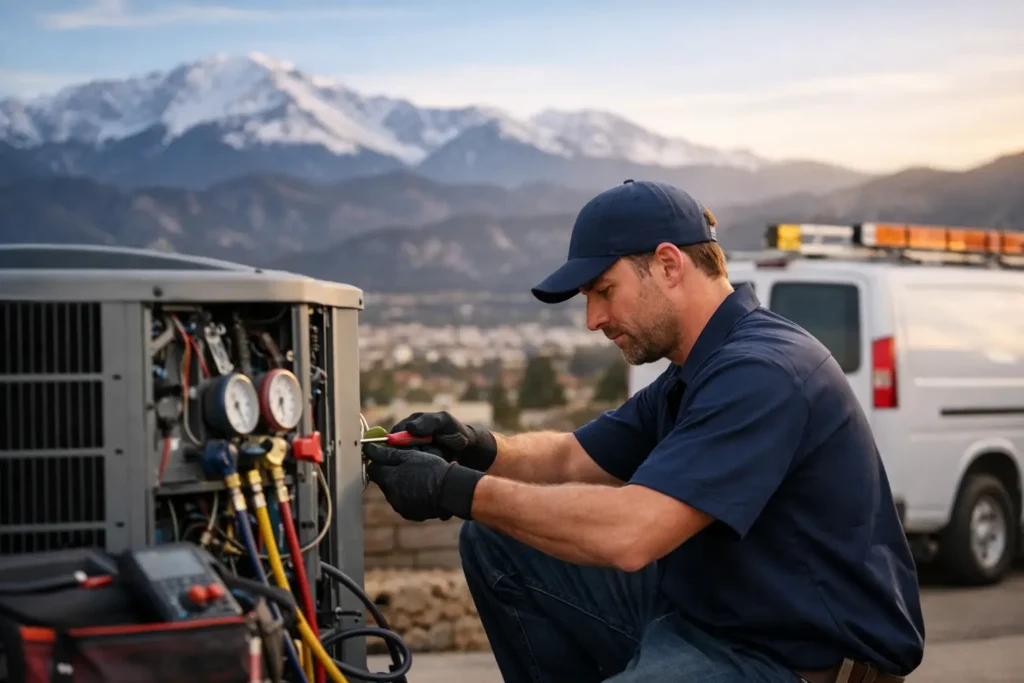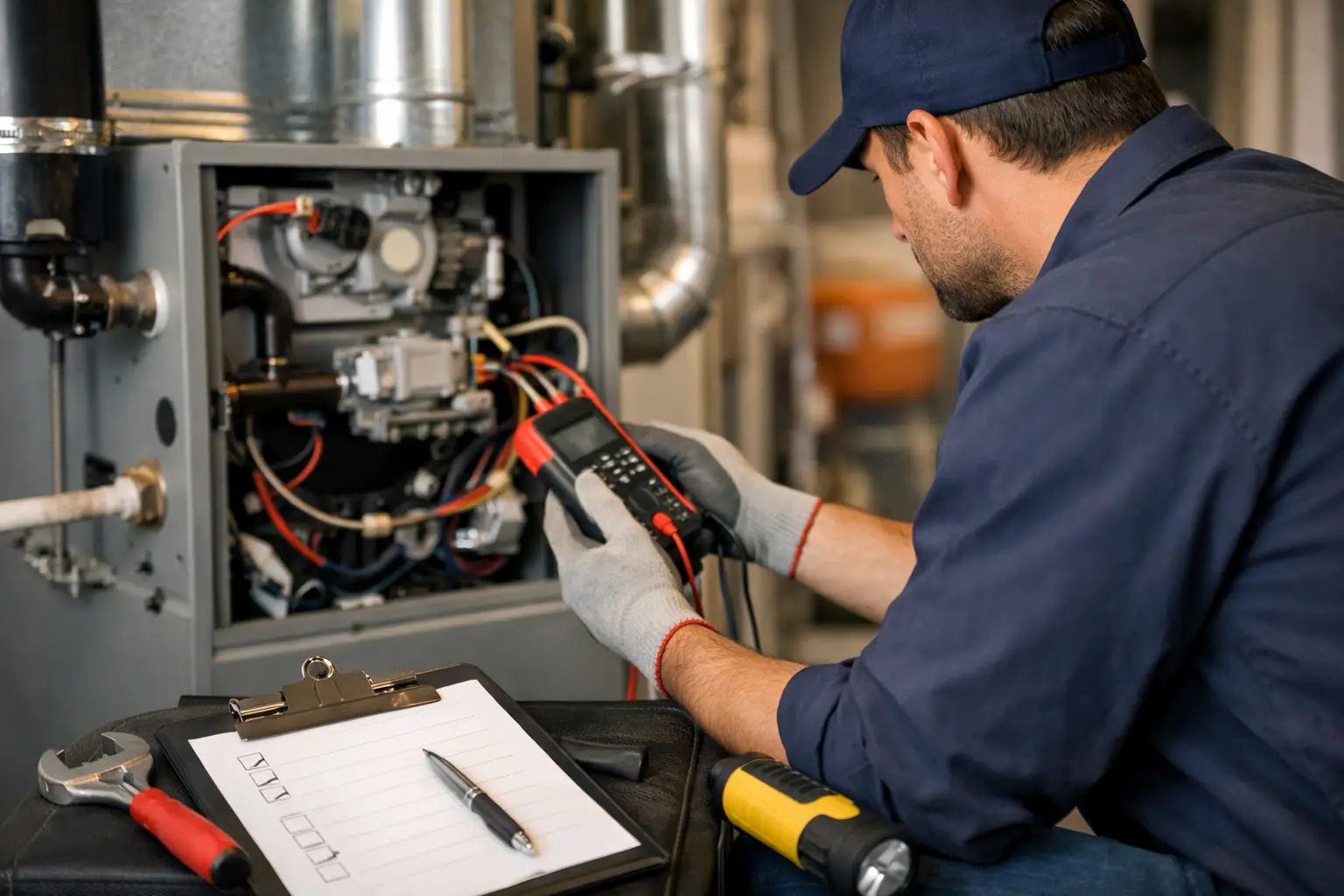
When your furnace quits on a cold night, the first few minutes matter. A good emergency furnace repair checklist helps you stay safe, rule out simple problems, and decide whether you need immediate professional service or a routine repair visit.
Most furnace emergencies are not really about repair first. They are about safety, heat loss, and preventing damage to your home or building. That is especially true during Colorado cold snaps, when indoor temperatures can drop quickly and pipes, pets, inventory, and vulnerable family members may all be at risk.
Start with safety before troubleshooting
If you smell gas, hear a loud bang from the unit, see smoke, or suspect carbon monoxide, do not keep testing the system. Leave the building if needed, shut off the furnace only if it is safe to do so, and call the gas utility or emergency services right away. After the immediate safety issue is addressed, contact an HVAC professional for repair.
If there is no gas smell or active hazard, check whether the problem is a total no-heat failure, weak airflow, short cycling, or unusual noise. That distinction matters. A furnace that runs but blows cool air may have a different cause than one that will not start at all.
Emergency furnace repair checklist for homeowners and property managers
Start at the thermostat. Make sure it is set to Heat, not Cool or Fan. Raise the set point several degrees above room temperature and wait a minute. If the thermostat screen is blank, the problem may be power-related rather than furnace-related. Battery-powered thermostats may simply need fresh batteries.
Next, check the circuit breaker. A tripped breaker can shut down the furnace completely. Reset it once if it has tripped, but if it trips again, stop there. Repeated breaker trips point to an electrical problem that needs professional diagnosis.
Then check the furnace switch. Many people mistake it for a light switch and turn it off by accident. It is usually mounted on or near the furnace. If it is off, restore power and see whether the system starts normally.
Look at the air filter before you assume the worst. A heavily clogged filter can overheat the system, reduce airflow, and trigger safety shutoffs. If the filter is visibly dirty, replace it with the correct size and type. This will not fix every issue, but it is one of the most common causes of poor furnace performance.
Make sure supply vents and return grilles are open and unobstructed. Closed vents, furniture pressed against returns, or blocked airflow can stress the system and make heating uneven. In commercial spaces, this can be easy to miss if shelving, boxes, or equipment have shifted.
If you have a high-efficiency furnace, check the intake and exhaust pipes outside. Snow, ice, leaves, or debris can block venting and stop the unit from operating properly. In winter weather, this is a practical check that can save time. Clear only what is safely accessible.
Condensing furnaces also have a drain line that can clog. If the system has shut down and you notice water around the unit, the issue may involve condensate drainage. At that point, it is usually best to call for service instead of trying to take apart components.
What to check if the furnace is running but not heating well
A furnace that turns on but does not keep the building warm can create a different kind of emergency. The system is not dead, but your indoor temperature keeps dropping.
In that case, check for a dirty filter, blocked vents, and thermostat settings first. Then pay attention to the flame behavior if your furnace has a visible inspection window. A normal flame is typically steady and blue. If it looks weak, unstable, or yellow, shut the system down and call a technician. Combustion issues are not a DIY situation.
Short cycling is another warning sign. That means the furnace starts, runs briefly, then shuts off before the space reaches the target temperature. It can happen because of airflow problems, flame sensor issues, overheating, or control board faults. Sometimes the fix is minor. Sometimes it points to a deeper problem. The key is not to ignore it, especially in freezing weather.
Signs this is a true furnace emergency
Not every repair needs same-day service, but some situations do. If your furnace fails completely during freezing temperatures, that is an emergency for most homes and many businesses. It becomes more urgent if there are infants, older adults, medical concerns, or pets in the building.
A commercial property may need emergency response sooner if no heat affects employees, customers, tenants, inventory, or plumbing systems. Restaurants, offices, retail spaces, and multifamily properties all have different thresholds, so it depends on occupancy and exposure. A rooftop unit or commercial furnace problem may also involve more than one zone, which can complicate temporary workarounds.
You should also treat the situation as urgent if the furnace is making grinding, screeching, or banging noises, if the blower will not shut off, if the burner will not stay lit, or if you see signs of scorching, soot, or electrical burning. Those are not symptoms to monitor overnight.
What not to do during an emergency furnace issue
Do not keep resetting the furnace repeatedly. One reset is reasonable when checking basic controls. Multiple resets can make the problem worse or delay proper diagnosis.
Do not remove panels or attempt gas valve, ignition, or wiring repairs yourself. Modern furnaces include safety controls for a reason, and bypassing them can create a bigger risk than the original failure.
Do not use an oven or stove to heat the house. That creates fire and carbon monoxide hazards. If you need temporary heat, use safe, approved space heaters with clearances from curtains, furniture, and traffic areas. Keep them supervised and plugged directly into a wall outlet, not an overloaded power strip.
How to prepare before the technician arrives
Once you have ruled out the obvious and scheduled service, make the visit easier and faster. Clear a path to the furnace, thermostat, and electrical panel. If you manage a commercial site, make sure maintenance staff or keyholders can provide access to mechanical rooms or rooftop entry points.
Write down what happened and when. Note whether the furnace stopped completely, whether it was making noise, whether the thermostat was blank, and whether you changed the filter or reset the breaker. Small details can shorten diagnosis time.
If your system displays an error code or flashing light sequence, record that too. Do not worry if you cannot interpret it. The code still helps the technician narrow down the issue.
Have the approximate age of the equipment ready if you know it. An older furnace with a failed heat exchanger, repeated ignition issues, or expensive motor problems may shift the conversation from repair to replacement. That is not always the case, but in an emergency, good decisions depend on knowing whether the repair makes financial sense.
When repair is worth it and when replacement is the better call
This is where a practical checklist has limits. A furnace that needs a sensor, igniter, capacitor, or filter-related correction is often a straightforward repair. A unit with chronic breakdowns, cracked components, rising utility bills, or unsafe combustion problems may be better replaced.
There is a trade-off. Emergency replacement costs more up front, but repeated emergency repairs on an aging furnace can add up fast. For homeowners, the right answer often depends on the age of the system and how often it has failed in the last two seasons. For property owners and commercial clients, downtime, tenant impact, and energy costs usually carry more weight.
A dependable contractor should be clear about that distinction. You want a technician who can stabilize the immediate problem, explain what failed, and tell you honestly whether the system is still a good repair candidate.
The best checklist is the one you use before the next breakdown
The most effective emergency furnace repair checklist starts before the emergency. Regular filter changes, seasonal tune-ups, carbon monoxide detector checks, and attention to strange noises can prevent a lot of after-hours failures. Not all breakdowns are avoidable, but many warning signs show up early.
If your furnace has already had a few close calls, now is the time to plan ahead. Save the model information, know where the breaker and shutoff are, and keep a trusted HVAC number handy. When the heat goes out, clear steps and a fast response make all the difference.
A cold building can feel stressful fast, but the right next move is usually simple: protect safety first, check the basics, and get qualified help when the problem goes beyond them.