Congratulations on the new home. Once the boxes are unpacked, the heating and cooling system deserves a little attention — getting to know it now prevents expensive surprises later. Here's a first-year HVAC checklist for new Colorado Springs homeowners that keeps your system reliable and your bills in check.
1. Find and learn your equipment
Locate the furnace, AC condenser, water heater, and thermostat. Note the manufacture dates from the data plates so you know how old everything is. Knowing the age of each system tells you what to expect — furnaces last 15-20 years, AC units 12-15, water heaters 8-12. If anything is near the end, start planning rather than reacting.
2. Schedule a baseline inspection
If the previous owner didn't leave service records, get a professional inspection early. A technician can confirm everything is operating safely, catch deferred maintenance, and give you a realistic timeline for any future replacements. This is especially smart if you skipped a specialist HVAC check before closing — see what to check before you close.
3. Set a filter routine
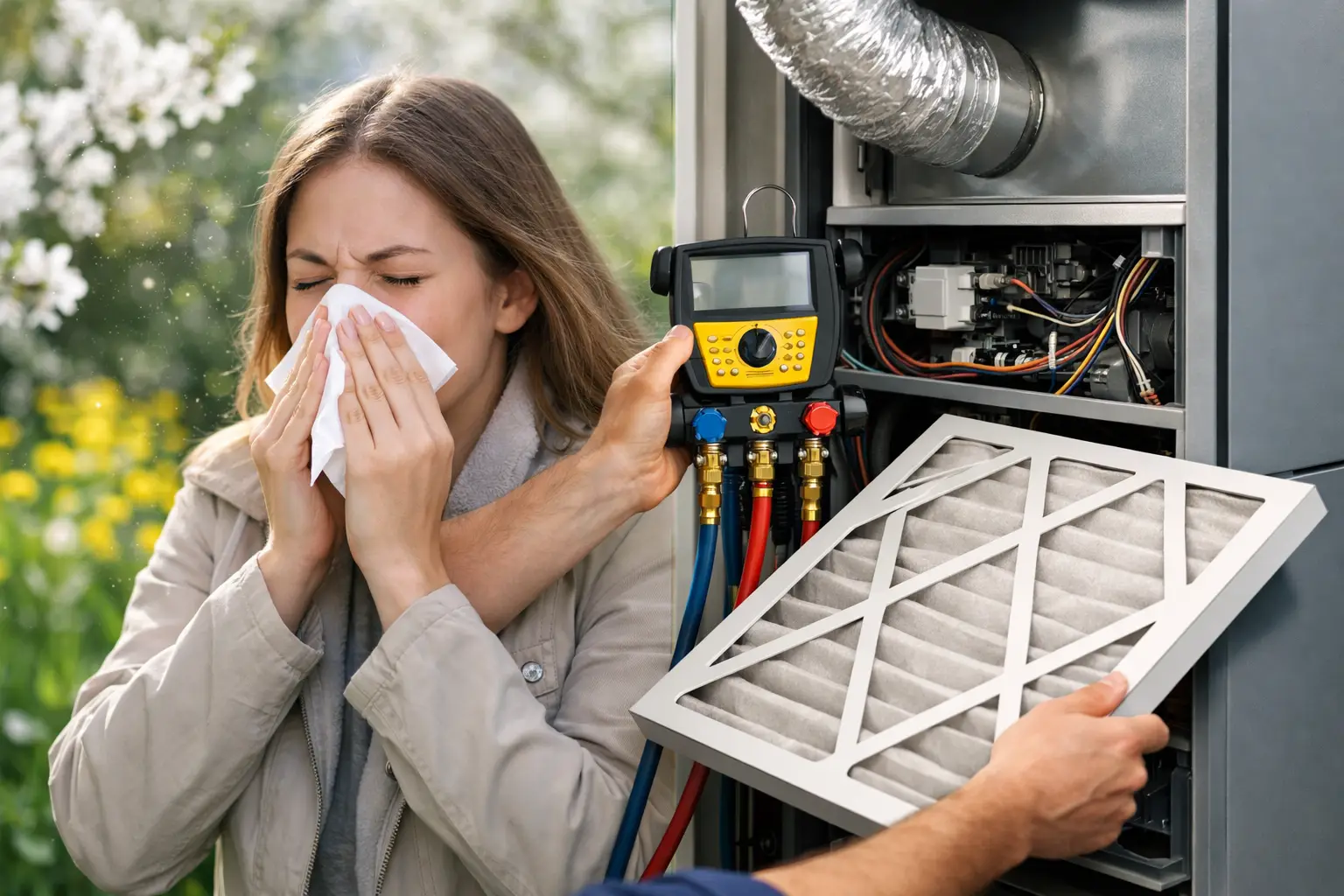
Find out what filter size your system uses and establish a replacement schedule — typically every one to three months depending on the filter and household. A clean filter protects airflow and efficiency, and it's the simplest habit that extends equipment life. If you're unsure which filter rating is right, ask during your inspection.
4. Get to know your thermostat
Whether you inherited a basic dial or a smart thermostat, learn its settings and program it for your routine. A smart thermostat can meaningfully reduce energy use — our post on efficiency explained covers how equipment and controls work together to lower bills.
5. Don't ignore the water heater
In our hard-water region, sediment buildup shortens water heater life. A flush and inspection in your first year can prevent early failure and the flooding that comes with it — read the warning signs and our guide on hard water and your water heater.
6. Plan for our climate
Colorado Springs brings intense summer sun at altitude and cold, dry winters. Make sure your system is suited to both — our guide on high-altitude cooling explains why local conditions matter for comfort and cost.
7. Consider a maintenance plan
Rather than tracking seasonal service yourself, a maintenance plan handles it for you and keeps small issues from becoming big ones. See what our plan covers.
Start your homeownership right
A little attention in year one pays off for years. If an inspection reveals a system nearing replacement, estimate costs with our pricing calculator and explore financing. Ready to schedule your baseline visit? Contact our team and check our coupons to save.
What Does Colorado Springs' Unique Environment Mean for Your HVAC System?
Living in Colorado Springs offers incredible views and a vibrant community, but it also presents specific challenges and opportunities for your home's heating and cooling. Understanding these local factors will help you make informed decisions about your HVAC system, ensuring comfort and efficiency for years to come.
Altitude Adjustments Are Essential
Our city's elevation, ranging roughly 6,000–7,500 feet, means the air is thinner, containing about 20% less oxygen. For gas-fired appliances like furnaces and boilers, this isn't just a minor detail; it necessitates altitude-correct setup. Without proper calibration, these systems can operate inefficiently or even unsafely. Additionally, the reduced air density can mean equipment loses some of its rated capacity. When considering any new installation, such as a furnace replacement or a boiler, it's crucial to ensure your HVAC professional has the expertise to account for these conditions, like our Master Mechanical License holder, Jeff Jennings, who understands how to optimize systems for high-altitude performance.
Protecting Against Weather Extremes
Colorado Springs experiences significant day-night temperature swings and a dry climate, coupled with a long heating season. This puts considerable demand on both heating and cooling equipment. Furthermore, hail storms are not uncommon and can cause substantial damage to outdoor AC coils, which are vital for your cooling system's operation. Regular check-ups, especially an annual AC inspection included in a maintenance membership, can help identify and address potential vulnerabilities before they lead to costly repairs. Our same-day urgent repair service is available during operating hours if an unexpected issue arises, ensuring your home stays comfortable despite the weather.
Navigating Permits and Rebates
A significant aspect of any HVAC replacement in Colorado Springs is the need for a Pikes Peak Regional Building Department (PPRBD) permit. This ensures installations meet safety and code requirements. Our team is familiar with this process, holding PPRBD license #26745. Beyond permits, homeowners can take advantage of local incentives. Colorado Springs Utilities offers valuable rebates for qualifying equipment, which can significantly offset the cost of new installations. For example, you could see rebates for qualifying furnaces, heat pumps, boilers, and smart thermostats. These programs, which are verified through at least September 2026, can make upgrading to more efficient systems, like a new heat pump or a complete system package, more affordable. Don't forget to ask about our 10% military/first responder and 10% senior (65+) discounts.
Consider these local factors as you establish your home's HVAC routine. Strong Heating And Cooling is here to help with your Colorado Springs HVAC needs. Call us at (719) 960-7208 or request service at our contact page to schedule your baseline inspection or learn more about local rebates.
Need expert HVAC help?
Colorado Springs' trusted, veteran-owned heating & cooling team — same-day service.