
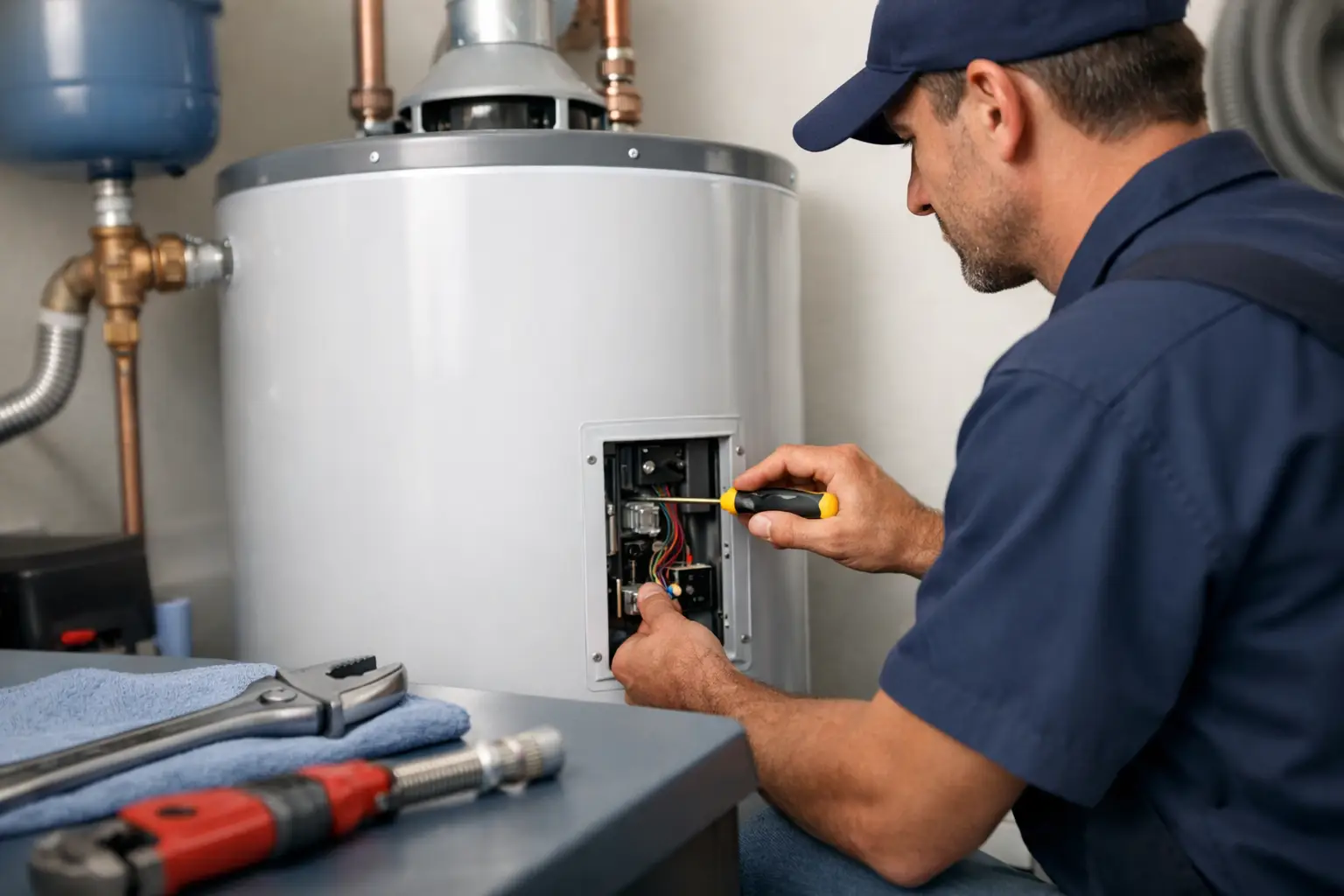
Colorado is hard-water country, and your water heater quietly pays the price for it. The minerals dissolved in hard water settle out as sediment, and over time that buildup robs your water heater of efficiency and lifespan. Understanding this hidden problem helps you protect one of your home's most-used appliances.
What "hard water" actually means
Hard water contains higher levels of dissolved minerals, mainly calcium and magnesium. It's not harmful to drink, but it's tough on plumbing and appliances. Much of the Front Range has moderately hard to hard water, which means most local water heaters are dealing with it every day.
How sediment builds up
When hard water is heated, those minerals precipitate out and settle at the bottom of a tank water heater as a layer of sediment. The longer it goes unaddressed, the thicker that layer grows. In tankless units, the same minerals form scale on the heat exchanger. Either way, the buildup gets between the burner and the water it's trying to heat.
Why it matters
Sediment is an insulator. As it accumulates, your water heater has to work harder and burn more energy to heat the same water — driving up bills. It also reduces the effective capacity of a tank, so you get less hot water. Worse, sediment can cause overheating and stress that shortens the unit's life and can lead to leaks or failure. That popping or rumbling sound from an older tank? Often sediment.
The warning signs
Watch for rumbling or popping noises, water that doesn't get as hot or runs out faster than it used to, rusty or cloudy hot water, and rising energy bills. These often point to sediment doing its damage. Our guide on signs your water heater is about to fail covers the symptoms that mean it's time to act before a leak floods your home.
How to protect your water heater
The single best defense is regular professional maintenance — periodic flushing for tank units and descaling for tankless. This removes accumulated sediment, restores efficiency, and extends the unit's life. In a hard-water region like ours, this isn't optional upkeep; it's what keeps a water heater from failing years early. A maintenance plan makes it easy to stay on schedule.
When buildup means replacement
If sediment has gone unaddressed for years, the damage may already be done, and replacement could be the better value — especially if the unit is also aging. Our comparison of tank vs. tankless helps you choose a replacement, and you can estimate costs with our pricing calculator plus financing.
Stay ahead of hard water
A little maintenance protects a big investment. Whether you need a flush, a descale, or a new unit, our team can help. Visit our water heater services page, schedule service, and check our coupons to save.
Need expert HVAC help?
Colorado Springs' trusted, veteran-owned heating & cooling team — emergency service.