
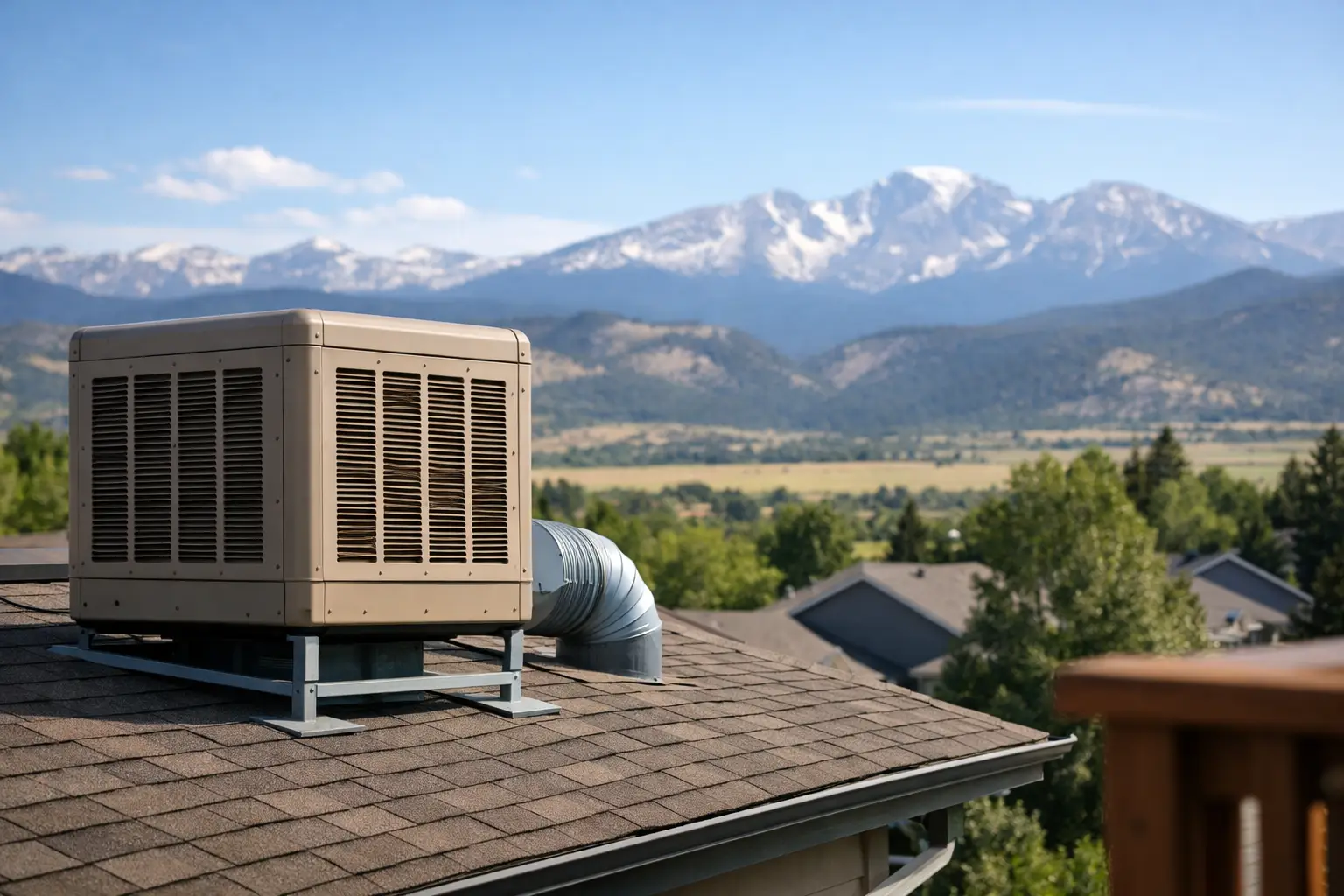
Cooling a home at 6,000-plus feet isn't the same as cooling one at sea level, and the systems that work well here are chosen with that in mind. If you're shopping for AC in Colorado Springs or anywhere along the Front Range, understanding how altitude and our dry climate affect cooling will help you get a system that actually performs when it counts.
Thinner air changes how equipment performs
At our elevation, the air is less dense. That affects heat transfer and airflow, which means cooling equipment has to be selected and set up with altitude in mind. A system spec'd for a humid lowland city may not deliver its rated performance here. Experienced local installers account for this when sizing and configuring equipment — it's one reason local familiarity matters more than a generic online quote.
Dry air is an advantage — if you use it
Colorado's low humidity is genuinely good news for cooling. Because there's less moisture to remove from the air, evaporative ("swamp") coolers can be a viable, energy-efficient option for some homes — something that simply doesn't work in muggy climates. Whether a swamp cooler, central AC, or a hybrid approach fits your home depends on your layout and comfort priorities. The point is that our climate opens up options other regions don't have.
Big temperature swings, fast
Our days can swing dramatically from morning to afternoon, and a cold front can drop temperatures in hours. That puts a premium on systems that respond quickly and run efficiently across a wide range, rather than one tuned for constant, all-day heat. Modern variable-speed and high-efficiency equipment handles these swings far better than older single-stage units.
Sun exposure and intense UV
At altitude, sunlight is more intense, and homes with large south- or west-facing windows can heat up fast in the afternoon. This is exactly the kind of detail a proper load calculation captures — see our guide on why sizing matters — and it's why two similar homes can need very different solutions.
Efficiency pays off more here
Because our cooling season is intense but not endless, choosing the right efficiency level matters. Our post on SEER2 ratings explained helps you weigh upfront cost against long-term savings for a Colorado home specifically.
Get a system built for where you live
The bottom line: cooling in Colorado Springs rewards local expertise. The right system, properly sized and configured for our altitude and climate, delivers reliable comfort and lower bills. To estimate what that looks like for your home, use our pricing calculator and review financing options.
Want to dig deeper? Read about the real cost of an aging AC and whether it's time to upgrade. When you're ready for a recommendation tailored to your home, visit our cooling services page or schedule a consultation — and check our current offers.
What Does This Mean for Colorado Springs Homeowners?
Local Expertise for Reliable Performance
Understanding the unique climate and altitude of Colorado Springs is crucial for proper HVAC system selection and installation. As a veteran-owned company, Strong Heating And Cooling knows these local conditions firsthand. Our owner, Jeff Jennings, is a U.S. Army veteran with 12 years in HVAC and holds a Master Mechanical License and PPRBD license #26745, along with EPA 608 Universal and NATE certifications. This expertise ensures that whether you're replacing a furnace, AC, or heat pump, your system is correctly specified for our 6,000–7,500 ft elevation. Thinner air means gas appliances need altitude-correct setup, and all equipment must be chosen to perform optimally despite the reduced oxygen levels.
Considering Rebates and Local Permits
When upgrading your HVAC system, it's wise to consider local incentives and requirements. Colorado Springs Utilities currently offers significant rebates for qualifying equipment. This includes $900 for furnaces, $1,500 for heat pumps under 3 tons/ENERGY STAR, $3,000 for NEEP heat pumps 3+ tons, $1,200 for boilers, and $50 for smart thermostats. These rebates are verified through September 2026, making it an opportune time to invest in energy-efficient solutions. Additionally, HVAC replacements generally require a Pikes Peak Regional Building Department (PPRBD) permit, ensuring installations meet local safety and building codes. We handle the intricacies of these permits to ensure your new system is compliant.
Protecting Your Investment and Saving Money
Our dry climate and occasional hail storms can impact outdoor AC coils. Regular maintenance helps protect your equipment from these elements and ensures it runs efficiently year-round. Our maintenance membership, priced at $300/year, includes one AC checkup and one furnace checkup, plus a 10% discount on service and installations. This proactive approach extends the life of your system and can save you money on energy bills. We also offer 10% military/first responder and 10% senior (65+) discounts, further making essential HVAC services more accessible for our community members. From furnace replacement starting at $4,500 to complete system packages at $10,400, our pricing is transparent, and we are available Monday–Saturday 8 AM–7 PM for your needs.
For more details on available incentives and how they can reduce your upgrade costs, visit our HVAC Rebates in Colorado page.
When you're ready to ensure your home has an HVAC system truly built for Colorado Springs, call us at (719) 960-7208 or request service at our contact page.
Need expert HVAC help?
Colorado Springs' trusted, veteran-owned heating & cooling team — same-day service.