
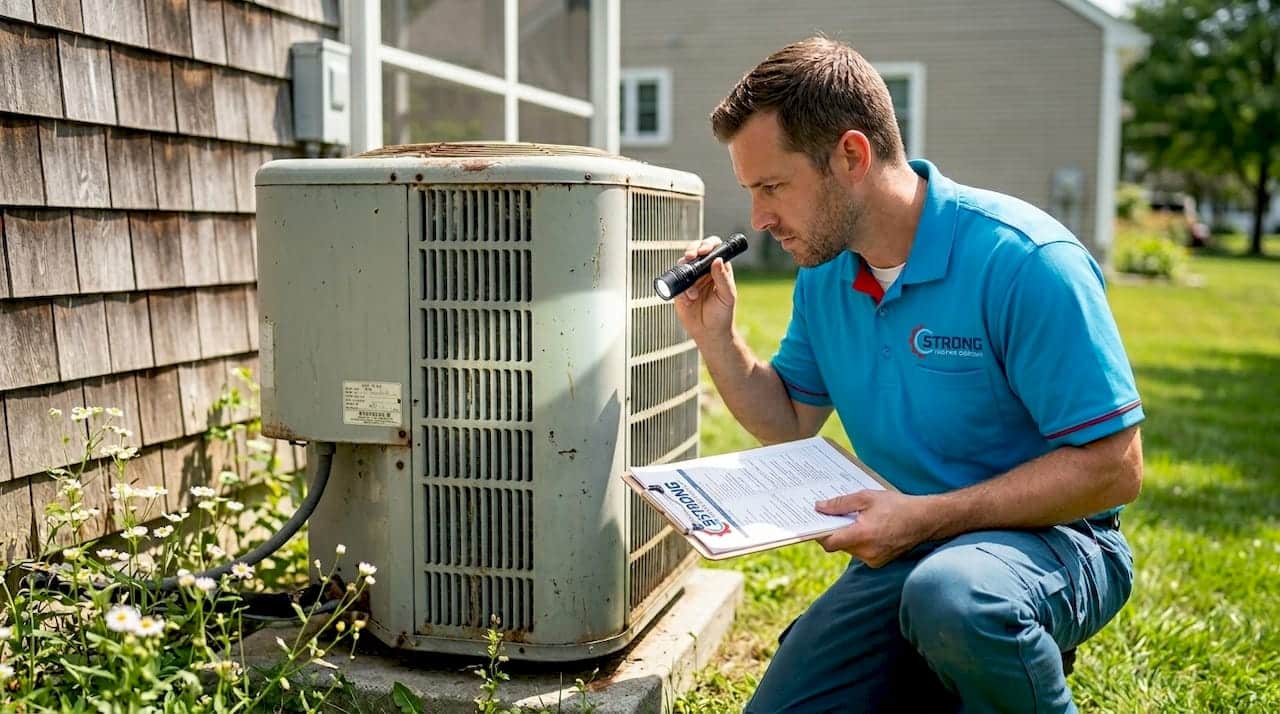
General home inspectors do important work, but they're generalists. They check that the furnace turns on and the AC blows cold, but they're not HVAC specialists and often aren't equipped to catch problems that only show up under load or require specialized testing. If you're buying a home, here are the HVAC red flags that frequently slip past a standard inspection.
A cracked heat exchanger
This is the big one. A cracked heat exchanger in a furnace can leak carbon monoxide and usually means the furnace needs replacing. It's not always visible without partial disassembly and proper testing, so a quick visual check may miss it entirely. A dedicated HVAC technician knows how to evaluate it.
Low or leaking refrigerant
An AC can blow cool air during a brief inspection while slowly losing refrigerant from a leak. By midsummer, that same system can't keep up. Inspectors typically don't measure refrigerant pressures, so a slow leak — and the looming repair — goes unnoticed.
Improper or aging ductwork
Leaky, undersized, or poorly designed ductwork wastes energy and causes uneven comfort, but it's largely hidden in walls, attics, and crawlspaces. Rooms that never reach temperature are a clue, often dismissed as a thermostat quirk. Our guide on cooling a stubborn upstairs room covers how distribution problems show up.
An oversized or undersized system
A system that's the wrong size for the home will short cycle or run constantly, wearing out early and never delivering even comfort. This rarely gets flagged because the unit "works." Read why sizing matters to understand the long-term cost.
Obsolete refrigerant
Systems running on phased-out R-22 still function, but any future refrigerant repair will be expensive. An inspection report rarely highlights this, yet it's a real factor in the cost of owning that system.
Deferred maintenance hiding bigger issues
Dirty coils, a clogged condensate drain, a worn capacitor — individually minor, but together they signal a system that's been neglected and may be closer to failure than it looks. A specialist sees the pattern; a checklist often doesn't.
The fix: a specialist HVAC assessment
None of this means a home is a bad buy — it means you should know the truth before you close. A dedicated HVAC inspection catches what a general one misses and gives you accurate information for negotiating or budgeting. If replacement is on the horizon, estimate it with our pricing calculator and review financing options.
For the full pre-purchase picture, read what to check on the HVAC before you close. Ready to schedule a specialist inspection? Get in touch and check our coupons before you book.
What does this mean for Colorado Springs homes?
Living in Colorado Springs presents unique challenges for HVAC systems, making a specialist assessment even more crucial before buying a home here. The general conditions of our region can amplify the issues mentioned above or introduce new ones that a standard home inspection might overlook.
Altitude and Appliance Performance
Colorado Springs sits at a significant elevation, generally between 6,000 and 7,500 feet. This thinner air means gas appliances, like furnaces and boilers, must be correctly set up for altitude. A system that isn't properly adjusted will operate inefficiently or even dangerously, potentially leading to more frequent repairs or premature failure. An HVAC specialist will verify if the existing furnace or boiler is correctly configured for our elevation, ensuring it's not wasting energy or operating with reduced capacity. While a furnace might "turn on" during a general inspection, an incorrectly adjusted one for altitude will not perform optimally or safely in the long run.
Extreme Weather and System Resilience
Our dry climate, coupled with significant day-night temperature swings and long heating seasons, puts a lot of stress on HVAC equipment. Hail storms are also a common occurrence, and they can severely damage outdoor AC coils. A general inspector might not look closely enough for subtle hail damage that, while not immediately impacting function, could lead to refrigerant leaks or reduced efficiency down the line. A thorough HVAC inspection will specifically look for signs of weather-related wear and tear, assessing the system's ability to withstand our local conditions. This is especially important for the AC unit, which might appear to blow cold air during a brief inspection but could have compromised coils from past hail.
Permitting and Local Requirements
In Colorado Springs, most HVAC replacements—including furnaces, air conditioners, and boilers—require a Pikes Peak Regional Building Department (PPRBD) permit. When you're buying a home, it's vital to know if previous HVAC installations or significant repairs were done correctly and with the necessary permits. An unpermitted installation could lead to issues during future home sales or require costly corrections. A specialist inspection can help identify whether permits were likely pulled for major work and if the installation meets current local codes, protecting you from potential headaches and unexpected expenses after closing.
Take Advantage of Local Rebates
If a specialist HVAC assessment reveals that a system is at the end of its life, knowing about local rebates can significantly offset replacement costs. Colorado Springs Utilities offers various rebates that can be combined with our own discounts. Here are some examples of what might be available for qualifying systems:
- Furnace replacement
- Heat pumps (under 3 tons/ENERGY STAR and NEEP heat pumps 3+ tons)
- Boiler replacement
- Smart thermostats
Considering the long heating season and potential for aging systems, these rebates can make upgrading to a new, energy-efficient system much more affordable. Our specialist assessment can help you understand what qualifies.
When you're ready to ensure your prospective home's HVAC system is truly ready for Colorado Springs living, call Strong Heating And Cooling at (719) 960-7208 or request service at our contact page. Learn more about local savings on our HVAC rebates page.
Need expert HVAC help?
Colorado Springs' trusted, veteran-owned heating & cooling team — same-day service.