
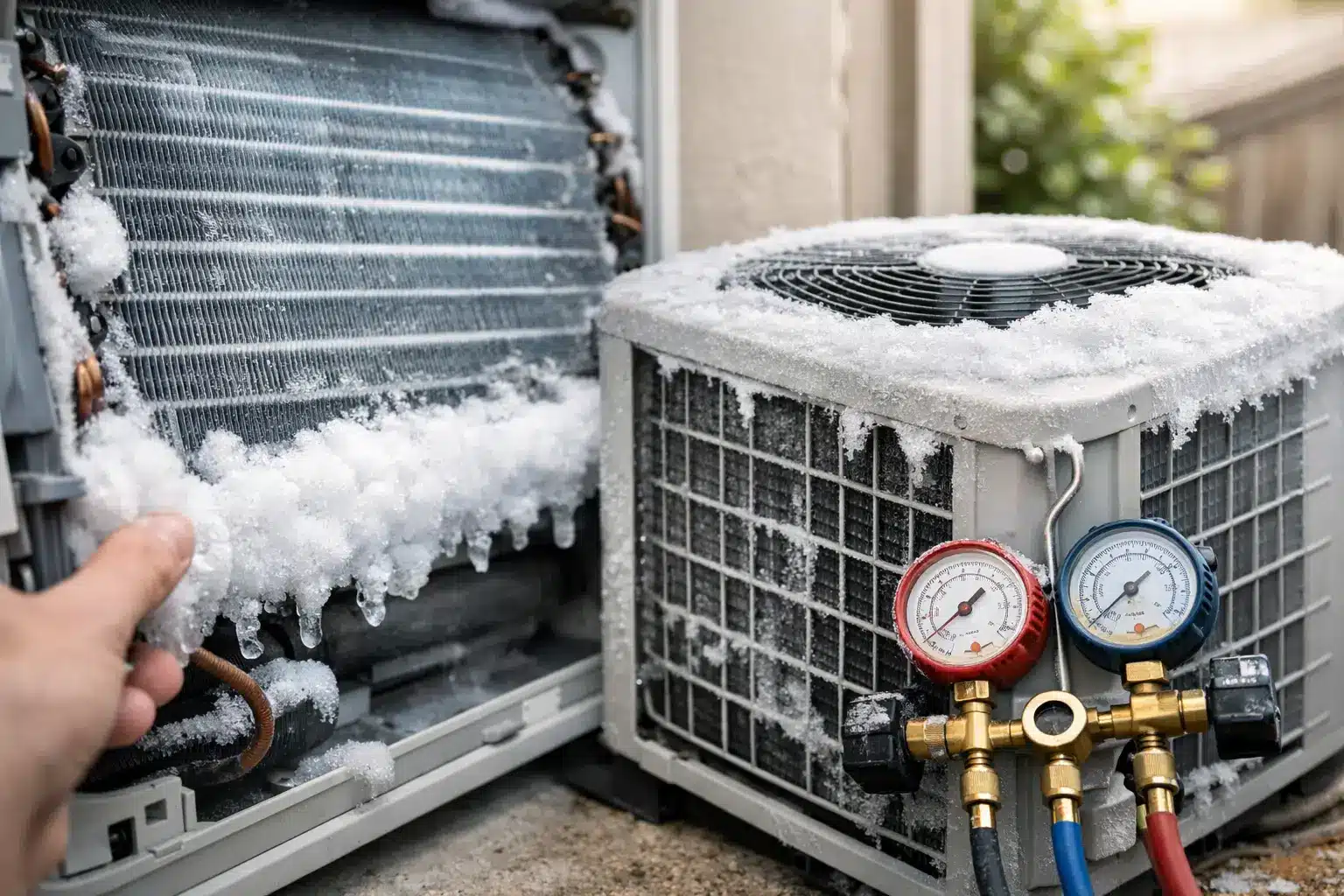
When it comes to air conditioning, one of the most common and most expensive mistakes is assuming bigger is better. A unit that's too large for your home won't cool it better — it'll cool it worse, cost more, and wear out faster. Proper sizing is one of the most important decisions in any AC installation, and it's where a professional load calculation earns its keep.
What "sizing" actually means
AC capacity is measured in tons, and sizing is the process of matching that capacity to your home's actual cooling load. That load depends on far more than square footage: insulation quality, window placement and sun exposure, ceiling height, ductwork condition, the number of occupants, and — here in Colorado Springs — our elevation and dry climate all factor in. Two identical-looking homes can need different systems.
Why oversized is a real problem
An oversized AC cools the air quickly, then shuts off — a pattern called short cycling. That sounds efficient, but it's the opposite. The system never runs long enough to pull humidity out of the air or circulate it evenly, so you get cold-but-clammy rooms and hot spots. The constant stopping and starting also wears out the compressor faster and uses more energy than steady operation. You pay more upfront for the bigger unit, then pay again in comfort and repairs.
Why undersized fails too
The opposite extreme is just as bad. An undersized system runs constantly, never quite catching up on the hottest days, driving up bills and wearing out early. This is common when homeowners replace "like for like" without accounting for additions, finished basements, or changed conditions.
How sizing is done right
A proper installation starts with a load calculation, not a guess. A technician evaluates the home's construction, ductwork, and usage, then matches the equipment — including the indoor coil and blower — to the result. Getting the whole system matched is what delivers even, efficient cooling. Skipping this step is why so many homes have AC that never feels quite right.
Sizing affects efficiency too
Even the most efficient, high-SEER2 unit underperforms if it's the wrong size. Pairing correct sizing with a good efficiency rating is what actually lowers your bills — our guide on SEER2 ratings explained covers the efficiency side.
Get it right the first time
If your current system leaves some rooms hot and others cold, or short cycles on and off, sizing may be the root cause. Before you replace anything, get a professional assessment. You can estimate costs with our pricing calculator and review financing options to make a right-sized system affordable.
For more on choosing the right system, read why cooling at our altitude is different and the signs it's time to upgrade. When you're ready, our cooling team can run the calculation and recommend the right fit — schedule a visit and check our coupons to save.
Need expert HVAC help?
Colorado Springs' trusted, veteran-owned heating & cooling team — emergency service.