
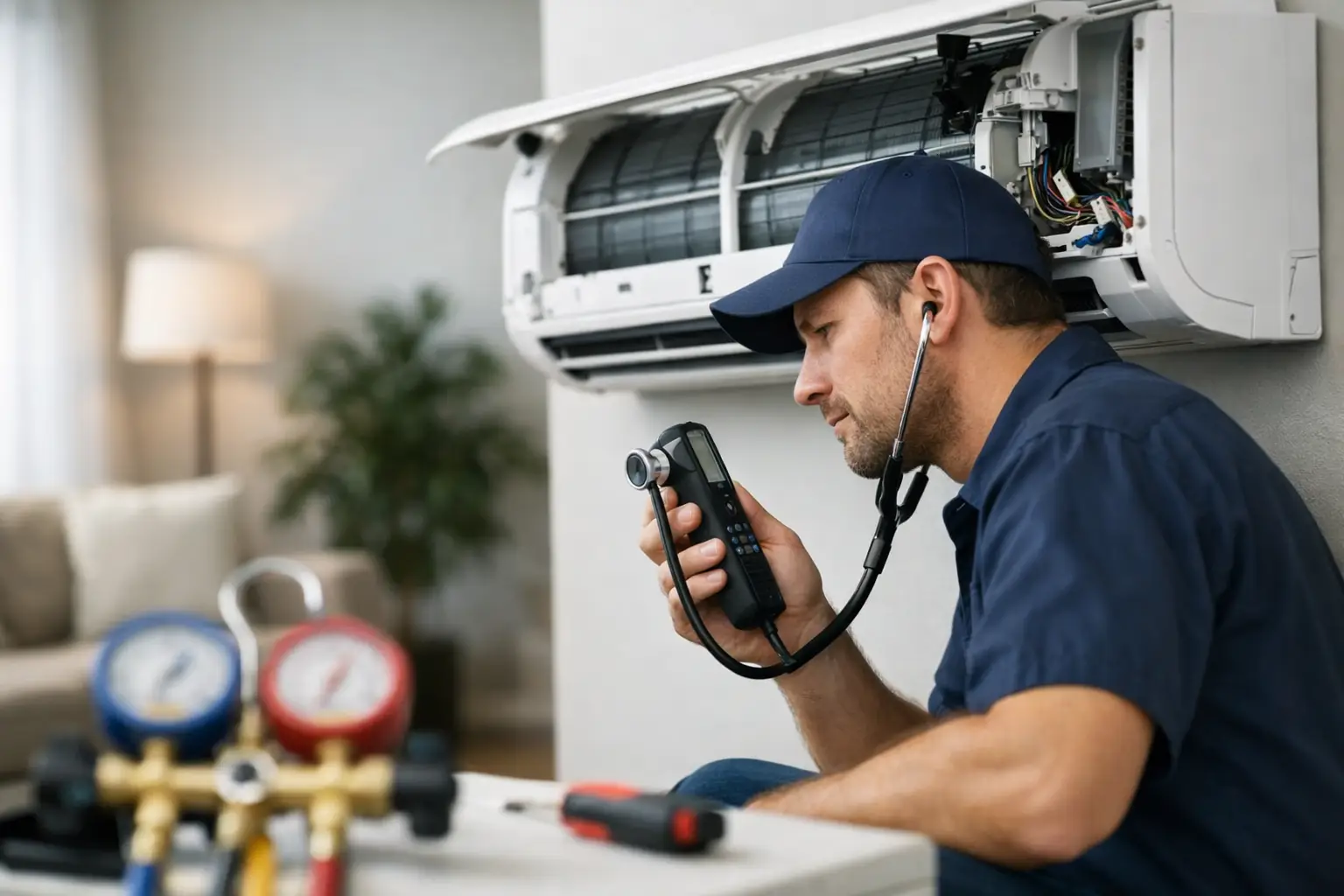
Almost every two-story home has one: the upstairs bedroom or bonus room that's always too hot in summer, no matter how low you set the thermostat. It's one of the most common comfort complaints we hear, and the frustrating part is that cranking the central AC rarely fixes it. Here's why it happens and how to solve it — often without adding any ductwork.
Why upstairs rooms run hot
Heat rises, so upper floors are naturally warmer. Add in attic heat radiating down, west-facing windows soaking up afternoon sun at our high-altitude UV levels, and ductwork that loses pressure by the time it reaches the farthest rooms, and you get a space the central system can't keep up with. Bonus rooms over garages are especially bad because they're surrounded by unconditioned space.
Why turning down the thermostat doesn't work
The thermostat usually sits in a comfortable downstairs hallway. When you lower it to cool the hot upstairs room, you overcool the rest of the house, run up your bill, and still don't fully fix the problem room — because the issue is distribution, not overall capacity. Oversizing the central system to brute-force one room just causes short cycling and other problems, as we explain in why sizing matters.
The ductless solution
This is exactly where a ductless mini split excels. A single indoor air handler mounted in the problem room delivers dedicated, adjustable cooling (and heating) right where you need it — independent of the central system and the thermostat downstairs. No ripping into walls for ductwork, no overcooling the rest of the house. You set the room to whatever's comfortable, and the central system goes back to handling the rest of the home easily.
Why it's efficient
Because a mini split conditions only the space in use, you stop wasting energy cooling the whole house to satisfy one room. Modern ductless units are highly efficient and quiet, so you get comfort and lower energy waste at the same time. We cover the broader case in when a mini split beats central air.
Other contributing factors worth addressing
Sometimes the upstairs problem is compounded by leaky ductwork, poor attic insulation, or a system that's simply aging out — see signs it's time to upgrade your AC. A professional assessment identifies whether a mini split alone solves it or whether other improvements help.
Fix the room for good
You don't have to live with a room nobody wants to use in summer. A targeted solution can make it the most comfortable space in the house. Estimate costs with our pricing calculator, review financing, and explore our mini split services. Schedule a consultation and check our coupons to save.
What does this mean for Colorado Springs homes?
For homeowners in Colorado Springs, addressing that hot upstairs room often involves unique considerations. Our city sits at an elevation of roughly 6,000–7,500 feet, which impacts how HVAC systems perform. Traditional gas furnaces, for example, need to be properly altitude-corrected to account for the thinner air and approximately 20% less oxygen. While the main central system might struggle with distribution, a dedicated mini split unit can provide precise comfort without the need for complex altitude adjustments within its own sealed system, delivering consistent heating and cooling right where it’s needed.
High Altitude & System Performance
The dry climate and significant day-night temperature swings in Colorado Springs can put extra stress on HVAC systems. When a central system is battling to cool an upstairs room, it's often working overtime, especially on hot, sunny days common in our region. This constant struggle can lead to premature wear. A mini split takes this burden off the central unit, allowing it to operate more efficiently for the rest of the home. It’s a targeted solution for a targeted problem, helping to preserve your main system’s lifespan.
Protecting Your Investment from Local Conditions
Colorado Springs is known for hail storms, which can cause significant damage to outdoor AC coils. When considering a solution for that hot upstairs room, you want a reliable system. All HVAC replacements, including mini splits, typically require a Pikes Peak Regional Building Department (PPRBD) permit. Strong Heating And Cooling, with PPRBD license #26745, ensures all installations are up to code and properly permitted. Our owner, Jeff Jennings, is a U.S. Army veteran with 12 years in HVAC and holds a Master Mechanical License, guaranteeing professional service from a veteran-owned company.
Potential Rebates & Savings for Colorado Springs Residents
Investing in an efficient solution for your home can also qualify for local savings. Colorado Springs Utilities currently offers specific rebates that could apply to certain mini split heat pump installations:
- $1,500 for qualifying heat pumps under 3 tons/ENERGY STAR
- $3,000 for qualifying NEEP heat pumps 3+ tons
- $50 for a qualifying smart thermostat
Additionally, Strong Heating And Cooling offers a 10% discount for military/first responders and seniors (65+), as well as a $300/year maintenance membership that includes two annual checkups and 10% off service and installs. A mini split, designed to specifically address that one uncomfortable room, can also be a more efficient solution, potentially reducing overall energy waste compared to continually cranking the central AC for the entire house.
Ready to make that upstairs room comfortable again? Call us today at (719) 960-7208 or request service at our contact page to schedule a consultation. Explore our HVAC Rebates Colorado 2026 page for more details on current savings opportunities.
Need expert HVAC help?
Colorado Springs' veteran-owned heating & cooling team — Mon–Sat, 8 AM–7 PM. Same-day service when available.