
What is a hybrid heating system?
A hybrid heating system pairs an electric heat pump with a gas or propane furnace in a single, coordinated setup. Also called a dual-fuel system, it automatically switches between the two heat sources depending on outdoor temperature, giving you the efficiency of a heat pump during mild weather and the raw heating power of a furnace when temperatures drop hard. The result is a system that handles both heating and cooling without asking you to choose between comfort and cost.
Here is what defines a hybrid heating system at its core:
- Combines an electric heat pump and a gas or propane furnace
- Switches automatically based on outdoor temperature, typically below 30°F–40°F
- Often called a dual-fuel system in the HVAC industry
- Uses the heat pump for most of the year, reserving the furnace for extreme cold
- Handles both heating and cooling through one connected system
How does a hybrid heating system work?
The heat pump carries the load during mild conditions, typically above 40°F, by pulling heat from outdoor air and moving it inside. This process uses electricity and is far more efficient than burning fuel directly, since the system moves heat rather than generating it. When outdoor temperatures fall into the 30°F–40°F range, the system crosses what HVAC technicians call the balance point. Below that threshold, the heat pump loses efficiency, and the furnace takes over automatically.
The switching is controlled by a thermostat or a dedicated control board that monitors outdoor temperature in real time. A well-calibrated system makes this transition without any input from you. The key stages look like this:
- Above 40°F: heat pump runs, providing efficient heating and cooling
- 30°F–40°F: the system approaches the balance point and prepares to switch
- Below 30°F: furnace activates to maintain reliable, consistent warmth
- Spring and fall: heat pump resumes as temperatures moderate
The balance point is not a fixed number. It varies based on your local climate and utility rates, which is why proper commissioning by a qualified technician matters so much. A system set to the wrong balance point will either run the furnace too early, wasting gas, or lean on the heat pump too long in cold weather, reducing comfort.
Furnace vs. heat pump vs. hybrid: how do they compare?
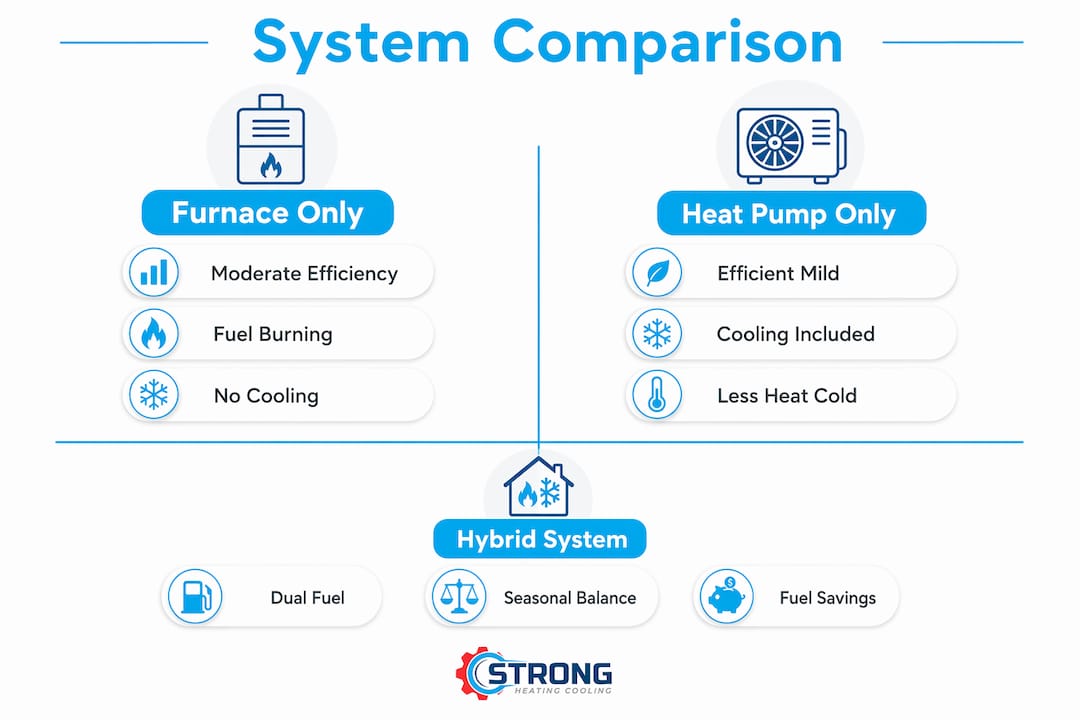
Each system type has a distinct performance profile depending on the season, climate, and energy source. The heat pump vs. furnace question comes down to where you live and what winters actually look like.
| Factor | Furnace only | Heat pump only | Hybrid system |
|---|---|---|---|
| Heating efficiency | Moderate to high (gas combustion) | Very high above 40°F, drops in extreme cold | High year-round; optimized by source switching |
| Operating temperature range | Effective in all temperatures | Best above 40°F; limited below freezing | Full range covered by combining both sources |
| Energy source | Natural gas or propane | Electricity | Electricity (heat pump) + gas or propane (furnace) |
| Seasonal operation | Heating only | Heating and cooling | Heating and cooling, year-round |
A furnace delivers reliable heat in any temperature but offers no cooling and burns fuel continuously. A heat pump alone handles both heating and cooling efficiently but struggles below freezing without a backup. The hybrid setup covers the weaknesses of both.
When does a hybrid system make the most sense?
Hybrid systems yield their best return in climates that swing between hot summers and genuinely cold winters. Regions with mild shoulder seasons and occasional hard freezes are exactly where the dual-fuel design earns its keep, since the heat pump handles the bulk of the year while the furnace steps in only when needed. Annual heating bills can drop 15–30% compared to a furnace-only setup, depending on climate and local energy rates.
Conditions that favor a hybrid system:
- Climates with freezing winters and long mild shoulder seasons
- Homes that need both heating and cooling from one system
- Properties with existing ductwork compatible with both components
- Households where natural gas prices are moderate and electricity rates are reasonable
- Situations where a heat pump alone cannot reliably cover the coldest weeks of the year
If your home already has a gas furnace and the air conditioning unit needs replacement, a hybrid setup can be one of the most cost-effective paths forward. You keep the furnace, add a heat pump, and gain year-round efficiency without a full system overhaul.
Pros and cons of hybrid heating systems
Hybrid systems offer real advantages, but they are not the right fit for every home or budget. Here is an honest look at both sides.
Advantages:
- Energy savings throughout the year, with the heat pump handling most of the load
- Reliable heating in extreme cold, backed by the furnace
- One system covers both heating and cooling
- Reduced dependence on a single fuel source, which helps when energy prices shift
- Compatible with existing ductwork in most homes
Considerations:
- Higher upfront installation cost, typically $4,500 to $12,500 depending on home size and equipment efficiency
- Requires proper balance point calibration to perform as intended
- Two systems mean two sets of components to maintain
- Not ideal for very mild climates where a heat pump alone would suffice
The upfront investment is the most common hesitation. Over time, the fuel savings tend to offset that gap, particularly in regions with cold winters and moderate gas prices.
Pro Tip: Ask your HVAC technician to document the balance point setting during installation. If the system ever behaves oddly, that number is the first thing a service technician will want to check.

What Strongheatingandcooling knows about hybrid systems
With over 40 years of combined HVAC experience serving Colorado Springs and surrounding communities, the team at Strongheatingandcooling has seen what separates a well-installed hybrid system from one that underperforms. The most common issue is not the equipment itself.
Improper thermostat programming is the leading cause of hybrid system inefficiency. When the balance point is not calibrated to local energy prices and climate conditions, the system switches fuels at the wrong time, driving up costs and reducing comfort. Getting that setting right during commissioning is the single most important step in a hybrid installation.
Proper airflow matters just as much on the heat pump side. A unit installed without adequate clearance or in a space that restricts air movement will fall back on less efficient heating modes more often than it should. Strongheatingandcooling’s approach is to assess the home’s existing ductwork, verify electrical capacity, and calibrate the control settings before the first heating season begins. Ongoing HVAC maintenance keeps both components running at peak efficiency year after year.
Ready to explore a hybrid system for your home?

If you are weighing your options for a new heating system in Colorado Springs or the surrounding area, Strongheatingandcooling can walk you through whether a hybrid setup fits your home, your climate, and your budget. The team provides honest assessments, clear pricing, and installations backed by decades of hands-on experience. Reach out through the heating installation page to get started, or explore local service options at the Divide heating services page.
Key Takeaways
A hybrid heating system delivers year-round efficiency by pairing an electric heat pump with a gas furnace that activates automatically when outdoor temperatures fall below 30°F–40°F.
| Point | Details |
|---|---|
| Dual-fuel design | Combines a heat pump and gas or propane furnace in one coordinated system. |
| Automatic switching | The system switches to the furnace below the 30°F–40°F balance point. |
| Cost savings potential | Hybrid systems can reduce annual heating bills 15–30% vs. furnace-only setups. |
| Installation cost range | Upfront costs typically run $4,500 to $12,500 depending on home size and equipment. |
| Balance point calibration | Proper thermostat setup is the most critical step for efficient fuel switching. |
FAQ
Are hybrid heating systems worth it?
For homes in climates with cold winters and mild shoulder seasons, hybrid systems offer genuine long-term savings and reliable comfort. The 15–30% reduction in annual heating costs often offsets the higher upfront installation price over several years.
How much does a hybrid heating system cost?
Installation typically ranges from $4,500 to $12,500, depending on home size, equipment efficiency ratings, and whether duct or electrical upgrades are needed.
What are the main disadvantages of a hybrid system?
The two primary drawbacks are higher upfront cost compared to a single-source system and the need for precise balance point calibration. Without proper setup, the system can switch fuels inefficiently and raise operating costs.
What is the life expectancy of a hybrid heating system?
Heat pumps in a hybrid setup typically last 15–20 years with regular maintenance, while gas furnaces often last long with proper care. Keeping both components on a consistent maintenance schedule is the best way to reach those ranges.
Recommended
Need expert HVAC help?
Colorado Springs' veteran-owned heating & cooling team — Mon–Sat, 8 AM–7 PM. Same-day service when available.