If your utility bills spike every time the weather turns, HVAC energy efficiency stops being a technical talking point and starts feeling personal. In Colorado, where winter cold and summer heat both put real pressure on heating and cooling systems, efficiency has a direct impact on comfort, operating cost, and how hard your equipment has to work.
The catch is that efficiency is often treated like a single feature. It is not. A high-efficiency furnace or air conditioner can help, but equipment ratings alone do not guarantee lower bills. The way the system is designed, installed, maintained, and used matters just as much.
What HVAC energy efficiency really means
At its simplest, HVAC energy efficiency is about getting the heating or cooling you need without wasting electricity or fuel. An efficient system reaches and holds the target temperature with less effort. That usually means shorter run times, more consistent indoor comfort, and less wear on major components.
For homeowners, that can show up as lower monthly bills, fewer hot and cold spots, and quieter performance. For commercial properties, it often means better temperature control across occupied spaces, lower operating expenses, and fewer disruptions from breakdowns.
Efficiency also has a practical lifespan benefit. Equipment that is oversized, neglected, or forced to run under poor airflow conditions often fails sooner than it should. Saving energy is part of the story, but protecting your investment matters too.
Why high bills do not always mean you need new equipment
It is easy to assume that rising utility costs mean your furnace, heat pump, or air conditioner is at the end of the road. Sometimes that is true. Often, though, the problem is less dramatic.
A dirty filter can choke airflow and make the system run longer. Leaky ductwork can send conditioned air into an attic, crawl space, or wall cavity instead of the rooms you paid to heat or cool. A thermostat in the wrong location can cause short cycling or uneven comfort. Low refrigerant, clogged coils, failing blower motors, and poor maintenance can all reduce efficiency even if the equipment itself is not especially old.
That is why blanket advice can be expensive. Replacing a system before checking the basics may solve the symptom while missing the reason performance dropped in the first place. On the other hand, continuing to repair aging equipment with poor efficiency ratings may cost more over time than upgrading. It depends on the system age, repair history, utility use, and how the building performs as a whole.
The biggest factors that affect efficiency
System sizing
Bigger is not automatically better. An oversized air conditioner may cool quickly but shut off before it removes enough humidity or circulates air evenly. An oversized furnace can cycle on and off too often, which wastes energy and puts extra strain on parts. An undersized system has the opposite problem. It may run constantly and still struggle to keep up.
Proper sizing should be based on the building, not a guess or a simple swap from the old unit’s nameplate. Square footage matters, but so do insulation levels, window quality, sun exposure, ceiling height, occupancy, and duct design.
Airflow and duct condition
Even efficient equipment performs poorly when airflow is restricted. Dirty filters are one cause, but not the only one. Closed or blocked vents, undersized returns, dirty blower components, and damaged ducts all force the system to work harder than necessary.
In homes and small commercial buildings, duct leakage is one of the most common hidden efficiency problems. If conditioned air is escaping before it reaches occupied rooms, you are paying for comfort you never actually get.
Maintenance and calibration
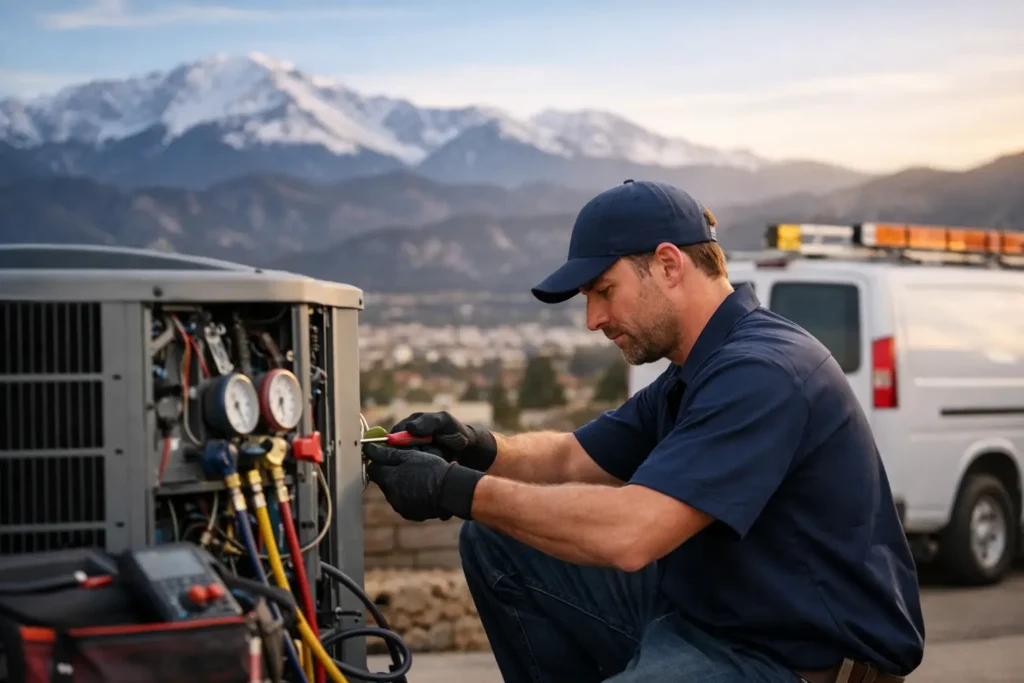
Routine service makes a measurable difference. Coils need to stay clean. Electrical connections should be checked. Burners, safeties, condensate drains, motors, refrigerant levels, and thermostat settings all affect performance. Systems drift out of tune over time, and small issues can stack up into a real efficiency loss.
Preventive maintenance is not glamorous, but it is one of the most cost-effective ways to protect HVAC energy efficiency.
Which upgrades tend to pay off
There is no single best upgrade for every property, but some improvements consistently make sense when matched to the right situation.
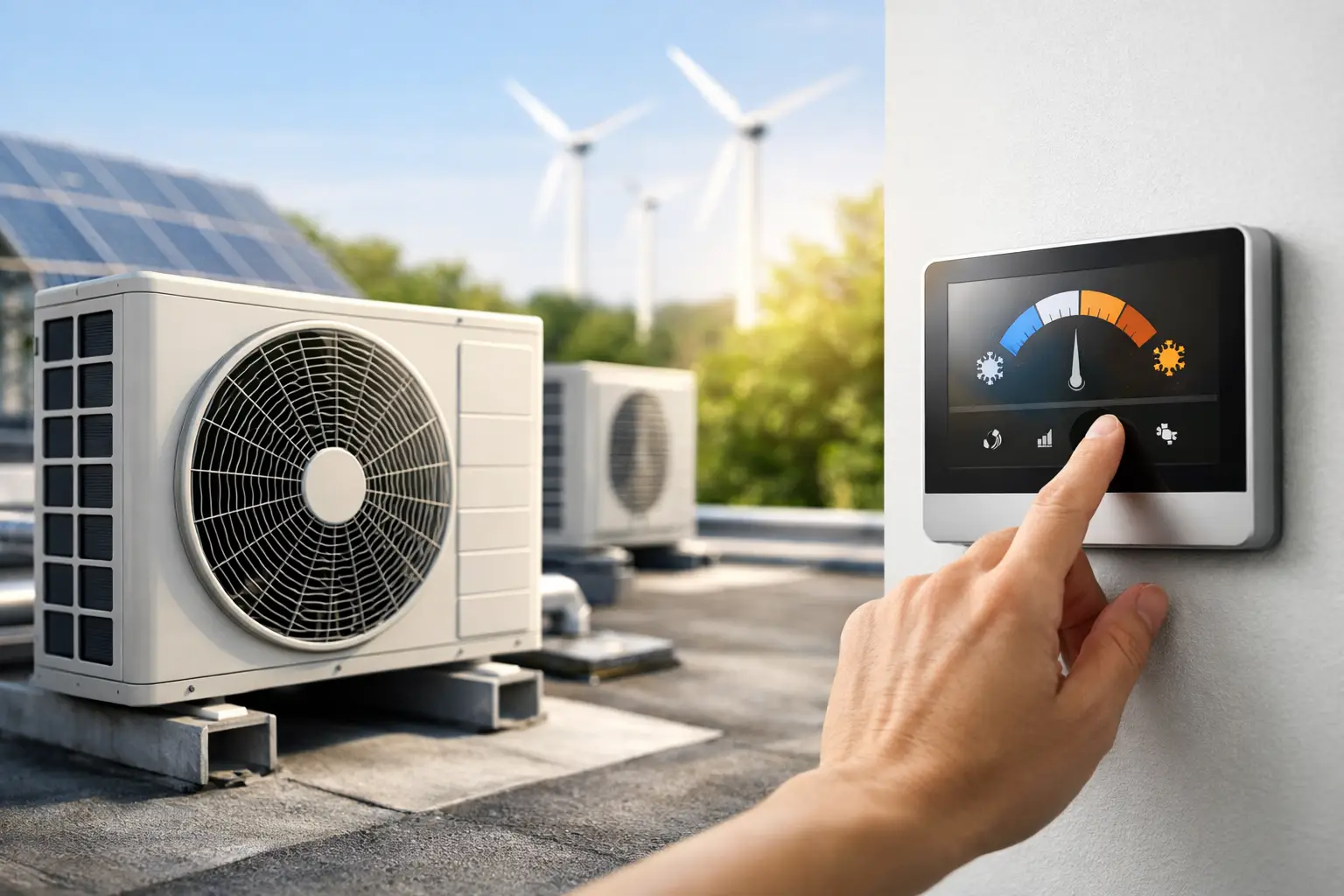
A programmable or smart thermostat can help if the building has regular occupied and unoccupied periods. The savings are real when schedules are set correctly and not constantly overridden. If the space is occupied all day at a steady temperature, the benefit may be more modest.
Sealing ducts and improving insulation often produce better results than people expect. That is especially true when rooms are hard to heat or cool, or when the HVAC system seems to run constantly without delivering stable comfort.
For homes without ductwork, or for additions, garages, and problem areas, a mini split can be an efficient solution because it avoids duct losses and gives more direct zone control. Heat pumps are also worth a close look in many situations because they can provide efficient heating and cooling in one system. The right choice depends on the building, utility costs, and how the space is used.
When existing equipment is older and repair costs are starting to add up, replacement may be the smarter move. Newer high-efficiency systems can reduce energy use, but only when installation quality is there. Poor installation can cancel out much of the advantage you paid for.
Efficiency for homes versus commercial buildings
The goals are similar, but the decisions are not always the same.
In a home, comfort complaints usually show up first. One bedroom is too hot, the basement is too cold, or the furnace seems to run all night. Homeowners also tend to focus on monthly bills and reliability during weather extremes.
In commercial spaces, efficiency issues often show up as operating cost, tenant complaints, inconsistent zone temperatures, or equipment downtime. Rooftop units, boilers, and larger hot water systems add complexity, and scheduling matters more because occupancy patterns can change throughout the day or week.
That means commercial HVAC energy efficiency often depends heavily on controls, maintenance planning, and matching equipment operation to actual building use. A system that runs full tilt during unoccupied hours is wasting money no matter how new it is.
When repair makes sense and when replacement makes sense
Repair is usually the right choice when the system is relatively new, the issue is isolated, and the equipment has otherwise been dependable. Replacing a capacitor, blower motor, igniter, control board, or thermostat can restore performance without a major project.
Replacement becomes more attractive when the unit is older, efficiency is poor by current standards, repairs are becoming frequent, or key components are failing in sequence. If the system still leaves parts of the building uncomfortable after repeated service, that is another sign the bigger picture needs attention.
This is where straightforward guidance matters. A trustworthy contractor should be able to explain what failed, what the repair will and will not solve, and whether the equipment is likely to keep costing you money in the near future.
How to make a smart efficiency decision
Start with the actual problem, not the sales pitch. If bills are high, comfort is uneven, or equipment seems to run nonstop, have the system evaluated as a system. That includes equipment condition, airflow, duct performance, controls, and how the space is being heated or cooled.
Ask practical questions. Is the unit properly sized? Are ducts leaking? Is maintenance current? Are there hot and cold spots that point to airflow or zoning issues? What is the repair history? If replacement is recommended, what efficiency gain is realistic for your building, and what assumptions are behind that estimate?
For property owners and facility managers, it also helps to weigh downtime, occupant comfort, and maintenance burden alongside energy savings. The cheapest fix today is not always the lowest operating cost over the next five years.
Strong Heating and Cooling works with homeowners and businesses that want clear answers, dependable workmanship, and energy-efficient recommendations that fit the building instead of a one-size-fits-all script. That is usually the difference between spending money on HVAC and making a decision that actually improves comfort and cost control.
The best efficiency upgrade is the one that solves the real problem, holds up through the seasons, and gives you fewer surprises when the next utility bill arrives.