
The Role of Emergency Shutoff in HVAC Safety
TL;DR:
- The emergency shutoff switch in HVAC systems manually isolates power at the unit for safety and compliance. It must be visible, accessible, and lockable, meeting NEC and OSHA requirements to prevent hazards and ensure proper repairs. Proper labeling, location, and regular testing of these switches are essential for safety and effective system operation.
The emergency shutoff switch in an HVAC system is a manually operated device designed to instantly disconnect power to heating and cooling equipment for safety and maintenance purposes. Every homeowner and facility manager needs to understand this device. It is not optional equipment. NEC Section 440.14 mandates a dedicated disconnect for all HVAC units, and the role of emergency shutoff in HVAC extends far beyond rare crisis moments. It protects technicians during routine service, prevents electrical fires, and keeps your system compliant with code. Knowing where your shutoff is, how it works, and when to use it is one of the most practical things you can do as a property owner.
What does an emergency shutoff switch do in an HVAC system?
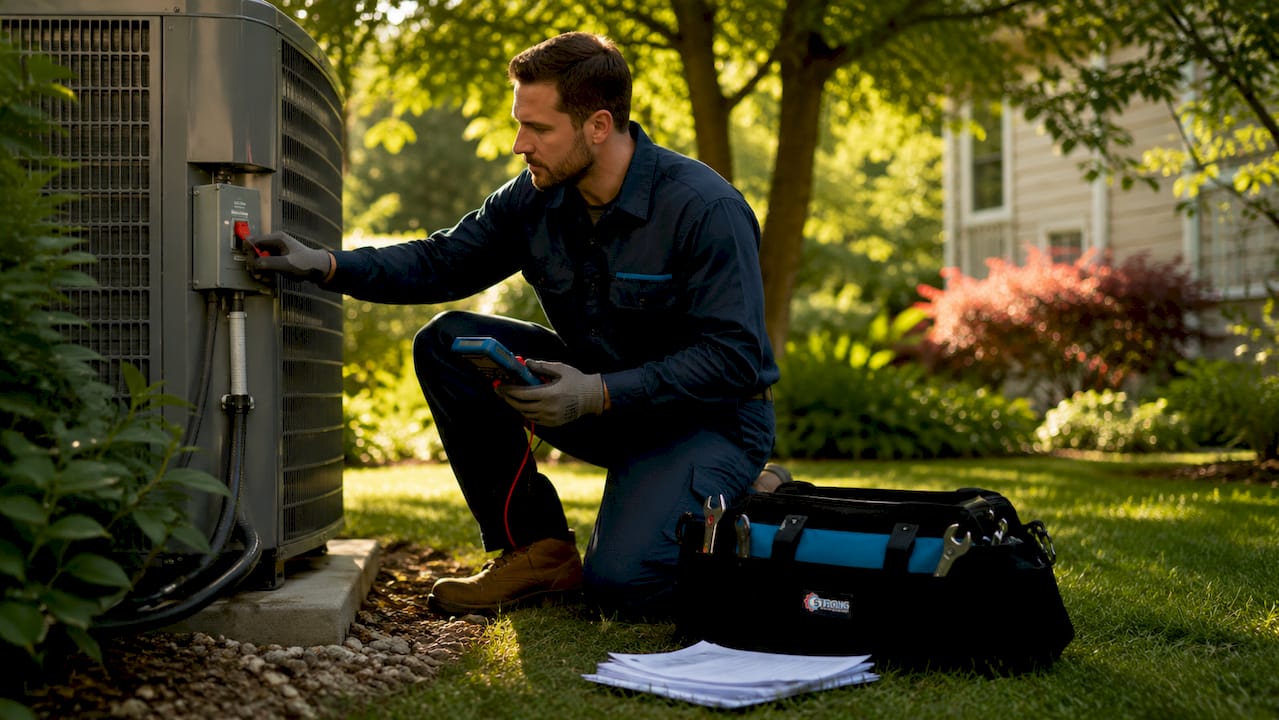
The emergency shutoff switch, also called a disconnect switch, manually isolates power to your HVAC unit at the equipment level. This is different from simply tripping a circuit breaker at your main panel. The disconnect gives you a dedicated, visible, and accessible way to cut power right at the machine, which matters enormously during a fault, a fire risk, or a service call.
Many homeowners assume the circuit breaker in the main panel serves the same purpose. It does not. The breaker handles overcurrent protection, meaning it trips automatically when too much current flows. The disconnect switch is for manual isolation. A technician working on your condenser needs to see that power is physically off at the unit before touching any wiring. The breaker alone cannot confirm that.
The disconnect switch must also be rated to interrupt locked-rotor current, which is the high surge of current a motor draws when it stalls. That rating prevents arc flash, a dangerous burst of electrical energy that can cause serious burns or start a fire. Standard light switches and breakers are not built to handle this safely.
Common switch types include fused disconnects, non-fused disconnects, and rotary disconnects. Each serves the same core function but differs in how overcurrent protection is integrated. The right type for your system depends on your equipment’s nameplate data, specifically the Minimum Circuit Ampacity (MCA) and Maximum Overcurrent Protection (MOCP) ratings.
- Fused disconnects combine isolation and overcurrent protection in one unit.
- Non-fused disconnects rely on the panel breaker for overcurrent protection.
- Rotary disconnects use a rotating handle and are common in commercial applications.
- Pull-out disconnects use a removable cartridge that physically breaks the circuit.
Pro Tip: Label your disconnect switch clearly with the unit it controls and the date it was last tested. A label takes two minutes to apply and can save critical time during an emergency.
What are the safety and code requirements for HVAC emergency shutoff systems?
NEC Section 440.14 sets the baseline rule: every HVAC unit must have a disconnect that is “within sight” and “readily accessible.” Both terms have specific legal meanings under the National Electrical Code. “Within sight” means visible and within 50 feet of the equipment, with a clear, unobstructed line of sight. A fence, a wall, or dense shrubs between the disconnect and the unit creates a code violation.
“Readily accessible” means reachable without tools, ladders, or removing panels. If your outdoor condenser is behind a locked gate and the disconnect is on the other side, that arrangement fails inspection. The intent is that a technician or emergency responder can reach the shutoff immediately, without obstacles or delay.
Lockout/tagout compliance adds another layer. OSHA and the NEC both require that the disconnect be lockable in the open position. This allows a technician to attach a personal lock to the switch, preventing anyone from re-energizing the equipment while they are working on it. Locking the panelboard door is not an acceptable substitute. Locking the panel blocks access to every other circuit in the building and does not provide the dedicated, equipment-level isolation the code requires.
| Requirement | Code Standard | What It Means in Practice |
|---|---|---|
| Within sight | NEC 440.14 | Visible and within 50 feet of the unit |
| Readily accessible | NEC 440.14 | Reachable without tools, ladders, or panels |
| Lockable in open position | OSHA/NEC lockout/tagout | Accepts a personal padlock to prevent re-energization |
| Correct ampacity rating | NEC Article 440 | Sized per equipment nameplate MCA and MOCP values |
| Unobstructed line of sight | NEC 440.14 deep knowledge | No fences, walls, or foliage blocking view |
Non-compliance carries real consequences. A failed inspection can delay a sale, void an equipment warranty, or result in a required correction before the system can legally operate. Incorrect sizing of the disconnect relative to nameplate data is one of the most common code violations electricians and inspectors find. Oversized or undersized protective devices create unsafe conditions that may not be obvious until a fault occurs.
Pro Tip: Before any HVAC service visit, confirm your outdoor disconnect is unobstructed and the switch moves freely. A corroded or stuck disconnect is a code violation and a safety hazard.
How to locate and use your HVAC emergency shutoff switch properly
Most homes have two disconnect points for a central HVAC system: one indoors near the air handler or furnace, and one outdoors near the condenser. Knowing both locations before an emergency is the difference between a controlled shutdown and a panicked search.
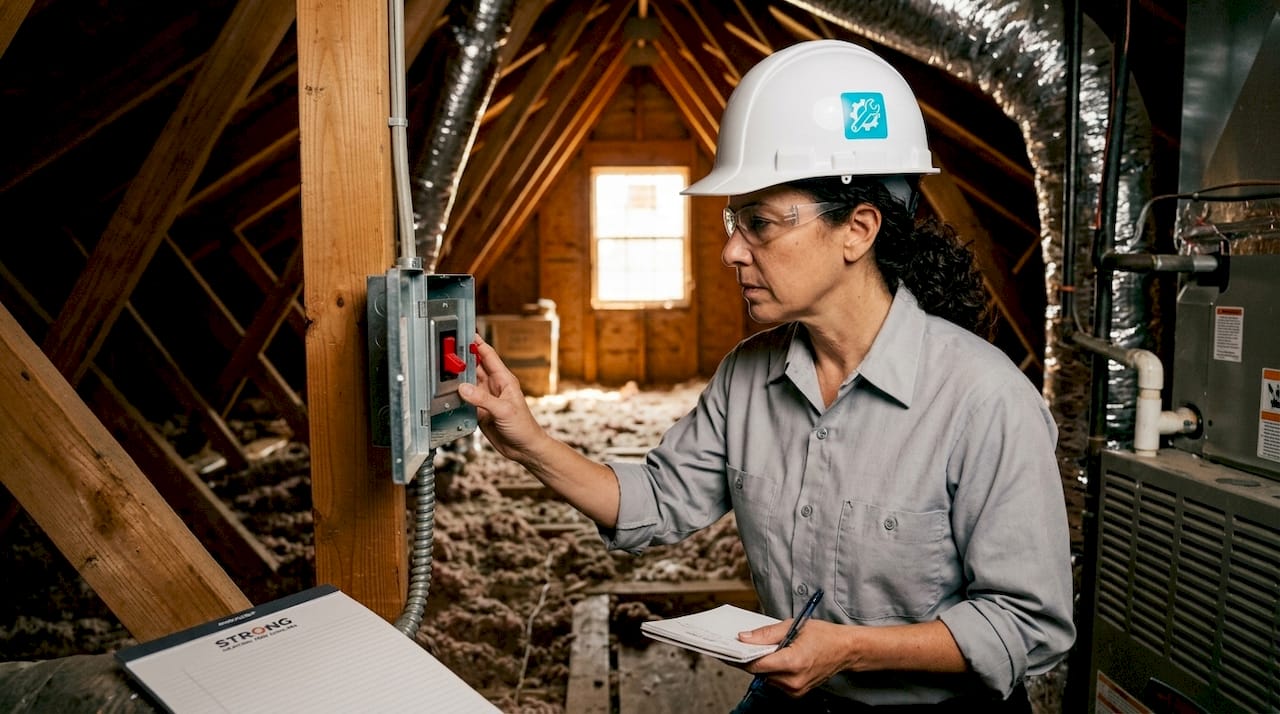
The indoor switch is typically mounted on the wall near the air handler, often in a utility closet, attic, or basement. It frequently looks like a standard light switch with a red cover plate. That red cover is the only visual cue distinguishing it from a regular switch in many installations. The outdoor disconnect is usually a gray metal box mounted on the exterior wall within a few feet of the condenser unit.
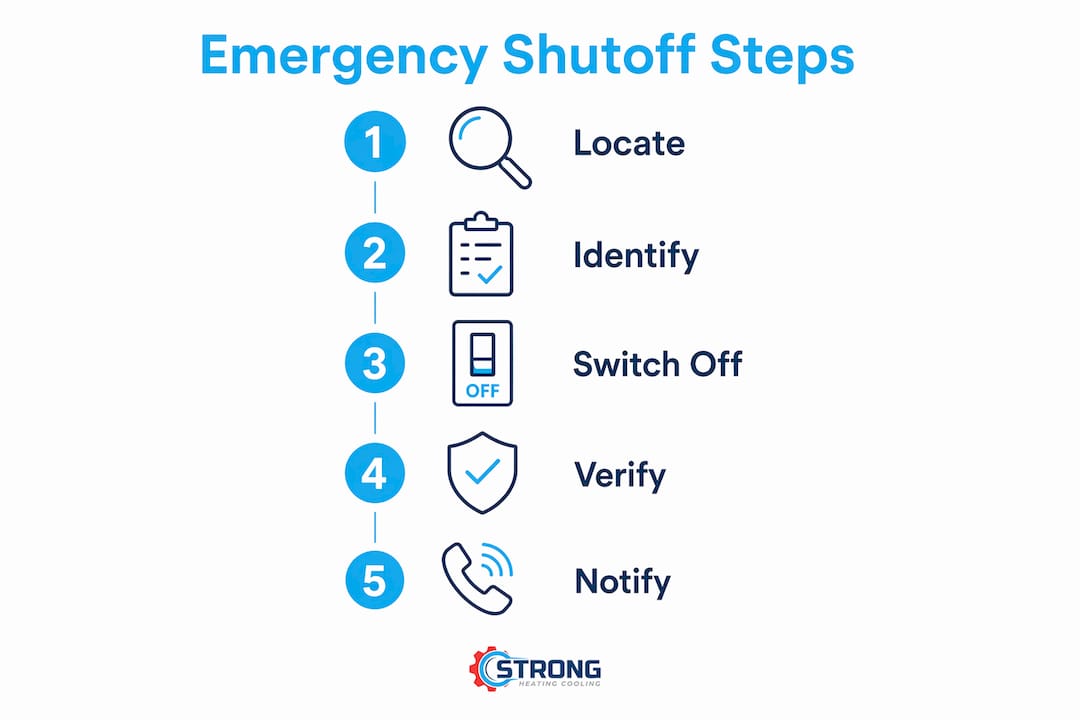
When you need to shut down your HVAC system in an emergency, follow this sequence:
- Turn off the thermostat first. This signals the system to stop its operating cycle before power is cut.
- Flip the indoor service switch to the off position. This cuts power to the air handler or furnace.
- Open the outdoor condenser disconnect box and pull the cartridge or flip the switch to off.
- Use the main breaker at your electrical panel only as a last resort, and only if the local disconnects are inaccessible.
This sequence matters because following the correct shutdown order maximizes safety and prevents further damage or hazards. Cutting power abruptly at the panel without first stopping the thermostat can leave the system mid-cycle, which stresses components and can cause refrigerant pressure issues.
If you smell gas, see flames, or notice sparks, do not attempt to operate any switch. Leave the building immediately and call 911. Gas shutoff and electrical shutoff are separate procedures, and electrical switches can create ignition sparks in a gas-rich environment.
For facility managers overseeing multiple units, create a written map of every disconnect location for each piece of equipment. Post it in the mechanical room and share it with your maintenance team. Test each switch twice a year to confirm it moves freely and makes clean contact.
Pro Tip: Take a photo of each disconnect switch and save it with the equipment serial number in your maintenance records. If a technician arrives for an emergency call, you can share the location instantly without searching.
What are common misconceptions and pitfalls regarding HVAC emergency shutoff switches?
The biggest misconception is that the disconnect switch exists only for emergencies. Experienced technicians treat it as a daily safety tool. Every time a technician opens an HVAC cabinet for inspection or repair, the local disconnect provides visible power isolation at the equipment. That visibility is what prevents electrical injury and arc flash during routine maintenance, not just crisis situations.
Several other pitfalls show up repeatedly in residential and commercial settings:
- The indoor service switch looks identical to a light switch. Without a red cover plate or clear label, homeowners and even some technicians flip the wrong switch.
- Facility managers sometimes assume locking the electrical panel satisfies lockout/tagout requirements. It does not, and inaccessible disconnect switches create service liability and fail code inspections.
- Landscaping grows around outdoor units over time. Shrubs, fences, and deck additions can block the line of sight to the disconnect, creating a violation that was not present at installation.
- Unlabeled switches cause accidental shutoffs. A homeowner flips what they think is a light switch and shuts down the HVAC system without realizing it.
“Mislabeling or lack of labeling of indoor service switches can lead to confusion and prevent homeowners from quick action in emergencies. Professional labeling and homeowner education reduce service calls and confusion.”
Relying solely on the main panel breaker is another common error. Using only the panel breaker for emergency shutdown often fails inspection because it does not provide a lockable, dedicated local disconnect at the HVAC unit. This is not a technicality. It is a fundamental safety gap that leaves technicians without a reliable way to confirm power is off at the equipment.
Why is the role of emergency shutoff vital for HVAC safety and efficiency?
The HVAC emergency shutoff system does more than stop the equipment. It creates a controlled, verifiable break in the electrical circuit that protects people, property, and the equipment itself. During a fault caused by water intrusion, a failed capacitor, or a shorted motor winding, the ability to cut power immediately at the unit limits the damage and eliminates the risk of electrical fire.
For technicians, the local disconnect ensures power is visibly isolated before any hands-on work begins. This is not a procedural formality. Arc flash incidents cause severe burns and can be fatal. A properly rated, accessible disconnect switch is the primary defense against that risk during every service visit.
From an efficiency standpoint, a functioning shutoff switch also supports timely repairs. When a technician can safely isolate the unit and begin diagnostics without delay, repair time drops. Faster repairs mean less downtime, less discomfort, and lower costs. A corroded or stuck disconnect switch, by contrast, forces a technician to work around the problem, adding time and liability to every service call.
Compliance with HVAC safety mechanisms also protects your warranty. Many equipment manufacturers require code-compliant installation as a condition of warranty coverage. A disconnect that fails inspection can void that coverage, turning a covered repair into an out-of-pocket expense.
Pro Tip: Schedule a quick visual check of both your indoor and outdoor disconnects every spring and fall when you change your air filter. Confirm the switches move freely, labels are legible, and nothing is blocking access.
Key Takeaways
The emergency shutoff switch is the single most important safety device between your HVAC equipment and a serious electrical hazard, and NEC Section 440.14 requires it to be visible, accessible, and lockable at all times.
| Point | Details |
|---|---|
| Code compliance is mandatory | NEC 440.14 requires a disconnect within 50 feet, in clear sight, and lockable in the open position. |
| Disconnect differs from a breaker | The disconnect manually isolates power at the unit; the breaker handles automatic overcurrent protection. |
| Labeling prevents emergencies | Unlabeled indoor switches cause accidental shutoffs and delay response during real emergencies. |
| Shutdown sequence matters | Turn off the thermostat first, then the indoor switch, then the outdoor disconnect, and use the panel only as a last resort. |
| Obstructions create violations | Fences, decks, or shrubs blocking the outdoor disconnect fail NEC inspection and create service liability. |
What I’ve learned about emergency shutoffs after 40 years in the field
Most homeowners never think about their disconnect switch until something goes wrong. That is understandable. It is a gray box on the wall, easy to ignore. But after decades of service calls, the pattern is clear: the homes and facilities where the disconnect is labeled, accessible, and tested regularly are the ones where emergencies stay manageable.
The detail that surprises most people is how often the disconnect matters outside of emergencies. Every technician who works on your system needs that switch to do their job safely. If it is corroded, buried behind a bush, or unlabeled, it slows down the repair and adds risk. A stuck disconnect on a hot Colorado Springs afternoon, when your system has failed and a technician is trying to work quickly, is a real problem.
My honest recommendation is this: walk your property today and find both your indoor and outdoor disconnect switches. If you cannot find them in under two minutes, that is a problem worth fixing before you need them. Label them, confirm they move freely, and make sure nothing is blocking the outdoor unit’s line of sight. If you are not sure whether your installation meets current NEC requirements, have a qualified technician check it during your next HVAC maintenance visit. The cost of a compliance check is a fraction of what a failed inspection or a voided warranty will cost you.
Understanding your HVAC emergency shutoff is not about being prepared for the worst. It is about making sure every service visit, every inspection, and every repair goes smoothly. That is what keeps your system running reliably for years.
— Owner
How Strongheatingandcooling supports your HVAC safety and compliance
Strongheatingandcooling serves Colorado Springs and surrounding communities with HVAC installations, repairs, and maintenance built around code compliance and honest workmanship. If you are unsure whether your disconnect switch meets NEC Section 440.14 requirements, our technicians can inspect, label, and correct your setup during a scheduled visit.

Whether you need a new system installed with a fully compliant disconnect, a safety check on your existing equipment, or fast help when something goes wrong, Strongheatingandcooling is ready. Our team brings over 40 years of combined experience to every job, and we treat every home like our own. Reach out for emergency HVAC repair or schedule a maintenance visit through our heating services page today.
FAQ
What is the role of an emergency shutoff in an HVAC system?
The emergency shutoff switch manually disconnects power to HVAC equipment at the unit level, protecting technicians during service and stopping electrical hazards during faults. NEC Section 440.14 requires this device on every HVAC installation.
Where is the HVAC emergency shutoff switch located?
Most systems have two locations: an indoor switch near the air handler or furnace, often with a red cover plate, and an outdoor disconnect box mounted within a few feet of the condenser unit.
Is the HVAC disconnect switch the same as a circuit breaker?
No. The circuit breaker provides automatic overcurrent protection at the main panel. The disconnect switch provides manual, lockable power isolation directly at the HVAC unit, which is what NEC and OSHA lockout/tagout rules require.
What happens if my HVAC disconnect does not meet code?
A non-compliant disconnect can fail a home inspection, void your equipment warranty, and create liability during service calls. Common violations include blocked access, missing lockout capability, and incorrect ampacity sizing per nameplate data.
When should I use the HVAC emergency shutoff switch?
Use it any time a technician is servicing your equipment, and during emergencies such as burning smells, sparks, or water intrusion near the unit. Always turn off the thermostat first, then the indoor switch, then the outdoor disconnect.
Recommended
Need expert HVAC help?
Colorado Springs' trusted, veteran-owned heating & cooling team — same-day service.