
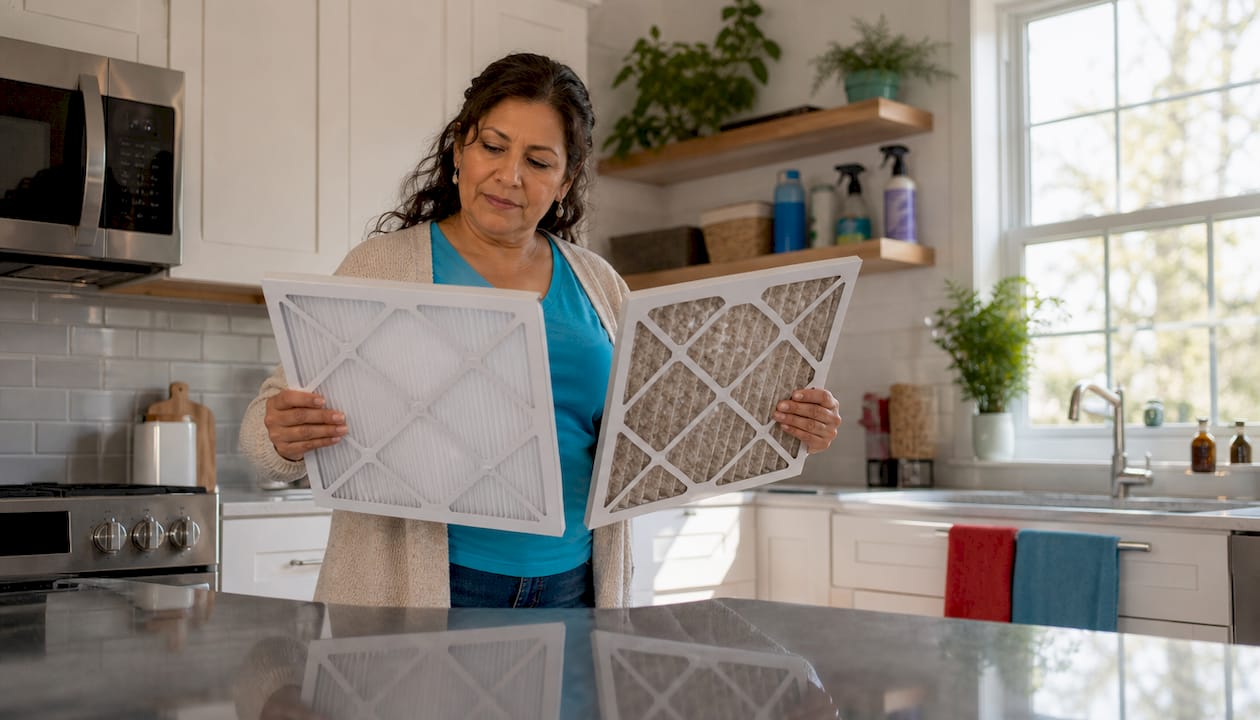
The Role of Air Filters in HVAC: A Homeowner’s Guide
TL;DR:
- Choosing the right HVAC air filter involves matching its MERV rating and type to your system’s capacity. Regular replacement of filters every one to three months maintains system efficiency, prolongs equipment life, and improves indoor air quality. Using filters that exceed your system’s specifications can cause damage, so adherence to manufacturer recommendations is essential.
An HVAC air filter is defined as the primary barrier between your home’s circulating air and the mechanical components that heat and cool it. The role of air filter in HVAC systems covers three distinct jobs: cleaning the air you breathe, protecting equipment from dust and debris, and keeping airflow efficient enough to hold energy costs down. ASHRAE developed the MERV rating system to standardize how well filters perform across these jobs, giving homeowners a reliable way to compare options. Understanding how filters work, which type fits your system, and how often to replace them is the most cost-effective maintenance decision you can make as a homeowner or property manager.
What is the role of air filters in HVAC systems?
An HVAC air filter sits in the return air duct or air handler, where it intercepts particles before they reach the blower motor, heat exchanger, and evaporator coil. Without a filter, those components collect dust rapidly, reducing heat transfer efficiency and accelerating wear. The filter protects the equipment first. Cleaner air for occupants is a direct benefit of that protection.
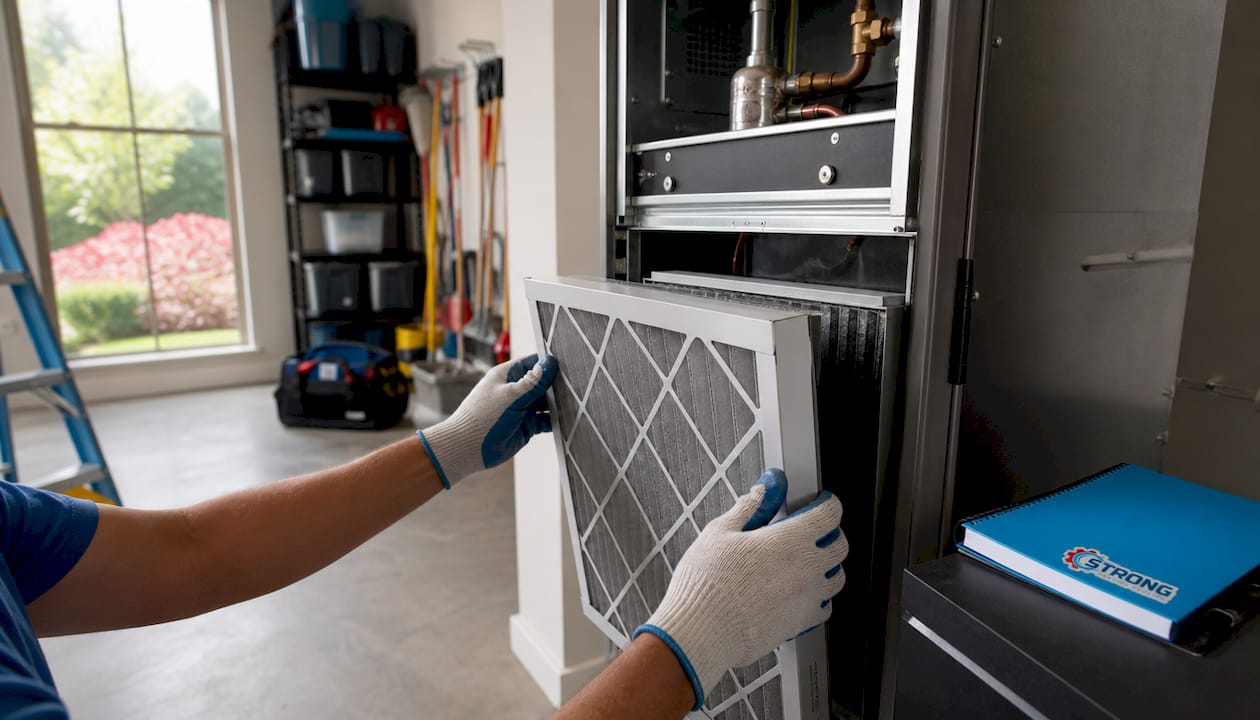
The particles a filter captures include dust, pollen, pet dander, mold spores, and some bacteria, depending on the filter’s rating. A filter rated MERV 8 captures particles in the 3–10 micron range efficiently, which covers most common household allergens. Filters rated higher capture smaller particles, including fine dust and some airborne pathogens. The tradeoff is that finer filtration creates more resistance to airflow, which matters a great deal for system health.
Proper filtration also affects residential airflow in ways most homeowners do not expect. When a filter restricts airflow too much, the blower motor works harder to pull air through the system. That extra strain raises energy consumption, generates more heat inside the motor, and shortens the blower’s service life. A filter that is too restrictive for your system causes the same problems as a clogged filter.
How do HVAC air filter types and MERV ratings affect performance?
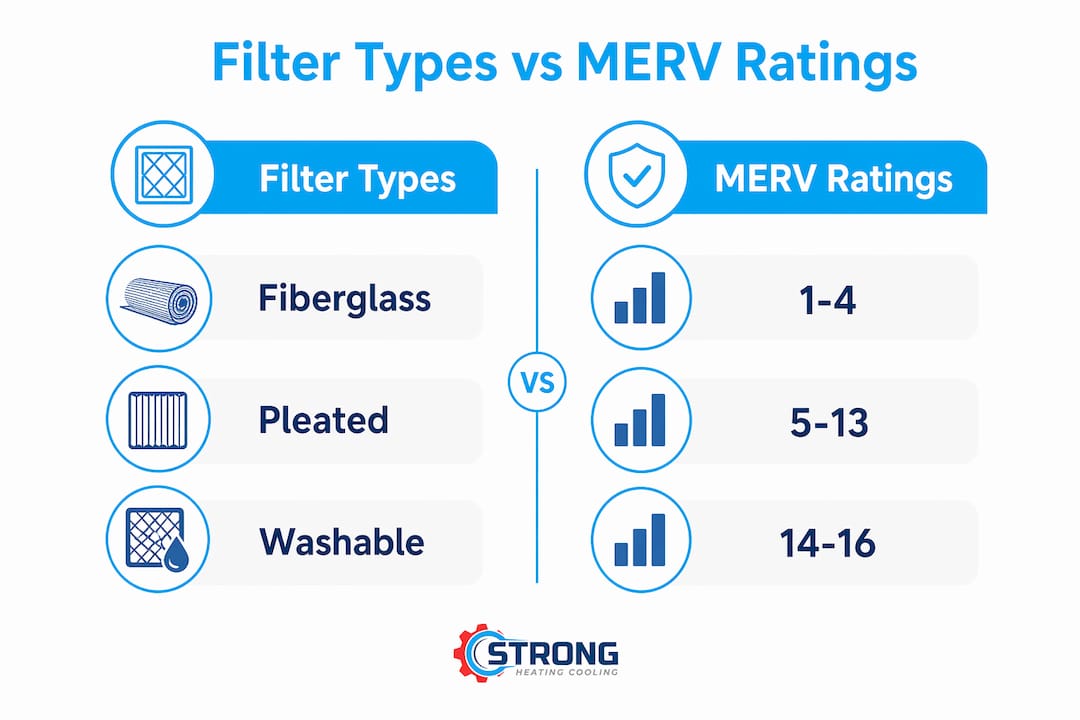
ASHRAE defines the MERV scale from 1 to 16 for standard HVAC filters, with higher numbers indicating finer particle capture. The scale gives homeowners a consistent way to compare filters regardless of brand or marketing language. Knowing where your filter falls on that scale tells you exactly what it captures and what it does not.
Common filter types and what they do
Fiberglass filters are the least expensive option and typically carry MERV ratings of 1–4. They capture large particles like lint and dust bunnies but do little for pollen, pet dander, or mold spores. They protect equipment adequately but offer minimal air quality improvement for occupants.
Pleated filters are the most practical choice for most homes. Their folded design increases surface area, which allows them to capture smaller particles while maintaining acceptable airflow. Modern pleated filters use that increased surface area to balance effective particle capture with acceptable airflow resistance. Pleated filters typically range from MERV 8 to MERV 13.
Washable and electrostatic filters are reusable, which appeals to homeowners looking to reduce waste. Their filtration performance varies, and they require thorough drying before reinstallation to prevent mold growth inside the air handler. HEPA filters, rated MERV 17 and above, are used in hospitals and clean rooms. Most residential HVAC systems cannot generate enough airflow to pull air through a true HEPA filter without serious strain.
MERV ratings compared
| Filter type | Typical MERV range | Particle capture | Airflow impact |
|---|---|---|---|
| Fiberglass | 1–4 | Large dust, lint | Very low restriction |
| Basic pleated | 8–10 | Pollen, dust mites, pet dander | Low to moderate restriction |
| Mid-grade pleated | 11–13 | Mold spores, fine dust, smoke | Moderate restriction |
| High-efficiency pleated | 14–16 | Bacteria, fine particles | High restriction |
| HEPA (hospital grade) | 17+ | Viruses, ultrafine particles | Very high restriction |
MERV 8 is the recommended baseline for typical residential systems, capturing particles in the 3–10 micron range without overburdening most blowers. That rating handles the majority of common household allergens and keeps equipment clean. For homes with pets or mild allergies, MERV 11 pleated filters strike a practical balance, capturing pollen and pet dander without causing short cycling or blower strain.
Pro Tip: Never assume a higher MERV rating is automatically better for your system. Higher ratings increase particle capture but also raise airflow resistance, which can strain older HVAC blowers and cause overheating or coil freezing. Check your system’s manual for the maximum allowable pressure drop before upgrading.
Why does regular filter maintenance matter for HVAC efficiency?
A dirty filter is one of the most common and most preventable causes of HVAC system damage. A clogged filter can increase HVAC energy consumption by as much as 15% while shortening equipment lifespan due to strain on blower motors and heat exchangers. That 15% increase compounds over months of neglect, adding meaningfully to utility bills before most homeowners notice anything wrong.
Restricted airflow from a dirty filter creates a chain reaction inside the system. The blower motor works harder to pull air through the clogged media. That extra effort generates heat inside the motor housing. The heat exchanger, which relies on steady airflow to transfer heat safely, can overheat. Neglected filters lead to increased blower motor workload, heat exchanger overheating, and uneven heating or cooling distribution. Uneven temperatures in different rooms are often the first sign a homeowner notices.
How often should you replace your HVAC filter?
Experts recommend replacing HVAC filters every 1–3 months to maintain efficiency and air quality. That range accounts for differences in home conditions. A single-occupant home with no pets and low outdoor pollution can stretch toward the three-month end. A home with two dogs, three occupants, and a nearby construction site should replace filters monthly.
The following conditions call for more frequent replacement:
- Pets in the home, especially dogs and cats that shed
- Occupants with asthma, allergies, or respiratory conditions
- Homes near wildfire smoke zones or high-traffic roads
- Properties with recent renovation work that generates fine dust
- Vacation rentals or properties with high occupant turnover
Visual inspection alone is unreliable for filter maintenance. A filter can look relatively clean on the surface while its internal fibers are loaded with fine particles that block airflow. Scheduled replacement intervals, or pressure drop monitoring for property managers with multiple units, provide more reliable maintenance data than appearance alone.
Pro Tip: Write the installation date on the side of the filter with a marker when you put it in. You will always know exactly how old it is without guessing, and it takes three seconds.
The residential HVAC maintenance guide from Strongheatingandcooling outlines a full seasonal maintenance schedule that includes filter replacement as a core step, alongside coil cleaning and blower inspection.
How do you choose the right air filter for your home?
Choosing the right filter starts with your HVAC system, not with the filter itself. The system’s blower motor design, duct sizing, and age all determine how much airflow resistance it can handle. Installing a MERV 13 filter in a system designed for MERV 8 can push an older single-stage blower motor beyond safe operating limits, risking early failure. Static pressure buildup from incompatible high-MERV filters is a real and documented risk for older residential systems.
Factors to assess before selecting a filter
Your HVAC system’s manual lists the maximum allowable pressure drop for the filter slot. That number tells you the upper limit of filtration resistance your system can handle. If you do not have the manual, the system’s age is a useful proxy. Systems installed before 2010 typically use single-stage blowers that struggle with filters above MERV 11. Newer variable-speed systems handle higher MERV ratings more comfortably.
Filter slot depth is another factor most homeowners overlook. Deeper filters, such as 4-inch models, provide more surface area and lower pressure drop than thinner filters of similar MERV ratings. A 4-inch MERV 11 filter restricts airflow less than a 1-inch MERV 11 filter because the air has more media to pass through. If your filter slot accommodates a deeper filter, that upgrade often delivers better filtration with less strain than simply buying a higher-rated thin filter.
Consider your household’s specific needs alongside system capacity:
- Allergy or asthma sufferers benefit from MERV 11–13 if the system supports it
- Pet owners should prioritize MERV 10–11 and replace more frequently
- Homes in Colorado Springs with seasonal wildfire smoke should consider MERV 11 minimum during fire season
- Rental properties benefit from MERV 8 for reliable performance with minimal maintenance complexity
For Colorado homeowners, indoor air quality considerations extend beyond the filter itself, particularly given the region’s dry climate and seasonal wildfire smoke. A filter is one part of a broader air quality strategy.
How do clean air filters improve energy efficiency?
Clean filters directly reduce the energy your HVAC system uses to condition your home. Replacing a clogged filter with a clean one can lower air conditioner energy usage by 5–15% depending on system age and filter condition. For a system running several months of the year, that percentage represents a real dollar amount on your utility bill.
The mechanism is straightforward. A clean filter allows air to move through the system at the volume the blower was designed to handle. The blower reaches its target airflow without working at maximum capacity. The heat exchanger or evaporator coil receives steady airflow and transfers heat efficiently. The system reaches the thermostat’s set temperature faster and cycles off sooner.
Optimized filtration strategies focused on lifecycle performance extend HVAC component lifespan and reduce long-term maintenance costs. That means choosing a filter that matches your system’s capacity, replacing it on schedule, and not chasing the highest MERV rating available. The goal is consistent, appropriate filtration over years, not peak filtration for a few weeks before the filter clogs.
Pro Tip: If you manage multiple rental units, track filter replacement dates in a simple spreadsheet by unit. Consistent replacement schedules across a property portfolio reduce emergency repair calls more reliably than any other single maintenance action.
For more detail on how filter choices connect to utility savings, the HVAC energy efficiency guide from Strongheatingandcooling covers the full picture of residential efficiency improvements.
Key Takeaways
The most effective approach to HVAC air filtration is matching filter type and MERV rating to your specific system’s capacity, then replacing it on a scheduled interval rather than waiting for visible dirt.
| Point | Details |
|---|---|
| Filter role in HVAC | Filters protect equipment and clean air simultaneously; equipment protection is the primary design function. |
| MERV rating selection | MERV 8 is the residential baseline; MERV 11 suits most homes with pets or mild allergies without straining blowers. |
| Replacement frequency | Replace every 1–3 months; homes with pets, allergies, or high dust loads need monthly replacement. |
| Energy impact | A clean filter reduces air conditioner energy use by 5–15% compared to a clogged one. |
| Filter slot depth | A deeper filter slot (4-inch) lowers pressure drop more effectively than simply choosing a higher MERV rating. |
What I’ve learned after years of watching homeowners get filters wrong
The most common mistake I see is homeowners buying the highest MERV filter on the shelf without checking whether their system can handle it. The reasoning makes sense on the surface: better filtration means cleaner air. But a MERV 16 filter in a 2003 furnace with a single-stage blower is not better filtration. It is a restriction that forces the blower to work at the edge of its design limits every time the system runs. The result is a motor that fails two years early and a repair bill that dwarfs the cost of a decade’s worth of appropriate filters.
The second mistake is treating filter replacement as optional until the filter looks dirty. Filters load from the inside out. The surface can appear light gray while the internal fibers are packed with fine particles that block airflow significantly. Scheduled replacement, not visual inspection, is the right approach. Set a calendar reminder and replace the filter whether it looks dirty or not.
The third thing I want homeowners and property managers to understand is that filters are not a substitute for professional maintenance. A filter keeps the system cleaner between service visits. It does not clean coils, check refrigerant levels, or inspect heat exchanger integrity. If your system has not had a professional inspection in more than a year, a new filter will not compensate for deferred maintenance. The filter is one part of a system that needs attention at every level.
When homeowners ask me which filter to buy, my answer is always the same: find out what your system’s manual recommends, buy that rating in the deepest slot your housing accepts, and replace it on a schedule. That approach protects the equipment, maintains air quality, and keeps energy costs predictable. It is not complicated, but it requires consistency.
— Owner
How Strongheatingandcooling helps you get filtration right
Choosing the right filter for your specific system is easier with a professional who knows your equipment. Strongheatingandcooling serves Colorado Springs homeowners and property managers with HVAC installation and maintenance services that include filter compatibility assessments as part of every system evaluation. The team checks blower capacity, filter slot dimensions, and system age to recommend the right filter rating for your setup, not just the most popular one on the shelf.

Whether you need a full system installation with proper filter sizing built in from day one, or a maintenance visit that includes a filter audit for your current equipment, Strongheatingandcooling brings over 40 years of combined experience to every job. Honest pricing, clear recommendations, and equipment you can trust for years to come are what the team delivers. Contact Strongheatingandcooling to schedule a filter compatibility check or full system maintenance visit for your Colorado Springs home or property.
FAQ
What does an air filter do in an HVAC system?
An HVAC air filter traps airborne particles like dust, pollen, and pet dander before they reach the blower motor and heat exchanger, protecting equipment and improving indoor air quality simultaneously.
How often should I replace my HVAC air filter?
Replace your filter every 1–3 months. Homes with pets, allergy sufferers, or high dust loads should replace filters monthly to maintain efficiency and air quality.
What MERV rating is best for a residential HVAC system?
MERV 8 is the recommended baseline for most homes. MERV 11 suits households with pets or mild allergies, provided the system’s blower can handle the added airflow resistance.
Can a high-MERV filter damage my HVAC system?
Yes. A filter with a MERV rating too high for your system’s blower creates static pressure buildup that can overheat the motor and cause early failure, particularly in systems installed before 2010.
Does replacing a dirty filter actually save energy?
Replacing a clogged filter with a clean one reduces air conditioner energy usage by 5–15%, depending on system age and how restricted the old filter was.
Recommended
- Furnace Filter Basics Every Owner Should Know | Strong Heating And Cooling
- Residential HVAC Maintenance Guide | Strong Heating And Cooling
- Indoor Air Quality: Why Colorado Homes Need More Than a Filter | Strong Heating And Cooling
- What Is an HVAC System? A Homeowner’s Guide | Strong Heating And Cooling
Need expert HVAC help?
Colorado Springs' trusted, veteran-owned heating & cooling team — same-day service.