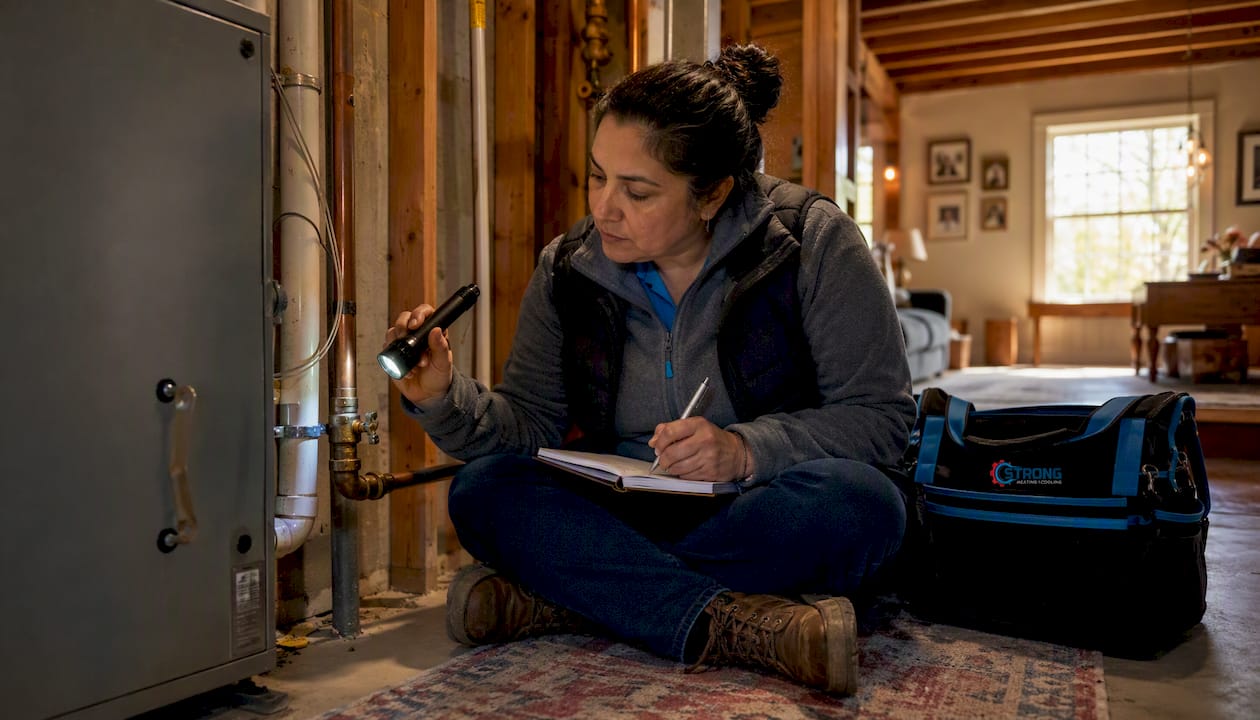
Staying Safe With a Broken HVAC in Winter
TL;DR:
- If your heat fails during winter, immediately check the thermostat, circuit breaker, and for gas leaks to prevent hazards. Protect pipes by dripping faucets and preparing safe supplemental heat while awaiting professional repair. Regular preventative maintenance reduces the risk of prolonged outages and costly damage.
If your heat goes out in winter, do these five things immediately: confirm the thermostat is set to heat, check your circuit breaker, smell for gas, protect your pipes, and set up safe temporary warmth while you wait for a technician. Those five steps, done in order, address the most serious risks — carbon monoxide exposure, burst pipes, fire, and hypothermia — before a licensed tech arrives.
Your three highest priorities right now: (1) Rule out a gas leak or CO alarm activation — evacuate if either is present. (2) Protect exposed pipes from freezing by dripping faucets and opening cabinet doors. (3) Use only safe electric supplemental heat or extra layers; never use an oven, unvented kerosene heater, or generator indoors.
The CPSC’s winter safety guidance covers generators, furnaces, and space heaters together because all three carry overlapping CO and fire risks. Staying safe with a broken HVAC in winter means managing those risks in parallel, not one at a time.
Here is the immediate checklist:
- Check the thermostat: set it to “Heat” and raise the setpoint at least 5°F above the current room temperature.
- Go to your electrical panel and look for a tripped breaker labeled “furnace,” “air handler,” or “HVAC.” Reset it once.
- Stand near the furnace and sniff. A sulfur or rotten-egg odor means gas. Leave the house, leave the door open, and call your gas utility from outside.
- Open cabinet doors under sinks on exterior walls and let a pencil-thin trickle run from both hot and cold taps on vulnerable fixtures to keep water moving and relieve pressure behind any forming ice.
- Gather blankets, close interior doors to concentrate warmth, and identify a safe electric space heater if you have one.
If indoor temperatures near exposed pipes drop toward 50°F or below during subfreezing weather, the risk of a burst pipe rises significantly. An outage lasting more than 24 hours in severe cold usually calls for shutting off the main water valve and draining the plumbing lines entirely.
Table of Contents
- What quick homeowner checks can restore heat before a tech arrives?
- How to keep people and pets warm safely while you wait for repair
- Safe temporary heating options and the hazards you need to know
- Which HVAC parts can you safely inspect yourself?
- When should you call an HVAC professional, and what will it cost?
- How do you prevent the next winter breakdown?
- What should you expect for repair timelines and costs?
- What are your options if the outage lasts more than a few days?
- How do you prepare for a prolonged HVAC failure before it happens?
- How does a broken HVAC affect indoor air quality and humidity?
- Key Takeaways
- The part most homeowners underestimate about a winter HVAC failure
- Strong Heating & Cooling is ready when your heat goes out
- Useful sources
- FAQ
What quick homeowner checks can restore heat before a tech arrives?
Three checks resolve a large share of winter heating failures without any tools or technical knowledge: the thermostat setting, the circuit breaker, and the air filter. Run them in that order before calling for service.
- Thermostat: Confirm the mode reads “Heat,” not “Cool” or “Fan Only.” Raise the setpoint above the current room temperature. If the thermostat runs on batteries, swap them now — a dead battery is a surprisingly common cause of a furnace that simply will not start.
- Circuit breaker: Locate the breaker for your furnace or air handler. If it is tripped to the middle position, flip it fully off and then back on. A breaker that trips again immediately signals an electrical fault; stop there and call a technician.
- Air filter: Pull the filter and hold it up to light. A heavily clogged filter restricts airflow enough to trigger a furnace safety shutoff. If it is visibly gray and matted, replace it with a matching size before restarting the system.
- Supply registers and vents: Walk through the house and confirm every supply register is open and unobstructed by furniture, rugs, or drapes.
- Outdoor unit clearance: From ground level, brush loose snow away from the heat pump or exterior exhaust vent with a broom. Do not chip ice, do not pour water, and do not climb on the unit.
Pro Tip: Before winter arrives, locate three things in your home: the furnace power switch (it looks like a standard light switch, usually mounted on the wall near the unit), the main water shutoff valve, and the thermostat’s battery compartment. Knowing where they are in the dark or under stress saves critical minutes.
How to keep people and pets warm safely while you wait for repair
The priority is people first, then property. Concentrate everyone in one or two interior rooms, close the doors, and apply targeted warmth rather than trying to heat the whole house with improvised methods.
Practical steps that work:
- Layer clothing: a base layer, an insulating mid-layer (fleece or wool), and a wind-blocking outer layer trap body heat effectively even indoors.
- Seal drafts at door bottoms with rolled towels or draft stoppers. Close blinds and curtains on windows facing north or west to reduce radiant heat loss.
- Hot water bottles filled from the tap and placed under blankets provide sustained warmth for sleeping without any fire or CO risk.
- Electric blankets used according to manufacturer instructions are safe for adults; do not use them for infants, young children, or anyone who cannot feel or respond to heat.
- Keep pets off cold floors. A folded blanket or pet bed elevated slightly off tile or concrete makes a real difference for small animals.
CPSC guidance specifically flags children, elderly adults, and people with disabilities as facing higher risk when temporary heating is used improperly. If anyone in the household falls into those categories, prioritize their room and monitor them more frequently.
What not to do: never use a gas oven or range for heat. It produces carbon monoxide and creates a fire hazard. Unvented kerosene or propane heaters are equally dangerous indoors without proper ventilation.
Pro Tip: Sequence your response this way: first seal drafts and close off rooms (free, zero risk), then add layers and bedding (free, zero risk), then introduce a safe electric supplemental heater only if temperatures remain uncomfortable. This order keeps fire and CO risk at the lowest possible level.
Safe temporary heating options and the hazards you need to know
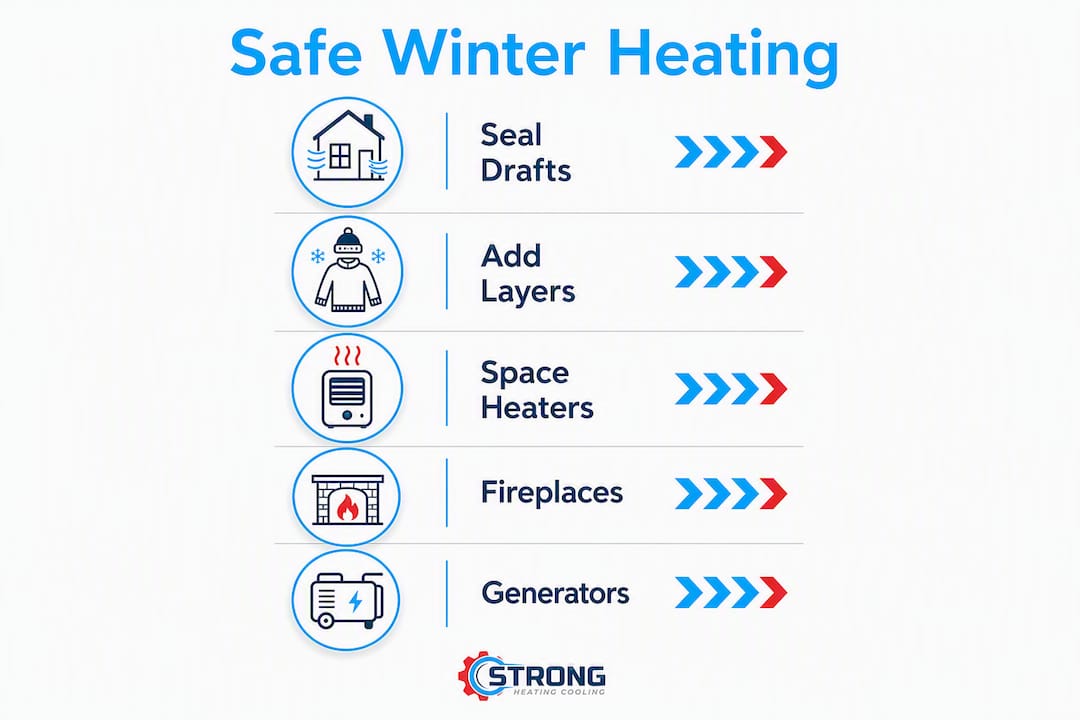
Portable electric heaters and fireplaces can bridge a heating outage safely when used correctly. Generators and fuel-burning devices carry serious CO and fire risks that require strict controls.
Electric space heaters
Choose a model sized for the room, with tip-over shutoff and overheat protection. FEMA’s heating fire safety guidance and the NFPA both specify keeping anything combustible at least 3 feet away from the heater. Plug directly into a wall outlet — never into an extension cord or power strip. Turn the heater off before leaving the room or going to sleep.
Oil-filled radiator-style heaters tend to be safer for longer periods because the surface temperature stays lower than coil-type units, reducing ignition risk near curtains or bedding. Consumer Reports notes that portable space heaters were involved in an average of 1,600 house fires per year from 2019 to 2021, resulting in an average of 70 deaths annually — nearly all from improper placement or unattended use.
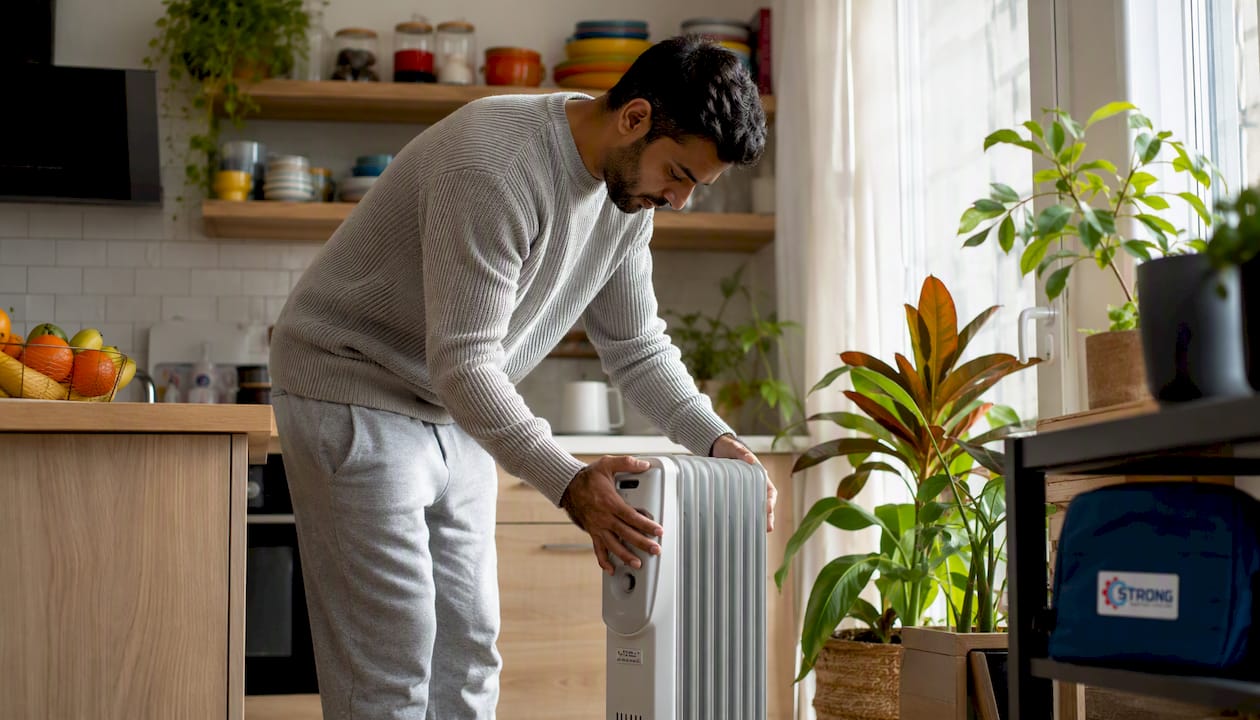
One placement mistake that often goes unnoticed: putting a space heater near the thermostat. The localized heat fools the thermostat into thinking the whole house is warm, so other rooms stay cold. Keep heaters away from thermostats.
Fireplaces and wood stoves
Confirm the flue damper is fully open before lighting anything. Use a fireplace screen to contain sparks. A fireplace is not a reliable overnight heat source if you have any doubt about flue condition; incomplete combustion produces CO. Battery-backup CO detectors are non-negotiable when burning wood indoors.
Generators
Run generators outdoors only, at least 20 feet from doors, windows, and vents. Never run one in an attached garage, even with the door open. Use properly rated extension cords rated for outdoor use.
Absolute do-nots:
- Never use a gas oven or range as a heat source.
- Never run an unvented kerosene or propane heater in a closed room.
- Never leave any portable heater running while you sleep.
- Never operate a generator indoors or in an attached garage.
For more on safe temporary heating during a furnace breakdown, Strongheatingandcooling has a dedicated guide covering the options the team recommends most often in the field.
Which HVAC parts can you safely inspect yourself?
Limit homeowner inspection to visual and non-invasive checks. Burners, heat exchangers, gas lines, refrigerant lines, and internal wiring are strictly for licensed technicians.
Safe checks you can do:
- Inspect supply registers and return vents for visible blockage or closed dampers.
- Look for water pooling near the furnace or air handler, which can indicate a clogged condensate drain.
- From a safe distance outside, confirm the flue termination cap is not buried in snow or blocked by ice.
- Touch the furnace cabinet exterior. It should be warm, not hot. A cabinet that is scalding to the touch suggests a restricted airflow problem.
- Confirm no strong gas odor is present near the unit.
If you have a heat pump that is iced over after a storm, switch to Emergency Heat mode and allow up to 24 hours for natural thaw. Do not chip ice from the outdoor unit or pour water on it.
Leave immediately and call 911 or your gas utility if you notice any of these: a strong sulfur or rotten-egg smell near the furnace, a yellow or orange burner flame instead of blue, a CO detector alarm, loud banging or metal-on-metal sounds from inside the unit, or visible electrical arcing. These are not situations for a DIY fix.
When should you call an HVAC professional, and what will it cost?
Call a licensed HVAC technician immediately for any combustion issue, gas odor, CO alarm, or when indoor temperatures are approaching freezing near pipes. For a system that simply stopped working with no safety indicators, same-day or next-day service is appropriate depending on outdoor temperatures and household vulnerability.
Emergency criteria — call now, do not wait:
- CO detector has activated.
- You smell gas near the furnace or anywhere in the house.
- The burner flame is yellow, orange, or flickering abnormally.
- Water is actively spraying from a pipe or the unit.
- Outdoor temperatures are subfreezing and indoor temps are dropping toward pipe-freeze range.
- You hear loud banging, grinding, or electrical sparking from the system.
When a technician arrives, expect on-site diagnostics, a combustion safety check, and a prioritized repair plan. Some repairs can be completed same-day; others require ordered parts, which can add one to several days. If the system cannot be safely restored immediately, a technician may recommend a temporary safe-heat hookup or advise on emergency heating alternatives while parts arrive.
On cost: emergency service calls typically carry a higher trip fee than standard appointments, and after-hours or weekend rates add to that. The total cost depends on what failed — a capacitor or ignitor replacement runs far less than a heat exchanger or inducer motor. Knowing whether you are facing a repair or a full replacement decision is worth reviewing; Strongheatingandcooling’s furnace repair versus replacement guide walks through the key cost thresholds.
Understanding the signs that a system needs service before a full breakdown can also help you avoid the emergency call fee entirely.
Pro Tip: When you call for service, have these details ready: your thermostat model and any error code displayed, the filter condition and last replacement date, whether the outdoor unit is iced or clear, and whether your CO detector activated. This information speeds diagnosis and reduces the time the technician spends on-site.
How do you prevent the next winter breakdown?
Annual professional maintenance combined with a simple homeowner checklist is the most effective way to avoid mid-winter emergencies. A system that has not been serviced tends to fail under the heavy load of the coldest days, precisely when you need it most.
- Schedule an annual tune-up before the heating season, ideally in September or October before demand peaks.
- Change filters on a consistent schedule — every 1–3 months depending on filter type and household conditions (pets, dust, occupancy).
- Clear exterior vents and exhaust terminations of debris, nests, and ice buildup before freeze season.
- Keep condensate drain lines clean; a blocked drain can trigger a safety shutoff.
- Insulate exposed pipe runs in unheated spaces (crawl spaces, garages, attics) and install heat tape on the most vulnerable sections before temperatures drop.
Industry guidance is consistent: annual maintenance is the single most effective way to prevent mid-winter HVAC emergencies. A poorly maintained system is far more likely to fail under cold-weather stress than one that has been inspected and tuned within the past 12 months.
Strongheatingandcooling’s preventive HVAC maintenance schedule outlines specific filter intervals and pre-winter tasks. Maintenance plan members receive priority scheduling, which matters most in January and February when service demand is highest and wait times for non-members stretch longer.
What should you expect for repair timelines and costs?
For most common failures — a failed ignitor, a tripped pressure switch, a clogged condensate line — a technician can diagnose and repair the system in a single visit, typically one to three hours on-site. Parts that are in stock locally often mean same-day completion. Parts that must be ordered can push the timeline to two to five days, depending on the component and supplier availability.
Emergency calls placed after hours or on weekends carry a premium trip fee on top of the diagnostic and repair charges. Standard daytime service visits cost less, which is one reason scheduling a tune-up before the season pays off. If a repair estimate approaches or exceeds roughly half the cost of a new system, and the equipment is more than 15 years old, replacement often makes more financial sense over the next few winters.
For a realistic sense of what furnace work costs in the Colorado Springs area, Strongheatingandcooling publishes furnace pricing guidance that covers typical ranges for repair and replacement without requiring a call first.
What are your options if the outage lasts more than a few days?
A short outage is manageable with space heaters and extra layers. An extended outage — several days or longer in subfreezing conditions — calls for a more structured approach.
Ductless mini-split heat pumps are one of the most practical long-term alternatives for homes where the central system is down for an extended period or undergoing replacement. They heat individual rooms efficiently without requiring ductwork and can be installed relatively quickly compared to a full central system replacement.
Electric baseboard heaters are another option for zone-by-zone coverage, though they are less efficient than mini-splits over extended use. Propane or natural gas wall heaters with direct venting are effective in well-ventilated spaces, but require professional installation and proper venting to be safe.
If the central system is beyond repair, heating installation and replacement is the most reliable path to restoring full comfort. Strongheatingandcooling can assess whether a repair, a partial system upgrade, or a full replacement makes the most sense given the age and condition of your equipment.
How do you prepare for a prolonged HVAC failure before it happens?
A written emergency plan takes about 30 minutes to put together and can prevent serious harm if a failure happens during a multi-day cold snap.

The plan should cover four areas. First, identify a warm destination: a family member’s home, a hotel, or a community warming center in your area. Second, know your pipe-protection threshold: if indoor temperatures near exposed pipes drop toward 50°F and the outage will extend beyond 24 hours, shut off the main water valve and drain the lines. Third, keep emergency supplies on hand: battery-powered CO detectors with fresh batteries, a quality electric space heater, extra blankets, and a flashlight. Fourth, have your HVAC service contact saved and accessible, along with your gas utility’s emergency line.
For families with young children, elderly members, or anyone with a medical condition affected by cold, identify the warm destination before winter and confirm it is available. Do not wait until temperatures are dropping to make that call.
How does a broken HVAC affect indoor air quality and humidity?
When your HVAC system goes offline, it stops filtering and circulating air. Dust, allergens, and combustion byproducts from temporary heat sources accumulate faster than usual. If you are burning wood or using a gas fireplace, particulate levels rise. CO from any combustion source becomes a real concern without the ventilation the HVAC system normally provides.
Humidity drops significantly in winter without a functioning system. Dry indoor air at 20–30% relative humidity irritates airways, dries out skin, and can cause wood floors and furniture to crack. The US EPA’s guidance on winter weather and indoor air quality recommends monitoring for both pollutants and moisture levels during heating outages.
A standalone hygrometer (available at most hardware stores for under $20) lets you track relative humidity. Target 30–50% for comfort and health. If humidity drops well below that range, a portable evaporative humidifier adds moisture without requiring the central system. Crack a window briefly in rooms where combustion heating is in use to allow fresh air exchange and reduce CO buildup — even a one-inch gap for 10 minutes per hour makes a measurable difference.
Key Takeaways
Staying safe with a broken HVAC in winter requires immediate safety checks, pipe protection, controlled supplemental heat, and a clear threshold for calling a licensed technician.
| Point | Details |
|---|---|
| Immediate safety checks | Check thermostat, circuit breaker, and air filter first; evacuate immediately if you smell gas or a CO alarm activates. |
| Pipe protection threshold | Drip faucets at 1/4 inch on vulnerable fixtures; shut off the main and drain lines if the outage exceeds 24 hours in subfreezing weather. |
| Safe temporary heat rules | Use electric space heaters with tip-over protection, plugged directly into a wall outlet, kept 3 feet from combustibles, and never left unattended. |
| Emergency call triggers | Call immediately for gas odor, CO alarm, abnormal flame color, electrical sparking, or indoor temps dropping toward pipe-freeze range. |
| Strongheatingandcooling | Serves Colorado Springs and surrounding communities with emergency HVAC repair, maintenance plans, and priority scheduling for plan members. |
The part most homeowners underestimate about a winter HVAC failure
Most of the calls that come in during a cold snap share a common thread: the homeowner waited too long, either to run the basic checks or to call for service. A tripped breaker or a dead thermostat battery is a five-minute fix. A burst pipe from a 48-hour outage is a five-figure repair.
The other pattern worth naming is the CO risk that builds quietly. Temporary heat sources — space heaters, fireplaces, gas ranges used improperly — all introduce combustion byproducts into a home that is now more tightly sealed than usual because everyone has closed the windows and stuffed towels under the doors. That combination is exactly when a CO detector earns its place. If you do not have one on every level of the home, that is the single most important thing to add before the next heating season.
Annual maintenance does not just extend equipment life. It creates a documented baseline that makes emergency diagnosis faster and often cheaper. A technician who serviced your system in October knows what it looked like when it was running correctly. That context speeds the repair and reduces guesswork.
The team at Strongheatingandcooling has seen this play out across more than 40 combined years of field work in Colorado Springs. The homeowners who come through winter breakdowns with the least damage and the lowest repair bills are almost always the ones who ran the basic checks, protected their pipes early, and called before the situation became critical.
Strong Heating & Cooling is ready when your heat goes out
When your furnace stops working in January, you need a team that picks up the phone and gets there fast. Strongheatingandcooling provides emergency HVAC repair and preventive maintenance across Colorado Springs and surrounding communities, with over 40 years of combined experience diagnosing and fixing the exact failures that happen under cold-weather stress.

Maintenance plan members receive priority scheduling, which means shorter wait times during the peak demand weeks of January and February. For homeowners facing a system that may be beyond repair, the team provides honest guidance on heating installation and replacement without pressure, including options that fit a range of budgets. Whether you need emergency service today or want to schedule a pre-winter tune-up through the residential HVAC maintenance guide, the process starts with a single call. Contact Strongheatingandcooling to schedule service or get emergency help now.
Useful sources
The following resources provide authoritative guidance on the safety topics covered in this article. For anything involving gas lines, combustion components, or refrigerant, consult a licensed professional rather than attempting repairs yourself.
- Keep Warm and Safe This Winter: Tips for Using Generators, Furnaces, and Space Heaters — CPSC official winter safety guidance covering CO risk, generator placement, and heater precautions.
- CPSC Warns Consumers to Be Cautious When Using Space Heaters, Furnaces, and Fireplaces This Winter — Consumer warning on space heater fire and CO risks, with specific guidance for vulnerable household members.
- Winter Weather and Indoor Air Quality — US EPA guidance on protecting air quality during heating outages and winter storms.
- Heating Fire Safety — FEMA/USFA handout on space heater clearance, fireplace safety, and preventing heating fires.
- How to Prevent Frozen Pipes When Your Heat Fails — Practical pipe-protection steps by outage length and temperature, including the 1/4-inch drip recommendation and drain thresholds.
- How to Use Your Space Heater Safely — Consumer Reports guidance on model selection, placement, and the fire statistics behind improper use.
- Emergency HVAC: What to Do When Comfort Can’t Wait — Strongheatingandcooling’s step-by-step emergency guidance and what to expect from a service call.
- Hollywood HVAC Emergency Checklist: Stay Safe Fast — Emergency triage checklist from an HVAC service partner covering immediate safety steps.
FAQ
What should you do first if your HVAC stops working in winter?
Check the thermostat setting, reset any tripped circuit breaker, and inspect the air filter — these three steps resolve a large share of winter heating failures. If you smell gas or a CO detector activates, leave the house immediately and call your gas utility from outside.
What is the $5,000 rule for HVAC?
A common decision guide is to multiply the system’s age in years by the repair cost, and if the result is high, replacement is usually the better financial choice. It is a starting point, not a firm threshold, and the actual decision depends on equipment condition, efficiency, and replacement cost.
At what temperature does a broken heater become an emergency?
When indoor temperatures near exposed pipes approach 50°F during subfreezing outdoor weather, the risk of burst pipes becomes serious and same-day service is warranted. For households with infants, elderly members, or anyone medically vulnerable to cold, call for service before temperatures drop that far.
How do you stay warm with no heat in the house?
Concentrate everyone in one or two interior rooms, close doors to retain warmth, layer clothing, and use a properly placed electric space heater with tip-over protection plugged directly into a wall outlet. Hot water bottles and extra blankets add warmth without any fire or CO risk.
When should you call for emergency HVAC help rather than waiting for a standard appointment?
Call immediately if you detect a gas odor, a CO alarm activates, the burner flame is yellow or orange, water is spraying from a pipe, or outdoor temperatures are subfreezing and indoor temps are falling. A helpful triage guide from LC Heating & Air outlines these criteria in detail.
Recommended
Need expert HVAC help?
Colorado Springs' trusted, veteran-owned heating & cooling team — emergency service.