

TL;DR:
- Knowing when to switch to emergency heat can significantly increase your energy bills unless used solely during actual system failures.
- Preparing safe, effective backup heating solutions in advance minimizes safety risks and reduces emergency costs during winter outages.
Your furnace goes out on the coldest night of the year. The repair technician can’t arrive until morning. That’s exactly when knowing what is an emergency heating alternative becomes a practical necessity, not just a theoretical question. Most homeowners assume they only have one option, and many choose the wrong one. This guide covers the real alternatives available to you, how safe each one is, what each costs to run, and when you should call in a professional rather than go it alone.
Table of Contents
- Key takeaways
- What emergency heat on your thermostat actually means
- Emergency heating options when the main system is down
- Safety practices that actually prevent accidents
- Comparing your options: cost, efficiency, and fit
- Building your emergency heating plan before you need it
- My perspective on emergency heating decisions
- How Strongheatingcooling can help when your heat fails
- FAQ
Key takeaways
| Point | Details |
|---|---|
| EM Heat is not free backup | Switching to emergency heat on a thermostat can raise your heating bill by 50% or more. |
| Space heaters carry real fire risk | Nearly half of all home heating fires are traced back to portable heaters and heating stoves. |
| CO detectors are non-negotiable | Nearly 40% of Americans lack proper CO detector coverage despite heavy reliance on fuel-burning backup heat. |
| Match the option to your situation | Renters, homeowners, and those with or without power need different emergency heating solutions. |
| Plan before the emergency hits | Preparing your backup heating strategy in advance is far safer and less costly than reacting mid-crisis. |
What emergency heat on your thermostat actually means
Before discussing external heating alternatives, it helps to understand the “EM Heat” setting that appears on many home thermostats. This button is one of the most misunderstood features in residential HVAC, and using it incorrectly costs homeowners real money every winter.
Heat pumps work by extracting heat from outdoor air and transferring it indoors. They do this with remarkable efficiency. As this heat output ratio shows, heat pumps deliver two to four units of heat energy for every one unit of electricity consumed. Emergency heat mode, by contrast, runs electric resistance strips that produce exactly one unit of heat per unit of electricity. The efficiency advantage disappears entirely.
When you manually switch to EM Heat, you are not adding a supplemental source. You are disabling the heat pump completely and forcing your system to run on backup resistance heat alone. According to thermostat operation experts, this can increase your heating expenses by 50% or more compared to normal heat pump operation. That is a significant jump for a setting many people flip on during cold snaps thinking it will warm the house faster.
AUX Heat is different and worth understanding separately. AUX Heat engages automatically when your heat pump needs a short boost to meet demand during very cold weather. You do not control it manually, and it does not disable the heat pump. EM Heat, on the other hand, is a manual override intended for one specific situation: when your heat pump itself is broken, malfunctioning, or physically damaged.
Here is when it is actually appropriate to use EM Heat:
- Your outdoor heat pump unit is physically damaged or frozen solid and cannot operate
- A technician has diagnosed a refrigerant leak or compressor failure in the heat pump
- Ice or debris has caused the heat pump to shut down completely and you are waiting on a repair
Pro Tip: If your thermostat shows EM Heat running on a cold but functional day, switch back to the standard heat setting immediately. You are spending significantly more than necessary for the same result.
Knowing when EM Heat applies saves money without sacrificing comfort. Reserve it for actual equipment failure, and consider contacting an HVAC technician for heat pump repair before relying on it for more than a few hours.
Emergency heating options when the main system is down
When your primary heating system fails entirely, or when a power outage takes it offline, you need practical emergency heating options that can sustain a livable temperature until repairs are complete. Each option carries its own cost profile, safety requirements, and suitability depending on your home type.
Electric space heaters are the most common first response. They are affordable, widely available, and require no installation. A quality unit with a thermostat control, UL safety listing, and automatic tip-over shutoff is a reasonable short-term solution for one or two rooms. The key word is rooms, not a whole house. Space heaters are not designed for whole-home heating, and attempting to cover a large space with multiple units strains your electrical circuits and increases fire risk. These heaters must have UL certification and should always plug directly into a wall outlet, never an extension cord.
Propane and kerosene heaters are genuine heating alternatives for cold weather when electricity is unavailable. They produce real heat output, but they also produce combustion byproducts, including carbon monoxide. Indoor-rated propane heaters exist and are labeled as such, but they still require adequate ventilation. Kerosene heaters are generally not recommended for enclosed spaces without a clear airflow path. If you use either type, treat CO detection as a requirement rather than a suggestion.
Wood-burning stoves and fireplaces offer significant heat output and work without electricity. If you already have a fireplace or stove installed, this can be one of the best emergency heat sources available to you. The critical requirements are using properly seasoned wood and maintaining a clean chimney. The NFPA recommends annual chimney cleaning and correct stove installation to prevent fires. Do not attempt to install a wood stove during a heating emergency. That work needs to be done ahead of time by a licensed professional.
Battery-powered and camping-style heating solutions occupy a niche but worth knowing about category. Catalytic heaters designed for tent camping can safely operate indoors when used per manufacturer instructions, though their output is limited. Hand warmers, electric blankets, and layering strategies supplement but do not replace actual heat sources. These are bridge measures for a few hours, not a multi-day solution.
Carbon monoxide detection deserves its own mention in any list of emergency heating tips. Roughly 40% of Americans lack or are uncertain about their CO detector installation. Any fuel-burning heater, from a propane unit to a fireplace, introduces CO risk. A working CO detector on every floor of your home is the single most important piece of safety equipment when using alternative heating solutions.
Safety practices that actually prevent accidents
Most emergency heating accidents are not random. Fire safety officials consistently point out that misuse and poor setup cause the overwhelming majority of alternative heater fires, not equipment defects. Understanding what proper use looks like protects your family without requiring any special expertise.
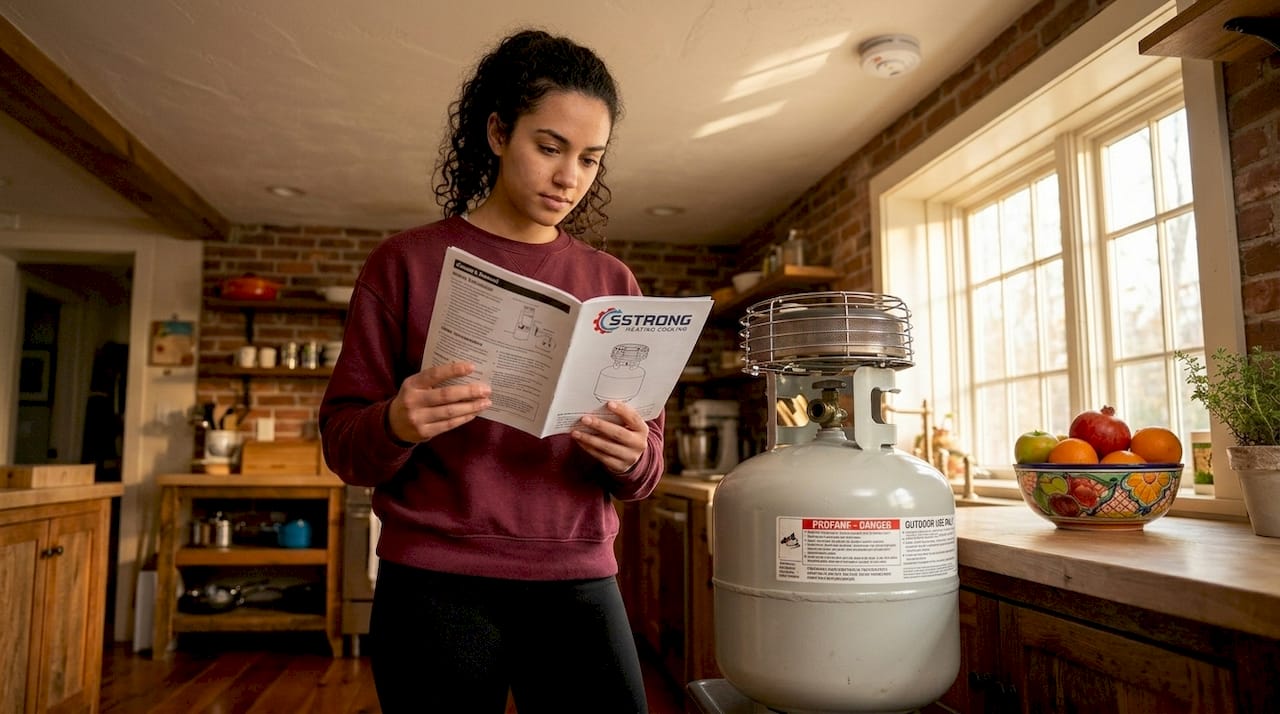
Space heaters and heating stoves account for 46% of home heating equipment fires and are linked to 72% of cold-season heating injuries and deaths. Those numbers reflect real consequences of common mistakes. The good news is that most of these accidents are preventable.
Follow these safety steps whenever you deploy a portable or alternative heater:
- Keep all heaters at least three feet from curtains, bedding, furniture, and any other combustibles. This clearance requirement applies to every fuel type and electric unit equally.
- Plug electric heaters directly into a wall outlet. Extension cords cannot safely carry the power load of most space heaters and create a fire hazard, a practice the CPSC strongly warns against.
- Turn off all portable heaters before going to sleep. Overnight operation dramatically increases the risk of a fire going undetected.
- Never refuel propane or kerosene heaters while they are operating or while they are still warm. Let them cool completely before adding fuel.
- Test your CO detector before relying on any fuel-burning heater. Press the test button and confirm the alarm functions. Replace the battery if you have not done so in the past year.
- If you use a portable generator to power electric heaters during an outage, run it outdoors at least 20 feet from any window or door. Generator CO poisoning was responsible for 750 deaths over a recent ten-year period, and every one of those deaths involved indoor or semi-enclosed operation.
Pro Tip: Write the date on your CO detector with a permanent marker when you install a fresh battery. That makes the annual replacement check automatic instead of a guessing game.
Homeowners and renters alike should follow manufacturer safety instructions for every heater they operate. The manual is not optional reading. It specifies ventilation requirements, fuel types, clearances, and operating limits that the product was actually tested to.
Comparing your options: cost, efficiency, and fit
Choosing among temporary heating methods is easier when you can see the key differences side by side. The table below compares the most common emergency home heating options across the factors that matter most to homeowners and renters.
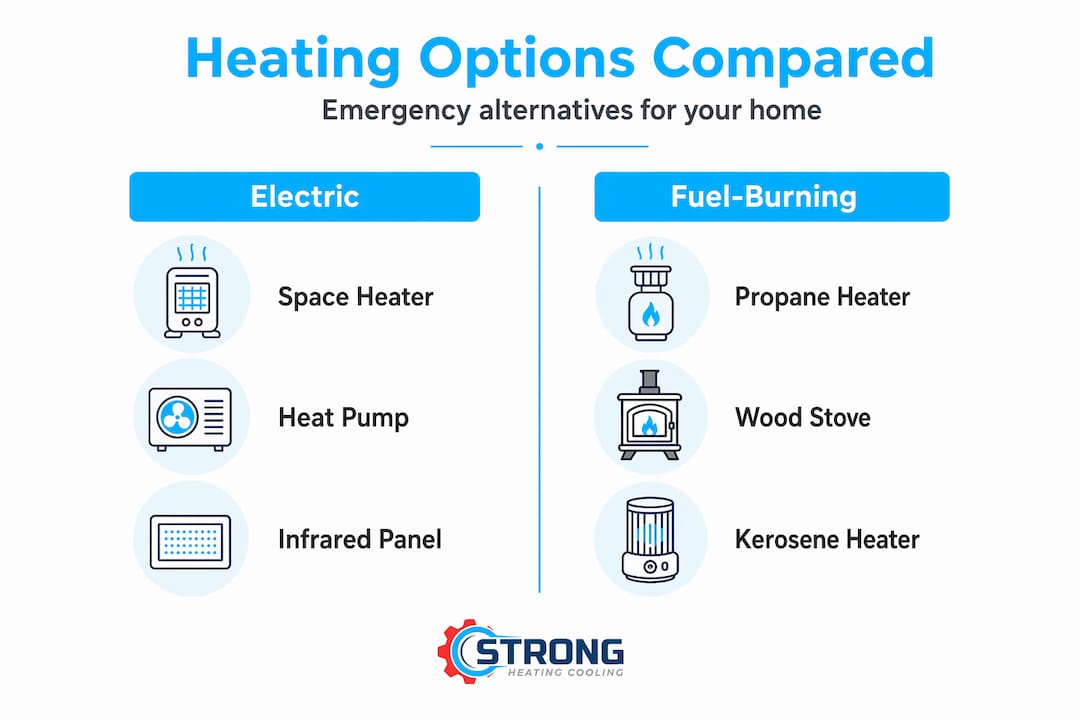
| Heating method | Best for | Power required | CO risk | Approximate cost to run |
|---|---|---|---|---|
| Electric space heater | Renters, apartments, single rooms | Yes (electricity) | None | Moderate (high electricity rate) |
| Propane heater (indoor-rated) | Homes without power, larger spaces | No | Yes, ventilation required | Low to moderate |
| Kerosene heater | Garages, partially open spaces | No | Yes, high without ventilation | Low |
| Wood stove or fireplace | Homeowners with existing install | No | Low if maintained | Low (seasoned wood) |
| Catalytic camping heater | Short-term, small spaces | No | Low with ventilation | Low |
| EM Heat setting (heat pump backup) | Heat pump failure only | Yes (electricity) | None | High (50%+ cost increase) |
Electric space heaters are the easiest option for renters because they require no installation and leave no permanent changes to the property. The trade-off is that electricity rates make them expensive to run for extended periods, and they work best for maintaining temperature in one room rather than heating a full home.
Propane and wood-based options suit homeowners better, particularly those with an existing fireplace or stove. Hybrid systems combining heat pumps and boilers can reduce gas consumption by up to 60% while serving as efficient low-carbon backup options, making them a strong long-term investment for homeowners in cold climates. That kind of planned redundancy is more efficient and less stressful than scrambling for a space heater mid-storm.
For renters, the practical range of alternative heating solutions is narrower. Permission from a landlord is generally required before installing anything permanent. This makes electric space heaters and indoor-rated portable propane heaters the most realistic temporary heating methods. Always check your lease before using any fuel-burning device indoors, as some explicitly prohibit open-flame heaters.
Environmental impact matters to an increasing number of homeowners. Fuel-burning heaters produce real carbon emissions, while electric heaters are only as clean as the grid supplying them. A heat pump in standard operating mode remains the lowest-carbon option, which is one more reason to restore it quickly rather than rely on resistance backup heat for days at a time.
Building your emergency heating plan before you need it
The best emergency home heating tips are not the ones you search for at midnight when the furnace stops working. They are the ones you act on in October. A prepared household handles a heating failure with calm and confidence rather than a scramble.
Consider these steps for a practical emergency heating readiness plan:
- Install CO detectors on every level of your home, including the basement. Test them monthly and replace batteries annually.
- Select and purchase one appropriate backup heating device before winter. Make sure it matches your home type, whether that is an apartment, a single-family home, or a townhouse with shared walls.
- Store appropriate fuel safely if you rely on a propane or kerosene unit. Keep fuel in approved containers in a well-ventilated outdoor storage area, away from living spaces.
- Create and review a fire escape plan with every member of your household. Know two exit routes from every room.
- Know how to switch your thermostat to EM Heat and, equally important, know when not to. If your heat pump is operational, leave the system on its normal setting even during very cold weather.
- Keep the contact number for an emergency HVAC repair service saved in your phone. Waiting until you are cold and stressed to search for one leads to rushed decisions and potentially higher costs.
The decision about what to do for heating during an outage becomes much simpler when the groundwork is already in place. A functioning CO detector, a safe and ready backup heater, and a clear understanding of when to call a professional are the three things that make the biggest difference.
My perspective on emergency heating decisions
I’ve seen a lot of heating emergencies in Colorado Springs, and the pattern that stands out most is how many people misuse their thermostat’s EM Heat setting. They flip it on because the house feels cold, not because the heat pump has actually failed. Then they wonder why their January electric bill doubled. In my experience, that one misunderstanding costs homeowners hundreds of dollars a season, and it is entirely avoidable with about five minutes of education.
What I’ve also learned is that the pressure of a cold house makes people skip safety steps they would never skip otherwise. They run extension cords to heaters, leave them on overnight, or bring propane units inside without ventilation. The emergencies that turn into tragedies almost always involve that kind of pressure-driven shortcut.
My take is straightforward: safety is not a secondary consideration when you are cold. It is the first one. A properly placed electric space heater that keeps one room at 65 degrees is better than a propane heater improperly ventilated trying to heat the whole floor. Comfort is recoverable. Some emergencies are not.
Plan before winter arrives. Know your options. And when the repair is outside what you can handle yourself, call a professional early rather than late.
— Strong
How Strongheatingcooling can help when your heat fails
When your furnace goes out or your heat pump stops working during a Colorado Springs winter, Strongheatingcooling is available around the clock to get your heat restored. Their 24/7 emergency HVAC services mean a qualified technician can assess your system and provide transparent pricing before any work begins, so you are never guessing at the cost.
Whether you need an immediate furnace repair or you want to discuss installing a backup heating system before next winter, Strongheatingcooling offers the kind of thorough, honest service that eliminates the need to rely on space heaters longer than necessary. Visit Strongheatingcooling to learn more about emergency services and long-term heating solutions in Colorado Springs.
FAQ
What is an emergency heating alternative for a home?
An emergency heating alternative is any safe, temporary heat source used when your primary system fails, such as electric space heaters, indoor-rated propane heaters, wood stoves, or fireplaces. The right choice depends on your home type, available power, and safety setup.
When should I actually use the EM Heat setting on my thermostat?
Use EM Heat only when your heat pump has physically failed or been diagnosed as non-operational. Using it during cold weather when the heat pump works fine increases heating costs by 50% or more without any benefit.
Are portable space heaters safe to use during a heating outage?
Yes, when used correctly. Choose a unit with UL listing and tip-over shutoff, keep it three feet from any combustibles, and always plug it directly into a wall outlet. Turn it off before sleeping.
Do I need a CO detector if I use an electric space heater?
Electric space heaters do not produce carbon monoxide, so CO risk is minimal with electric-only units. However, if you use any fuel-burning heater alongside it, a working CO detector is required on every floor.
How long can I safely rely on an emergency heating alternative?
Portable and fuel-burning heaters are short-term solutions, typically safe for one to three days with proper precautions. For longer outages, restoring your primary system through a professional HVAC repair service is the safest path forward.


