
Selecting AC Unit Replacement: A Homeowner’s Sizing Guide
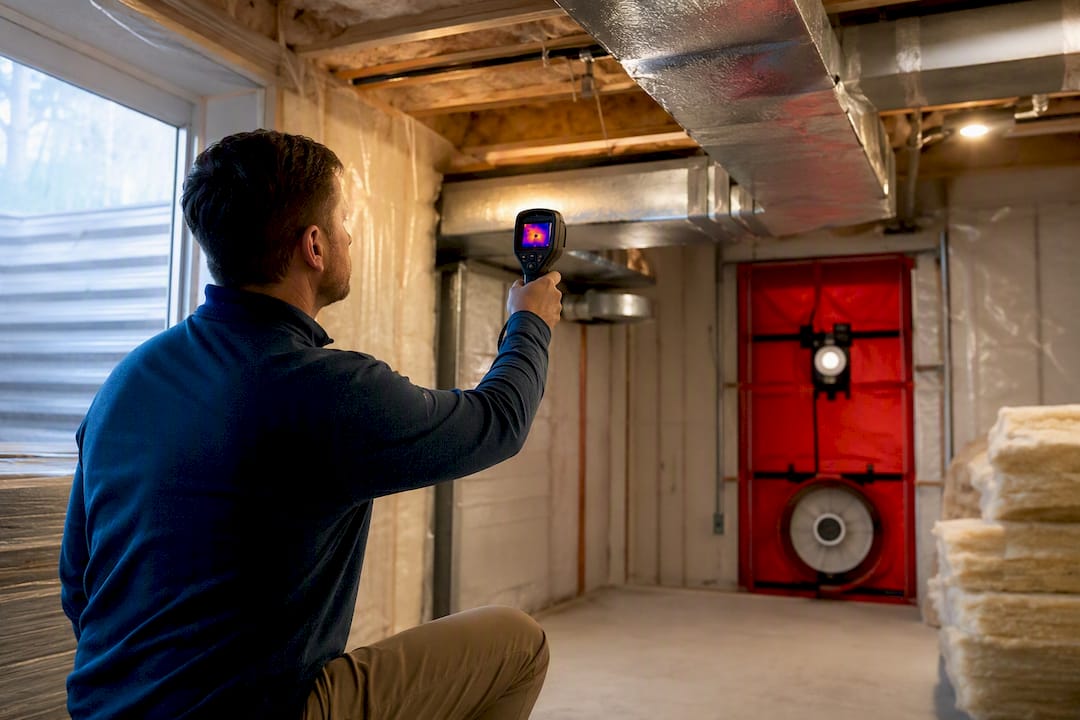
The right approach to selecting AC unit replacement for your home starts with one decision that overrides every other spec sheet: get a professional Manual J load calculation before you compare a single brand or price. Once you know the actual cooling load your house needs, the rest follows logically. You pick a system type that fits your existing infrastructure, target an efficiency level that matches your climate and budget, and get two or three contractor quotes built on that same number.
Here’s your immediate checklist:
- Schedule a Manual J load calculation with a licensed contractor before requesting quotes.
- Collect two to three installer bids that each include Manual J numbers, and Manual D duct calculations if you have existing ductwork.
- Compare installed SEER2/EER2 ratings and total installed cost, not just equipment sticker price.
Before your first site visit, gather these three things:
- A rough floor plan or sketch showing room dimensions.
- A count of windows, including orientation and approximate age.
- Notes on attic and wall insulation levels, if known.
Pro Tip: Take five minutes to photograph your attic insulation and your electrical panel before the contractor arrives. Both details speed up the assessment and often change which system options make financial sense.
Key Takeaways
Selecting the right replacement AC unit comes down to matching a Manual J-verified load to the correct system type and efficiency tier, then verifying the installer’s documentation before signing.
| Point | Details |
|---|---|
| Start with Manual J | Never accept a quote based on square footage alone; insist on a documented load calculation. |
| Match system to infrastructure | Choose central air for existing ducts, mini-splits for unducted spaces, and window units for single rooms. |
| Target efficiency by climate | Use SEER2 for seasonal savings and EER2 for peak-heat performance in hot regions. |
| Apply the $5,000 rule carefully | Multiply system age by repair cost; over $5,000 usually favors replacement. |
| Choose a documented contractor | Strongheatingandcooling provides Manual J and Manual D calculations, written scope, and startup verification with every replacement quote. |
Table of Contents
- How Do You Properly Size a Replacement AC Unit?
- Which Type of AC System Fits Your Home?
- What Do SEER2, EER2, and ENERGY STAR Mean for Your Bill?
- How Do Compressor Type and Controls Affect Comfort?
- What Does a Replacement AC Unit Typically Cost?
- What Happens During AC Installation Day?
- What Questions Should You Ask AC Installers?
- Do You Need to Replace or Repair Your Ductwork Too?
- How Often Does an AC System Need Maintenance?
- How We Approach Every AC Replacement
- Ready for a Manual J-Based Replacement Quote?
- Sources
- FAQ
How Do You Properly Size a Replacement AC Unit?
You size a replacement air conditioner with a Manual J load calculation, not a square-foot estimate. Manual J is the ACCA standard that accounts for your home’s insulation levels, window orientation, air infiltration, ceiling height, occupancy, and local climate data, producing a room-by-room BTU requirement instead of a generic guess.
Rule-of-thumb sizing, the old “600 square feet per ton” shortcut, ignores all of that nuance. A contractor using this method will size two identical-looking homes the same way even if one has triple-pane windows facing north and the other has single-pane glass baking in west sun all afternoon. Field data collected by contractors who compare rule-of-thumb estimates against actual Manual J results shows the two numbers diverge widely by climate and construction type, which is exactly why persistent hot and cold rooms show up in homes sized this way.
Oversizing feels like a safe bet, but it usually backfires. An oversized system cools the air quickly, shuts off, and starts again minutes later. That short cycling leaves humidity hanging in the air, wears out components faster, and pushes your utility bill higher despite the bigger price tag. Undersizing creates the opposite problem: a unit that runs constantly and still can’t keep up on the hottest days.
To speed up your Manual J and keep the design fee reasonable, hand your contractor:
- A rough floor plan with room dimensions
- Window count, type, and compass orientation
- Insulation levels in walls, attic, and floor
- Typical occupancy (how many people, how often the home is empty during the day)
This homeowner-prep approach mirrors what Modernize recommends for getting an accurate calculation without repeat site visits. A properly executed Manual J with good home data typically takes 45 to 90 minutes for a contractor working from a software platform, not a guess scratched on a clipboard.
Pro Tip: If your Manual J comes back with a surprisingly high load, don’t just size up the equipment. Air sealing, attic insulation, or window upgrades often shrink that number enough to justify a smaller, cheaper system instead.
Which Type of AC System Fits Your Home?
Your existing infrastructure narrows the field faster than any brand comparison. If you already have ductwork in good condition, a central air conditioner, including heat pump versions that both heat and cool, is usually the most cost-effective replacement path. It uses your current distribution system and delivers even, whole-house comfort.
Homes without ducts, additions, converted garages, sunrooms, or older houses that were never ducted, are better candidates for ductless mini-splits. Each indoor unit conditions its own zone, so bedrooms over a garage or a finished basement get dedicated capacity without tearing open walls. Popular Mechanics notes that mini-splits and modern window units have both improved significantly with inverter compressor technology, closing much of the comfort gap with central systems.

Window and portable units still make sense for rentals, single rooms, or temporary cooling needs where a permanent installation isn’t worth the investment. Evaporative (swamp) coolers remain a legitimate whole-house alternative in very dry, low-humidity climates, where they cool effectively at a fraction of the operating cost of refrigerant-based systems, though they lose effectiveness fast once humidity climbs.
| System type | Best for | Ductwork needed | Typical comfort profile |
|---|---|---|---|
| Central air/heat pump | Existing ducted homes | Yes | Even whole-house temperature |
| Ductless mini-split | Additions, no ducts, zoned needs | No | Room-by-room control |
| Window/portable unit | Rentals, single rooms, temporary use | No | Localized cooling only |
| Evaporative cooler | Very dry climates | Sometimes | Whole-house in low humidity |
Pro Tip: If you’re adding a mini-split to a home that also has central air, size that indoor unit off its own Manual J zone calculation, not a fraction of the whole-house number. Zone loads don’t scale evenly across a floor plan.
What Do SEER2, EER2, and ENERGY STAR Mean for Your Bill?
SEER2 measures a system’s total cooling output over an entire season divided by the energy it consumes, giving you a seasonal efficiency snapshot. EER2 measures efficiency at a single peak outdoor temperature, which matters more if you live somewhere with long stretches of extreme heat, since it reflects performance when your system is working hardest. ENERGY STAR maintains a searchable database of certified central air conditioners that meet efficiency thresholds tied to both metrics, and checking that list is the fastest way to confirm a unit qualifies for utility or state rebates.
The savings case for upgrading is not marketing fluff. The Department of Energy estimates that moving from an older low-efficiency unit to a modern higher-efficiency system can significantly reduce cooling energy use. If your current system was installed in the late 1990s or earlier, you’re likely running well below today’s federal minimums, and that gap shows up directly on your summer electric bill.
Routine maintenance compounds those gains; for practical tips on reducing unit energy use and lowering operational bills, see this guide to how to improve unit energy efficiency. The same DOE guidance notes that keeping a system properly serviced can lower heating and cooling costs by roughly 5 to 10 percent on top of whatever efficiency upgrade you make. For a deeper breakdown of how these ratings translate into dollars, see this guide to SEER2 ratings and running costs.
How Do Compressor Type and Controls Affect Comfort?
Single-stage compressors run at one speed, full blast or off, which cools quickly but leaves humidity behind and cycles noisily. Two-stage units add a lower setting for mild days, improving comfort without a big price jump. Variable-speed, or inverter, compressors adjust output continuously, running longer at lower speeds to pull more moisture out of the air while using less energy per hour.
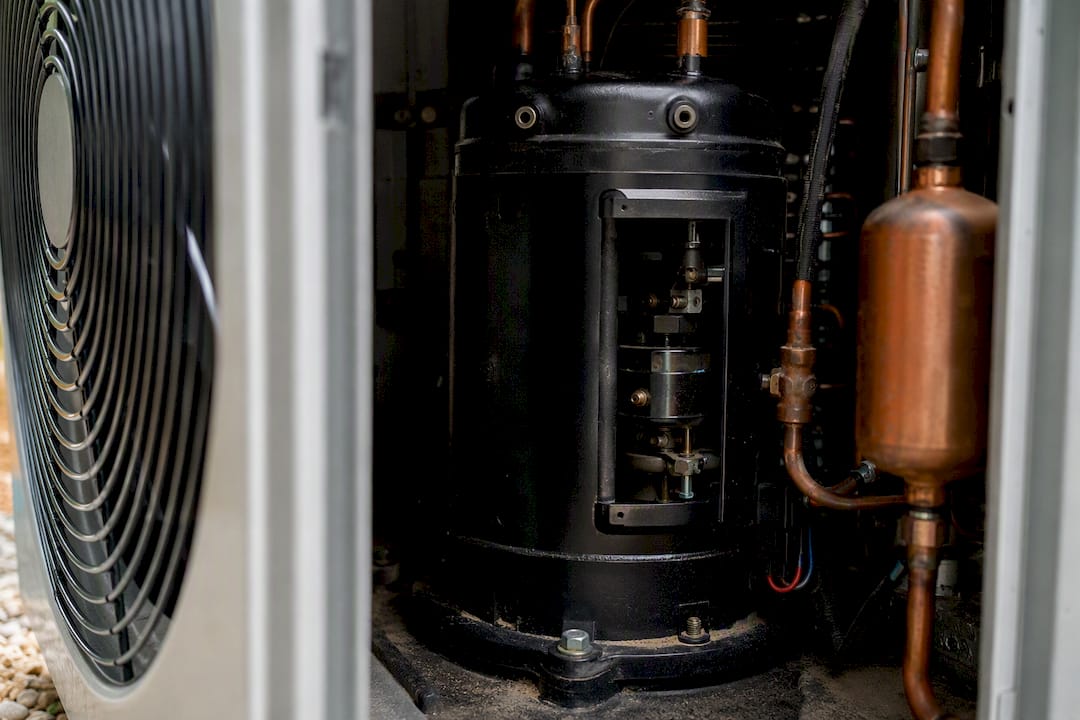
That extended low-speed runtime is where real humidity control happens. A system that cools your living room to the setpoint in eight minutes hasn’t had time to dehumidify anything; one that runs gently for forty-five minutes has. Consumer Reports testing confirms inverter-style compressors deliver quieter operation and better humidity performance than older on/off designs.
Zoning dampers paired with a smart thermostat let you direct conditioned air to occupied rooms instead of cooling an empty guest bedroom at the same rate as your kitchen.
Pro Tip: If noise is a priority, ask your contractor for the unit’s decibel rating at the property line, not just the marketed “quiet” claim on the box.
Pro Tip: Two-stage compressors often deliver 80% of the comfort benefit of variable-speed units for a meaningfully lower price. Ask for both quotes before assuming you need the top tier.
What Does a Replacement AC Unit Typically Cost?
Installed cost depends on far more than the equipment itself: system size, efficiency tier, ductwork condition, electrical panel capacity, and any permit or code upgrades all factor into the final number.
The “$5,000 rule” is a widely used heuristic for deciding between repair and replacement: multiply the age of your system by the cost of the repair, and if that number exceeds $5,000, replacement is usually the smarter financial move. A $600 repair on a 10-year-old unit lands at $6,000, tipping toward replacement, while the same repair on a 3-year-old unit stays well under the threshold. Treat it as a starting point, not gospel; a unit with a failing compressor or a cracked heat exchanger often warrants replacement regardless of the math.
To fund the upgrade:
- Check your utility provider’s rebate programs for qualifying high-efficiency equipment.
- Search ENERGY STAR’s rebate finder for state and local incentives tied to certified units.
- Ask installers about manufacturer financing or bundled system packages that combine AC, heat pump, or furnace work.
For local pricing specifics, this cost breakdown walks through common installed price ranges homeowners can use to sanity-check bids.
What Happens During AC Installation Day?
A replacement follows a predictable sequence: site visit and Manual J, written quote, permit application if required, scheduled install day, and post-install commissioning.
- Contractor conducts a site visit and performs the Manual J load calculation.
- You receive a written quote specifying equipment, SEER2/EER2 rating, and scope of work.
- The contractor pulls any required permits, typically triggered by electrical changes or full system swaps.
- Old equipment is removed and the new system is installed, usually in a single day for straightforward swaps.
- The technician verifies refrigerant charge, airflow, and thermostat calibration before leaving.
Your install day checklist should confirm:
- Refrigerant charge matches manufacturer specification
- Airflow across all registers is tested, not assumed
- Thermostat is calibrated and programmed correctly
- Old equipment and debris are hauled away
Pro Tip: Ask upfront whether permit costs are included in your quote or billed separately. This is a common source of surprise line items after the work is already scheduled.
What Questions Should You Ask AC Installers?
Contractors who skip Manual J and quote off square footage alone are the biggest red flag in this entire process. Ask every bidder these questions directly:
- Will you perform a Manual J load calculation before quoting equipment size?
- If I have existing ducts, will you run a Manual D check on airflow?
- What’s covered under parts and labor warranty, and for how long?
- Who pulls the permit, and is that cost included in the quote?
- Can you provide references from installations completed in the last year?
Watch for these warning signs:
- A quote generated over the phone with no home visit
- Pricing based purely on square footage
- No mention of licensing or insurance verification
- Silence about startup checks or post-install testing
A contractor who can’t explain how they arrived at your system size, and won’t show you the load calculation in writing, is asking you to trust equipment sizing you can’t verify. That’s the wrong kind of trust to extend on a $6,000 to $12,000 purchase.
Before signing anything, get the scope of work, equipment model and serial numbers, full warranty terms, and acceptance test results in writing. This homeowner’s guide to replacement questions covers additional questions worth asking before you commit.
Do You Need to Replace or Repair Your Ductwork Too?
Manual D takes the room-by-room loads from your Manual J and sizes ducts so each room receives the correct airflow in cubic feet per minute. Skip this step and even a perfectly sized system can leave one bedroom stuffy while another freezes.
Watch for these signs your ducts need attention:
- Persistent hot or cold spots that don’t respond to thermostat changes
- High static pressure readings during a technician’s diagnostic check
- Visible gaps, disconnected sections, or crushed flex duct in the attic or crawlspace
- Ductwork older than the home’s second or third HVAC replacement
Minor leaks can often be sealed rather than fully replaced. But if your ducts were sized for a much older, less efficient system, including them in your replacement quote, with a proper Manual D redesign, usually pays off in comfort.
Pro Tip: Ask your contractor to check static pressure during the site visit, not after installation. Catching duct problems before install day avoids a callback and a second invoice.
How Often Does an AC System Need Maintenance?
Schedule an annual spring tune-up before cooling season starts, and change filters every one to three months depending on your household and pets. A mid-summer check catches refrigerant or airflow issues before they become emergency repairs.
Central systems typically last 12 to 15 years; mini-splits often run a similar range with proper care. Skipped maintenance shortens both, and most manufacturers require documented annual service to keep warranty coverage valid. This residential maintenance guide outlines the specific tasks that protect both your equipment and its warranty.
How We Approach Every AC Replacement
Every replacement we handle starts the same way: a site survey, a documented Manual J, and a Manual D review whenever ductwork is part of the picture. We’ve found that homeowners trust a quote more when they can see the math behind it, not just a number on a page.
Our process includes a written scope of work, clear warranty terms, and a startup checklist that verifies refrigerant charge and airflow before we consider the job finished. With more than 40 years of combined experience across our team, and a commitment to supporting our community through partnerships like the Humane Society and Wounded Warrior Project, we treat every installation as a long-term relationship, not a one-time transaction.
Ready for a Manual J-Based Replacement Quote?
Skipping the sizing math is the single most expensive mistake homeowners make when replacing an AC unit, and it’s the one Strongheatingandcooling refuses to shortcut. Every quote we write starts with a documented Manual J, and a Manual D review if your ducts factor into the decision, so you know exactly why we’re recommending the size and system type we land on.

Our replacement process includes a full site survey, load calculations, an installation timeline you can plan around, manufacturer-backed warranty coverage, and optional maintenance plans to protect your investment once the system is running. We serve Colorado Springs and surrounding communities with in-home assessments scheduled promptly, so you’re not left waiting through a heat wave for a straight answer. If your current system is aging, cycling oddly, or you’re just tired of guessing, request a quote through our cooling services page and we’ll walk your home the right way, starting with the numbers, not a sales script.
Sources
- Manual J® Residential Load Calculation - ACCA
- Best central air conditioning buying guide — Consumer Reports
- Guide to Home Heating and Cooling - U.S. Department of Energy
- Manual J guide for homeowners — Modernize
FAQ
What Is the $5,000 Rule for HVAC?
Multiply your system’s age in years by the estimated repair cost. If the result exceeds $5,000, replacement is usually the more cost-effective choice than continued repair.
What AC Brands Should You Stay Away From?
Comfort problems come far more often from improper sizing or skipped maintenance than from brand choice, according to Consumer Reports. Reputable manufacturers like Trane, Lennox, Carrier, Goodman, Bryant, and Mitsubishi Electric all make reliable equipment when it’s sized correctly and installed by a qualified contractor.
What Is the 20-Degree Rule for Air Conditioners?
It refers to the general guideline that a properly functioning AC should cool indoor air significantly below the outdoor temperature. It’s a rough diagnostic check, not a sizing method, and shouldn’t replace a Manual J calculation.
Will a 2-Ton Unit Cool a 1,500 Square Foot House?
It depends entirely on insulation, window count, orientation, and climate, which is exactly why a Manual J load calculation, not a square-footage estimate, determines the correct tonnage for your specific home.
Does Strongheatingandcooling Provide Manual J Calculations With Every Quote?
Yes. Every replacement quote from Strongheatingandcooling includes a documented Manual J load calculation, and a Manual D duct review when ductwork is part of the project scope.
Recommended
Need expert HVAC help?
Colorado Springs' trusted, veteran-owned heating & cooling team — same-day service.