
Scheduling Your Annual HVAC Tune-Up in Colorado Springs
TL;DR:
- Scheduling an annual HVAC tune-up with diagnostic measurements helps prevent system failures and extend equipment life.
- Homeowners should book these services during spring and fall to avoid technician backlog and ensure warranty compliance.
Annual HVAC maintenance is defined as a planned service visit where a certified technician inspects, measures, and adjusts your heating and cooling system to manufacturer specifications. Scheduling an annual HVAC tune-up is the single most effective step Colorado Springs homeowners can take to prevent costly breakdowns and extend system life. Neglecting this service increases the risk of major failure by up to 40% and can cut a system’s lifespan from 15–20 years down to 8–10 years. Routine service also improves energy efficiency by 5–15%, which translates directly to lower monthly utility bills. For homes in Colorado Springs, where temperatures swing from summer heat to hard winter freezes, that reliability is not optional.
Why scheduling an annual HVAC tune-up matters for Colorado Springs homes
Colorado Springs sits at roughly 6,000 feet above sea level. That altitude affects airflow, combustion efficiency, and how hard your system works to condition the air. A furnace calibrated for sea level runs differently here, and an air conditioner pushing against thinner air faces added strain every cooling season. These are not abstract concerns. They show up as higher energy bills, shorter equipment life, and repairs that catch homeowners off guard.

Preventive maintenance reduces emergency repair costs by up to 70%. That figure reflects the difference between catching a failing capacitor during a tune-up versus replacing a compressor after a summer breakdown. The cost gap between those two outcomes is significant, and the inconvenience is even greater when temperatures peak in July or drop below zero in january.
Manufacturer warranties add another layer of urgency. Documented annual service is a condition of most manufacturer warranties, and skipping visits can result in denied claims for major repairs. A $400 compressor warranty claim denied because of missed maintenance becomes a $1,500 out-of-pocket expense. Keeping a service record protects that coverage and adds value when you sell the home.
When is the best time for HVAC service in Colorado Springs?
The best time to schedule a cooling system tune-up is in the spring, ideally between march and early may, before the first hot stretch arrives. For heating systems, fall service between september and early november positions your furnace for the cold months ahead. Scheduling during these shoulder seasons keeps you ahead of the technician backlog that builds when temperatures spike or plunge and every neighbor calls at once.
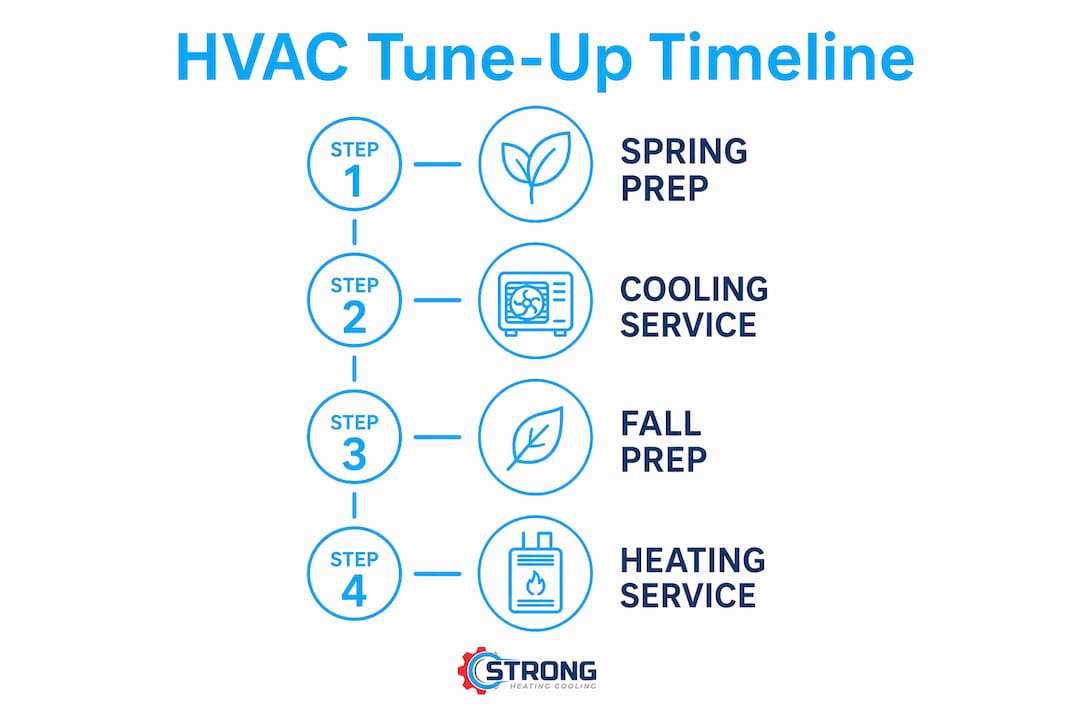
Most homes with both a furnace and central air conditioning benefit from two service visits per year, one for each system. Homes with a heat pump, which handles both heating and cooling, still need two visits because the system runs year-round and accumulates wear faster than a single-season unit. Low-use vacation homes or properties with newer equipment may manage with one annual visit, but twice yearly remains the standard recommendation for full-time residences.
A few situations call for more frequent attention:
- Systems older than 10 years carry more wear on components like heat exchangers and blower motors, making twice-yearly checks more important, not less.
- Homes with pets or occupants with allergies accumulate filter-clogging debris faster and may need filter checks between scheduled visits.
- Vacation properties that sit unused for months should receive a startup check before the heating or cooling season begins, regardless of when the last service occurred.
Pro Tip: Book your spring AC tune-up in february or march before the rush. Most technicians in Colorado Springs fill their april and may calendars quickly once warm weather is forecast.
What does a professional HVAC tune-up actually include?
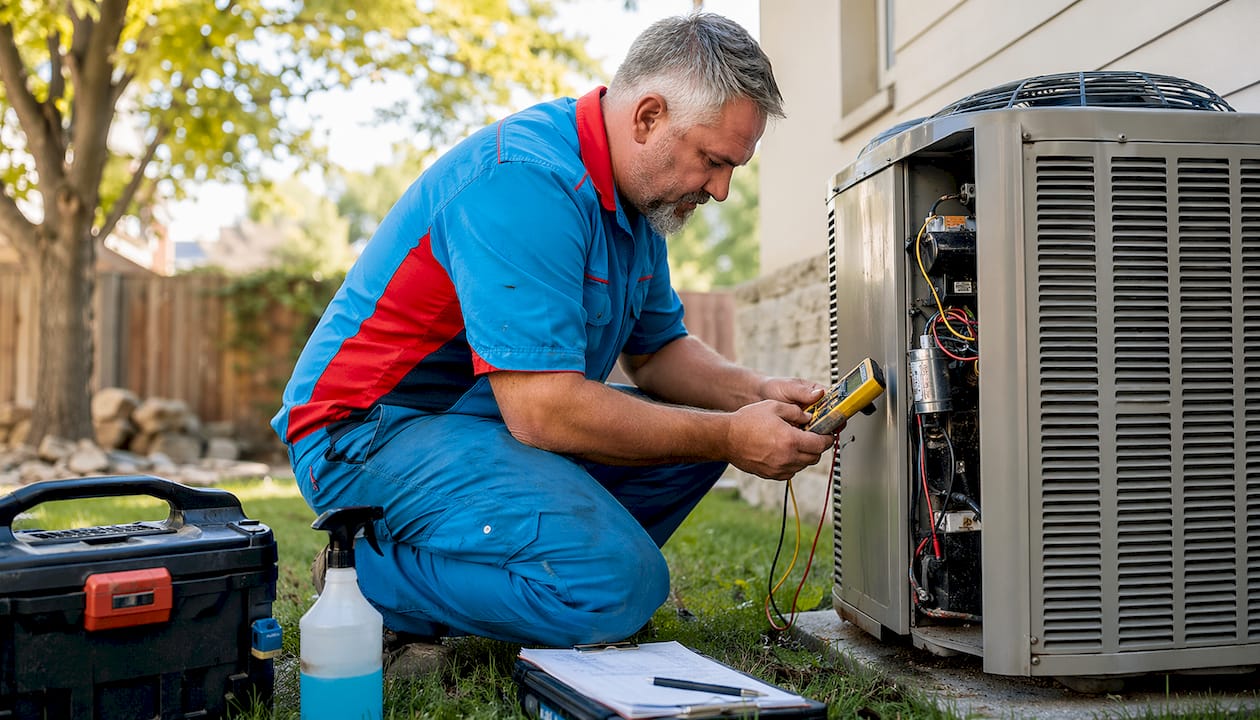
A real tune-up is a diagnostic process, not a visual walkthrough. Technicians measure components against manufacturer specifications, record the results, and flag anything trending toward failure. That distinction separates a legitimate service visit from a sales call dressed up as maintenance.
A thorough tune-up for a central air conditioning system covers:
- Refrigerant pressure check against manufacturer specs to confirm proper charge
- Capacitor value measurement to identify degradation before failure
- Blower motor amp draw to detect early motor strain
- Condenser and evaporator coil inspection and cleaning
- Condensate drain flush to prevent water damage and mold growth
- Thermostat calibration to verify accurate temperature control
- Electrical connection tightening and safety checks
- Filter inspection and replacement
For a gas furnace, the checklist expands to include heat exchanger inspection for cracks, flame sensor cleaning, flue vent inspection for blockages or corrosion, inducer motor amp draw, and gas pressure verification. A cracked heat exchanger is a carbon monoxide risk, and it is one of the conditions a visual inspection alone will miss.
| Component | What is measured | Why it matters |
|---|---|---|
| Capacitor | Capacitance value (microfarads) | A weak capacitor causes hard starts and compressor failure |
| Refrigerant | Pressure (PSI) | Incorrect charge reduces efficiency and damages the compressor |
| Blower motor | Amp draw | High amps signal motor strain before burnout occurs |
| Heat exchanger | Visual and combustion analysis | Cracks allow carbon monoxide to enter living spaces |
| Thermostat | Temperature accuracy | Miscalibration causes short cycling and wasted energy |
After the visit, ask the technician for the actual numbers recorded. Specific measurements like refrigerant pressure, capacitor values, and amp draws confirm that real diagnostic work was done. If a technician cannot produce those figures, the visit was an inspection, not a tune-up.
Pro Tip: Keep a folder, physical or digital, with every service report. Recorded measurements from past visits let the next technician spot trends, like a capacitor slowly losing value over two years, before it fails completely.
Common mistakes homeowners make when booking HVAC service
The most expensive mistake is treating a sales-call inspection as a tune-up. Some low-cost or “free” tune-up offers exist primarily to generate repair upsells. A legitimate tune-up involves labor, cleaning, and diagnostic measurements. If the price seems too low to cover that work, it probably does not.
Skipping the fall furnace tune-up because the system “ran fine last winter” is the reasoning behind most mid-January emergency calls. Systems do not announce their problems in advance. A tune-up finds the problem before the coldest night of the year does.
Homeowners also underestimate the damage caused by closing too many air registers. Closing more than 20% of registers creates excessive static pressure that overworks the blower motor. At Colorado Springs altitude, where airflow is already reduced, this accelerates motor wear faster than it would at lower elevations. Leave registers open throughout the home, even in unused rooms.
Other common pitfalls include:
- Scheduling only one tune-up per year for a system that handles both heating and cooling, leaving one season unserviced.
- Waiting until june or december to book, when technician availability is at its lowest and wait times stretch to weeks.
- Ignoring warning signs between visits like unusual noises, short cycling, or uneven temperatures, which signal that a system needs attention before the next scheduled service.
- Choosing a provider based on price alone without confirming they perform diagnostic measurements as part of the service.
One-time tune-up or annual maintenance plan: which fits your situation?
A one-time tune-up makes sense for homeowners with newer systems, those who recently moved into a home and want a baseline assessment, or those testing a new service provider before committing to a longer relationship. Pay-as-you-go service gives you flexibility without obligation.
An annual maintenance plan makes more financial sense for most Colorado Springs homeowners with established systems. Most professional maintenance plans cost $100–$250 per year and typically include two tune-up visits, priority scheduling, repair discounts of 10–20%, and waived diagnostic fees. Those benefits add up quickly when a repair is needed.
Maintenance plan members also benefit from documented service history, which satisfies manufacturer warranty requirements and provides a clear record for home buyers during a sale. A home with five years of documented HVAC service is a more credible purchase than one with no records.
| Situation | Better fit |
|---|---|
| System under 5 years old, no prior service history | One-time tune-up to establish baseline |
| System 5–10 years old, regular use | Annual maintenance plan for consistent coverage |
| System over 10 years old or heat pump | Annual plan with twice-yearly visits |
| Multiple HVAC systems in one home | Plan that covers all units, often at a bundled rate |
| Vacation or low-use property | One-time seasonal startup check |
For homeowners weighing the cost of a maintenance plan against pay-as-you-go service, the math generally favors the plan once a system is past its fifth year. Older systems are more likely to need repairs, and plan members pay less for those repairs when they occur.
Pro Tip: When comparing plans, ask specifically whether both heating and cooling tune-ups are included, or just one. Some plans cover only one system type, which leaves the other unserviced for the year.
Key Takeaways
Scheduling an annual HVAC tune-up twice per year, once in spring and once in fall, is the most reliable way to protect your system, your warranty, and your budget.
| Point | Details |
|---|---|
| Schedule in shoulder seasons | Book spring AC service in march to april and fall furnace service in september to october to avoid peak backlog. |
| Demand diagnostic measurements | A real tune-up produces recorded numbers for refrigerant pressure, capacitor value, and motor amp draw. |
| Protect your warranty | Manufacturers require documented annual service; missing visits can void coverage on major repairs. |
| Avoid closing registers | Closing more than 20% of air registers strains the blower motor, especially at Colorado Springs altitude. |
| Evaluate maintenance plans | Plans costing $100–$250 per year typically pay for themselves through repair discounts and priority scheduling. |
What consistent HVAC service has taught me about Colorado Springs homes
After working with hundreds of homeowners across Colorado Springs, the pattern is clear. The calls that hurt the most financially are not from people who ignored their systems entirely. They are from people who thought one tune-up every few years was close enough.
Colorado Springs is not a forgiving climate for HVAC equipment. The altitude alone changes how systems perform, and the temperature swings between seasons push heating and cooling equipment harder than in many other parts of the country. A furnace that works fine in october may be running on a marginal capacitor or a partially blocked flue that nobody checked. By january, that marginal condition becomes a failure.
The other thing I have seen repeatedly is homeowners who received a “tune-up” that amounted to a filter swap and a visual look at the unit. They paid for a service and got something far less valuable. Insisting on recorded measurements is not being difficult. It is the only way to know whether the visit accomplished anything. Ask for the numbers. A technician who did the work will have them.
Keeping a service record is also something most homeowners skip until they need it. Warranty claims, home sales, and insurance situations all go more smoothly when you can show a clear history of documented maintenance. A simple folder with each service report takes five minutes to maintain and has saved homeowners thousands of dollars in disputed claims.
— Owner
Strongheatingandcooling serves Colorado Springs homeowners year-round
Strongheatingandcooling offers HVAC maintenance plans built specifically for Colorado Springs homes, covering both heating and cooling tune-ups with priority scheduling, repair discounts, and documented service records that protect your manufacturer warranty.

Whether your system is a few years old or approaching the end of its expected life, Strongheatingandcooling’s team brings over 40 years of combined experience to every visit. Each tune-up includes the diagnostic measurements that confirm real work was done, not just a visual check. If your system needs more than routine service, the team also handles HVAC repair in Colorado Springs with honest pricing and no pressure. Reach out to schedule your next tune-up and keep your home comfortable through every season.
FAQ
How often should I schedule an HVAC tune-up?
Most homes need two tune-ups per year, one for the cooling system in spring and one for the heating system in fall. Heat pumps and older systems benefit most from this twice-yearly schedule.
What is the best time to book an HVAC tune-up in Colorado Springs?
The best time is during shoulder seasons: march through early may for cooling systems and september through october for heating systems. Booking early avoids the technician backlog that builds when extreme weather arrives.
How much does an annual HVAC maintenance plan cost?
Most professional plans cost $100–$250 per year and include two tune-up visits, priority scheduling, and repair discounts of 10–20%.
Can skipping a tune-up void my HVAC warranty?
Yes. Most manufacturers require documented annual maintenance as a condition of warranty coverage. Missing service visits can result in denied claims for major repairs.
What should a legitimate HVAC tune-up include?
A legitimate tune-up includes diagnostic measurements of refrigerant pressure, capacitor values, and blower motor amp draw, along with cleaning, filter replacement, and a written record of all findings.
Recommended
Need expert HVAC help?
Colorado Springs' trusted, veteran-owned heating & cooling team — same-day service.