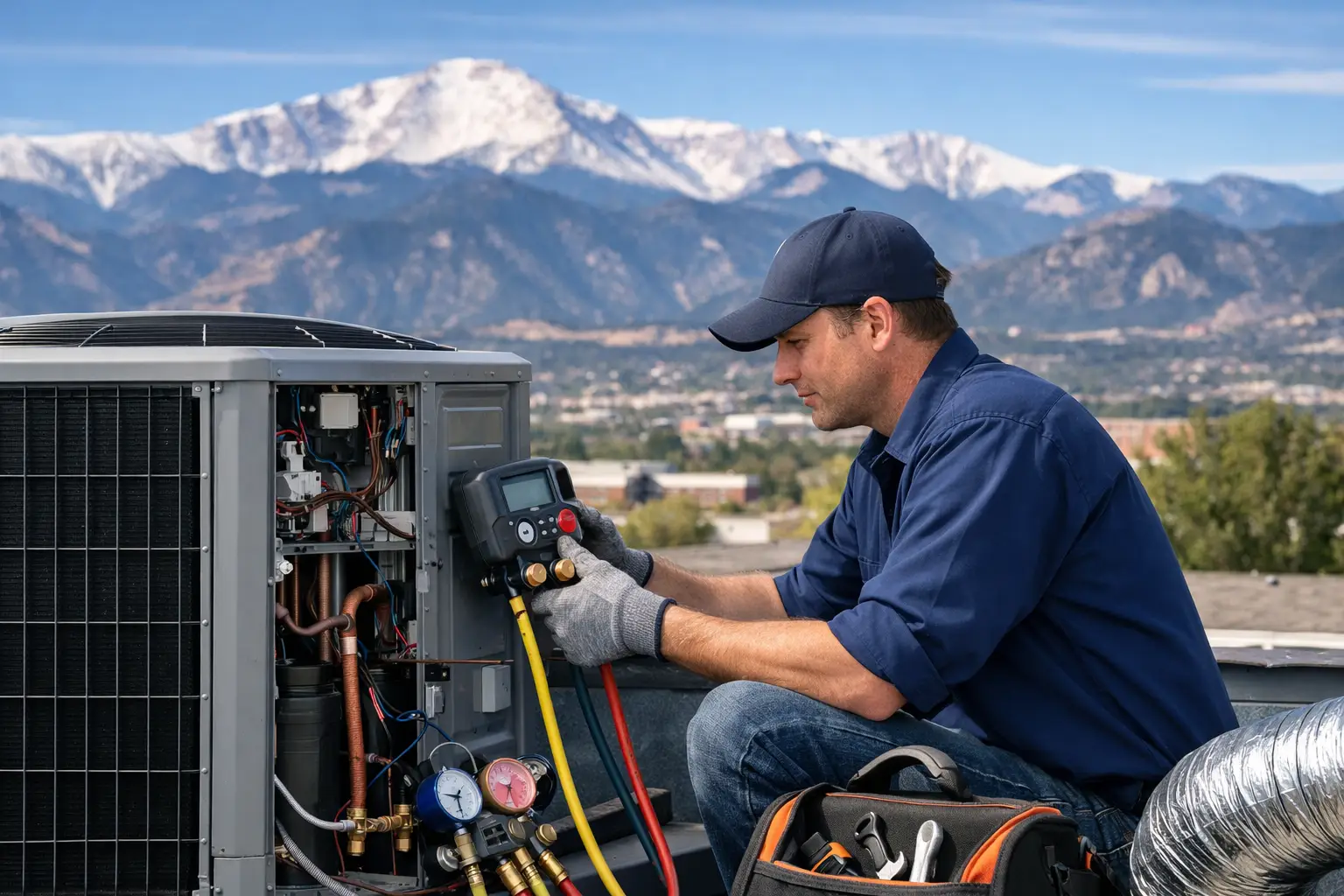
Colorado Springs weather does not give HVAC equipment much of a break. A furnace can work hard through freezing winter nights, then your cooling system has to be ready when summer heat shows up fast. That is why an HVAC maintenance plan Colorado Springs homeowners and property managers choose should do more than offer a quick tune-up. It should help prevent breakdowns, control operating costs, and keep comfort steady when the weather turns.
A good plan is less about sales language and more about consistency. You want scheduled service, clear communication, and a technician who notices small issues before they become expensive ones. For homes, that can mean avoiding a no-heat call in January. For commercial properties, it can mean protecting tenant comfort, business operations, and equipment life.
What an HVAC maintenance plan in Colorado Springs should actually cover
Not every maintenance plan is built the same. Some are little more than a reminder card and a basic visual inspection. Others provide real value through seasonal service, performance checks, priority scheduling, and repair savings. The difference matters.
For most properties, the right plan should include routine inspections for both heating and cooling equipment. That usually means checking electrical connections, testing system operation, inspecting safety controls, cleaning accessible components, and measuring how the system is performing. Airflow, refrigerant levels when applicable, thermostat accuracy, burner condition, drain lines, and filter status all play a role in how reliably the system runs.
If your property uses more specialized equipment, the plan should reflect that. A heat pump, boiler, mini split, swamp cooler, commercial rooftop unit, or commercial water heater each has different service needs. A one-size-fits-all plan can leave important items unchecked, which defeats the purpose of preventive maintenance in the first place.
The best plans also explain what is included and what is not. That helps you budget better and avoids confusion later. Maintenance should reduce surprises, not create them.
Why maintenance matters more in this climate
Colorado Springs puts HVAC systems through sharp seasonal swings, dry air, dust, and altitude-related performance challenges. Those conditions can expose weak components faster than many owners expect. Filters load up sooner, moving parts wear down, igniters fail, capacitors weaken, and airflow problems become more noticeable when systems are already working hard.
That does not mean every system needs major work every year. It does mean neglected equipment is more likely to struggle when you need it most. Regular maintenance gives technicians a chance to spot wear patterns, clean critical components, and verify that the system is operating safely and efficiently.
For homeowners, that often translates to fewer emergency calls and more stable utility bills. For commercial clients, it can help reduce disruptions, protect inventory or workspace conditions, and support more predictable operating costs. Maintenance is not a guarantee against failure, but it is one of the most practical ways to lower the odds.
What you are really paying for
People sometimes look at a maintenance plan and ask a fair question: why not just call when something breaks? In some cases, that might work for older equipment near the end of its life or for owners willing to accept more risk. But most of the time, waiting for failure costs more in the long run.
A maintenance plan is not just a cleaning appointment. You are paying for routine oversight, earlier problem detection, and easier access to service when demand is high. You are also paying for a technician to keep an eye on efficiency, safety, and wear before a small issue becomes a larger repair.
There is also the convenience factor. Scheduled visits are easier to manage than last-minute emergencies. If a plan includes priority scheduling or discounts on needed repairs, that can add real value during peak summer and winter service periods.
The savings are not always dramatic in one visit. Often, the value shows up over time through fewer breakdowns, lower strain on equipment, and more informed decisions about repairs versus replacement.
How to compare one HVAC maintenance plan Colorado Springs option to another
If you are reviewing plans, start with the basics. How many visits are included each year, and are they matched to your equipment type? A heating-only inspection may not be enough if you depend on central air, a heat pump, or ductless systems. Commercial properties should also ask whether the provider has experience with larger or more specialized equipment.
Next, look at the service details. Does the company perform actual performance checks, cleaning, and safety inspections, or is the visit mostly a quick once-over? Does the plan include reminders, documented findings, and recommendations that are easy to understand? Clear reporting matters because it helps you make decisions without guesswork.
Then consider service support. Priority scheduling, emergency availability, transparent repair pricing, and technician training all matter. A low-cost plan may sound appealing until peak season arrives and you still wait days for service. Dependable local support often proves more valuable than a bargain plan with limited follow-through.
Finally, ask about flexibility. Some owners need coverage for a furnace and AC. Others have boilers, mini splits, rooftop units, or multiple systems across one property. The right provider should be able to match the plan to the equipment rather than forcing your system into a standard package.
Signs a maintenance plan is worth it for your property
A maintenance plan usually makes sense if your equipment is still in serviceable condition and you want to protect its performance. That includes newer systems you want to keep under proper care, as well as mid-life systems that need consistent attention to stay reliable.
It is especially useful if you have had repeat issues, uneven heating or cooling, rising utility bills, or a history of emergency service calls. Those problems do not always mean replacement is necessary, but they do suggest your system needs closer oversight.
For commercial properties, maintenance is often less optional than it is for a single-family home. When comfort affects staff, customers, tenants, or operations, preventive service becomes part of protecting the business itself.
If your system is already failing frequently and facing major repair costs, the answer may be different. In that case, maintenance still helps with short-term operation, but replacement planning may be the smarter financial move. A trustworthy contractor should tell you that directly instead of selling maintenance as a cure-all.
What to expect from a dependable local provider
Choosing a maintenance plan is also choosing the company behind it. The strongest providers are straightforward about pricing, responsive when service is needed, and equipped to work on the type of system you have. They do not hide behind vague service descriptions or pressure you into unnecessary work.
Look for clear estimates, trained technicians, and a company that can support you beyond the maintenance visit. If a problem is found, you want real repair capability, honest recommendations, and options that fit your budget and timeline. That matters for both residential and commercial customers.
Local experience helps too. A contractor serving El Paso County understands how seasonal demands affect equipment here and can recommend maintenance timing that makes sense. Strong Heating and Cooling, for example, serves both homes and businesses with broad HVAC coverage, which matters when a property has more than a standard furnace-and-AC setup.
Making the plan work after you sign up
A maintenance plan works best when it is treated as part of ongoing system care, not a substitute for attention. Keep filters changed on schedule, pay attention to unusual noises or airflow changes, and do not wait months to report a problem that keeps returning. Maintenance visits are valuable, but between-visit habits still matter.
It also helps to keep records. If a technician recommends a repair, asks you to monitor a component, or notes declining performance, that information can guide the next decision. Over time, you build a clearer picture of whether the system is holding steady, needs repair investment, or is nearing replacement.
The right plan brings structure to all of that. Instead of reacting every time comfort drops or equipment stops, you have a consistent service path and a better chance of staying ahead of problems.
If you are considering a maintenance plan, focus on practical value. Choose one that fits your equipment, explains the service clearly, and gives you confidence that when your system needs attention, help will be there when it counts.