

HVAC Brand Selection Criteria: A Homeowner’s Guide
TL;DR:
- Proper installation and correct sizing are more crucial than brand name for long-term HVAC performance.
- Verifying manual J calculations, warranty registration, and local parts support ensures system reliability and efficiency.
The single most important factor in long-term HVAC performance is not the brand on the cabinet. It is the quality of the installation and whether the system was sized correctly for your home. A well-installed mid-tier system will consistently outperform a premium brand that was rushed in without a Manual J load calculation. Before you compare logos, confirm these three things:
- The contractor will provide a printed Manual J sizing report before any equipment is ordered.
- Warranty registration will be completed in writing by the installer at startup.
- The brand you are quoted has local parts and dealer support in your area.
Pro Tip: Ask every contractor for the Manual J report as a condition of signing. If they size by square footage alone or say “we’ll just match what you have,” that is a reason to call someone else.
Table of Contents
- Why installer skill and proper sizing matter more than brand names
- What are the concrete criteria for choosing an HVAC brand?
- How to vet a specific brand and model before you sign
- How do rebates and efficiency ratings affect your total cost?
- What reliability signals should you look for?
- Which system type is right for your home?
- What should you ask contractors, and what are the red flags?
- Key Takeaways
- Why installation and service are the priority at Strongheatingandcooling
- Strong Heating & Cooling handles the details so you do not have to
- Useful sources for further reading
- FAQ
Why installer skill and proper sizing matter more than brand names
Proper sizing is foundational, and the industry is clear on this: sizing by square footage alone is unreliable, and Manual J is the accepted standard. An oversized system short-cycles, meaning it starts and stops too frequently to complete a full dehumidification cycle. The result is a home that feels clammy even when the thermostat reads the right temperature, plus accelerated wear on the compressor and control board.
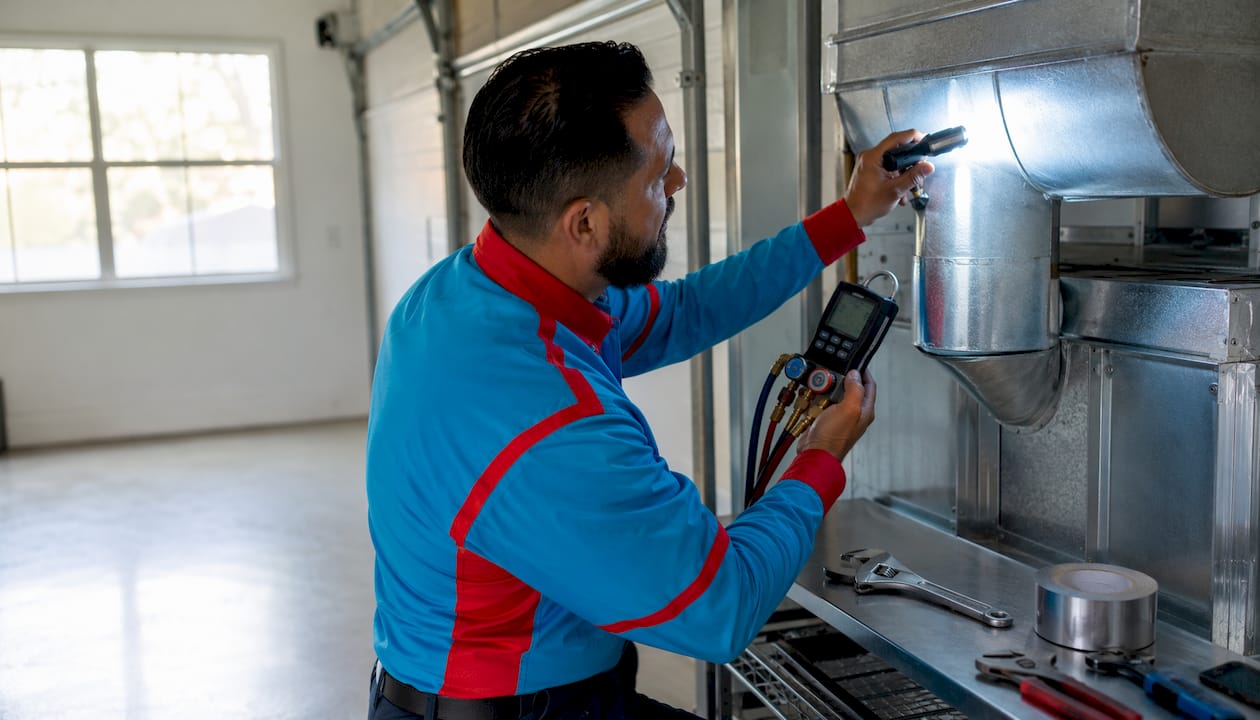
Poor installation practices compound the problem. Skipped refrigerant charging, leaky duct connections, and missing startup commissioning can reduce a new system’s efficiency by a significant margin regardless of its rated SEER2. Contractor practices directly correlate with long-term performance and whether the efficiency rating on the label ever shows up on your utility bill.
Duct condition is another factor that often gets overlooked. Duct leakage and restricted returns cause major performance issues and should be evaluated before any equipment replacement. A new high-efficiency system pushing conditioned air through leaky ducts is money left on the table.
Pro Tip: Request written confirmation that startup commissioning was completed and that the equipment warranty has been registered with the manufacturer before the installer leaves your property.
What are the concrete criteria for choosing an HVAC brand?
When comparing brands and models, focus on factors you can actually verify rather than marketing language. The table below shows the dimensions that matter and the question to ask for each.
| Evaluation Dimension | Question to Ask |
|---|---|
| Efficiency (SEER2 / HSPF2 / AFUE) | What is the rated efficiency, and does it meet or exceed ENERGY STAR minimums? |
| Warranty (parts and labor) | How many years, is labor included, and is registration required to activate full coverage? |
| Parts availability | Does the local dealer stock compressors, control boards, and blower motors, or are they ordered on demand? |
| Installer/dealer network | How many certified dealers are within your service area, and what is the typical parts lead time? |
| Features | Does the model offer variable-speed inverter operation, zoning compatibility, or smart thermostat integration? |
| Upfront vs. lifecycle cost | What is the estimated annual operating cost, and how does the payback period compare across quoted models? |
| Noise and comfort | What is the rated decibel level, and does the system offer two-stage or variable-speed operation for steadier temperatures? |
Efficiency ratings are the standard metrics for estimating operating costs: SEER2 for cooling, HSPF2 for heat pumps, and AFUE for furnaces. A buyer focused on lowest upfront cost may reasonably choose a 14–15 SEER2 single-stage system with a clean install. A long-term owner in a climate with high utility rates will often find that a 16+ SEER2 variable-speed system pays back the premium over time. For a rental property where the owner pays utilities, that calculus shifts again.
Variable-speed inverter-driven systems provide superior humidity control and more consistent temperatures, which matters especially in climates with hot, humid summers. They also tend to run quieter and carry better onboard diagnostics.
Pro Tip: Before signing, call a local HVAC supply house and ask whether the brand you are being quoted has parts in stock. A two-day parts wait in July is a real comfort and cost issue.
How to vet a specific brand and model before you sign
Use this checklist on every quote you receive to compare proposals on equal terms.
- Confirm the contractor will perform a Manual J load calculation and provide the printed report.
- Request the AHRI performance match sheet showing the specific indoor and outdoor unit model numbers as a matched pair.
- Verify exact model numbers for both indoor and outdoor components so you can look up the AHRI certificate independently.
- Ask for the labor warranty terms in writing, including duration and any exclusions.
- Confirm who will register the equipment warranty with the manufacturer and when.
- Ask about the dealer’s parts inventory and typical lead time for compressors and control boards.
- Request two or three references from similar installations completed in the past 12 months.
Manufacturer registration is frequently required to maintain full parts warranty length, often 10–12 years. Failure to register can reduce that coverage. Confirm in writing that the installer will handle registration at startup, not weeks later.
When replacing aging equipment, replacing both the indoor and outdoor components together is usually the right call. Mismatched components reduce system efficiency and can void warranties, so a partial replacement to save money upfront often costs more over the system’s life.
How do rebates and efficiency ratings affect your total cost?
Higher efficiency ratings translate directly into lower monthly operating costs, but the payback period depends on your local utility rates, climate, and available incentives. Upgrading from a minimum-efficiency system to a 16+ SEER2 model often yields notable annual savings and may qualify for utility rebates or federal tax credits.
The federal Inflation Reduction Act provides a 30% tax credit up to $2,000 for qualifying heat pumps through 2032, provided the equipment carries ENERGY STAR certification. State and utility rebates can stack on top of that. Check dsireusa.org for programs specific to your state and utility.
A simple payback check: if a higher-efficiency model costs $1,500 more upfront and saves $200 per year on energy, the payback is 7.5 years before incentives. A $500 utility rebate shortens that to 5 years. Over a 15–20 year system life, the math usually favors the more efficient option for homeowners who plan to stay.
What reliability signals should you look for?
Consumer Reports owner-survey data shows that a notable portion of central AC systems experience at least one problem during their service life, and many units that had issues eventually stopped functioning as intended. The most common and costly failure types to factor into a brand decision include:
- Compressor failures, which are the most expensive single repair on a central system.
- Control board failures, which are increasingly common on systems with complex electronics.
- Evaporator and condenser coil leaks, often linked to manufacturing quality and refrigerant handling during installation.
- Refrigerant obsolescence, a real concern as older refrigerant types are phased out.
Parts availability and local dealer support reduce downtime significantly. Brands with regional warehouse stock for compressors, control boards, and blower motors can mean a same-day repair versus days of waiting. In Colorado Springs, where winter temperatures can drop sharply, a two-day parts delay on a furnace control board is not a minor inconvenience.
Brands with wide dealer networks, including Carrier, Trane, Lennox, Rheem, Goodman, York (Johnson Controls), American Standard, Bryant, Daikin, and Mitsubishi Electric, generally offer faster parts access than niche or regional brands. That said, local dealer quality varies even within the same brand family, so ask your contractor specifically about their stocking practices.
Which system type is right for your home?
The right system type depends on your climate, existing infrastructure, and how long you plan to stay in the home. Here is a brief comparison:
| System Type | Best Fit | Key Consideration |
|---|---|---|
| Gas furnace + central AC | Cold climates, existing ductwork, natural gas available | Proven technology, widest contractor availability |
| Air-source heat pump | Moderate climates, all-electric homes, eligible for 30% tax credit | Less effective below about 15°F without backup heat |
| Dual-fuel (heat pump + gas furnace) | Cold climates where efficiency and backup heat both matter | Higher upfront cost, excellent efficiency in mixed conditions |
| Ductless mini-split | No existing ductwork, room additions, supplemental zones | Higher per-zone cost, excellent for targeted comfort |
Oversizing is one of the most common installation mistakes, and it causes short-cycling, poor humidity control, and shorter equipment life. The right approach is to match unit capacity to the Manual J result, not to the old unit’s tonnage. The old unit may have been oversized from the start, or your home’s load may have changed with insulation upgrades or additions.
Duct evaluation belongs in every replacement project. Sealing and balancing existing ductwork before installing new equipment is often the highest-return step a homeowner can take. Improvements to the building envelope, such as garage door insulation upgrades, also reduce the calculated load and can affect what size system you actually need.
What should you ask contractors, and what are the red flags?
Ask every contractor these questions before accepting a proposal:
- Will you perform a Manual J load calculation, and can I see the printed report?
- Are you licensed, insured, and bonded? What is your state license number?
- Will you pull the required permits and schedule the inspection?
- How do you confirm refrigerant charge at startup, and do you provide a commissioning report?
- Who registers the equipment warranty, and will you confirm that in writing?
Red flags that should stop the conversation:
- Sizing the system by square footage or matching the old unit without a load calculation.
- Quoting over the phone without visiting the home.
- Refusing to pull permits or suggesting permits are unnecessary.
- Vague warranty language with no written labor terms.
- Pressure to decide the same day with a “today only” price.
- Requiring full payment upfront.
Licensed contractors carry insurance that protects you if something goes wrong during installation. Always ask for the license number and verify it with your state licensing board before signing.
Key Takeaways
Choosing the right HVAC brand requires verifying installer quality, correct sizing via Manual J, warranty registration, and local parts support before any brand comparison matters.
| Point | Details |
|---|---|
| Installation beats brand | A well-installed mid-tier system outperforms a premium brand installed without Manual J or commissioning. |
| Manual J is non-negotiable | Sizing by square footage alone is unreliable; insist on a printed Manual J report before equipment is ordered. |
| Warranty registration protects you | Full parts warranty coverage (often 10–12 years) typically requires manufacturer registration at installation. |
| Efficiency ratings drive operating cost | Compare SEER2 for cooling, HSPF2 for heat pumps, and AFUE for furnaces; a 16+ SEER2 system may qualify for rebates. |
| Strongheatingandcooling includes the checklist | Every Strongheatingandcooling installation quote includes Manual J sizing, permit handling, and warranty registration confirmation. |
Why installation and service are the priority at Strongheatingandcooling
The brands that hold up over time share a few things: they are installed correctly, sized to the actual load, and backed by a contractor who stocks parts and answers the phone. That is the standard Strongheatingandcooling holds itself to across Colorado Springs and surrounding communities. With over 40 years of combined industry experience, the team focuses on documentation, commissioning, and ongoing support because those are the steps that determine whether a system performs as promised. Community work, including support for the Wounded Warrior Project and providing free systems to families in need, reflects the same commitment: this is about people, not just equipment.
Strong Heating & Cooling handles the details so you do not have to
Replacing a heating or cooling system is one of the larger investments a homeowner makes, and the details matter. Every Strongheatingandcooling installation and replacement includes a Manual J load calculation, permit handling, startup commissioning, and written warranty registration confirmation. There is no guesswork about whether the system is sized correctly or whether your warranty is active.
For homeowners weighing repair against replacement, the team can walk through the numbers honestly, including available rebates and financing options that make a higher-efficiency system more accessible. Serving Colorado Springs, Monument, Security-Widefield, Ellicott, and surrounding areas, Strongheatingandcooling is ready to provide a local, itemized quote that covers every line item. Contact the team today to schedule your in-home assessment.
Useful sources for further reading
- Manual J load calculation guidance (ACCA) — The industry standard for residential load calculations; explains why square-footage sizing is insufficient.
- SEER2, HSPF2, and AFUE definitions (Trane) — Plain-language explanations of efficiency metrics and what they mean for operating costs.
- Central AC reliability findings (Consumer Reports) — Owner-survey data on common failure points and longevity for central air conditioning systems.
- Contractor vetting checklist (HVAC Database) — Step-by-step questions to ask before signing with any HVAC contractor.
- Federal rebates and tax credits (DSIRE) — State-by-state database of utility rebates and federal incentives for qualifying HVAC equipment.
FAQ
What is the most important factor when choosing an HVAC brand?
Installation quality and correct sizing matter more than brand name. A properly sized, well-installed mid-tier system will consistently outperform a premium brand installed without a Manual J load calculation.
How do I know if an HVAC contractor is reputable?
Ask for their state license number, proof of insurance, and references from recent similar installations. Any contractor who refuses to pull permits or declines to provide a Manual J report is a red flag.
Does ENERGY STAR certification matter when selecting an HVAC brand?
Yes. ENERGY STAR certification confirms the equipment meets minimum efficiency thresholds and is required to qualify for the federal 30% tax credit (up to $2,000) available through 2032 for qualifying heat pumps.
Why does warranty registration matter so much?
Manufacturer registration is often required to activate full parts warranty coverage, typically 10–12 years. Failure to register at installation can reduce that coverage, leaving you with less protection on a major investment.
Which HVAC brands have the strongest dealer and parts networks?
Brands including Carrier, Trane, Lennox, Rheem, American Standard, Bryant, Goodman, York, Daikin, and Mitsubishi Electric generally maintain wide dealer networks in the U.S., though local parts availability varies by market and should be confirmed with your contractor before signing.
Recommended
Need expert HVAC help?
Colorado Springs' trusted, veteran-owned heating & cooling team — emergency service.