

TL;DR:
- An HVAC warranty shields homeowners from costly repairs and replacements by covering defective parts and labor under specific terms.
- Proper registration, maintenance, and understanding of coverage are essential to ensure the warranty remains valid when needed.
- Extended warranties are beneficial for high-use climates, budget equipment, or long-term homeowners seeking predictable repair costs.
An HVAC warranty is a manufacturer or contractor guarantee that defective parts or systems will be repaired or replaced under specified terms, and understanding why HVAC warranty is important can mean the difference between a manageable repair bill and a financial crisis. HVAC repairs typically cost $130 to $450, while full system replacements run $5,000 to $15,000. That gap is exactly what a well-managed warranty is designed to close. Most systems come with a standard manufacturer parts warranty, a separate labor warranty from the installing contractor, and the option to purchase an extended warranty for longer-term coverage. Registering your equipment on time and maintaining it properly are the two steps that determine whether that protection actually holds when you need it.
Why HVAC warranty coverage matters for your budget
HVAC warranty coverage is the financial safety net that keeps a compressor failure or heat exchanger crack from becoming a five-figure emergency. Without it, every major component failure lands entirely on your budget. With it, the manufacturer or contractor absorbs the cost of covered parts and, in some cases, the labor to install them.
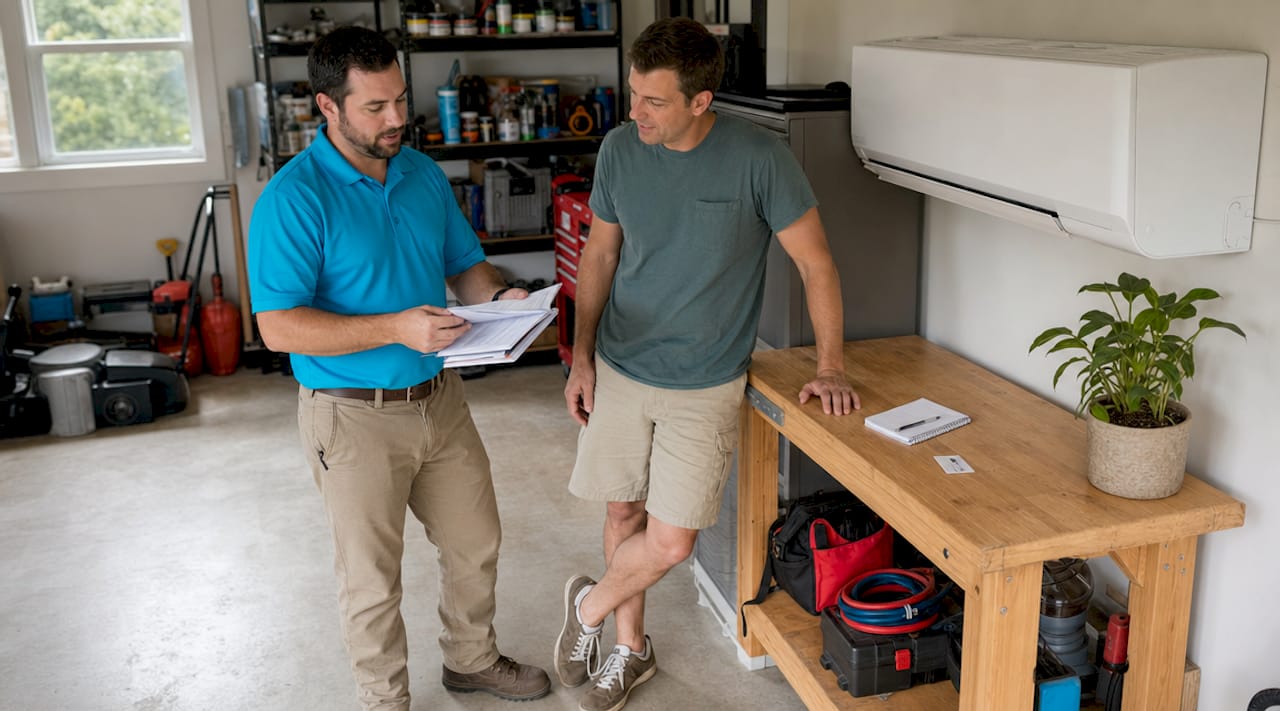
The three main warranty types each protect a different part of your exposure. The manufacturer parts warranty covers defective components like compressors, coils, heat exchangers, and circuit boards. The contractor labor warranty covers the technician’s time to diagnose and swap those parts. The extended warranty, purchased separately, stretches both types of coverage beyond the standard term.
Understanding HVAC warranty coverage also means knowing what the standard policy does not cover. Standard manufacturer warranties rarely include refrigerant, diagnostic fees, or labor costs. Refrigerant alone runs $50 to $150 per pound, and labor for a typical repair takes three to six hours at $300 to $800 total. A homeowner who assumes their parts warranty covers everything can still face a substantial out-of-pocket bill.
Common exclusions across most manufacturer warranties include:
- Refrigerant recharge or leak repair
- Diagnostic and service call fees
- Damage caused by improper installation or unlicensed work
- Repairs made by unauthorized technicians
- Damage from floods, lightning, or other external events
- Routine maintenance items like filters, belts, and capacitors
Pro Tip: Ask your installing contractor for a written copy of both the manufacturer warranty and their own labor warranty before the installation crew leaves your property. Verbal assurances are not enforceable.
How does HVAC system registration affect your warranty?
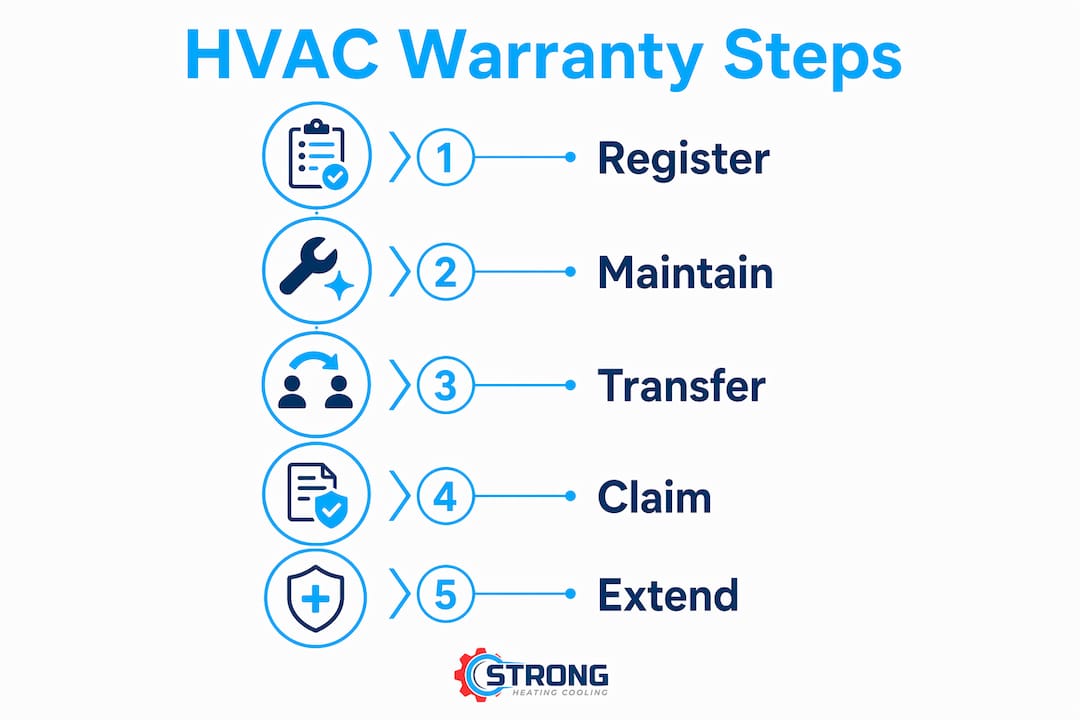
Registration is not optional. Missing the registration window automatically reduces your parts warranty from 10 years to 5 years with most major manufacturers, including Carrier, Lennox, and Trane. That single administrative oversight cuts your protection in half, often without any notification from the manufacturer.
Most manufacturers require online registration within 60 to 90 days of installation. The process takes less than 10 minutes, but many homeowners fail to register on time because they assume the contractor handled it or because the paperwork gets lost in the chaos of a new installation or home purchase.
Here is how to complete registration correctly:
- Locate the model number and serial number on the equipment nameplate, usually found on the side or back of the outdoor unit and the air handler.
- Note the exact installation date from your contractor’s invoice.
- Gather the installing contractor’s name, license number, and contact information.
- Visit the manufacturer’s registration portal (Carrier, Lennox, Trane, Rheem, and most others have dedicated registration pages) and submit all details within the 60 to 90 day window.
- Save the confirmation email and print a copy to store with your home records.
If your contractor offers to handle registration on your behalf, follow up within two weeks to confirm it was completed. Contractors occasionally miss this step, and the consequences fall on you as the homeowner. Checking the manufacturer’s portal directly using your serial number takes 60 seconds and removes all uncertainty.
Does an HVAC warranty help when you sell your home?
A transferable HVAC warranty is a concrete selling point that buyers and their inspectors notice. Transferable warranties add $500 to $1,500 in buyer-perceived home value, which means the paperwork involved in a transfer often pays for itself before the closing table.
The transfer process is not automatic. Warranty transfer requires paperwork filed within roughly 90 days of the home sale, a transfer fee typically ranging from $25 to $100, and usually results in a reduced remaining warranty term for the buyer. A 10-year parts warranty with six years remaining may convert to a five-year term after transfer, depending on the manufacturer’s policy.
The table below compares how major manufacturers handle warranty transfers:
| Manufacturer | Transfer fee | Remaining term after transfer | Transfer window |
|---|---|---|---|
| Carrier | $25–$50 | Reduced to base term | 90 days post-sale |
| Lennox | $0–$50 | Varies by product line | 90 days post-sale |
| Trane | $25–$100 | Reduced to base term | 90 days post-sale |
| Rheem | $0 | Full remaining term | 90 days post-sale |
Sellers who plan ahead have a clear advantage. Disclosing a valid, transferable warranty in your listing documentation signals that the HVAC system is newer, properly installed, and still covered. Buyers who are comparing two similar homes often favor the one where a major system is protected.
- Gather your original warranty registration confirmation before listing the home.
- Contact the manufacturer at least 30 days before closing to understand the transfer process.
- Include the warranty documentation in your seller’s disclosure packet.
- Budget for the transfer fee so it does not become a last-minute negotiation point.
Pro Tip: If you are buying a home, ask the seller’s agent for proof of HVAC warranty registration and the original installation date. A system installed three years ago with no registration on file is effectively operating on a five-year base warranty, not the 10-year extended term.
When should homeowners consider an extended HVAC warranty?
An extended HVAC warranty adds labor coverage and sometimes parts coverage beyond the standard manufacturer term, and extended plans typically cost $600 to $1,200 for a 10-year period. Whether that cost makes sense depends on your situation, your equipment, and how long you plan to stay in the home.
The benefits of an HVAC warranty extension are clearest in specific circumstances. Extended labor warranties provide budget certainty and protection against inflation in repair costs, especially in high-stress climates or with budget-tier equipment. Colorado Springs homeowners, for example, run their heating systems hard through long winters and their cooling systems through intense summer heat cycles. That kind of year-round demand accelerates wear on components like blower motors, capacitors, and contactors.
Situations where an extended warranty tends to pay off:
- You purchased a mid-range or budget-tier system where component quality is lower than premium brands.
- You live in a climate with extreme seasonal temperature swings that push the system to run frequently.
- You plan to stay in the home for more than seven years, maximizing the coverage window.
- Your home is older and the ductwork or electrical system adds stress to the HVAC equipment.
- You prefer predictable maintenance budgets and want to avoid surprise repair bills.
Situations where an extended warranty may not be worth the cost include short-term ownership plans, premium equipment with strong base warranties, or cases where the extended plan excludes labor entirely. Read the contract carefully before purchasing. Some plans sold as extended warranties are actually service contracts with narrow exclusions that leave the most expensive repairs uncovered. Confirm that the plan covers labor, not just parts, and check whether it requires repairs to be performed by a specific contractor network.
The HVAC warranty vs repair cost comparison is straightforward over a 10-year period. A single compressor replacement without coverage can cost $1,500 to $2,500 in parts and labor. One covered repair can recover the entire cost of an extended plan.
What can void your HVAC warranty?
Warranty voidance is more common than most homeowners realize, and the most frequent causes are late registration, improper installation, lack of annual maintenance, and unauthorized repairs. Each of these is preventable with straightforward habits.
The most damaging mistake is skipping or delaying registration. Once the 60 to 90 day window closes, the extended warranty term is gone permanently. No manufacturer will restore it retroactively. The second most common cause of voidance is using an unlicensed contractor for installation or repairs. Manufacturers require that installation and service work be performed by licensed HVAC technicians. Work done by an unlicensed individual, even if technically correct, can invalidate the entire warranty.
Additional causes of warranty voidance include:
- Failure to perform annual maintenance by a certified technician
- Use of unapproved refrigerant types or incorrect refrigerant quantities
- Modifications to the system not authorized by the manufacturer
- Physical damage from flooding, fire, or lightning not covered under a separate homeowner’s insurance policy
- Repairs performed by technicians not authorized by the manufacturer
Keeping your warranty valid requires one core habit: documentation. Save every service invoice, maintenance record, and repair receipt in a dedicated folder, either physical or digital. If a warranty claim is ever disputed, your maintenance history is the evidence that proves the system was properly cared for. The importance of HVAC warranties is only realized when you can actually use them, and that requires a paper trail.
Pro Tip: Schedule annual HVAC maintenance every fall for your heating system and every spring for your cooling system. Consistent annual maintenance records are the single strongest defense against a disputed warranty claim.
Key takeaways
An HVAC warranty protects homeowners from repair and replacement costs that can reach $15,000, but only when the system is registered on time, maintained by licensed technicians, and the coverage terms are fully understood.
| Point | Details |
|---|---|
| Register within 60 to 90 days | Missing the registration window cuts parts warranty coverage from 10 years to 5 years permanently. |
| Labor is rarely included by default | Manufacturer warranties cover parts only; labor costs of $300 to $900 typically come out of pocket without a contractor labor warranty. |
| Transfers require proactive steps | Warranty transfer during a home sale requires paperwork, fees, and filing within 90 days or coverage is lost. |
| Extended plans suit specific situations | High-use climates, budget equipment, and long-term ownership make extended warranties a financially sound choice. |
| Documentation preserves coverage | Keeping maintenance records and service invoices is the primary defense against a denied warranty claim. |
What I’ve learned from 40 years of HVAC warranty situations
After four decades of combined experience installing and servicing HVAC systems across Colorado Springs, the pattern I see most often is not equipment failure. It is homeowners discovering their warranty is invalid at exactly the moment they need it most.
The registration issue alone accounts for a significant share of avoidable expenses. A homeowner calls with a failed compressor, the system is three years old, and the repair should be covered. Then we pull the registration record and find it was never filed. The manufacturer’s base warranty applies, which may or may not cover the specific component at that age. That is a painful conversation, and it is entirely preventable.
The second mistake I see regularly is assuming that a parts warranty covers the full cost of a repair. When a heat exchanger cracks on a furnace, the part itself might be covered, but the labor to replace it can run $300 to $900 depending on system access and complexity. Homeowners who did not purchase a labor warranty are often surprised by that bill. It is not a hidden fee. It is simply a gap in coverage that nobody explained clearly at the time of installation.
My honest recommendation is to treat warranty management the same way you treat homeowner’s insurance. You do not wait until something breaks to understand what your policy covers. You read it when it is issued, you file the registration immediately, and you keep records of every service visit. The homeowners who get the most value from their HVAC warranties are the ones who approached it as a system to manage, not a document to file and forget. Hiring a licensed HVAC contractor for every installation and service call is the single most reliable way to keep that coverage intact.
— Owner
How Strongheatingandcooling protects your HVAC investment
At Strongheatingandcooling, every installation includes warranty registration handled by our licensed technicians so you never have to worry about missing the filing window. We serve Colorado Springs and surrounding communities with heating and cooling services designed to keep your equipment covered, efficient, and running reliably for years.

Our HVAC maintenance plans are built specifically to satisfy manufacturer maintenance requirements, which means your warranty stays valid and your records stay current. Whether you need a new installation with full warranty support or annual maintenance to protect existing coverage, our team is ready to help. Contact Strongheatingandcooling today to schedule a service appointment or ask about our maintenance plan options.
FAQ
Why is an HVAC warranty important for homeowners?
An HVAC warranty protects homeowners from repair costs of $130 to $450 per incident and replacement costs up to $15,000 by covering defective parts and, in some cases, labor. Without warranty coverage, every major component failure becomes a direct out-of-pocket expense.
What does a standard HVAC warranty typically not cover?
Standard manufacturer warranties typically exclude refrigerant, diagnostic fees, labor costs, and damage caused by improper installation or lack of maintenance. Homeowners should expect to pay $300 to $900 in labor even when parts are covered under warranty.
How long does an HVAC warranty last if I don’t register?
Failing to register within 60 to 90 days of installation reduces most manufacturer parts warranties from 10 years to a base term of 5 years. Registration is mandatory, not optional, and the reduction is permanent once the window closes.
Can I transfer my HVAC warranty when I sell my home?
Most HVAC warranties are transferable, but the process requires paperwork filed within 90 days of the home sale, a transfer fee of $25 to $100, and typically results in a reduced remaining warranty term for the new owner.
Is an extended HVAC warranty worth the cost?
An extended warranty costing $600 to $1,200 for a 10-year plan is worth considering if you own budget-tier equipment, live in a high-demand climate, or plan to stay in the home long-term. A single covered compressor replacement can recover the full cost of the plan.
Recommended
Need expert HVAC help?
Colorado Springs' veteran-owned heating & cooling team — Mon–Sat, 8 AM–7 PM. Same-day service when available.