
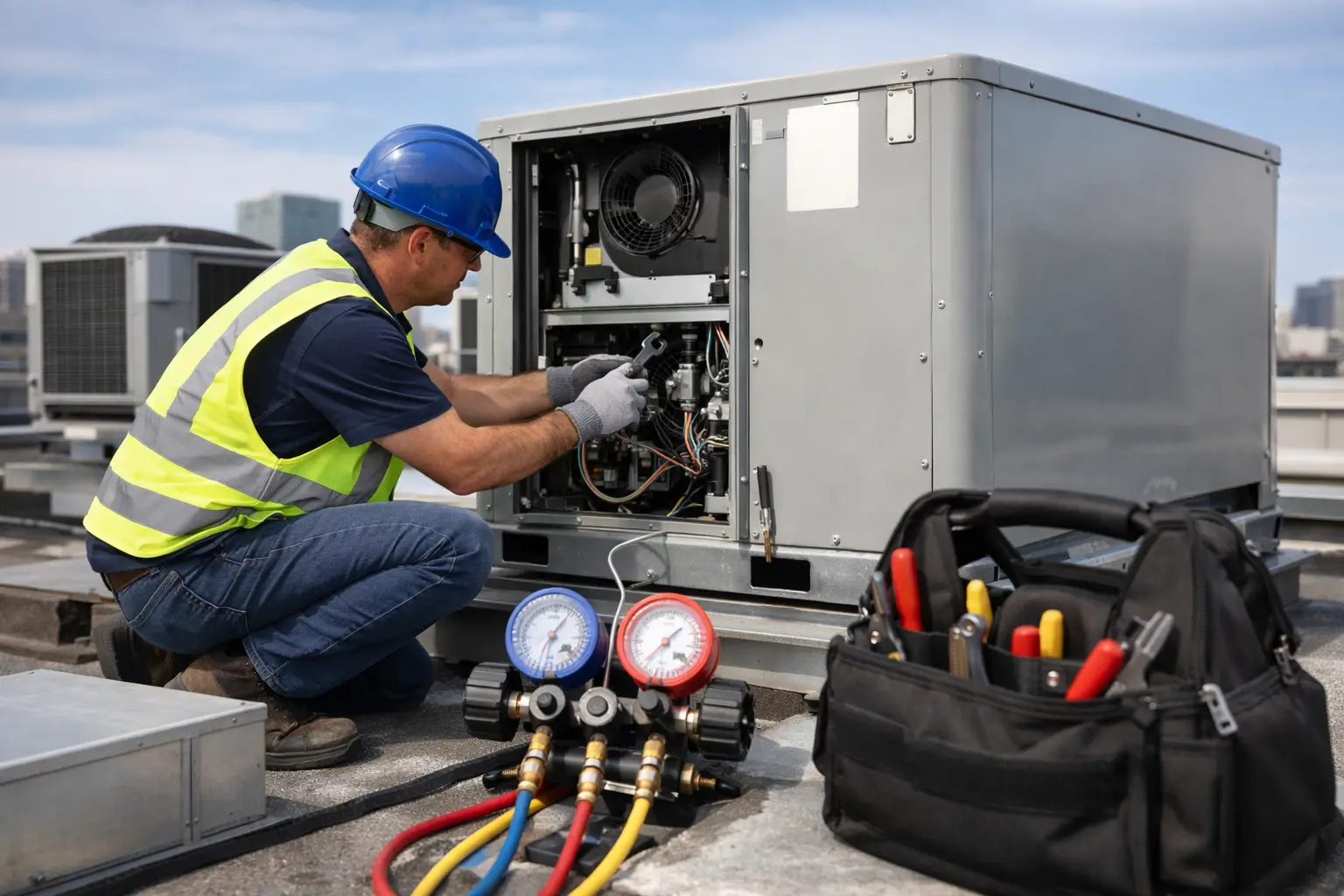
For a business, a rooftop HVAC unit failing in the middle of a heat wave is more than an inconvenience — it disrupts tenants, customers, staff, and sometimes inventory. Commercial rooftop units (RTUs) tend to fail in summer precisely when you can least afford it, and the reasons are usually preventable. Here's why it happens and how to stay ahead of it.
Summer is peak load
RTUs work hardest during the hottest stretches, running long hours to keep large spaces cool. That sustained demand exposes any underlying weakness — a marginal capacitor, a dirty coil, low refrigerant — that coasted unnoticed through milder weather. The heat doesn't create new problems so much as it surfaces the ones already there.
Dirty coils and restricted airflow
Rooftop units are exposed to the elements, and their coils collect dust, pollen, and debris. A dirty condenser coil can't shed heat efficiently, forcing the unit to work harder and run hotter until something gives. Clogged filters and blocked airflow compound the strain. Much of this is preventable with routine cleaning.
Refrigerant and electrical issues
Slow refrigerant leaks reduce cooling capacity and stress the compressor — the most expensive component to replace. Electrical components like contactors and capacitors degrade over time and tend to fail under the heavy load of summer operation. These faults often give early signs that maintenance catches before they become failures.
Deferred maintenance is the real culprit
Most summer RTU failures trace back to maintenance that was skipped or delayed. Commercial equipment is easy to ignore when it's out of sight on the roof — until it stops. The units that make it through summer reliably are the ones on a consistent service schedule. Our guide on planned HVAC maintenance for facility managers lays out the approach.
Aging equipment
Like all HVAC, RTUs have a lifespan. An older unit that's been patched repeatedly becomes a liability — each summer raises the odds of a failure that shuts down part of your operation. At some point, planned replacement is cheaper and far less disruptive than emergency repair during peak season.
The cost of downtime
When a rooftop unit fails, the cost isn't just the repair — it's lost business, uncomfortable customers, and potentially spoiled inventory or unhappy tenants. Compared to that, proactive maintenance and timely replacement are inexpensive insurance.
Stay ahead of summer failures
The best protection is prevention: regular service, prompt attention to early symptoms, and a realistic replacement plan for aging units. Our team handles commercial rooftop systems and can keep yours running through the season — explore our commercial rooftop unit services. To plan costs, use our pricing calculator and review financing options. Contact us to set up a service schedule and check our coupons.
Need expert HVAC help?
Colorado Springs' trusted, veteran-owned heating & cooling team — emergency service.