

What to Ask During HVAC Replacement: A Homeowner’s Guide
TL;DR:
- Asking detailed questions about system sizing, efficiency, and warranties can prevent costly mistakes during HVAC replacement. Homeowners should request documentation like Manual J reports, verify AHRI certifications, and clarify contractor responsibilities for permits and registrations. Being proactive ensures proper system performance, warranty coverage, and compliance, saving money and avoiding future problems.
Knowing what to ask during HVAC replacement is the single most effective way to protect a major home investment. A residential HVAC replacement is not a routine purchase. It involves technical standards like the ACCA Manual J load calculation, AHRI certification for matched equipment, building permits, and manufacturer warranties that can shift dramatically based on how the job is handled. Homeowners who ask the right questions before signing anything get better equipment, clearer contracts, and fewer surprises after installation day. This guide covers every critical question to ask your contractor, from system sizing and cost breakdowns to permits, inspections, and contractor qualifications.
What to ask during HVAC replacement: sizing and efficiency
System sizing is the most technically consequential decision in any HVAC replacement. A system that is too large short-cycles, meaning it turns on and off too frequently, which drives up humidity and wears out components faster. A system that is too small runs constantly and never reaches the set temperature on extreme days.
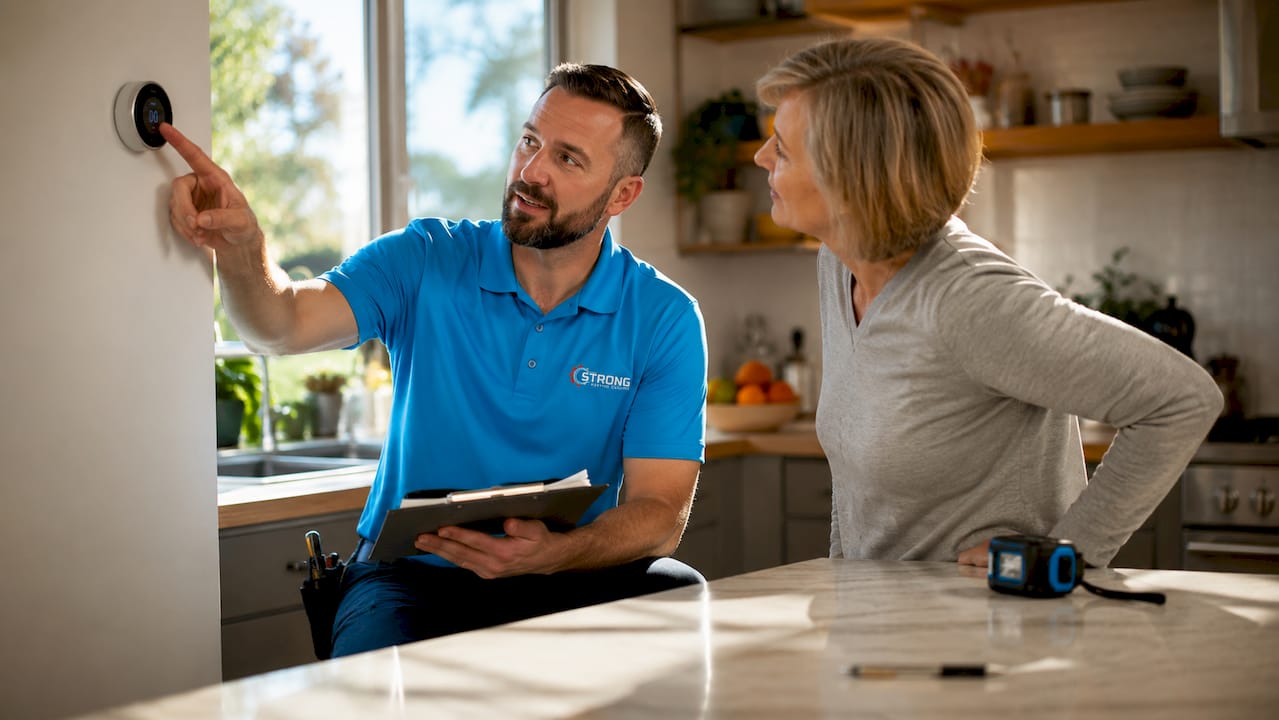
The correct sizing method is the ACCA Manual J load calculation. Manual J accounts for your home’s square footage, insulation levels, window area, ceiling height, local climate, and duct layout. It replaces the old “rule of thumb” approach where contractors simply matched the tonnage of the previous system. Ask your contractor directly: “Will you perform a Manual J load calculation, and can I see the documentation?” Any contractor who declines or dismisses this question is a red flag.
AHRI certification is the second sizing question to ask. The Air-Conditioning, Heating, and Refrigeration Institute certifies matched indoor and outdoor unit combinations. A matched AHRI system maintains the SEER2 and HSPF2 efficiency ratings listed on the equipment and keeps the manufacturer warranty valid. Ask for the AHRI certificate number before installation begins. You can verify it independently on the AHRI website.
Pro Tip: Ask your contractor to show you the Manual J report as a printed or digital document, not just a verbal assurance. If they cannot produce one, request it in writing as a condition of the contract.
Efficiency ratings matter because they directly affect your utility bills for the next 15 to 20 years. SEER2 measures cooling efficiency, and HSPF2 measures heating efficiency for heat pumps. Higher ratings cost more upfront but reduce operating costs over time. Ask your contractor to show you a side-by-side comparison of annual operating costs at different efficiency tiers so you can make an informed decision. You can also review HVAC load calculation basics to understand what the numbers mean before your contractor visit.
What cost components and contract terms should you clarify?
A residential HVAC replacement typically costs $7,000 to $13,000, and that range is wide for a reason. The final number depends on equipment brand, efficiency tier, labor rates, duct modifications, permit fees, and disposal costs. Homeowners who receive a single lump-sum quote have no way to compare bids fairly or identify where costs are inflated.
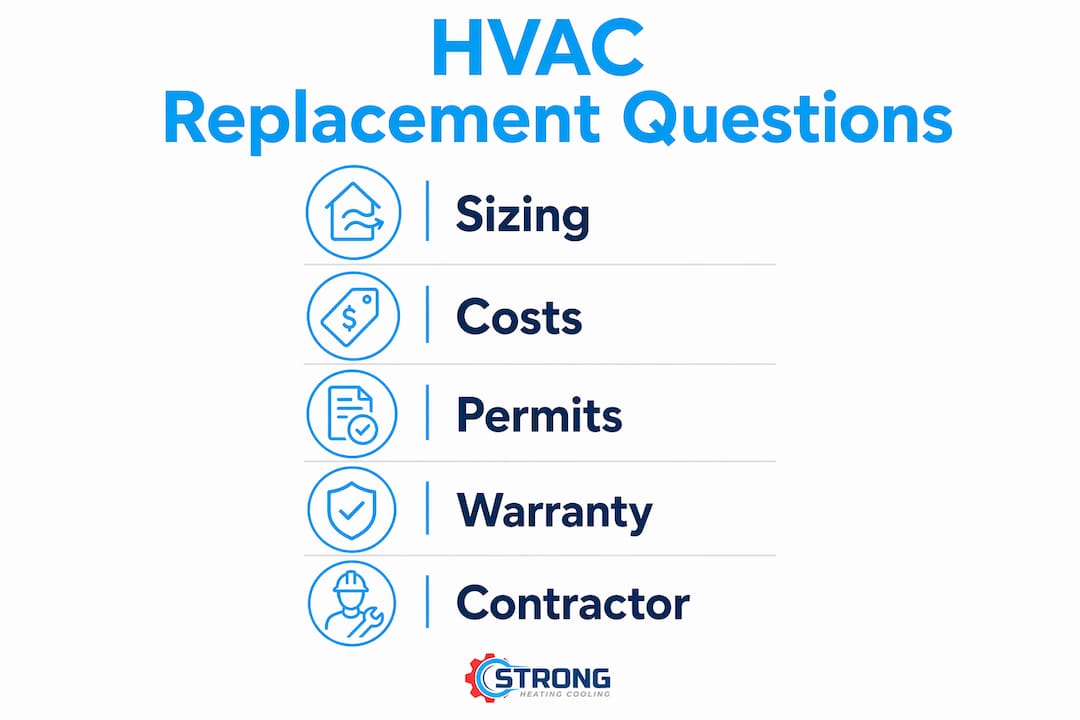
Request a fully itemized bid that separates each cost component. The line items should include equipment cost, labor, refrigerant, electrical work, duct modifications, old equipment disposal, permit fees, and any materials like drain lines or condensate pumps. When you have itemized bids from multiple contractors, you can compare equipment models directly and spot labor markups. Reading HVAC quotes carefully before signing prevents overpaying on items that vary widely between contractors.
Payment schedule terms reveal a contractor’s professionalism. A fair schedule looks like this:
- A deposit of 10–30% is paid at contract signing to cover material orders.
- A progress payment may apply for large multi-day jobs after equipment delivery.
- The final payment is held until installation is complete, the system passes inspection, and you are satisfied with the work.
Never pay the full amount upfront. Full upfront payment removes your leverage if problems arise during or after installation.
Warranty registration is a detail that catches many homeowners off guard. Failing to register HVAC equipment within 60–90 days can reduce parts warranty coverage from 10 years down to 5 years. Ask your contractor in writing who is responsible for registering the equipment with the manufacturer. If the contractor handles it, get written confirmation with the registration date and confirmation number. You can learn more about why warranty registration matters before your installation appointment.
The labor warranty is separate from the manufacturer equipment warranty. Contractor labor warranties typically run 1 to 5 years and cover installation workmanship issues like refrigerant leaks from improper connections or faulty drain line installations. Get the labor warranty terms in writing, including what it covers, what voids it, and how to file a claim.
Change orders are another area where costs can grow unexpectedly. If the contractor discovers additional work is needed after the job starts, such as replacing a section of ductwork or upgrading an electrical circuit, that work changes the original scope. Verbal change orders cause billing disputes. Require written approval for every change before any additional work begins. A reputable contractor will not push back on this request.
Pro Tip: Ask for a “not-to-exceed” clause on any open-ended cost items like duct repairs. This caps your exposure if the contractor finds more work than expected once the job is underway.
What permits, inspections, and post-installation steps must you confirm?
Permits are a legal requirement for HVAC replacement in nearly every U.S. jurisdiction. Skipping permits is not a shortcut. Unpermitted HVAC work can void your homeowner’s insurance, create liability during a home sale, and leave you responsible for bringing the system up to code at your own expense later. Permit fees typically run $50 to $200 and take one to five business days to process. Ask your contractor directly: “Will you pull the permit, and can I have the permit number before work starts?”
A final inspection by the local building department confirms the installation meets code. The inspector checks refrigerant line connections, electrical wiring, drainage, and equipment clearances. Ask your contractor when the inspection is scheduled and whether you can be present. Being present lets you hear the inspector’s findings directly.
Commissioning is a distinct step that happens after installation and inspection. It is not the same as turning the system on and confirming it blows air. Commissioning verifies refrigerant charge, airflow, and controls to confirm the system operates at its rated efficiency. Ask for a written commissioning report. This document is tangible proof that the system performs as specified.
At project completion, you should receive a complete documentation package. The table below outlines what to request:
| Document | Why you need it |
|---|---|
| Permit number and final inspection sign-off | Proves the work is code-compliant and protects resale value |
| AHRI certificate number | Confirms matched equipment and valid efficiency ratings |
| Manufacturer warranty registration confirmation | Secures full parts warranty coverage for the equipment life |
| Written labor warranty | Covers installation defects for 1–5 years after installation |
| Commissioning report | Documents that the system meets performance specifications |
Before the crew leaves, ask for a walkthrough of the new thermostat settings and filter replacement schedule. A contractor who installs a new system and leaves without explaining basic operation is cutting corners on customer service. Ask them to show you where the filter is located, what size it takes, and how often to replace it. Pairing this with a residential maintenance routine keeps the system running efficiently for years.
How do you evaluate contractor qualifications and communication?
The right contractor makes every other question easier to answer. A qualified contractor pulls permits without being asked, provides Manual J documentation as standard practice, and gives you a written contract before touching your equipment.
Start by verifying the contractor’s license and insurance. Most states maintain an online license lookup tool through the contractor licensing board. Confirm the license is active and covers HVAC work in your state. Ask for a certificate of insurance showing general liability and workers’ compensation coverage. If a technician is injured on your property and the contractor lacks workers’ compensation insurance, you could face a claim.
Technician certifications matter beyond the contractor license. EPA Section 608 certification is required by federal law for any technician who handles refrigerants. NATE (North American Technician Excellence) certification is voluntary but demonstrates a higher level of technical competence. Ask which certifications the technicians performing your installation hold.
References and reviews provide real-world evidence of how a contractor performs. Ask for two or three recent local references from jobs completed in the past six months. Call them. Ask whether the contractor showed up on time, completed the job as quoted, and handled any post-installation issues promptly. Online reviews on Google confirm patterns, but direct references give you specific project details.
Post-installation support is a question most homeowners forget to ask. Find out who handles service calls after installation. Some contractors subcontract service work to a different company, which creates continuity problems if you need warranty repairs. A contractor who handles their own service calls is accountable for the quality of the original installation.
Watch for these red flags during the contractor evaluation process:
- High-pressure sales tactics or same-day-only pricing offers
- Refusal to provide a written contract or itemized quote
- No permit pulled or suggestion that permits are unnecessary
- Full upfront payment required before any work begins
- No written labor warranty offered
What I’ve learned from watching homeowners navigate HVAC replacements
After working in this industry for years, the pattern I see most often is homeowners who focus entirely on price and miss the questions that actually determine whether the job goes well. The lowest bid is almost never the best value. A contractor who skips Manual J, skips permits, and offers a vague one-page contract will cost you far more in the long run through callbacks, warranty disputes, and code violations.
The question I rarely hear homeowners ask is who registers the warranty. That single oversight can cut parts coverage in half. Manufacturers are not flexible on registration deadlines. By the time a homeowner discovers the warranty was never registered, the window has closed.
Timing matters more than most people realize. Contractors are busiest in late spring and early summer when air conditioning demand peaks, and again in early fall when heating season starts. Scheduling a replacement in late winter or early fall often means better contractor availability, more attention to your job, and occasionally better pricing. If your system is aging but still functional, planning the replacement proactively gives you time to get multiple bids and ask every question on this list without the pressure of a broken system.
The homeowners who come out of a replacement feeling confident are the ones who treated the contractor conversation like a business negotiation, not a favor. You are spending $7,000 to $13,000 on equipment that will condition your home for the next 15 to 20 years. You have every right to ask detailed questions, request documentation, and hold payment until the job meets the agreed standard.
— Owner
Strongheatingandcooling is ready to answer every question
Strongheatingandcooling has served Colorado Springs and surrounding communities for over 40 years, and transparent communication is built into every replacement job. The team performs Manual J load calculations, pulls permits, handles warranty registration, and provides written commissioning documentation as standard practice, not as extras you have to request.

Whether you need a heating installation in Colorado Springs or are weighing your options for cooling replacement, Strongheatingandcooling provides fully itemized quotes, written labor warranties, and a post-installation walkthrough on every job. Reach out to schedule a consultation and get the answers you need before you sign anything.
Key takeaways
Asking the right questions before HVAC replacement protects your warranty, confirms proper sizing, and prevents costly surprises from unpermitted work or vague contracts.
| Point | Details |
|---|---|
| Require Manual J documentation | Proper ACCA Manual J sizing prevents short-cycling, humidity problems, and premature equipment failure. |
| Verify AHRI certificate number | Matched equipment confirmed by AHRI maintains efficiency ratings and keeps the manufacturer warranty valid. |
| Hold final payment until inspection passes | Pay only 10–30% upfront and withhold the balance until the system passes the final building inspection. |
| Confirm warranty registration in writing | Failure to register within 60–90 days can cut parts warranty coverage from 10 years to 5 years. |
| Demand written change order approvals | All scope changes must be approved in writing before work starts to prevent billing disputes. |
FAQ
What does a Manual J load calculation involve?
Manual J is the ACCA standard method for sizing HVAC equipment. It calculates the correct system capacity based on your home’s insulation, windows, square footage, ceiling height, and local climate rather than a simple square footage estimate.
How much should I expect to pay for HVAC replacement?
A residential HVAC replacement typically costs between $7,000 and $13,000, with permit fees adding $50 to $200 depending on your jurisdiction.
What happens if my contractor skips the permit?
Unpermitted HVAC work can void your homeowner’s insurance, create code compliance issues during a home sale, and leave you liable for bringing the system up to code at your own expense.
Who is responsible for registering the HVAC warranty?
Warranty registration is the homeowner’s responsibility unless the contractor agrees in writing to handle it. Missing the 60–90 day registration window can reduce parts warranty coverage from 10 years to 5 years.
What is commissioning and why does it matter?
Commissioning is a post-installation verification step that checks refrigerant charge, airflow, and controls to confirm the system operates at its rated efficiency. Ask for a written commissioning report as proof of performance.
Recommended
- HVAC Repair vs Replace: How the Decision Works | Strong Heating And Cooling
- HVAC Replacement Financing Options for Homeowners | Strong Heating And Cooling
- The HVAC Contractor Vetting Process: A Homeowner’s Guide | Strong Heating And Cooling
- New Homeowner HVAC Checklist for Your First Year | Strong Heating And Cooling
Need expert HVAC help?
Colorado Springs' trusted, veteran-owned heating & cooling team — same-day service.