
What Is a Packaged HVAC Unit? A Homeowner’s Guide
TL;DR:
- A packaged HVAC unit is a single outdoor cabinet housing all cooling and heating components, eliminating indoor mechanical space. Its lower upfront cost and simpler installation make it suitable for homes with limited indoor space, but it has a shorter lifespan and lower efficiency than split systems. Regular maintenance, proper site placement, and consideration of long-term ownership influence its reliability and performance.
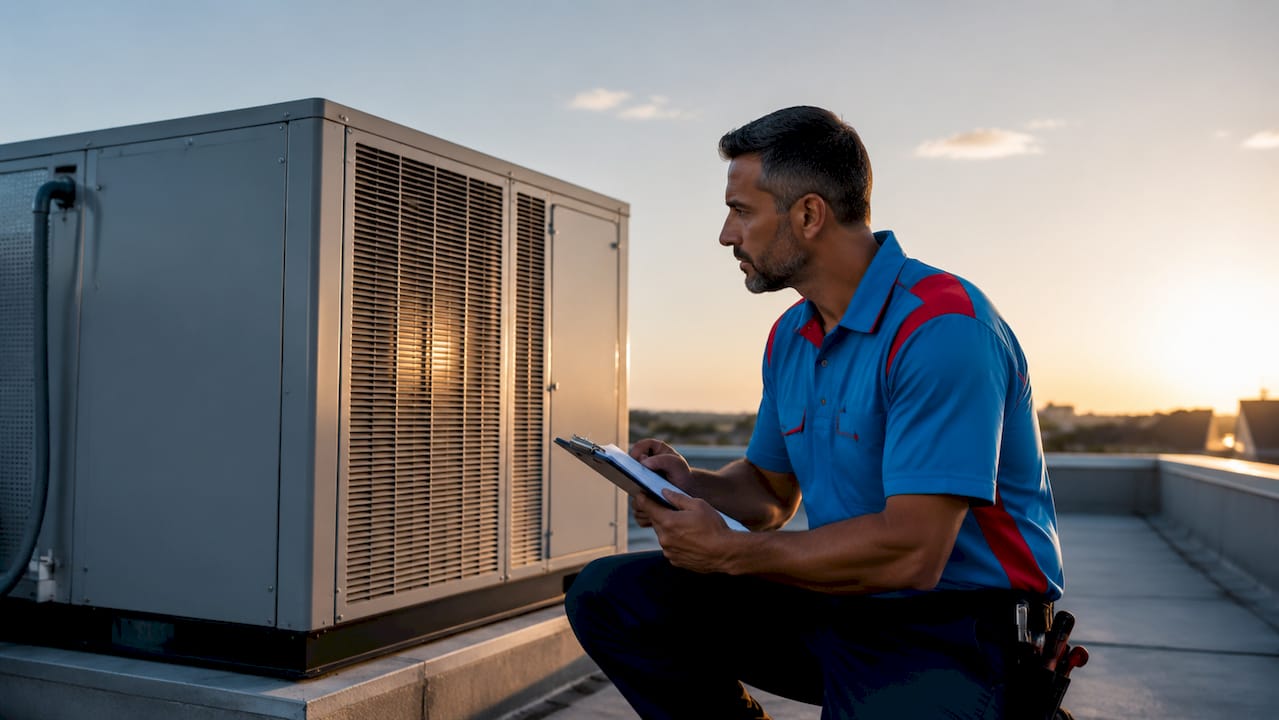
A packaged HVAC unit is defined as a self-contained, all-in-one system that houses the compressor, condenser, evaporator coil, and air handler inside a single outdoor cabinet. Unlike split systems, which divide components between an indoor air handler and an outdoor condenser, a packaged unit keeps everything in one place, typically mounted on a rooftop or concrete slab. That design eliminates the need for indoor mechanical rooms entirely. For homeowners and property managers weighing their options, understanding what a packaged HVAC unit is and how it performs in real conditions is the clearest path to a confident decision.
What is a packaged HVAC unit and how does it work?
A packaged HVAC system operates by drawing indoor air through return ducts, conditioning it inside the outdoor cabinet, and then pushing it back through supply ducts into the building. All the mechanical work happens in that single cabinet outside. The compressor pressurizes refrigerant, the condenser releases heat outdoors, and the evaporator coil absorbs heat from the return air to cool it. In heating mode, a gas furnace section or heat pump coils within the same cabinet warm the air before it travels back inside.
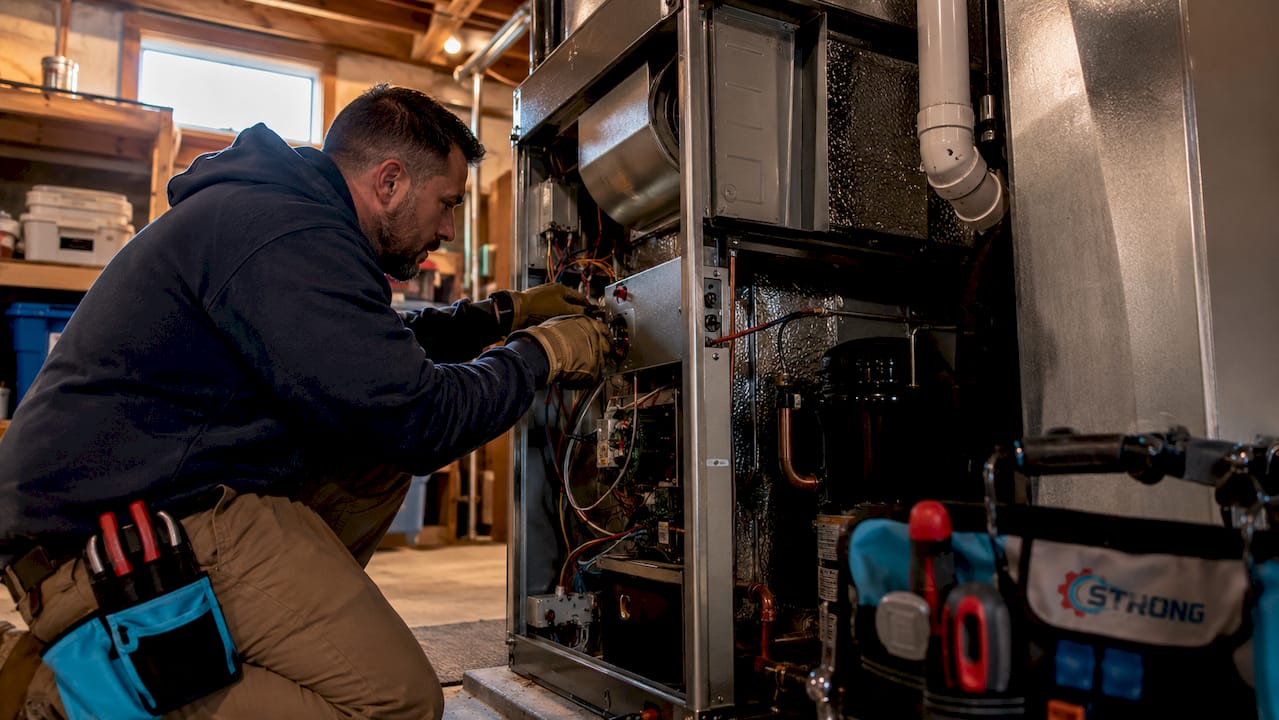
The air handler and blower motor inside the cabinet move air through the duct system continuously. Controls connect to a standard thermostat inside the building, so the operation feels identical to any other HVAC system from the homeowner’s perspective. Power runs from the electrical panel to the outdoor unit, and refrigerant lines stay entirely within the cabinet rather than running between two separate locations.
Because all components sit outdoors, the unit faces weather, debris, and temperature swings year-round. That exposure accelerates wear compared to split systems, which protect the air handler indoors. The trade-off is a simpler installation with no indoor equipment footprint.
Core components inside the cabinet
- Compressor: Pressurizes refrigerant to drive the cooling cycle.
- Condenser coil: Releases heat from the refrigerant to the outdoor air.
- Evaporator coil: Absorbs heat from return air, cooling it before delivery.
- Air handler and blower: Moves conditioned air through the duct system.
- Gas furnace section or heat pump coils: Provides heating within the same cabinet.
- Electrical controls and thermostat wiring: Connects the system to indoor controls.
Pro Tip: Ask your HVAC technician to confirm that the ductwork connection points are properly sealed at the cabinet during installation. Gaps at that junction are a common source of energy loss in packaged units.
What are the advantages and disadvantages of packaged HVAC systems?
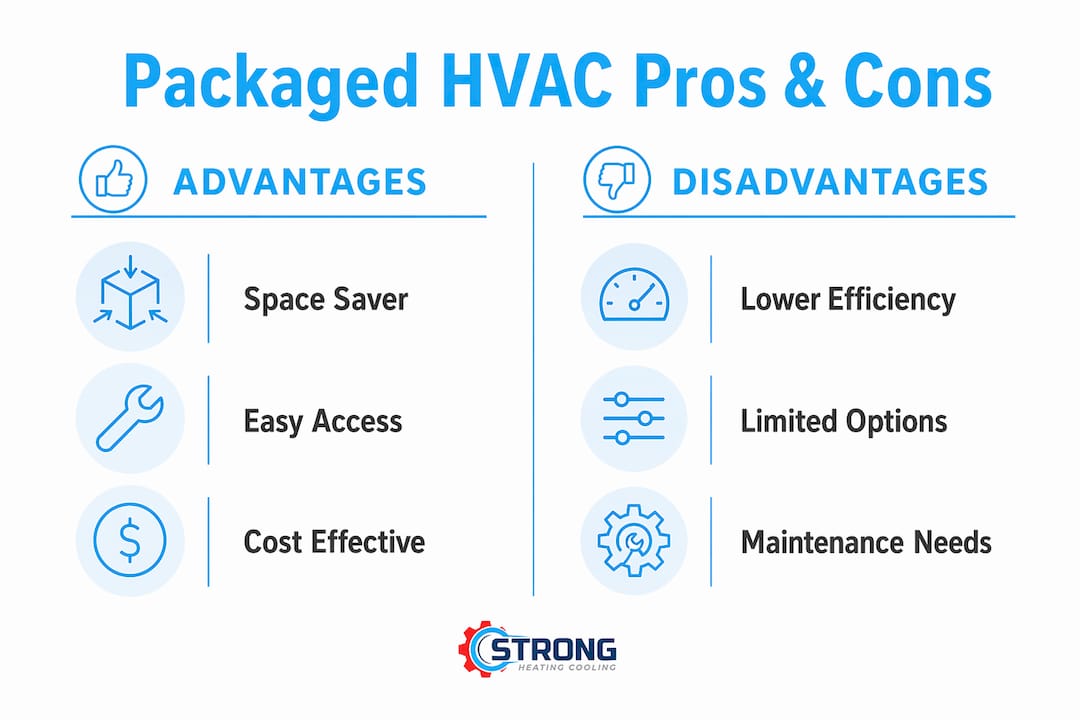
The choice between a packaged unit and a split system depends on indoor space and budget more than any other factor. Packaged units win on simplicity and cost of entry. Split systems win on long-term efficiency and lifespan. Neither is universally better.
Advantages of packaged HVAC units
Packaged units save all indoor mechanical space because there is no air handler, furnace, or indoor coil to accommodate. For homes without basements, utility closets, or attic space, that is often the deciding factor. Installation is faster because factory assembly reduces the number of field connections a technician must make. Upfront cost is also lower. Packaged units typically cost $1,000–$2,000 less than comparable split systems, and the labor time is shorter.
Maintenance access is straightforward because every component is in one location. A technician does not need to move between an attic air handler and an outdoor condenser. For property managers overseeing multiple units, that consolidation reduces service time per visit.
Disadvantages to weigh carefully
Efficiency is the clearest drawback. Packaged units carry a SEER range of 13–18, while split systems can reach 26 or higher. Over a decade of operation, that gap shows up in utility bills. Lifespan is also shorter. The average packaged rooftop unit lasts 10–15 years, compared to longer service lives for well-protected split systems. Noise is another consideration. Blower sound travels through the ductwork into living spaces, and the entire mechanical assembly runs outdoors where it is audible to neighbors or occupants near windows.
Packaged unit vs split system: key differences
| Category | Packaged unit | Split system |
|---|---|---|
| Installation location | Single outdoor cabinet | Separate indoor and outdoor units |
| Indoor space required | None | Air handler, furnace, or coil closet |
| Upfront cost | Lower by $1,000–$2,000 | Higher |
| SEER efficiency range | 13–18 | 14–26+ |
| Typical lifespan | 10–15 years | Longer with indoor protection |
| Best fit | Limited indoor space, budget-conscious | Efficiency-focused, space available |
Pro Tip: If your home or property has no indoor mechanical room and you are in a mild climate, a packaged unit is often the most practical choice. If you plan to stay in the property for 15 or more years, the efficiency gap in a split system pays back the higher upfront cost.
What maintenance does a packaged HVAC unit require?
Packaged units require more disciplined maintenance than split systems because every major component is exposed to the elements. Neglecting coil cleaning and blower belt replacement increases energy consumption and leads to premature failure. The outdoor environment accelerates the accumulation of dirt, debris, and moisture on components that would otherwise be protected indoors.
Maintenance schedule to follow
- Check and replace air filters every 1–3 months. Clogged filters restrict airflow, force the blower to work harder, and raise energy bills. Industry best practice sets this as the single most frequent maintenance task for packaged systems.
- Schedule professional tune-ups each spring and fall. Seasonal tune-ups cover refrigerant levels, electrical connections, thermostat calibration, and coil condition. Twice-yearly service aligns with warranty compliance requirements for most manufacturers.
- Inspect and clean condenser and evaporator coils annually. Dirty coils reduce heat transfer efficiency and force the compressor to run longer cycles. A technician uses coil cleaner and low-pressure rinse to restore performance.
- Inspect blower belts quarterly. Blower belts in packaged units are frequently overlooked. Improper tension or visible cracking reduces airflow and efficiency, and an unaddressed belt eventually causes blower motor failure. Quarterly physical inspections catch problems before they escalate.
- Check electrical connections and controls at each tune-up. Loose terminals cause arcing, which damages control boards and creates safety hazards. A technician torques connections and tests voltage at each service visit.
- Clear debris from around the cabinet after storms. Leaves, branches, and dirt accumulate against the cabinet and block airflow through the condenser. A clear perimeter of at least 18 inches on all sides keeps airflow unrestricted.
Preventive maintenance is the single largest factor in how long a packaged unit lasts. Well-maintained units can reach 20 or more years, while neglected systems often fail well before the 10-year mark. A planned maintenance contract removes the guesswork by scheduling every task automatically.
Pro Tip: Keep a maintenance log for your packaged unit. Record the date, technician name, and every task completed at each visit. That log protects your warranty and gives you clear data when deciding whether to repair or replace an aging system.
What installation and location factors affect packaged HVAC performance?
Installation location directly affects noise levels, system longevity, and maintenance access. Getting this decision right before the unit goes in saves significant trouble later.
Rooftop mounting is the most common choice for commercial buildings and some residential properties. It keeps the unit away from ground-level debris, reduces the risk of vandalism, and frees up yard space. Concrete slab mounting at ground level is standard for most residential applications. The slab must be level, stable, and elevated slightly to prevent water pooling around the cabinet base.
Blower noise travels through ductwork into living spaces, so placement relative to bedrooms and quiet rooms matters. Locating the unit on the side of the building away from primary living areas reduces perceived noise indoors. Vibration isolation pads between the cabinet and the mounting surface further reduce sound transfer.
Key installation considerations include:
- Ductwork connections: The supply and return ducts must connect directly to the cabinet’s factory openings. Improperly fitted connections cause air leakage and efficiency loss.
- Electrical service: Packaged units require a dedicated circuit sized to the unit’s amperage rating. A licensed electrician must verify the panel capacity before installation.
- Clearance requirements: Manufacturers specify minimum clearance distances on all sides of the cabinet for airflow and service access. Violating those clearances voids the warranty.
- Permits and licensed contractors: Local building codes require permits for HVAC installation in most jurisdictions. Hiring a licensed HVAC contractor protects your warranty and confirms the work meets safety standards.
- Weatherproofing: Duct connections at the cabinet entry point need proper sealing and weatherproofing to prevent moisture intrusion and air leakage.
Choosing the right location is not just about convenience. It affects how long the unit lasts, how efficiently it runs, and how much noise it introduces into your living space.
Key Takeaways
A packaged HVAC unit is the right choice when indoor space is limited, upfront cost matters, and the owner commits to consistent preventive maintenance.
| Point | Details |
|---|---|
| All-in-one outdoor design | A packaged unit houses every component in one outdoor cabinet, eliminating the need for indoor mechanical space. |
| Lower upfront cost, lower efficiency | Packaged units cost $1,000–$2,000 less than split systems but carry a lower SEER range of 13–18. |
| Lifespan depends on maintenance | Average lifespan is 10–15 years, but well-maintained units can reach 20 or more years. |
| Filter and belt care are critical | Filters need checking every 1–3 months; blower belts need quarterly inspection to prevent airflow loss. |
| Installation location affects noise | Strategic placement and vibration isolation pads reduce blower noise transfer into living spaces. |
What years of field experience taught me about packaged units
The conversation about packaged HVAC units almost always starts with price. Homeowners and property managers see the lower upfront number and make the decision there. That is understandable. But the number that actually determines whether a packaged unit was a good investment is the maintenance record, not the purchase price.
Every packaged unit I have seen fail before its time had one thing in common: deferred maintenance. A blower belt that nobody checked for two years. Coils that had not been cleaned in three seasons. Filters that were changed once a year instead of every one to three months. The unit was not defective. The maintenance schedule was.
The 50% Rule is worth keeping in mind as a packaged unit ages. If repair costs exceed 50% of replacement value and the unit has served 75% or more of its expected lifespan, replacement is the smarter financial decision. That calculation changes when you factor in supply chain lead times. Post-2020 replacement lead times have reached 8–20 weeks for some packaged units. A mid-summer failure with a two-month wait for a replacement unit is a situation that consistent maintenance almost always prevents.
The other thing I tell homeowners is to think about the efficiency gap honestly. A SEER 14 packaged unit costs less today, but if you plan to stay in the home for 15 years, the utility bill difference between that unit and a SEER 20 split system adds up to real money. The right answer depends on your timeline and your budget. What I do not recommend is choosing a packaged unit and then skipping the maintenance. That combination produces the worst outcome every time.
— Owner
Strongheatingandcooling is ready to help with your packaged HVAC needs
Strongheatingandcooling has served Colorado Springs and the surrounding communities for over 40 years, and packaged HVAC installation and maintenance is a core part of that work. Whether you are replacing an aging rooftop unit or installing a packaged system on a new concrete slab, the team brings the experience to get it right the first time.

Strongheatingandcooling offers professional air conditioner services and maintenance plans designed specifically for packaged systems, covering filter changes, coil cleaning, blower belt inspections, and seasonal tune-ups. If your unit is aging and you are weighing repair against replacement, the team can walk you through the numbers honestly. Contact Strongheatingandcooling for a personalized inspection or quote, and get the clarity you need to make a confident decision about your home’s comfort system.
FAQ
What is a packaged HVAC unit in simple terms?
A packaged HVAC unit is a single outdoor cabinet that contains every heating and cooling component, including the compressor, condenser, evaporator coil, and air handler. It connects to your home’s ductwork to deliver conditioned air indoors without requiring any indoor mechanical equipment.
How long does a packaged HVAC unit typically last?
The average lifespan of a packaged unit is 10–15 years, though well-maintained systems can reach 20 or more years. Consistent filter changes, seasonal tune-ups, and blower belt inspections are the primary factors that extend service life.
Is a packaged unit less efficient than a split system?
Packaged units carry a SEER range of 13–18, which is generally lower than split systems that can reach 26 or higher. That efficiency gap translates to higher monthly utility costs over time, which is a key consideration for long-term ownership.
How often should a packaged HVAC unit be serviced?
Filters should be checked every 1–3 months, and professional tune-ups should happen each spring and fall. Blower belts need quarterly physical inspection to catch tension issues or cracking before they cause blower motor failure.
Can a packaged HVAC unit be installed on the ground instead of a rooftop?
Ground-level installation on a concrete slab is standard for most residential packaged units. The slab must be level, stable, and slightly elevated to prevent water pooling, and the unit needs at least 18 inches of clearance on all sides for airflow and service access.
Recommended
Need expert HVAC help?
Colorado Springs' trusted, veteran-owned heating & cooling team — same-day service.