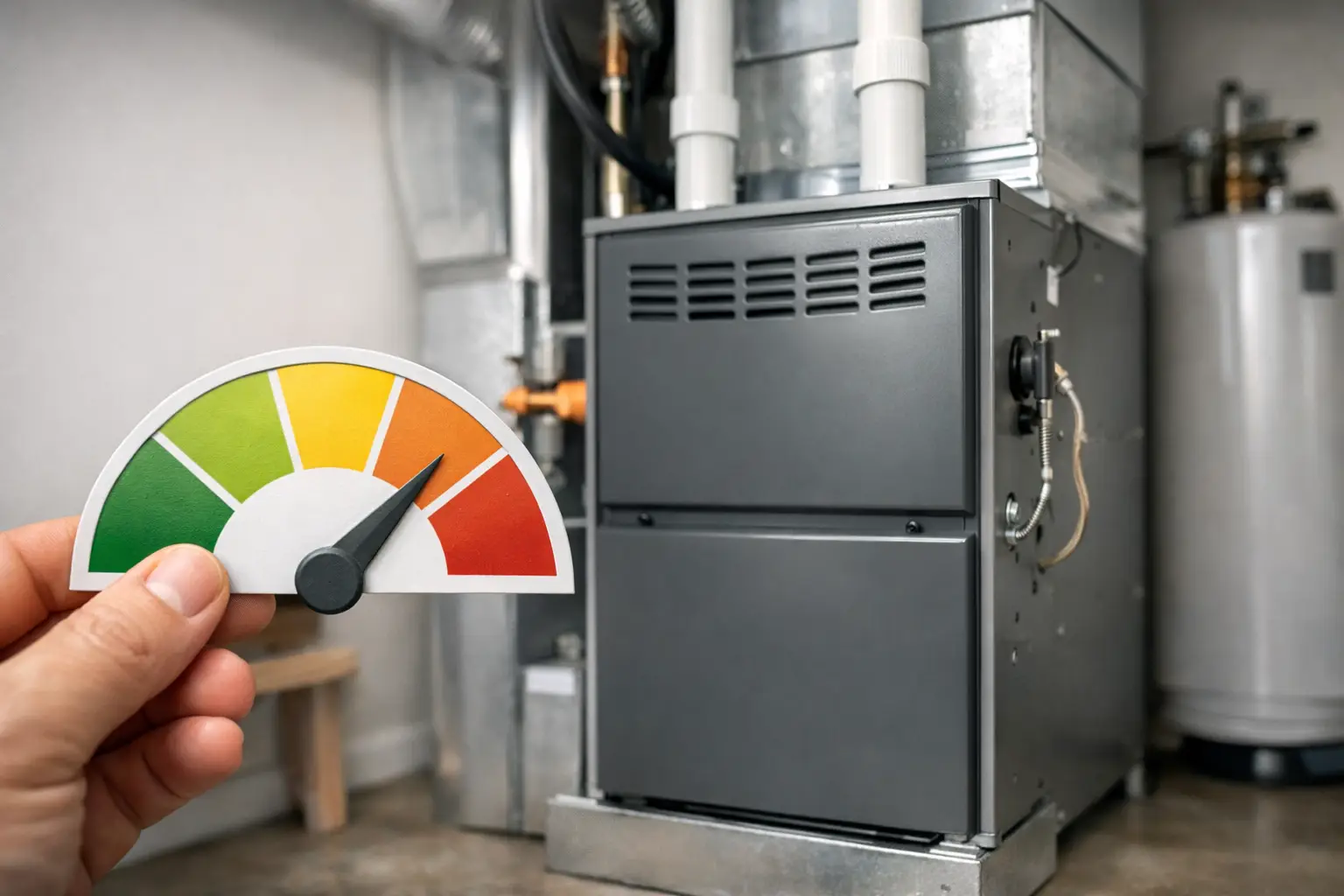
A furnace can seem fine right up until the utility bill shows up. The house feels warm, the thermostat says the right number, and nothing appears obviously wrong – yet the system may be working much harder than it should. That is where furnace energy efficiency matters. It is not just about buying the highest-rated unit on the market. It is about how effectively your heating system turns fuel or electricity into usable heat, and how well that heat actually stays where you need it.
For homeowners and property managers, efficiency affects comfort, operating cost, repair frequency, and long-term equipment value. In Colorado’s colder months, even small drops in performance can lead to noticeable increases in monthly heating expenses. A system that runs longer, cycles too often, or struggles to keep temperatures consistent is usually telling you something.
What furnace energy efficiency actually measures
At its core, furnace energy efficiency is a measure of output versus input. In simple terms, it asks how much of the energy your furnace uses becomes heat for your home or building, and how much is lost in the process. With gas furnaces, this is often expressed as AFUE, or Annual Fuel Utilization Efficiency.
If a furnace has a 90 percent AFUE rating, that means about 90 cents of every heating dollar goes toward warming the space, while the rest is lost through venting and normal operation. Higher ratings generally mean lower waste, but the rating does not tell the whole story. Installation quality, duct condition, airflow, insulation, and maintenance all affect real-world performance.
That is why two buildings with the same furnace model can have very different heating costs. The equipment matters, but the system around it matters too.
Why efficiency is about more than lower utility bills
The most obvious benefit of an efficient furnace is reduced energy use. But the real value usually shows up in day-to-day comfort. A well-performing system heats more evenly, maintains more stable indoor temperatures, and puts less strain on key components.
When a furnace is inefficient, it often has to run longer to meet the thermostat setting. That extra runtime can increase wear on motors, burners, igniters, and blower parts. Over time, that can mean more repairs and a shorter system lifespan. For commercial properties, inefficiency can also affect tenant comfort, staff productivity, and budgeting predictability during the heating season.
There is also the issue of sizing and cycling. A furnace that is too large may heat quickly but shut off before distributing air evenly. One that is too small may run constantly and still struggle on colder days. Good efficiency depends on matching the equipment to the space, not just choosing the highest number on a brochure.
What affects furnace energy efficiency in real homes and buildings
A furnace does not operate in isolation. Even a newer unit can underperform if the surrounding system has problems.
Airflow is one of the biggest factors. A clogged filter, blocked return, dirty blower wheel, or restricted duct can force the furnace to work harder than necessary. That leads to reduced efficiency and sometimes overheating or short cycling. These are common problems because they build gradually, and many property owners do not notice the impact until comfort drops or costs rise.
Ductwork also plays a major role. Heated air lost through leaks in attics, crawl spaces, or utility areas never reaches occupied rooms. In some properties, the furnace itself is working properly, but the duct system is wasting a meaningful portion of the heat being produced.
Thermostat performance matters as well. An older or poorly placed thermostat can cause uneven operation, especially if it is near drafts, direct sunlight, or heat-producing appliances. Smart thermostat controls can improve efficiency in many cases, but only when the system is compatible and programmed correctly.
Finally, the condition of the heat exchanger, burners, flame sensor, inducer motor, and other internal components can affect combustion and heat transfer. These are not guesswork issues. They require proper inspection and testing.
Maintenance and furnace energy efficiency
Routine maintenance is one of the most cost-effective ways to protect furnace energy efficiency. A seasonal inspection helps catch small performance issues before they turn into expensive repairs or ongoing energy waste.
A professional tune-up typically includes checking burner operation, inspecting the heat exchanger, cleaning critical components, testing safety controls, confirming airflow, and measuring system performance. Those steps help ensure the furnace is operating safely and efficiently, not just turning on and off.
Filter changes are the maintenance item most owners can handle themselves, but even that needs some attention. A filter that is too dirty restricts airflow. A filter that is too dense for the system can do the same thing. More filtration is not always better if the equipment is not designed for it.
For commercial equipment, maintenance becomes even more important because runtime is often heavier and comfort issues can affect multiple occupants at once. Preventive service can help avoid mid-season breakdowns and keep heating costs from creeping up unnoticed.
When repair makes sense and when replacement is smarter
Not every inefficient furnace needs to be replaced. In many cases, a repair can restore performance if the issue is related to airflow, controls, ignition, blower operation, or another serviceable component. If the unit is otherwise in good condition and has years of useful life left, repair is often the practical choice.
That said, there is a point where replacement becomes the better investment. Older furnaces with low AFUE ratings, frequent repair needs, or major component failures can cost more to keep than they are worth. If you are paying for repeated service calls and still dealing with uneven heat or high bills, the problem may not be a single broken part. It may be that the system has simply become outdated.
Newer high-efficiency furnaces can offer significant gains, but savings depend on the starting point. Replacing a very old unit with a modern high-efficiency model usually has a clearer return than replacing a moderately efficient furnace that still performs well. This is one of those situations where it depends on the age of the equipment, fuel costs, usage patterns, and the condition of the rest of the system.
A proper evaluation should look at the whole picture, including load requirements, ductwork, venting, and installation details. Equipment upgrades work best when they solve the actual problem rather than just replacing hardware.
How to improve furnace energy efficiency without rushing into a new system
If your furnace is heating the space but operating costs feel high, there may be room for improvement before replacement becomes necessary.
Start with the basics: clean filters, open supply and return vents, and make sure the thermostat is operating correctly. Then look at bigger system issues, especially if some rooms are colder than others or the furnace seems to run constantly. Duct leaks, insulation gaps, and poor airflow are often behind those complaints.
Professional testing can help identify where energy is being lost. In many homes, improving duct sealing and correcting airflow issues can noticeably improve comfort and efficiency. In others, the best move may be adjusting blower settings, replacing a failing component, or recalibrating controls.
For properties with older heating equipment, it can also be worth comparing repair costs against projected energy savings from a replacement. Strong Heating And Cooling often helps customers sort through that decision in a practical way, without pushing a one-size-fits-all answer. Some systems need a tune-up. Some need a repair. Some have reached the point where upgrading makes better financial sense.
Choosing efficiency that fits your property
The highest efficiency furnace is not automatically the best choice for every building. Upfront cost, venting requirements, equipment compatibility, and usage all matter. A system that works well for a newer, tightly sealed home may not be the right fit for an older property without improvements to insulation or ductwork.
Commercial spaces add another layer. Operating hours, occupancy patterns, rooftop equipment access, zoning, and maintenance planning can all affect the value of a higher-efficiency upgrade. The right decision usually comes from balancing operating cost, reliability, and installation practicality.
What most people want is simple: dependable heat, manageable utility bills, and fewer surprises. That is exactly why efficiency should be evaluated as part of overall system performance, not just a label on the equipment.
If your furnace has been louder, slower, or more expensive to run than it used to be, that is worth paying attention to before winter puts more pressure on the system.
What Does Furnace Efficiency Mean for Colorado Springs Homeowners?
For residents of Colorado Springs, understanding furnace energy efficiency takes on a unique importance due to our specific local conditions. While the general principles of AFUE ratings, proper sizing, and maintenance apply everywhere, the challenges and opportunities here often amplify their impact. Our high altitude, dry air, and extreme temperature swings demand heating systems that are not only efficient but also robust and correctly configured for optimal performance.
High Altitude and System Performance
Colorado Springs sits roughly 6,000–7,500 feet above sea level. This thinner air means about 20% less oxygen is available for combustion in gas furnaces. If not correctly set up, this can reduce efficiency and even lead to safety concerns. Proper altitude-correct adjustments are crucial to ensure your gas furnace operates as intended, converting fuel into heat effectively. Without these adjustments, the furnace might struggle to ignite, burn fuel incompletely, or lose some of its rated heating capacity, directly impacting your home's comfort and your energy bills. This is a critical factor that a qualified technician always considers during installation and maintenance.
Navigating Climate Extremes and Hail Damage
Our dry climate, combined with significant day-night temperature swings and a long heating season, means your furnace works hard for a good portion of the year. An inefficient system will face increased strain, leading to higher operating costs and potentially more frequent repairs. Additionally, while primarily affecting outdoor AC coils, hail storms are a common occurrence that can sometimes impact integrated HVAC systems. While not directly related to furnace efficiency, a damaged outdoor unit can throw off the balance of a complete system package, making overall home comfort and efficiency harder to achieve.
Local Requirements and Available Incentives
Replacing an inefficient or failing furnace in Colorado Springs typically requires a Pikes Peak Regional Building Department (PPRBD) permit. This ensures that new installations meet local safety and building codes, which are in place to protect homeowners. Furthermore, investing in high-efficiency models can make you eligible for valuable rebates from Colorado Springs Utilities, helping offset the initial cost. For instance:
- Qualifying furnaces may receive $900.
- Heat pumps under 3 tons or ENERGY STAR rated can qualify for $1,500.
- NEEP heat pumps 3+ tons may be eligible for $3,000.
- Boilers can receive $1,200.
- A smart thermostat can qualify for $50.
These incentives make upgrading to a more efficient system a financially attractive decision for many homeowners.
Whether you're considering a new installation, in need of a repair, or seeking to improve your current system's efficiency, Strong Heating And Cooling is here to help. Call us at (719) 960-7208 or request service at our contact page to discuss your home's heating needs.
Need expert HVAC help?
Colorado Springs' veteran-owned heating & cooling team — Mon–Sat, 8 AM–7 PM. Same-day service when available.