
15 Minute Diagnostics to Stop Sewer Smell From Vents for Homeowners
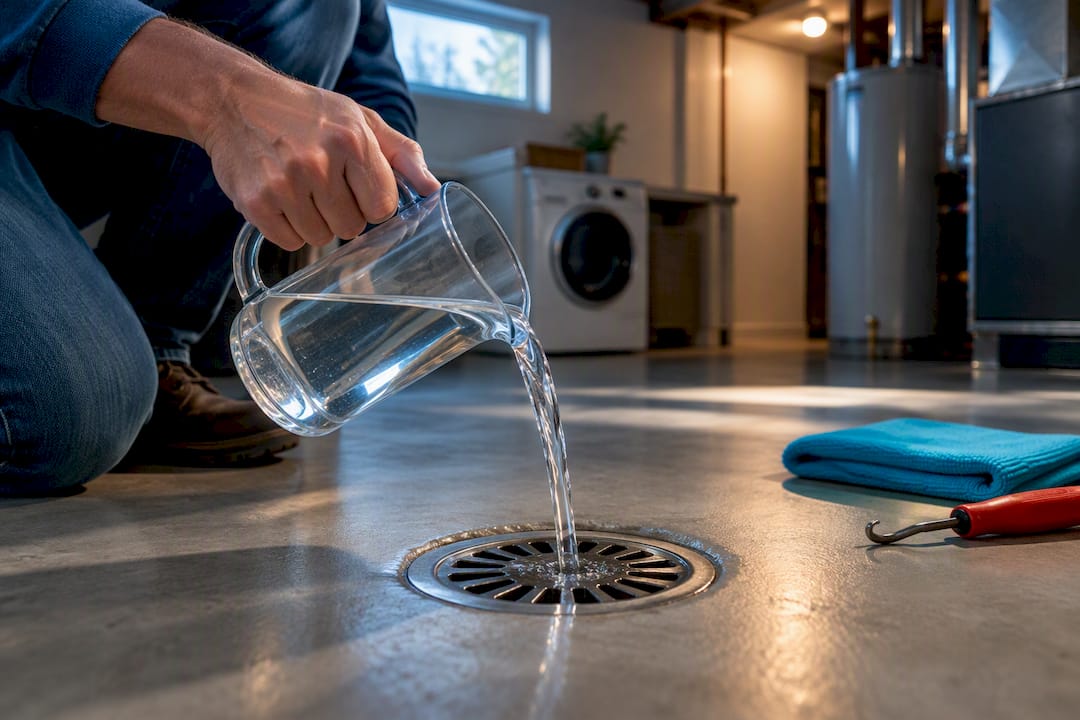
If your vents smell like sewer gas, the most likely culprits are a dry P-trap, a dirty condensate drain or coil pan, or negative pressure pulling sewer air through the HVAC blower. Stop the blower if the odor is strong, ventilate the room, and pour water into floor drains and any fixture you rarely use. If the smell is overpowering or anyone feels dizzy or nauseated, evacuate and call for emergency help right away.
TL;DR:
- Dry or evaporated floor drain traps are the primary cause of sewer gas odors entering the home through vents.
- Negative pressure from the HVAC blower can pull sewer gas into the duct system, especially if there are leaks or dry traps.
- Regularly refilling and sealing traps, cleaning condensate lines, and sealing duct leaks can typically resolve odors within a day.
- Persistent or strong smells, especially with symptoms like dizziness or nausea, require immediate ventilation and emergency professional intervention.
- A correct diagnosis involves both plumbing and HVAC inspections, with durable repairs focused on trap primers, sealing leaks, and routine maintenance.
Table of Contents
- What Causes Sewer Smell From Vents in Your Home?
- Quick Diagnostic Checks You Can Do Right Now
- DIY Fixes That Often Solve the Problem
- Plumber or HVAC Tech: Who Actually Fixes This?
- When Sewer Smell Becomes a Safety Emergency
- Technician-Grade Fixes That Actually Last
- Why We Treat Every Sewer Odor Call as Urgent
- Get a Straight Answer on Your Vent Odor
- Sources
- FAQ
What Causes Sewer Smell From Vents in Your Home?
Your plumbing system relies on water seals in every drain, called P-traps, to block sewer gas from entering your living space. Traps in floor drains, guest bathrooms, and laundry standpipes dry out through evaporation when they go unused for weeks, and once the water seal breaks, sewer gas has an open path into the room.
Your HVAC system can turn that small leak into a house-wide problem. A blower that pulls more air than the return ducts supply creates negative pressure, and that vacuum can drag sewer gas across a dry trap or through cracked seams straight into the duct system.
Two other sources mimic sewer odor without any plumbing failure at all:
- A clogged condensate line or algae-coated drain pan breeds bacteria that smells exactly like sewage, even though no sewer gas is involved.
- A cracked vent stack, a failed air admittance valve, or a soil pipe running near ductwork can vent sewer gas directly into wall cavities or attics that share airflow with your ducts.
Quick Diagnostic Checks You Can Do Right Now
Before you call anyone, spend fifteen minutes narrowing down the source. These checks cost nothing and often point straight to the fix.
- Log the pattern. Note whether the odor from HVAC vents shows up only when the blower runs, only during heating or cooling cycles, or constantly regardless of the system. Odors tied to blower cycles almost always point to negative pressure pulling air through a leak, while a constant smell suggests a plumbing leak that has nothing to do with your furnace.
- Refill every drain. Run water in floor drains, unused tubs, and laundry standpipes regularly to restore water seals.
- Check the condensate system. Look at the drip pan under the air handler for standing water or slime, and pour a cup of water into the unit’s test port to confirm the line drains freely.
- Run the tissue test. Hold a tissue near return duct seams and the mechanical room floor. If it gets pulled toward a gap, you have found a suction leak.
- Shut off the blower. If the smell stops within a few minutes of killing the fan, your ductwork is transporting the odor rather than generating it.
Pro Tip: Write down the time and conditions each time you notice the smell. A pattern log turns a vague complaint like “it smells bad sometimes” into a diagnosis a technician can act on in one visit instead of three.
DIY Fixes That Often Solve the Problem
Several fixes here are safe for a homeowner to try before spending money on a service call, and most show results within a day.
- Refill dry traps and protect them. After running water, add a teaspoon of mineral oil on top. A thin oil layer slows evaporation significantly and can keep a rarely used trap sealed for weeks longer than water alone.
- Clear the condensate line. A wet/dry vacuum at the outdoor termination point or an enzymatic drain cleaner poured into the line usually clears the clog. Treating the drain pan with a pan tablet or enzymatic cleaner removes the bacterial source rather than just masking it.
- Seal accessible return leaks. Duct mastic applied to visible seams near the blower cabinet cuts the suction that pulls sewer air inward.
- Replace a failed air admittance valve only if it is exposed and your local code allows AAVs; an aging AAV is a known point of failure that lets sewer gas back into the home.
Pro Tip: Skip the bleach and the air freshener. Bleach does nothing to a dry trap, and it can actually speed up evaporation in traps that still hold water, leaving you with the same problem in half the time.
Plumber or HVAC Tech: Who Actually Fixes This?
The two trades diagnose different halves of the problem, and picking the wrong one wastes a service call.
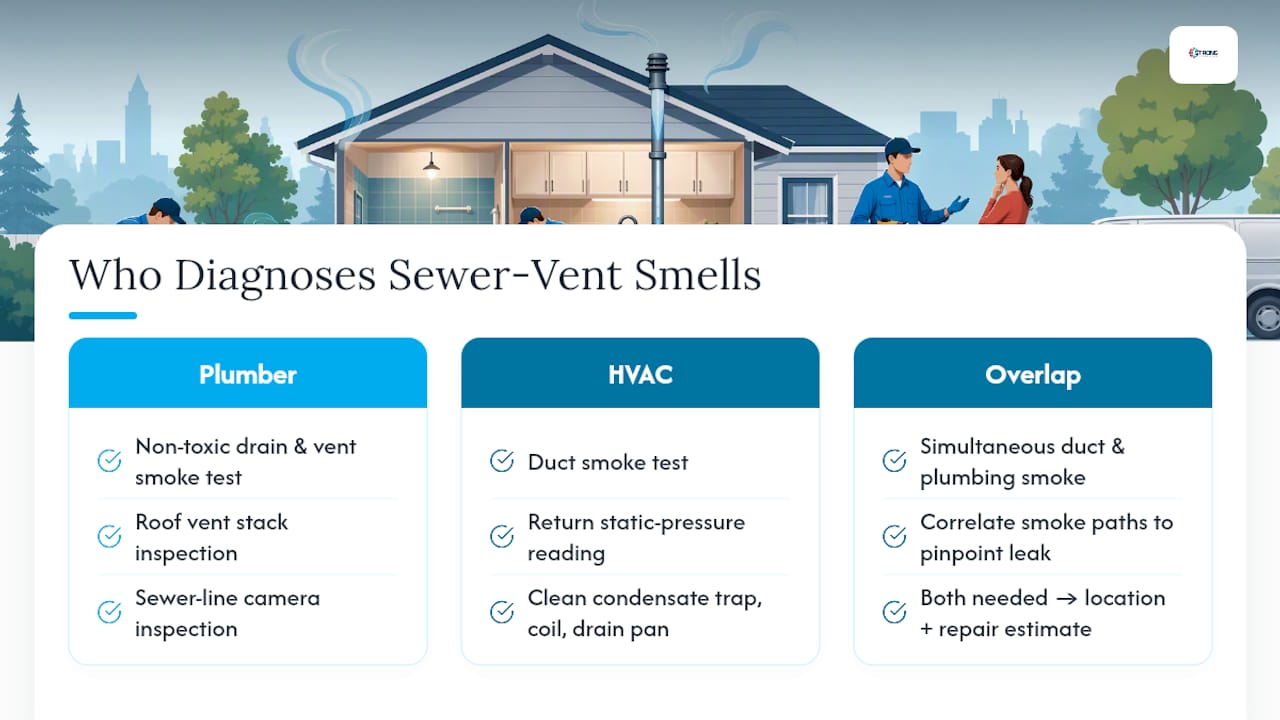
A plumber handles anything inside the drain and vent system. They run a non-toxic smoke test through the drain and vent piping, inspect the roof vent stack for cracks or blockage, and use a sewer-line camera to spot damage a smoke test alone would miss.
An HVAC technician handles the air side. That means a duct smoke test to trace leak paths, a static pressure reading across the return system, and hands-on cleaning of the condensate trap, coil, and drain pan.
You need both when the two systems physically overlap, such as a vent pipe running close to a fresh air intake or ductwork routed through the same slab cavity as a sewer line. Technicians sometimes run theatrical duct smoke and plumbing smoke simultaneously, then correlate where both appear to pinpoint exactly where the systems cross. Expect a diagnostic visit to end with a specific leak location and a repair estimate, not a guess.
When Sewer Smell Becomes a Safety Emergency
Sewer gas is not just unpleasant. It contains hydrogen sulfide, which produces the rotten-egg smell, and methane, which is flammable; hydrogen sulfide can turn dangerous at high concentrations, and the odor can actually disappear at the levels that matter most.
That is the part homeowners underestimate: losing the smell does not mean the gas is gone.
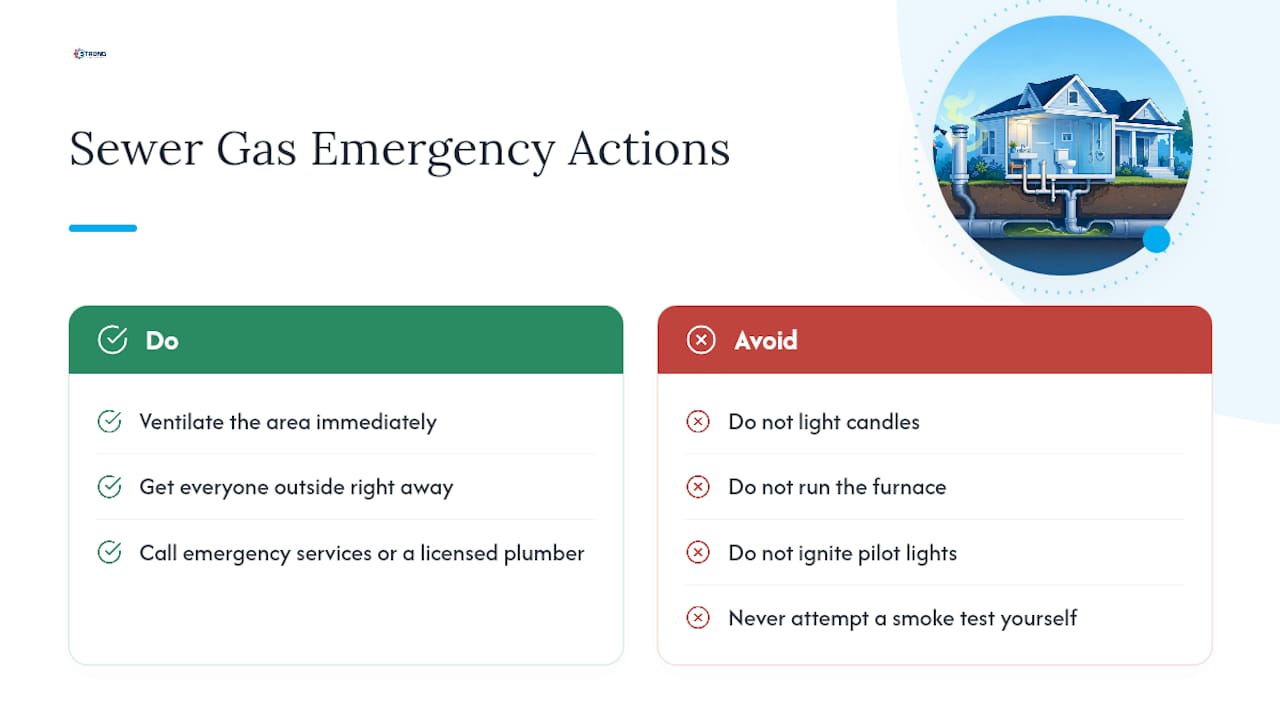
If anyone in the home reports nausea, headache, or dizziness, or the odor is overwhelming rather than faint, ventilate immediately, get everyone outside, and call emergency services or a licensed plumber. Do not light candles, run the furnace, or ignite a pilot light if you suspect sewer gas is present, and never attempt a smoke test yourself. A faint, occasional smell is a maintenance issue. A strong, persistent one paired with physical symptoms is a call-now situation.
Technician-Grade Fixes That Actually Last
A one-time DIY fix stops the smell temporarily. A durable repair addresses why the trap dried out or the pressure imbalance happened in the first place, and that is where a trained technician earns their visit.
Field technicians typically build a diagnosis around three data points: a pattern log from the homeowner, a static pressure reading across the return system, and a duct smoke test to trace exactly where outside air enters the ducts. That combination tells a technician immediately whether they are dealing with negative pressure at the blower or a plumbing-side leak, since sealing return-side duct leaks near the mechanical room usually drops the vacuum effect right away.
A durable repair plan usually includes:
- Installing trap primers on floor drains that see infrequent use, since primers add water automatically and keep the seal intact without homeowner intervention.
- Building or repairing a deep condensate trap at the air handler to stop bacterial odor at the source.
- Sealing return duct seams with mastic rather than tape, which degrades within a year in a mechanical room.
- Scheduling an annual coil and drain pan cleaning alongside monthly trap spot checks.
Homeowners dealing with recurring dirty sock syndrome often have the same underlying airflow imbalance driving both odors.
Why We Treat Every Sewer Odor Call as Urgent
Forty-plus years of combined field experience taught our team one thing: sewer smell from vents almost always traces back to a dry floor drain, a neglected condensate pan, or a return leak the homeowner never knew was there. Our team runs a thorough diagnostic sequence: pattern log first, static pressure and duct smoke test second, then a plain-language estimate before any work starts. No guesswork, no upsell pressure, just a straight answer about what is actually wrong and what it costs to fix.
— Owner
Get a Straight Answer on Your Vent Odor
A misdiagnosed sewer smell wastes money twice: once on a plumber for an HVAC problem, and again on an HVAC tech for a plumbing problem. Our HVAC service provider runs the duct smoke test and static pressure check on-site, coordinates with a plumber when the leak is on the drain side, and provides a flat estimate before any repair starts, so you know the real cost upfront instead of guessing.

Most return-leak seals and condensate trap repairs finish in a single visit. If the odor is strong enough that you have already shut off your blower, do not wait on it. Schedule an HVAC repair inspection or, if the smell showed up suddenly and strong, use our emergency HVAC repair line and we will walk you through safe steps until a technician arrives.
Sources
The safety and diagnostic claims in this article draw on public health guidance and technical inspection resources built for exactly this kind of troubleshooting:
- Sewer gas hazards (Wisconsin DHS)
- Sewer gas through ducts (InspectApedia)
- Sewer odors through AC vents: dry traps and negative pressure (Penning Plumbing)
- Blocked plumbing vents and odor diagnosis (InspectApedia)
FAQ
How Do I Stop Sewer Vent Smell?
Refill every dry trap, especially floor drains and rarely used fixtures, and add a teaspoon of mineral oil to slow future evaporation. If refilling traps does not resolve it, check your condensate drain and drain pan for clogs, and seal any visible return duct leaks near the blower, since negative pressure at the blower is a common driver of the smell.
Why Does My House Smell Like Sewage Even Though Nothing Is Clogged?
A dry P-trap does not need a clog to let sewer gas through. Simple evaporation from an unused drain breaks the water seal and opens a direct path for gas to enter the room, which is why homes with a guest bathroom or basement floor drain smell fine for months, then suddenly do not.
What Neutralizes Sewer Smell?
Nothing neutralizes sewer smell permanently except removing its source. Bleach and air fresheners mask the odor temporarily and can even speed up evaporation in a trap that still has water, making the underlying problem worse rather than better.
Is Sewer Gas Smell an Emergency?
It can be. Sewer gas contains hydrogen sulfide and methane, and hydrogen sulfide can become dangerous at high concentrations even after the odor is no longer noticeable. If the smell is overpowering or anyone feels dizzy, nauseated, or gets a headache, ventilate, evacuate, and call emergency services or a licensed plumber immediately.
Recommended
Need expert HVAC help?
Colorado Springs' trusted, veteran-owned heating & cooling team — emergency service.