
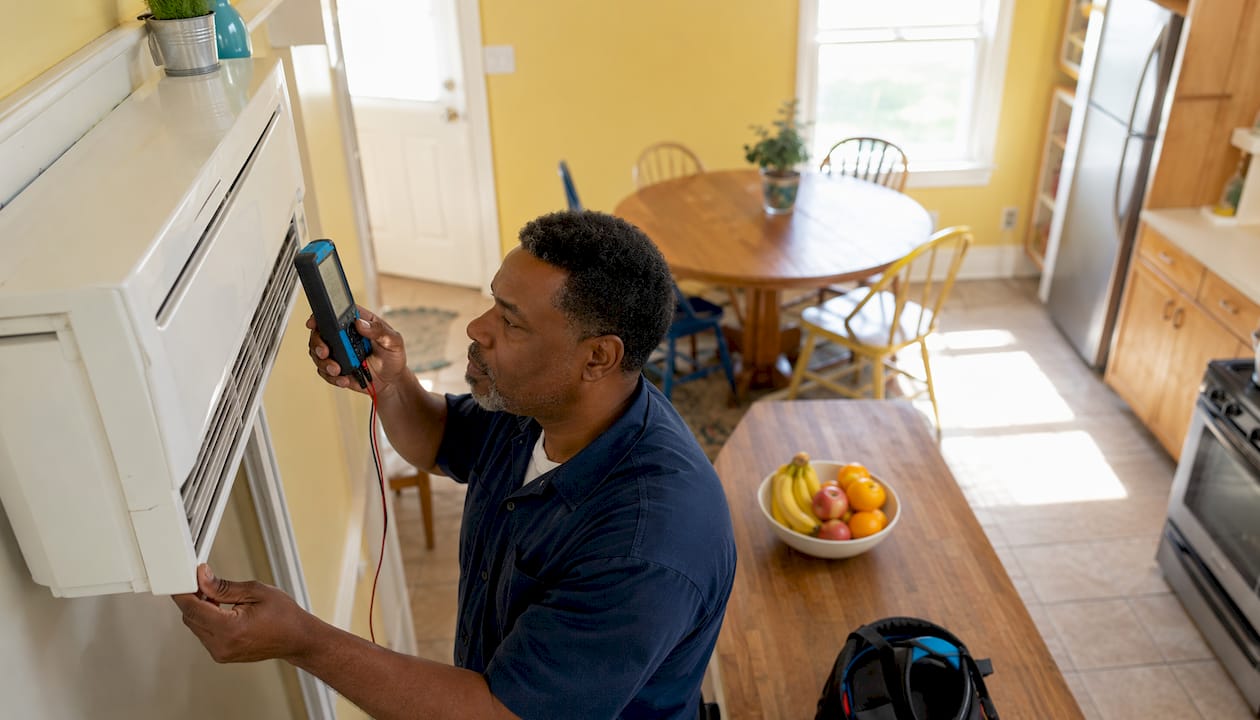
Functioning heating and ventilation systems are not optional amenities in U.S. rental properties. They are legal requirements. Under the implied warranty of habitability, recognized in every U.S. jurisdiction, landlords must maintain rental units in a condition safe and fit for human occupancy, and that obligation squarely includes HVAC systems. Heating is nearly universally mandated. Cooling requirements depend on the state, local ordinances, and what the lease promises. Recent legislation has sharpened these expectations considerably: California’s SB 655, effective 2026, sets indoor heat limits in rental units, while Colorado’s SB24-094 establishes strict repair timelines with a rebuttable presumption of landlord violation if HVAC issues go unresolved after written tenant notice. When landlords fail to keep these systems operational, tenants gain real legal leverage, including the right to withhold rent, pursue repair-and-deduct remedies, or terminate the lease entirely.
The core components at stake are the furnace or boiler providing heat, the ventilation system managing air quality, and, increasingly, cooling equipment where climate or law demands it. Poor HVAC performance creates more than discomfort. It raises genuine health and safety risks, from carbon monoxide exposure caused by a cracked heat exchanger to respiratory problems from inadequate ventilation. Understanding the role of HVAC in habitability standards is practical knowledge for landlords who want to stay compliant, tenants who need to know their rights, and property managers responsible for both.
How legal frameworks define HVAC habitability across the U.S.
The implied warranty of habitability is the legal foundation for HVAC requirements in rental housing nationwide. It does not require perfection. It requires that a unit substantially comply with housing and health codes in ways that materially affect tenant safety. Heating systems fall squarely within that standard everywhere. Cooling is more complicated.
California: SB 655 and indoor heat limits
California’s SB 655, effective in 2026, is one of the most significant recent updates to rental habitability law in the country. It establishes limits on indoor heat levels in rental properties, recognizing excessive indoor temperatures as a habitability threat, particularly for vulnerable tenants. Critically, SB 655 does not require landlords to install air conditioning in every unit. It does require them to address conditions that allow indoor temperatures to reach dangerous levels. Landlords who rely on passive measures like insulation and window shading may satisfy the law in some cases, but the burden of proof sits with them.
Colorado: SB24-094 and mandatory repair timelines
Colorado’s SB24-094 took a different approach, focusing on how quickly landlords must act once they know about a habitability problem. The law establishes a rebuttable presumption that a landlord has violated the warranty of habitability if a reported condition remains unresolved 7 or 14 days after written tenant notice, depending on the severity of the issue. A non-functioning furnace in winter would fall into the more urgent category. The law also requires landlords to provide a comparable dwelling or hotel accommodations for up to 60 days when uninhabitable conditions materially interfere with a tenant’s health or safety. Rental agreements signed after January 1, 2025 must include a statement in both English and Spanish explaining where tenants can report unsafe conditions.
Regional differences at a glance
Habitability requirements for HVAC vary considerably by state and city. The table below compares key standards across major jurisdictions.
| Jurisdiction | Minimum heating requirement | Cooling requirement | Repair timeline after notice |
|---|---|---|---|
| California | Required; must meet housing codes | SB 655 limits dangerous indoor heat; AC not universally mandated | Reasonable time; SB 655 tightens expectations |
| Colorado | Required | Not universally mandated | 7–14 days under SB24-094 |
| New York City | 68°F during day (oct. 1–may 31); 62°F at night | Not mandated by state law | Prompt; HPD enforcement applies |
| Florida (Miami-Dade) | Required | Strongly expected given climate; lease terms often govern | Reasonable time per local code |
| Texas | Required | Not mandated statewide; lease terms govern | Reasonable time |
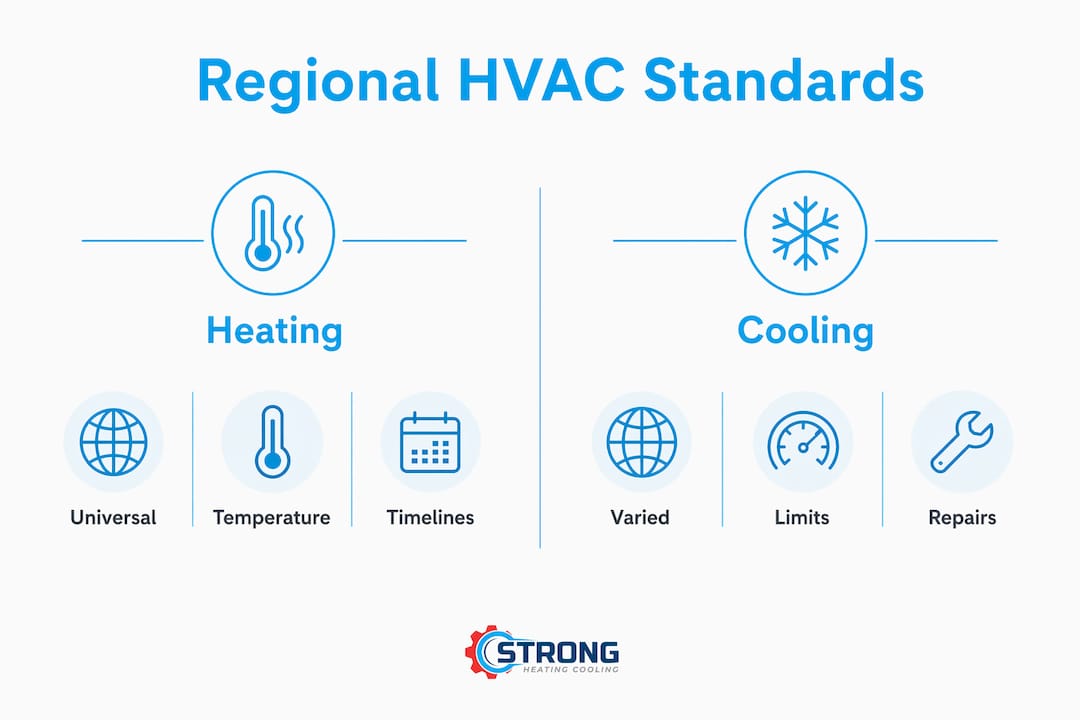
Local codes and lease agreements can add requirements beyond state law. A lease that promises central air conditioning makes cooling a contractual obligation, regardless of whether state law mandates it.
Who is responsible for HVAC maintenance and repairs?
Landlords bear primary responsibility for keeping HVAC systems in working order as part of their habitability obligations. That means scheduling regular maintenance, responding to reported failures, and ensuring systems meet applicable housing codes. Tenants typically handle minor upkeep, most commonly replacing air filters on a schedule defined in the lease, and notifying the landlord promptly when a problem appears.
Lease agreements can shift some maintenance duties to tenants, but only within limits. Under California law, for example, any agreement that assigns habitability-related repairs to a tenant must be made in good faith, reflect a genuine rent reduction, and be documented in writing. A landlord cannot unilaterally reassign repair responsibility after a tenancy begins. The underlying habitability obligation stays with the landlord regardless of what the lease says about day-to-day upkeep.
Written notice from the tenant is what legally starts the clock on repair timelines. Verbal complaints, text messages, and phone calls may not satisfy the legal threshold under laws like Colorado’s SB24-094. Once written notice is received, landlords must communicate with the tenant and begin remedial action within the timeframes the law specifies. Delays beyond those windows create a rebuttable presumption of violation, which puts the landlord in a difficult legal position.
Tenant negligence can reduce or eliminate landlord liability in specific situations. If a tenant’s own actions caused the HVAC failure, such as blocking vents, damaging equipment, or failing to replace filters as required by the lease, the landlord may not be obligated to repair the resulting damage. However, the landlord still cannot allow the unit to become uninhabitable. The practical standard is that landlords must act even when the cause is disputed, and sort out liability afterward.
What tenants can do when HVAC systems fail
Tenants have several legal remedies when a landlord fails to maintain HVAC systems to habitability standards. The right remedy depends on the severity of the failure, the jurisdiction, and whether proper notice was given.
The most common remedies are:
- Repair and deduct: Tenants arrange for repairs themselves and deduct the cost from rent, up to one month’s rent in California. This applies only to conditions that substantially breach the implied warranty of habitability.
- Rent withholding: Tenants stop paying some or all rent until the landlord fixes serious defects that threaten health or safety. The defects must be substantial, not minor inconveniences.
- Lease termination (abandonment): If the unit has substandard conditions that substantially breach habitability and the landlord has received written notice, tenants may vacate and end their rent obligation.
- Legal claims: Tenants may sue for actual damages, and under laws like Colorado’s SB24-094, courts can award punitive damages in breach cases.
A heating failure in winter creates one of the strongest possible habitability claims. Courts and housing agencies treat the absence of heat as an immediate threat to health and safety, which typically justifies faster remedies and less tolerance for landlord delay. Cooling failures are treated differently. Unless local ordinances mandate cooling, or the lease specifically promises it, the absence of air conditioning may not automatically constitute a habitability breach. California’s SB 655 changes this calculus somewhat by treating dangerous indoor heat as a habitability issue, even without a mechanical cooling system.
Documentation is the tenant’s most important tool. Keep written records of every notice sent to the landlord, every response received, and every date a repair was promised or completed. Under Colorado SB24-094, landlords are required to maintain all records related to habitability claims and remedial actions, but tenants should keep their own records independently.
Pro Tip: Send all HVAC repair notices to your landlord by email or certified mail. This creates a timestamped record that establishes exactly when the legal repair clock started, which matters enormously if you later need to pursue rent withholding or a legal claim.
Best practices for landlords to stay HVAC compliant
Staying ahead of HVAC habitability requirements is far less expensive than responding to a legal claim. A planned maintenance schedule is the most reliable way to prevent the kind of sudden failures that trigger tenant remedies.
Practical steps landlords and property managers should follow:
- Schedule professional HVAC inspections at least once a year, ideally before the heating season begins in the fall. A furnace that fails in december creates immediate legal exposure.
- Use licensed HVAC technicians for all repairs and replacements. Work done by unlicensed contractors may not meet code, which undermines your habitability defense.
- Define tenant responsibilities clearly in the lease, particularly filter replacement schedules. A written record of what tenants agreed to handle protects you if a dispute arises over who caused a failure.
- Respond to written HVAC complaints in writing, and begin remedial action within the timeframes your state requires. In Colorado, that window is 7–14 days depending on severity.
- Keep all maintenance records, repair invoices, inspection reports, and tenant correspondence. Colorado’s SB24-094 requires landlords to maintain this documentation, and it is your primary defense in any habitability claim.
- Do not rely on a home warranty vendor to meet your legal repair timelines. The repair clock starts when the tenant gives written notice, not when the warranty company schedules a technician.
Pro Tip: Upgrading to a higher-efficiency heating system not only reduces operating costs but often qualifies for utility rebates and tax incentives. A newer system also carries a lower risk of sudden failure, which directly reduces your habitability exposure during cold months.
For landlords managing properties in Colorado Springs and the surrounding area, residential HVAC maintenance protocols designed specifically for the region’s climate conditions can help keep systems compliant year-round.
Emerging trends shaping HVAC habitability requirements
The legal definition of a habitable temperature is evolving. California’s SB 655 is the clearest signal yet that regulators are beginning to treat excessive indoor heat as a habitability risk on par with inadequate heating. This shift reflects the growing frequency of extreme heat events and their documented health consequences, particularly for elderly tenants, children, and people with chronic illness.
Alongside mechanical HVAC, housing policy is paying more attention to what researchers and building scientists call thermal autonomy. The concept refers to a building’s ability to maintain safe indoor temperatures through passive means, including insulation, window shading, cross-ventilation, and thermal mass, without relying entirely on mechanical systems. This matters for habitability because a unit with poor insulation and no shading may become dangerously hot even with a functioning air conditioner running continuously. Passive cooling measures are gaining recognition as a complement to mechanical HVAC, not a replacement for it.
Climate change is accelerating these trends. As heat events become more frequent and severe, more jurisdictions are likely to follow California’s lead in treating indoor heat as a habitability issue. Landlords who invest now in both mechanical systems and building envelope improvements will be better positioned as standards tighten. The written notice requirement remains central to how these laws operate. Landlords who receive written complaints about excessive indoor temperatures and fail to act within statutory timeframes face the same legal exposure as those who ignore a broken furnace.
One other trend worth noting: relying on an external home warranty vendor to handle HVAC repairs does not protect a landlord from habitability liability. The legal obligation runs directly from landlord to tenant, and repair timelines begin at the moment of written notice regardless of vendor scheduling.
How HVAC compliance is inspected and enforced
Habitability enforcement for HVAC systems operates through several channels, and landlords should understand all of them. The most direct is a tenant complaint filed with a local housing authority or code enforcement agency. In cities like Los Angeles, the Tenant Habitability Program allows tenants to report substandard conditions, triggering inspections and potential citations. New York City’s Housing Preservation and Development agency actively enforces heating requirements during the heat season, which runs from october 1 through may 31.
Code enforcement inspectors have authority to enter rental properties, document HVAC deficiencies, and issue violation notices that carry fines and mandatory repair deadlines. A landlord who ignores a code violation faces compounding penalties, and the documented violation strengthens any concurrent tenant legal claim. In Colorado, SB24-094 also gives the state attorney general jurisdiction over habitability violations, adding a layer of enforcement beyond individual tenant lawsuits.
Courts are the other enforcement mechanism. When tenants pursue rent withholding, repair-and-deduct, or lease termination, judges evaluate whether the HVAC failure constituted a substantial breach of the implied warranty of habitability. Under SB24-094, the rebuttable presumption of violation after 7–14 days shifts the burden to the landlord to prove they acted appropriately. That presumption makes it considerably harder for landlords to defend delayed repairs in court.
Landlords who maintain thorough records, respond promptly to written notices, and use licensed contractors are in a much stronger position during any inspection or legal proceeding. The documentation requirement under SB24-094 is not just a legal formality. It is the practical record that determines whether a landlord can successfully rebut a habitability claim.
Keeping your Colorado property HVAC-compliant
Colorado’s SB24-094 sets some of the most specific HVAC repair timelines in the country, and the consequences of missing those windows are serious. Strongheatingandcooling serves landlords, property managers, and homeowners across Colorado Springs, Monument, Divide, Security-Widefield, Fountain, and surrounding communities with professional heating services and cooling system maintenance designed to keep properties compliant and tenants comfortable.

With over 40 years of combined industry experience, the Strongheatingandcooling team provides honest pricing, licensed workmanship, and the kind of reliable service that holds up under legal scrutiny. Whether you need a pre-season furnace inspection, an emergency repair, or a full system replacement, Strongheatingandcooling is ready to help you meet your obligations and protect your investment.
Key Takeaways
Heating is a legal requirement in every U.S. jurisdiction, and recent laws like California SB 655 and Colorado SB24-094 have made HVAC compliance more specific, more time-sensitive, and more consequential for landlords who delay.
| Point | Details |
|---|---|
| Heating is universally required | The implied warranty of habitability mandates functioning heat in rental units across all U.S. jurisdictions. |
| Cooling is conditionally required | Cooling becomes a legal obligation when local ordinances, SB 655 heat limits, or lease terms require it. |
| Colorado’s repair timelines | SB24-094 creates a rebuttable presumption of landlord violation if HVAC repairs are not addressed within specific timeframes after written notice. |
| Written notice starts the clock | Verbal complaints do not trigger legal repair timelines; only written notice establishes the landlord’s obligation. |
| Documentation is your defense | Landlords must maintain all maintenance records and correspondence related to habitability claims under SB24-094. |
FAQ
What is the $5,000 rule for HVAC?
The $5,000 rule is an informal industry guideline, not a legal standard, used to decide whether to repair or replace an HVAC system. It suggests multiplying the system’s age by the estimated repair cost; if the result exceeds $5,000, replacement is often the more practical choice.
At what temperature does a house become uninhabitable?
There is no single universal temperature threshold in U.S. law. New York City requires landlords to maintain at least 68°F during daytime hours from october 1 through may 31, and California’s SB 655 addresses dangerous indoor heat levels, but most states rely on local housing codes and lease terms rather than a fixed number.
What is the HVAC role and responsibilities in rental properties?
Landlords are legally responsible for maintaining HVAC systems to meet habitability standards, including functioning heat and adequate ventilation. Tenants typically handle minor tasks like filter changes and are responsible for reporting problems in writing to trigger the landlord’s legal repair obligation.
What is the depreciable life of HVAC in a rental property?
Under IRS MACRS rules, residential rental HVAC systems such as central furnaces and air conditioning units are classified as structural components and depreciated over 27.5 years, which affects how landlords plan capital expenditures for system replacements.
Recommended
Need expert HVAC help?
Colorado Springs' veteran-owned heating & cooling team — Mon–Sat, 8 AM–7 PM. Same-day service when available.