
How to Qualify for Energy Rebates in Colorado
Most Colorado homeowners and renters with an existing primary residence can qualify for state energy rebates through the Colorado Home Energy Rebate Program, provided they meet income thresholds based on their county’s Area Median Income (AMI) and work with a registered contractor. Qualifying for energy rebates in Colorado comes down to three things: where you live, how much your household earns relative to your county’s AMI, and which upgrades you install.
Here are the non-negotiable criteria to check before anything else:
- You occupy an existing Colorado home as your primary residence for at least half the year
- Your household income falls below 150% of your county’s AMI (households above 150% AMI do not qualify for HEAR or HER)
- The work is performed by a Colorado Energy Office (CEO) registered contractor
- The property is an existing home, not new construction
- Renters must obtain written landlord permission using the program’s Landlord Authorization for Participation Form
Your immediate next step: use the eligibility tool on the Colorado Energy Office website to look up your county AMI, or contact a registered contractor who can run that check for you during a free assessment.
Key Takeaways
Qualifying for Colorado energy rebates requires meeting AMI income thresholds, living in an existing primary residence, and working with a CEO-registered contractor who applies the rebate directly to your invoice.
| Point | Details |
|---|---|
| AMI determines your rebate level | Below 80% AMI covers up to 100% of cost; 80–150% AMI covers up to 50%; above 150% AMI does not qualify. |
| Household cap of up to $14,000 | Per-item HEAR rebates can sum to up to $14,000 per household for qualifying upgrades. |
| Registered contractor is required | Only CEO-registered contractors can submit proposals, secure reservations, and apply rebates at point of sale. |
| Renters need landlord authorization | Tenants must obtain a signed Landlord Authorization for Participation Form; rebate eligibility is based on tenant income. |
| Strongheatingandcooling handles the process | The team manages CEO portal submissions, rebate reservations, and landlord coordination for qualifying installations in Colorado Springs and surrounding areas. |
Table of Contents
- How Colorado’s home energy rebate programs work
- Detailed eligibility rules for Colorado energy rebates
- Which upgrades qualify and what rebate amounts look like
- How to apply: from eligibility check to rebate payment
- Why registered contractors matter and how to vet them
- How renters can participate and get landlord sign-off
- Major Colorado utility rebates and how they stack with state programs
- Common misconceptions that trip up applicants
- What working with rebate-funded projects looks like on the ground
- Strongheatingandcooling can handle the qualifying installation and paperwork
- Sources
- FAQ
Note: the federal Energy Efficient Home Improvement Credit (Section 25C) ended for equipment installed after December 31, 2025, so it no longer applies to new HVAC installations. For the rebates still available to Colorado Springs homeowners, see our 2026 Colorado HVAC rebates guide.
How Colorado’s home energy rebate programs work
The two program tracks are:
- HEAR (Home Electrification and Appliance Rebates): Targets appliance-level electrification upgrades in existing homes, such as replacing a gas furnace with a heat pump or swapping a conventional water heater for a heat pump model. Rebates are tied to specific equipment categories and capped per item.
- HER (Home Efficiency Rebates): Focuses on whole-home energy efficiency improvements, with a particular emphasis on manufactured homes and large multifamily buildings. Rebate amounts under HER are tied to modeled energy savings rather than specific equipment.
The federal government allocated funds to states under the Home Energy Rebate Program specifically to lower upfront costs for electrification and efficiency upgrades. Colorado’s CEO administers those funds at the state level, which means program rules, contractor requirements, and income thresholds are all set and enforced locally.
The most practical feature of both programs is the contractor point-of-sale model. Rather than paying full price and waiting weeks for a reimbursement check, you pay the contractor a reduced amount because the rebate is applied directly to your invoice. The registered contractor submits the project proposal, secures a rebate reservation through the CEO portal, completes the installation, and then receives the rebate payment from the program. For most households, this means the savings show up immediately at the time of purchase, not months later.
Major utilities you are likely to encounter alongside the state programs include Xcel Energy, Black Hills Energy, Colorado Springs Utilities, and local rural electric cooperatives. Each offers its own rebate programs that can often be layered on top of HEAR and HER, which is covered in detail later.
Detailed eligibility rules for Colorado energy rebates
The rules differ depending on whether you own or rent, what type of property you live in, and where your household income falls relative to your county’s AMI.
Homeowners vs. renters
Homeowners apply directly through a registered contractor and use their own household income to determine their AMI band. Renters are also eligible, but the process has one additional step: you must occupy the home as your primary residence for at least half the year and obtain written landlord permission using the program’s Landlord Authorization for Participation Form. According to the CEO’s program FAQ, eligibility for income-qualified rebates is based on the tenant’s household income, not the landlord’s, which is an important distinction. The CEO compares your Adjusted Gross Income (AGI) to your county’s AMI to determine your rebate level.
AMI income bands and their effect on rebate amounts
Your county’s AMI determines how much of a project’s cost the program will cover. The three tiers work as follows:
- Below 80% AMI: You generally qualify for 100% of project cost covered, up to the program’s per-item and household caps
- 80–150% AMI: You generally qualify for 50% of project cost covered, up to the same caps
- Above 150% AMI: You do not qualify for HEAR or HER rebates
To find your county’s AMI, use the lookup tool on the CEO website and compare it to your household’s AGI from your most recent federal tax return (Form 1040). Other accepted income documents include pay stubs, benefit award letters, and other official income verification.
Property types, residency rules, and exclusions
The program is limited to existing homes. New construction does not qualify, full stop. Vacation homes and secondary residences are also excluded. The property must be your primary home, meaning you live there for at least half the calendar year.
Manufactured and mobile homes are eligible under the HER track, with rebate tiers tied to modeled energy savings. Large multifamily buildings also fall under HER, with unit-level rules that govern how income thresholds are calculated across a building’s tenant population.
AMI income bands at a glance
| AMI Band | Rebate Coverage | Who This Typically Fits |
|---|---|---|
| Below 80% AMI | Up to 100% of project cost (within caps) | Lower-income households, many renters |
| 80–150% AMI | Up to 50% of project cost (within caps) | Moderate-income households |
| Above 150% AMI | Not eligible for HEAR or HER | Higher-income households |
Which upgrades qualify and what rebate amounts look like
The HEAR program covers specific equipment categories. Per-item rebate caps can sum to up to $14,000 per household for qualifying upgrades, with income-qualified households receiving a higher percentage of project cost up to those caps.
Commonly eligible measures include:
- Cold-climate heat pumps (for space heating and cooling): One of the highest-value categories. Colorado’s altitude and temperature swings make cold-climate ratings particularly relevant. Equipment must meet program-specified efficiency thresholds, and some utility rebates require additional cold-climate HSPF or low-temperature capacity ratings.
- Heat pump water heaters: A strong candidate for households replacing electric resistance or gas water heaters, with meaningful per-unit rebate caps.
- Electric stoves and ovens: Eligible for households replacing gas cooking appliances.
- Electrical panel upgrades: Covered when necessary to support electrification of other qualifying measures.
- Wiring upgrades: Similarly eligible when required for a qualifying installation.
- Insulation and air sealing: Eligible measures that reduce heating and cooling loads. Understanding common sources of home energy loss can help you prioritize where insulation and air sealing will deliver the most savings.
- Ventilation improvements: Covered in certain project configurations.
- Whole-home efficiency measures under HER: For manufactured homes and large multifamily buildings, rebates are tied to modeled energy savings percentages rather than individual equipment categories.
Equipment must be purchased and installed through a registered contractor. Buying equipment yourself and hiring a separate installer does not satisfy the program requirement. For heat pumps specifically, verifying that the model meets cold-climate performance specs before purchase prevents costly rework later, particularly if you are also pursuing a utility rebate that carries its own equipment requirements. Strongheatingandcooling’s guide on cold-climate heat pump technology covers what those specs mean in practical terms for Colorado homes.
How to apply: from eligibility check to rebate payment
The process follows a clear sequence. Skipping steps or completing them out of order is the most common reason applications stall.
- Check your AMI and confirm eligibility. Use the CEO’s online tool to look up your county’s AMI. Compare it to your household AGI. Confirm your property is an existing primary residence and that you occupy it at least half the year.
- Find a registered contractor. Only contractors registered with the CEO portal can submit project proposals and secure rebate reservations. The CEO maintains a searchable contractor list on its website.
- Schedule a home assessment. The contractor visits your home, evaluates existing equipment and conditions, and identifies which measures qualify. For renters, this is also the right time to have your landlord authorization form ready or in progress.
- Review and agree on the project proposal. The contractor prepares a formal project proposal that specifies the qualifying measures, equipment models, and estimated costs. Review it carefully before signing.
- Contractor secures a rebate reservation. Once you agree to the proposal, the contractor submits it through the CEO portal and secures a reservation. After that point, the contractor has a fixed window, typically 120 days, to purchase and install the approved equipment.
- Installation takes place. The contractor installs the qualifying equipment. The rebate amount is applied as a discount on your invoice, so you pay the reduced amount at this stage rather than the full project cost.
- Final submission and payment. The contractor submits final documentation, including invoices and photos, to the CEO portal. The program pays the contractor directly for the reserved rebate amount.
Documents you will need to have ready at various stages include: government-issued ID, proof of homeownership (deed or mortgage statement) or a signed lease for renters, the completed Landlord Authorization for Participation Form if renting, proof of income (Form 1040, pay stubs, or benefit letters), contractor invoices, and post-installation photos.
One administrative detail worth knowing: household profiles in the CEO portal expire after 90 days if they are not connected to a Project Proposal. Contractors who know the system prepare complete documentation before the reservation to prevent that expiration from resetting the process.
Why registered contractors matter and how to vet them
The registered-contractor requirement is not a formality. It is the mechanism that makes the point-of-sale rebate model work. A contractor who is not registered with the CEO portal cannot submit a project proposal, cannot secure a reservation, and cannot apply the rebate as an invoice discount. If you work with an unregistered contractor, you will pay full price and have no path to a rebate through these programs.
When evaluating contractors, ask these questions directly:
- Are you registered with the Colorado Energy Office contractor portal, and can you provide your registered-contractor ID?
- Have you completed HEAR or HER projects recently, and can you walk me through how the reservation and invoice process works?
- Can you handle the landlord authorization form if I am a renter?
- What is your permitting process, and do you pull all required permits for this type of installation?
- What warranty do you offer on equipment and labor?
Red flags to watch for: a contractor who asks you to pay the full project price and promises to help you apply for reimbursement afterward is not using the point-of-sale model correctly. That arrangement puts you at financial risk and may indicate the contractor is not actually registered. Similarly, a contractor who is vague about timelines or unwilling to use the CEO portal should prompt you to look elsewhere.
Pro Tip: Before signing any project proposal, ask for the contractor’s registered-contractor ID and verify it against the official Colorado Energy Office contractor list. This takes two minutes and prevents the most common and costly application mistake.
Understanding how HVAC rebates work mechanically before your first contractor conversation puts you in a much stronger position to ask the right questions and spot inconsistencies.
How renters can participate and get landlord sign-off
Renters face one extra step that homeowners do not: getting a landlord to sign the Landlord Authorization for Participation Form. This is where many renter applications stall, not because landlords refuse, but because the request is vague or the form arrives without context.
The most effective approach is to pre-fill the form before presenting it to your landlord. Include the specific measures being installed, the contractor’s name and contact information, the estimated installation timeline, and a brief explanation of how the point-of-sale model works. When a landlord understands that the contractor applies the rebate as an invoice discount, and that the installation does not require them to pay anything upfront, sign-off tends to happen faster.
Practical steps renters should take:
- Contact a registered contractor first and get a preliminary project scope in writing
- Pre-fill the landlord authorization form with the project details and contractor information
- Offer to schedule a brief call between the contractor and your landlord to answer technical questions
- Explain that the rebate reduces the cost of the upgrade, which benefits the property’s long-term value
- Provide the expected installation timeline so the landlord knows what to plan for
- Confirm that the contractor can accept a signed electronic form, which removes the friction of mailing physical documents
For renters, eligibility for income-qualified rebates is based on your household income, not your landlord’s. Your landlord’s role is limited to authorizing the work, not qualifying for the rebate.
Major Colorado utility rebates and how they stack with state programs
Utility rebates in Colorado can often be layered on top of HEAR and HER, which is where the total savings picture gets more interesting. Xcel Energy, Black Hills Energy, Colorado Springs Utilities, and some rural electric cooperatives all offer rebate programs for qualifying equipment, and combining these with state and federal programs can meaningfully reduce total project costs.
Each utility program has its own equipment and efficiency requirements, which may differ from the CEO’s specifications. Verifying that your chosen equipment meets both the state program’s requirements and your utility’s requirements before purchase is the single most effective way to avoid having to swap equipment mid-project.
Common utility rebate categories include:
- Heat pumps (space heating and cooling), often with cold-climate performance requirements
- Heat pump water heaters
- Smart thermostats
- Insulation and weatherization measures
- Energy audits or home assessments
The two rebates apply to different funding sources and are not duplicating the same dollar, so the combination is generally permitted. However, stacking rules vary by utility and measure, so confirming with both the CEO and your utility before finalizing the project scope is worth the extra call.
Energy Smart Colorado, a regional program operating in several Colorado counties, also connects households with energy advisors who can help identify which utility and state rebates apply to a specific property and guide the application process.
State rebates through HEAR and HER reduce your out-of-pocket cost at the time of installation, applied directly to your contractor invoice. You do not need to wait until tax season, and the benefit does not depend on your tax liability.
Key distinctions to keep in mind:
- Some stacking combinations between state rebates and federal credits are permitted; others are not, depending on the measure and program
Consulting a tax professional before finalizing your project is worth the time, particularly if you are planning a larger electrification project where both state rebates and federal credits may apply. The interaction between these programs is not always intuitive, and a tax professional can confirm which credits you can claim and what documentation to preserve.
Common misconceptions that trip up applicants
A few misunderstandings consistently delay or disqualify applications, and knowing them in advance saves real time and money.
New construction does not qualify. The CEO program is explicitly limited to existing homes. If you are building a new home and planning to install a heat pump from the start, that project does not meet the eligibility criteria for HEAR or HER.
DIY installation does not qualify. Both HEAR and HER require that qualifying measures be purchased and installed by a registered contractor. Self-installation, even of equipment that would otherwise qualify, is not eligible.
Verifying your AMI before committing to a project scope lets you plan your budget accurately.
Equipment specs matter more than brand name. A heat pump that does not meet the program’s cold-climate performance thresholds will not qualify, regardless of how well-known the manufacturer is. Ask your contractor to confirm spec compliance before the project proposal is submitted.
Practical tips that consistently help applicants move faster:
- Collect income documentation (Form 1040, pay stubs, benefit letters) before your first contractor meeting
- Ask your contractor to pre-check equipment models against both CEO and utility requirements simultaneously
- For renters, pre-fill the landlord authorization form before approaching your landlord
- Prefer contractors who apply the rebate as an invoice discount rather than asking for full payment upfront
- Keep copies of all invoices, photos, and signed forms in a single folder throughout the process
What working with rebate-funded projects looks like on the ground
Helping Colorado homeowners navigate rebate programs is something Strongheatingandcooling’s team encounters regularly in Colorado Springs and surrounding communities. The projects that go smoothly share a common pattern: the homeowner or renter confirms their AMI before the first appointment, the contractor arrives prepared with the right documentation, and the landlord authorization (when needed) is handled before the assessment visit rather than after.
Heat pump replacements are the most common rebate-funded project the team handles. Cold-climate performance is a real consideration in Colorado, not a marketing point, and selecting equipment that meets both the CEO’s requirements and the local utility’s specifications from the start prevents the kind of mid-project equipment swap that adds weeks to a timeline. The team’s experience with the CEO portal and contractor registration process means the reservation and invoice steps happen without the homeowner needing to manage the paperwork directly.
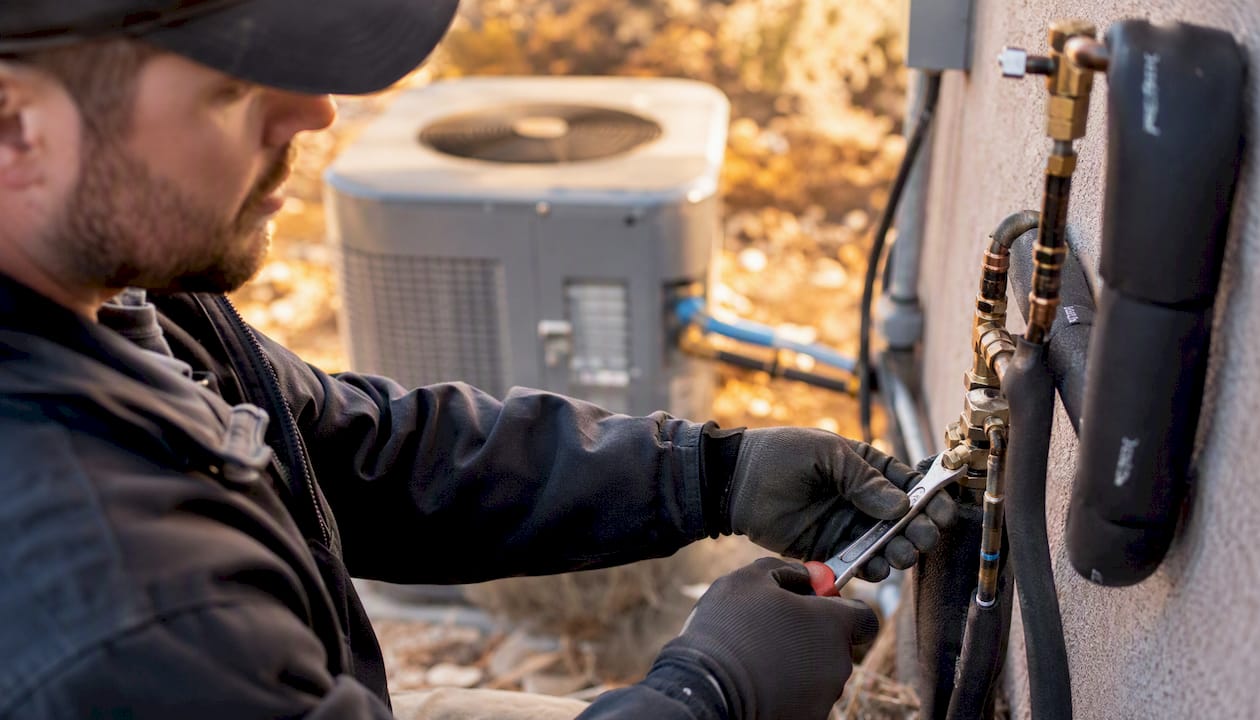
For renters, the landlord coordination step is where the team most often steps in to help. Providing a clear project scope, a straightforward explanation of the point-of-sale model, and a timeline that works for the property owner tends to resolve most hesitation quickly.
Strongheatingandcooling can handle the qualifying installation and paperwork
Replacing aging equipment with a qualifying heat pump or heat pump water heater is one of the most direct paths to a meaningful rebate, and Strongheatingandcooling performs exactly these installations across Colorado Springs and surrounding communities.

The team handles the registered-contractor steps that make the point-of-sale rebate model work: submitting the project proposal through the CEO portal, securing the rebate reservation, applying the discount directly to your invoice, and managing final documentation. For renters, the team can coordinate the landlord authorization process and help pre-fill the form with project details. Services that commonly qualify for HEAR rebates include heat pump installation and replacement, heat pump water heater installation, electrical panel upgrades, and insulation and air sealing work. To get started, schedule a free home assessment with Strongheatingandcooling and the team will confirm your AMI band, identify qualifying measures, and walk you through the expected rebate amounts before any commitment is made.
Sources
The programs and eligibility rules described here can change, so verifying current details directly with official sources before starting a project is always the right move. County AMI figures are updated periodically, and program funding availability can shift.
Key resources to bookmark:
- Colorado Home Energy Rebate Program | Colorado Energy Office
- Biden-Harris administration announces state and tribe allocations for the Home Energy Rebate Program | U.S. Department of Energy
- Residential clean energy credit | Internal Revenue Service
- What are Colorado’s Home Energy Rebate Programs? | PIRG Colorado
- Colorado Energy Rebates 2026: Save Up to $25,000 (Xcel + HEAR + HOMES) — Energy Rebate Calculator Blog
Check your utility’s website directly (Xcel Energy, Black Hills Energy, Colorado Springs Utilities, or your local cooperative) for current rebate amounts and equipment requirements, as these figures are updated more frequently than state program materials.
This article is general information, not a substitute for advice from a qualified financial advisor. Consult a qualified financial professional about your own circumstances before acting on anything here.
FAQ
Who qualifies for Colorado home energy rebates?
Renters also need a signed Landlord Authorization for Participation Form.
What does the Colorado Home Energy Rebate Program cover in 2026?
The program covers cold-climate heat pumps, heat pump water heaters, electric stoves, electrical panel and wiring upgrades, insulation, air sealing, and ventilation through the HEAR track, with whole-home efficiency measures available under HER for manufactured homes and large multifamily buildings.
What Xcel Energy rebates are available for Colorado homeowners?
Xcel Energy offers rebates on qualifying heat pumps, heat pump water heaters, and smart thermostats that can often be combined with HEAR rebates, though Xcel’s equipment efficiency requirements may differ from the CEO’s, so confirming spec compliance before purchase is necessary.
What rebates are available for heat pumps in Colorado?
Utility rebates from Xcel, Black Hills, or Colorado Springs Utilities can often be layered on top for additional savings.
Can renters qualify for Colorado energy rebates?
Yes. Renters qualify based on their own household income relative to county AMI, as long as they occupy the home as their primary residence for at least half the year and obtain a signed Landlord Authorization for Participation Form from their landlord before the project begins.
Recommended
Need expert HVAC help?
Colorado Springs' trusted, veteran-owned heating & cooling team — same-day service.