
Preventive HVAC Maintenance Schedule for Homeowners
TL;DR:
- A preventive HVAC maintenance schedule reduces emergency repairs by up to 73% and extends equipment life by 8 to 10 years.
- Homeowners should conduct monthly filter, drain, and thermostat checks and schedule professional tune-ups twice annually before peak seasons for optimal system performance.
A preventive HVAC maintenance schedule is a structured plan of professional and homeowner tasks designed to keep heating and cooling systems running efficiently, reduce costly breakdowns, and extend equipment lifespan. Industry data shows that structured preventive maintenance reduces emergency repairs by 65% to 73% and extends equipment life by 8 to 10 years. That kind of return makes a consistent schedule one of the most financially sound decisions a homeowner can make. The framework covered here follows ASHRAE Standard 180 best practices and applies directly to residential systems in Colorado Springs and similar climates.
1. What is the recommended preventive HVAC maintenance schedule?
The gold standard for residential HVAC care is two professional visits annually: a spring tune-up focused on cooling readiness and a fall tune-up focused on heating system preparation. Between those visits, homeowners handle monthly tasks that keep the system performing between professional checks. This two-tier approach covers different failure timelines and prevents the kind of gradual degradation that leads to expensive repairs.
Timing matters as much as frequency. Scheduling professional visits 4 to 6 weeks before peak season gives technicians time to identify problems before your system faces its heaviest workload. Booking in april for cooling season and september for heating season puts you ahead of the rush when HVAC technicians are in highest demand.
Pro Tip: Schedule both your spring and fall appointments at the same time, ideally in january or february. Most HVAC companies offer better availability and sometimes better pricing during off-peak months.
Monthly homeowner tasks take 10 to 15 minutes and require no special tools. Checking and replacing air filters, inspecting the condensate drain line for blockages, and verifying thermostat settings are the three tasks that deliver the most consistent protection between professional visits. Neglecting these basics is the single most common reason systems underperform between tune-ups.
Professional tune-ups typically last 15 to 30 minutes for standard tasks, though a thorough inspection of all components can run longer. A complete residential HVAC maintenance visit covers electrical connections, refrigerant levels, coil condition, and safety controls. Homeowners who understand what a professional visit includes are better positioned to verify they are getting full value from their service provider.
2. Monthly tasks every homeowner should do
Monthly maintenance is the foundation of any effective HVAC upkeep program. These tasks do not require a technician and take very little time, but skipping them consistently causes measurable performance loss.
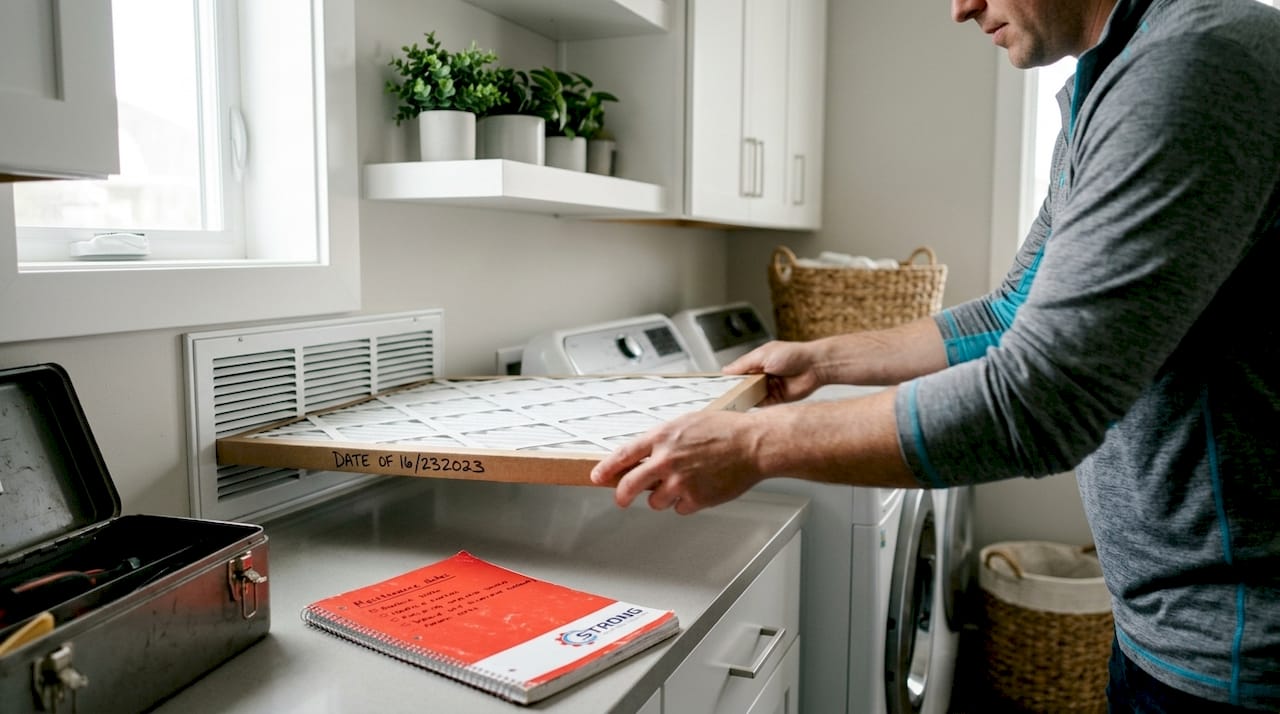
Air filter replacement is the highest-impact monthly task. A clogged filter forces the blower motor to work harder, raises energy consumption, and accelerates wear on internal components. Standard 1-inch filters need replacement every 30 to 90 days. High-efficiency media filters last up to 6 months, though homes with pets or high dust levels need more frequent changes regardless of filter type.
The condensate drain line carries moisture out of the system during cooling season. A blocked drain line causes water to back up into the unit, which can damage the air handler and trigger safety shutoffs. Pouring a small amount of diluted bleach down the drain line monthly prevents algae buildup, which is the most common cause of blockages.
Thermostat verification is quick but often overlooked. Confirm that your thermostat is reading the correct temperature and that programmed schedules are still active. A thermostat that drifts even a few degrees causes the system to run longer than necessary, which adds to your energy bill and shortens equipment life.
Pro Tip: Write the filter replacement date directly on the filter frame with a marker when you install it. You will always know at a glance how long it has been in service.
3. Spring tune-up tasks for cooling season readiness
A spring tune-up prepares your air conditioning system for the months when it will run hardest. Technicians focus on the components most likely to cause failures during summer heat, and the work done in spring directly determines how reliably your system performs from june through september.
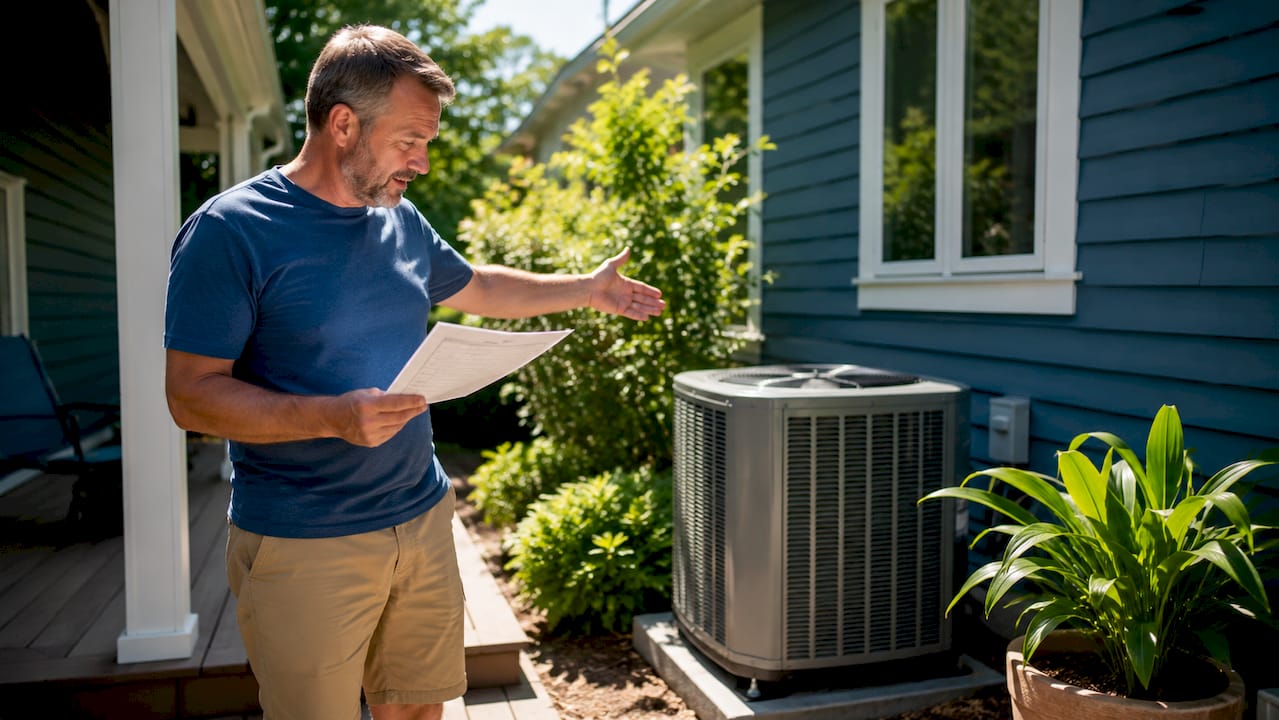
Condenser coil cleaning is one of the most important spring tasks. The outdoor condenser unit collects dirt, grass clippings, and debris over the winter months. A dirty condenser coil cannot release heat efficiently, which forces the compressor to work harder and raises your electricity costs. Cleaning the coil restores heat transfer capacity and reduces strain on the compressor, which is the most expensive component in the system.
Refrigerant charge verification confirms that the system has the correct amount of refrigerant. Low refrigerant reduces cooling capacity, causes the evaporator coil to ice over, and can permanently damage the compressor if left uncorrected. A technician uses gauges to measure system pressures and compares them against manufacturer specifications. This is not a task homeowners can perform themselves, which is one reason the spring professional visit is non-negotiable.
Electrical connections, capacitors, and contactors also get checked during a spring visit. Loose connections cause voltage drops that stress motors. Weak capacitors cause hard starts that shorten compressor life. Catching these issues in spring costs far less than replacing a compressor in july. You can read more about AC upkeep that prevents breakdowns to understand what these checks involve.
4. Fall tune-up tasks for heating season readiness
The fall tune-up shifts focus entirely to the heating system. For gas furnaces, this visit is also a safety check, not just a performance check. Carbon monoxide risks from cracked heat exchangers make fall inspections a matter of household safety, not just comfort.
Heat exchanger inspection is the most critical fall task for gas furnace owners. A cracked heat exchanger allows combustion gases, including carbon monoxide, to mix with the air circulating through your home. Technicians use cameras and combustion analyzers to check for cracks that are invisible to the naked eye. Catching a cracked heat exchanger early can prevent the need for a full furnace repair or replacement decision under emergency conditions.
Combustion analysis measures the efficiency of the burner and confirms that the furnace is burning fuel cleanly. A furnace running with an improper fuel-to-air ratio wastes energy and produces more carbon monoxide. Adjusting the combustion process during a fall visit improves efficiency and reduces the risk of dangerous emissions.
Blower motor inspection, belt condition checks on older systems, and lubrication of moving parts round out the fall visit. These tasks address the mechanical components that run continuously during heating season. A blower motor that fails in january is both an emergency repair and a comfort crisis, and it is almost always preventable with a fall inspection.
5. Quarterly tasks that fill the gaps
Monthly and biannual tasks cover the most urgent maintenance needs, but quarterly checks address components that degrade on a slower timeline. A layered maintenance program that includes quarterly attention prevents the kind of gradual failures that neither monthly nor biannual visits catch in time.
Evaporator coil inspection is a quarterly task that homeowners can perform visually. The indoor evaporator coil should be clean and free of frost or ice buildup. Ice on the coil during cooling season signals either a refrigerant problem or severely restricted airflow, both of which need professional attention. Catching this early prevents the compressor from running under stress for weeks before the next scheduled visit.
Electrical panel and disconnect box inspection is best left to technicians, but homeowners can check that the outdoor disconnect is accessible and undamaged. Vegetation growing around the outdoor unit should be trimmed back quarterly to maintain at least 2 feet of clearance on all sides. Restricted airflow around the condenser is a common and easily preventable cause of reduced cooling efficiency.
Drain pan inspection takes 60 seconds and can prevent water damage. Standing water in the drain pan indicates a partially blocked condensate line that has not yet triggered a shutoff. Addressing it before it becomes a full blockage avoids water damage to ceilings, walls, and the air handler itself.
6. How a maintenance schedule reduces costs and extends equipment life
Preventive maintenance delivers a documented 545% return on investment by avoiding emergency breakdowns and premature equipment replacements. That figure reflects the combined savings from avoided repairs, lower energy bills, and extended equipment life. For homeowners, the practical meaning is straightforward: spending a modest amount on scheduled maintenance consistently costs far less than paying for emergency service calls and early system replacement.
Neglected HVAC systems consume up to 20% more energy than well-maintained ones. That gap compounds over time. A system running at reduced efficiency for three or four years accumulates hundreds of dollars in unnecessary energy costs before it fails outright. Regular maintenance keeps the system operating near its rated efficiency, which shows up directly on your monthly utility bill.
“HVAC systems degrade continuously, and regular maintenance manages that deterioration, preventing irreversible damage.” — ASHRAE Standard 180
Maintenance plan enrollees often receive repair discounts of 10% to 20%, waived service fees, and priority scheduling during peak demand periods. Priority scheduling is particularly valuable in Colorado Springs, where summer heat waves and winter cold snaps create surges in service demand. A homeowner with a maintenance agreement gets a technician faster than one calling without a prior relationship.
7. How to create and maintain HVAC maintenance records
Maintenance records are the paper trail that protects your investment. A written log of every service visit, filter change, and repair supports warranty claims, insurance documentation, and home resale value. Scattered receipts in a drawer do not serve the same purpose as a structured log.
Each record entry should include the date of service, the name of the service provider and technician, findings from the inspection, any parts replaced, and the filter size and MERV rating used. MERV rating documentation matters because using the wrong filter for your system can restrict airflow or allow particles through that damage internal components. ASHRAE Standard 180 requires documented task frequency and record retention for compliance reviews, and residential homeowners benefit from the same discipline even without a formal compliance requirement.
Digital record-keeping works well for most homeowners. A simple spreadsheet or a notes app on your phone can hold years of maintenance history in a format that is easy to search and share. Some homeowners keep a physical binder near the furnace or air handler, which makes records immediately accessible during a service visit or emergency.
Recent maintenance history also saves troubleshooting time during critical failures. A technician who can see what was serviced three months ago narrows down the likely cause of a problem much faster than one starting from scratch. That speed translates directly into lower diagnostic labor costs.
8. How to track performance metrics between visits
Tracking basic performance metrics between professional visits transforms your maintenance program from reactive to predictive. Routine inspections that include measurement of electrical and mechanical parameters can identify latent issues weeks before failure. Homeowners do not need specialized equipment to track the most useful indicators.
Monitor your monthly energy bills and note any unexplained increases. A system that suddenly uses more electricity without a change in weather or usage patterns is showing an early warning sign. Comparing bills month over month and year over year gives you a baseline that makes anomalies obvious.
Note how long your system runs to reach the set temperature. A system that runs continuously without reaching the thermostat setting is losing efficiency, which points to a refrigerant issue, a dirty coil, or duct leakage. Catching this pattern early, rather than waiting for the next scheduled visit, can prevent a minor issue from becoming a major repair.
Key takeaways
A preventive HVAC maintenance schedule built on biannual professional tune-ups, monthly homeowner tasks, and thorough record-keeping reduces emergency repairs, lowers energy costs, and extends equipment life by 8 to 10 years.
| Point | Details |
|---|---|
| Two professional visits annually | Schedule spring and fall tune-ups 4 to 6 weeks before peak season for best results. |
| Monthly filter and drain checks | Replace filters every 30 to 90 days and clear the condensate drain monthly to prevent performance loss. |
| Fall visits are safety checks | Heat exchanger and combustion analysis during fall tune-ups protect against carbon monoxide risk. |
| Maintenance records protect value | Log dates, technician findings, filter MERV ratings, and parts replaced to support warranties and resale. |
| Maintenance plans add financial value | Plan enrollees gain repair discounts of 10% to 20% and priority scheduling during peak demand. |
What I have learned after years of HVAC service calls
After more than 40 years of combined experience serving Colorado Springs homeowners, the pattern is consistent. The calls that come in during the hottest week of july or the coldest night of january almost always involve systems that skipped their spring or fall tune-up. The breakdown is rarely a surprise to the equipment. It was building for weeks.
The most common oversight I see is homeowners who rely entirely on their twice-yearly professional visit and skip the monthly filter changes in between. A professional visit every six months cannot compensate for a filter that has been clogged for four of those months. The filter is the one task that has the biggest impact on day-to-day system health, and it takes less than five minutes.
Good maintenance records also change the nature of a service call. When a homeowner hands me a log showing the last three years of filter changes, tune-up findings, and parts replaced, I can diagnose a problem in half the time. That saves them money on labor and gets their system running again faster. A notes app or a simple binder near the furnace is all it takes.
My honest recommendation is to enroll in a formal maintenance plan if your budget allows. The priority scheduling alone is worth it in a market like Colorado Springs, where demand spikes hard in summer and winter. The discounts on repairs are a bonus. The real value is knowing your system gets attention before the season hits, not after it breaks.
— Owner
Strongheatingandcooling keeps your maintenance schedule on track
Strongheatingandcooling serves Colorado Springs and surrounding communities with biannual tune-ups, priority scheduling, and honest pricing built around what your system actually needs.

Our team handles the full spring and fall HVAC maintenance checklist, from condenser coil cleaning and refrigerant verification to heat exchanger inspection and combustion analysis. Homeowners on our maintenance plan receive priority scheduling and repair discounts that make the plan pay for itself. Whether you need cooling services heading into summer or heating system preparation before winter, Strongheatingandcooling is ready to help. Contact us to schedule your next maintenance visit and keep your system running reliably all year.
FAQ
How often should I schedule professional HVAC maintenance?
The recommended frequency is twice per year: once in spring for cooling system readiness and once in fall for heating system preparation. Scheduling 4 to 6 weeks before peak season gives technicians time to address any issues before your system faces its heaviest workload.
What does a professional HVAC tune-up include?
A professional tune-up covers coil cleaning, refrigerant charge verification, electrical connection inspection, safety control testing, and filter replacement. Fall visits also include heat exchanger inspection and combustion analysis for gas furnaces.
How often should I change my HVAC air filter?
Standard 1-inch filters need replacement every 30 to 90 days. High-efficiency media filters last up to 6 months, though homes with pets or high dust levels require more frequent changes regardless of filter type.
Does preventive maintenance actually save money?
Preventive maintenance delivers a documented 545% return on investment by avoiding emergency breakdowns and premature equipment replacement. Neglected systems also consume up to 20% more energy than maintained ones, adding ongoing costs to the risk of sudden failure.
What records should I keep for my HVAC system?
Log the date of each service visit, the technician’s name and company, inspection findings, parts replaced, and the filter size and MERV rating used. These records support warranty claims, insurance documentation, and home resale value.
Recommended
Need expert HVAC help?
Colorado Springs' trusted, veteran-owned heating & cooling team — emergency service.