
Homeowners, Stop Relighting the Pilot Light: 6 Safe Steps Technicians Use
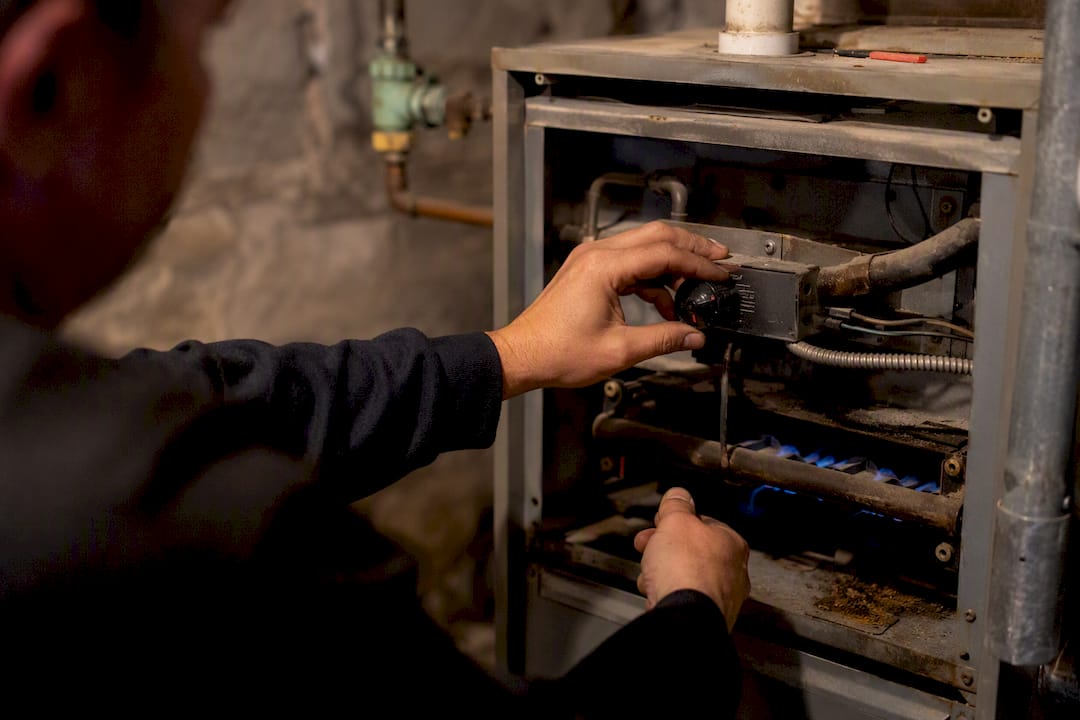
If your pilot light goes out, most modern furnaces and water heaters shut off the gas supply automatically, so an explosion risk is low unless you actually smell gas. No gas smell means you can safely try relighting it. If you smell gas, leave the house and call your gas utility or 911. If the pilot won’t stay lit after two careful relight attempts, stop and call a technician.
TL;DR:
- Most modern appliances shut off the gas supply automatically if the pilot light goes out, reducing explosion risk unless gas smell persists.
- A dead pilot indicates possible thermocouple failure, clogged orifice, drafts, low gas pressure, or an aging appliance nearing 12 years old, requiring professional inspection.
- Relighting attempts should be limited to two; repeated failure suggests a thermocouple or gas valve issue that needs replacement rather than more relights.
- Flame color and hold time are key diagnostic clues: a blue flame indicates safety, while yellow or flickering flames suggest combustion problems needing attention.
- Homeowners should recognize that frequent pilot outages are symptoms of underlying issues and not just minor inconveniences, warranting professional diagnosis.
Table of Contents
- What to Do When a Pilot Light Goes Out
- How Does a Pilot Light Safety System Work?
- What Causes a Pilot Light to Keep Going Out?
- How Do You Safely Relight a Pilot Light?
- What Simple Checks Help Diagnose the Problem?
- When Should You Call a Professional Instead?
- What Do Field Technicians Actually Check?
- What Homeowners Get Wrong About Pilot Light Problems
- How Strong Heating And Cooling Handles Pilot and Ignition Problems
- Sources
- FAQ
What to Do When a Pilot Light Goes Out
Before you touch the gas control, run through this checklist. It takes less than a minute and it’s the difference between a quick fix and a dangerous mistake.
- Smell gas (rotten eggs) or hear hissing? Leave immediately, don’t flip light switches or use your phone inside, and call your gas utility or 911 from outside.
- No smell? Turn the gas control knob to OFF and wait several minutes so any residual gas can clear before you do anything else.
- Never use a lighter, match, or open flame to “check” for gas, and never try to relight a pilot in a room that still smells like gas.
- Check that nearby vents, windows, or doors haven’t created a draft strong enough to blow out the flame repeatedly.
This wait period isn’t optional. The CPSC’s carbon monoxide safety guidance treats it as a baseline step precisely because gas needs time to dissipate before an open flame goes anywhere near it. If your first instinct is a gas odor rather than a dead pilot, our guide on what to do when your furnace smells like gas walks through that scenario specifically.
How Does a Pilot Light Safety System Work?
Older furnaces, water heaters, and fireplaces use a “standing pilot,” a small flame that burns continuously and ignites the main burner on demand. Newer systems increasingly use electronic ignition, which sparks a flame only when the thermostat calls for heat and skips the standing flame entirely.
Either way, a safety device is doing the real work behind the scenes. A thermocouple (or on newer systems, a flame sensor) sits in the pilot flame and generates a small electrical signal, typically around 10 millivolts or higher, that tells the gas valve to stay open. When your thermocouple stays lit, gas keeps flowing to the burner. The moment the flame goes out, that signal drops and the valve closes gas flow within 30 to 60 seconds.
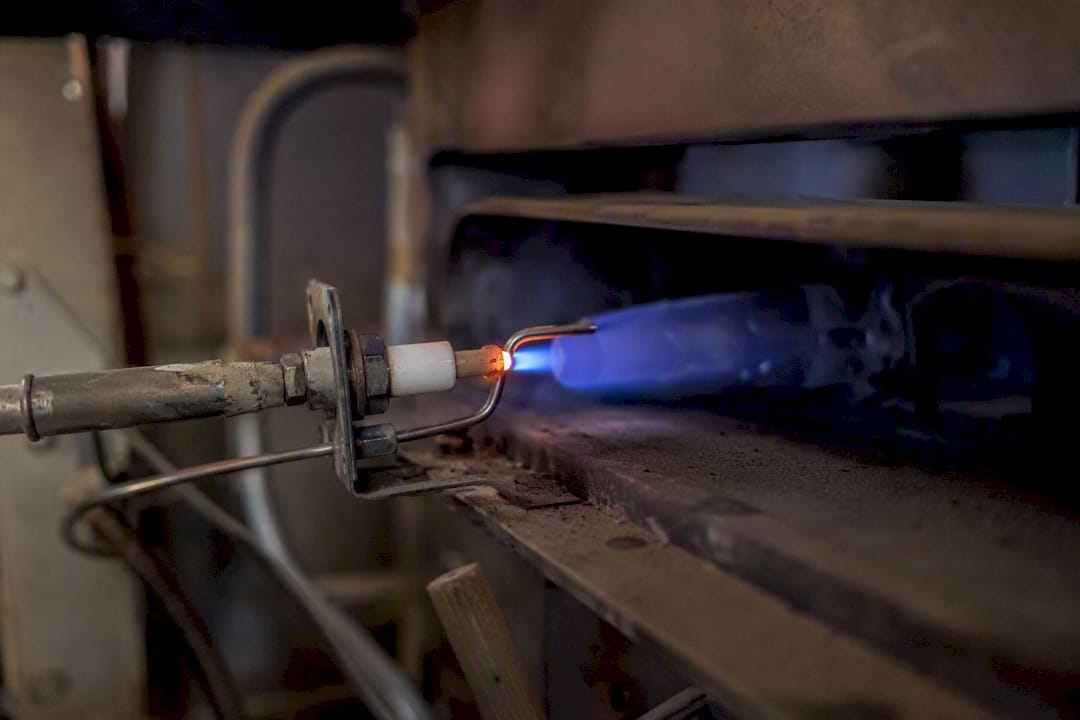
That’s why a dead pilot rarely means gas is pouring into your home unchecked. But if the flame shows yellow or orange instead of blue, or you notice soot around the burner, combustion is happening incompletely, which raises real carbon monoxide risk and means it’s time to stop troubleshooting yourself.
What Causes a Pilot Light to Keep Going Out?
Most pilot light problems fall into one of five categories, and each one leaves its own clues.
- A worn or dirty thermocouple. If the pilot goes out the instant you release the button, the sensor isn’t generating enough voltage to hold the valve open. This is the single most common culprit.
- A clogged pilot orifice or tube. Dust and debris restrict gas flow, so you’ll see a weak, sputtering, or lopsided flame instead of a steady blue cone.
- Drafts or venting problems. If the pilot blows out during windy weather or when a door slams, check for backdrafting or a compromised flue.
- Gas valve issues or low pressure. If other gas appliances in the house also seem sluggish, the problem may be upstream of the pilot itself.
- An aging appliance nearing the end of its service life. Repeated failures on a unit past 10 to 12 years old often cost more to chase down than to replace.
Energy lists thermocouple failure, clogged orifices, venting issues, and valve problems as the standard causes technicians investigate first, and that order roughly matches how often each one actually shows up in the field.
Pro Tip: A thermocouple coated in carbon or oxidation often looks fine but underperforms electrically. Gently scuffing the tip with fine emery cloth or 220 grit sandpaper sometimes restores enough voltage to fix the problem. If it doesn’t, the part has aged out internally and needs replacing rather than cleaning.
How Do You Safely Relight a Pilot Light?
Check your appliance’s own label first. Most water heaters and furnaces have relight instructions printed right on the access panel, and those should always take priority over generic steps. If yours doesn’t, or you want the general sequence, follow this order.
- Confirm there’s no gas smell. If there is, stop and go outside.
- Turn the gas control knob to OFF and wait 5 to 10 minutes for any residual gas to clear.
- Turn the knob to PILOT, then press and hold the pilot button.
- While holding the button, ignite the pilot with a long lighter or the built-in igniter button.
- Keep holding the pilot button for a sufficient time to allow the thermocouple to heat up and generate enough voltage to hold the valve open on its own.
- Release the button. If the flame stays lit, turn the knob to ON. If it goes out immediately, you can try once more.
Two clean attempts is the practical limit. If the pilot dies the moment you let go both times, that’s a strong sign of a failing thermocouple or gas valve, not something you’ll fix by trying a third or fourth time. Repeated relighting at that point just delays a repair a technician needs to make.
What Simple Checks Help Diagnose the Problem?
Before you call for service, a few quick observations help a technician diagnose the issue faster, or tell you whether you can handle it yourself.
- Flame color. A steady blue flame is healthy. Yellow, orange, or flickering flames point to a combustion problem worth flagging immediately.
- Hold time test. If the pilot won’t stay lit for even a few seconds after you release the button, that almost always points to the thermocouple.
- Draft check. Hold a lit candle near the pilot access panel. If the flame dances wildly, drafts or a venting issue are likely contributing.
- Other appliances. If your stove or oven also burns weak, the issue may be low gas pressure rather than something local to this one appliance.
If the trouble started around the same time your furnace stopped firing up altogether, our furnace not turning on troubleshooting guide covers the broader ignition chain, not just the pilot itself.
When Should You Call a Professional Instead?
Some situations call for a phone call, not another relight attempt. If you smell gas, hear hissing, or start feeling dizzy or nauseous, evacuate and call your gas utility or 911 right away. Short of that emergency, call an HVAC technician if the pilot won’t hold after two correct relights, if you’re seeing a yellow flame or soot, or if the appliance is already 10 to 12 years old and this isn’t its first hiccup.
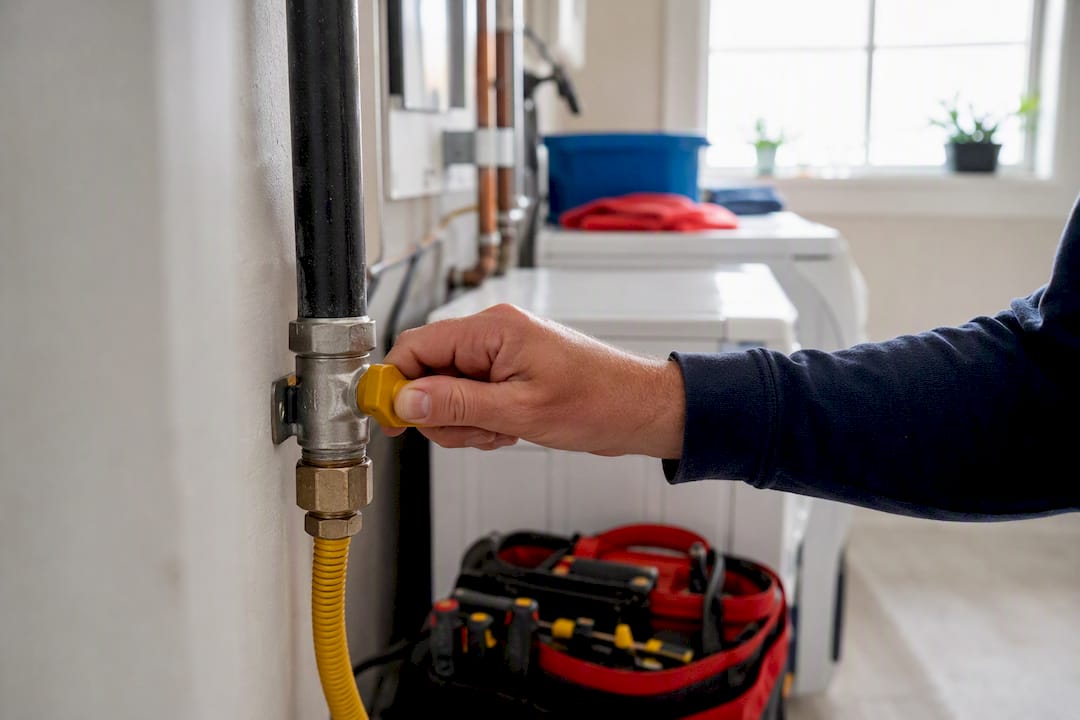
At that age, a technician’s inspection often turns into a bigger conversation. Our breakdown of furnace repair versus replacement is worth reading before that visit so you know what questions to ask.
What Do Field Technicians Actually Check?
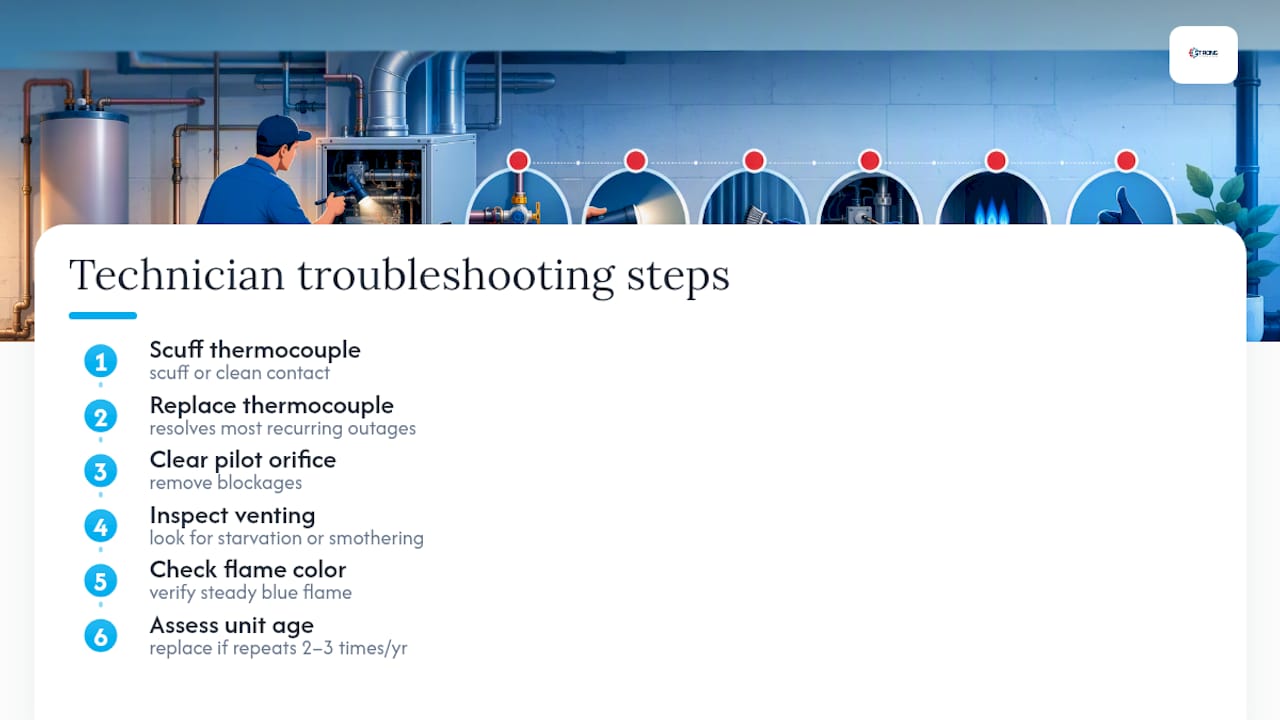
Technicians run through the same fundamentals every time: scuffing or replacing the thermocouple, clearing the pilot orifice, and inspecting for venting problems that starve or smother the flame. Thermocouples typically last 5 to 15 years depending on how much dust and moisture they’re exposed to, and cleaning or replacing one resolves most recurring outages technicians see in the field. When a unit needs the same repair two or three times in a year, that’s usually the signal to talk replacement instead of another patch job.
What Homeowners Get Wrong About Pilot Light Problems
Most advice online treats a pilot going out as a five-minute inconvenience solved by “just relight it.” That framing misses the point. A pilot light that goes out once is a nuisance. A pilot light that goes out repeatedly is a diagnostic message your appliance is sending you, and the most common mistake homeowners make is relighting it five, six, ten times over a few weeks instead of asking why.
The thermocouple exists to protect you, not to be worked around. When it starts failing, that’s not a defect to relight past. It’s aging equipment doing exactly what it’s designed to do: refusing to hold gas flow when it can’t verify a stable flame. Treating repeated relights as normal maintenance, rather than a symptom, is how minor thermocouple wear turns into a service call three months later anyway, usually at a less convenient time.
The other overlooked piece is combustion quality. Homeowners fixate on whether the pilot lights at all and rarely check flame color. A yellow, sputtering pilot that technically “works” can be a bigger safety concern than one that won’t light at all. If yours isn’t burning a clean blue, that deserves attention before the next cold snap, not after.
— Owner
How Strong Heating And Cooling Handles Pilot and Ignition Problems
If you’ve relit your pilot twice and it still won’t hold, Strong Heating And Cooling is the direct next step, not another guide to read. We handle thermocouple and pilot assembly replacement, venting repairs that stop drafts from snuffing your flame, and full furnace replacement consultations when repeated pilot trouble signals a unit near the end of its life. Unlike chasing another DIY fix that might buy you a week, a technician visit tells you exactly what’s failing and whether it’s worth repairing.

A typical visit starts with a diagnostic check of the thermocouple, gas valve, and venting, followed by a straightforward explanation of your repair or replacement options and honest pricing before any work begins. If your furnace is already older and this isn’t its first pilot issue, our furnace repair versus replacement breakdown and our HVAC pricing calculator can help you scope out costs before we ever show up. Schedule a visit with our team and get a clear answer on whether your pilot problem needs a part or a whole new system.
Sources
For official safety guidance, see the CPSC’s carbon monoxide prevention resources and the Department of Energy’s overview of home heating systems. If your issue is a water heater rather than a furnace, this step-by-step water heater relight guide covers appliance-specific timing, and if a pool heater’s standing pilot is the culprit, this troubleshooting resource addresses those quirks directly. For anyone dealing with a sudden loss of hot water rather than a furnace fault, this homeowner troubleshooting guide narrows down the likely cause.
- House Digest — Reasons why gas pilot light keeps going out
- Heating News Journal — Does a gas furnace leak gas if the pilot light goes out?
FAQ
Why would a pilot light keep going out?
The most common reasons are a worn or dirty thermocouple, a clogged pilot orifice, a draft disrupting the flame, or a failing gas valve, and each leaves a distinct symptom like a weak flame, immediate extinguishing on release, or flickering during windy conditions.
Does gas keep flowing if the pilot light goes out?
No. Most modern appliances have a flame-failure safety device that senses the dead pilot and shuts off gas flow to that burner within 30 to 60 seconds.
What happens when a pilot light goes out?
The thermocouple or flame sensor loses its signal and the gas valve closes automatically, stopping gas to the main burner until you relight the pilot and the safety device confirms a stable flame again.
How do you fix a pilot light that won’t stay lit?
Turn the gas control OFF, wait 5 to 10 minutes, then relight it following the PILOT setting and hold the button for 30 to 60 seconds before releasing. If it goes out immediately after two attempts, the thermocouple or gas valve likely needs replacement, and it’s time to call a technician.
Recommended
Need expert HVAC help?
Colorado Springs' trusted, veteran-owned heating & cooling team — same-day service.