
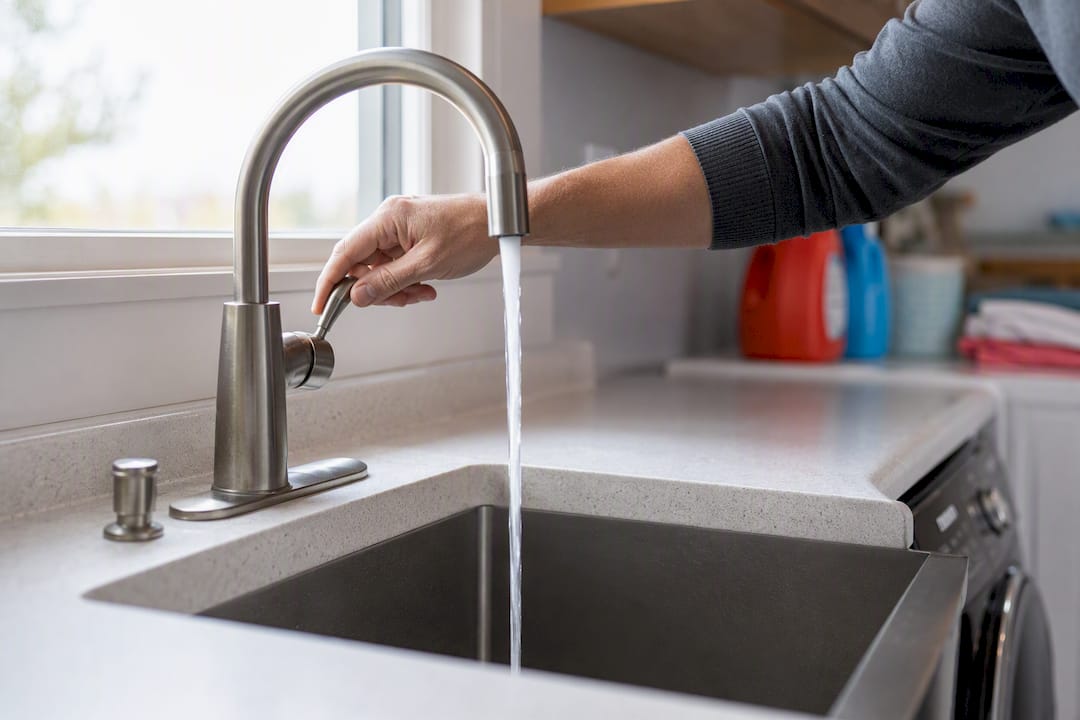
No Hot Water? Here’s What to Check Before You Call for Help
Start by testing more than one faucet: if only the kitchen sink runs cold, the fixture is likely the problem, but if every tap in the house is cold, the water heater’s power, gas, or a tripped safety switch is the cause. Reset the breaker or check the pilot depending on your unit type. If you smell gas, see water pooling at the tank, or a breaker trips again right after resetting it, stop and call a professional immediately.
TL;DR:
- Most electrical water heater issues stem from a tripped breaker or a faulty high-limit switch that requires resetting and monitoring; repeated trips indicate a serious fault.
- Gas water heaters often fail due to pilot problems caused by a failing thermocouple or gas valve, especially if soot or abnormal flames are present, and require professional service if gas smells are detected.
- Tankless units mainly fail from restriction issues like clogged filters or exceeding maximum flow rate, and error codes or ignition faults signal a need for expert diagnosis rather than DIY fixes.
- Isolating the problem between the heater and plumbing involves testing multiple fixtures and inspecting mixing valves, since localized issues avoid unnecessary heater repairs.
- When a water heater shows signs of age, rust, or persistent failure after DIY checks, calling a professional becomes necessary, especially if there is water pooling, tripping breakers, or a gas smell.
Table of Contents
- Why Is There No Hot Water? Quick Checklist To Try Now
- Why Did My Electric Water Heater Stop Making Hot Water?
- What Causes a Gas Water Heater’s Pilot to Go Out?
- Why Is My Tankless Water Heater Not Producing Hot Water?
- Is the Problem My Pipes or the Water Heater Itself?
- When Should You Call a Professional Instead of Troubleshooting?
- How Can You Prevent Sudden Hot Water Loss?
- What Field Technicians Notice About Sudden Hot Water Loss
- Get Fast, Honest Water Heater Help From Strong Heating And Cooling
- Sources
- FAQ
Why Is There No Hot Water? Quick Checklist To Try Now
Before assuming the worst, run through these checks in order. Most homeowners can complete this in under 30 minutes, and it often points straight to the fix, according to Pioneer Plumbers.
- Test the shower and at least one sink. If one fixture is cold and others run hot, you likely have a local plumbing issue, not a heater problem.
- Find the breaker. Electric water heaters usually run on a dedicated double-pole breaker, meaning two switches linked together in the panel. If it’s tripped, flip it fully off, then back on.
- Reset the high-limit switch on electric units. Cut power at the breaker first, remove the upper access panel, and press the small red reset button. Restore power and wait 30 to 60 minutes before checking again.
- Check gas supply on gas units. Confirm other gas appliances (a stove or furnace) are working. If they’re dead too, the issue is upstream of the heater. Look for a lit pilot, but never attempt to relight it if you smell gas.
- Check the display on tankless units. Read any error code shown and check that the inlet filter screen isn’t clogged, since restricted flow is a common trigger.
Pro Tip: Write down what you checked and what you saw, including whether the breaker tripped again or the pilot stayed lit. That five-minute log saves a technician real diagnostic time and often shortens the repair visit.
Confirming whether the outage is isolated or whole-house is the single most useful first step, since it immediately narrows the likely cause to either supply or a specific fixture.
Why Did My Electric Water Heater Stop Making Hot Water?
Electric tanks fail in a few predictable ways, and the symptom pattern usually tells you which part is at fault before a technician ever shows up.
- A tripped breaker that resets cleanly and holds is often just a minor overload, not a sign of a bigger problem.
- A breaker that trips again within minutes signals a genuine electrical fault. Do not keep resetting it — that repeated tripping means current is going somewhere it shouldn’t, and continuing to reset it risks a fire.
- Total, immediate cold water across the house usually points to a failed upper heating element, since the upper element handles initial heating for the whole tank.
- Hot water that starts fine but runs out fast within a few minutes typically means the lower element has failed, since the top of the tank is still heating but the reserve underneath isn’t.
- Burn marks, a scorched smell, or a breaker that won’t stay reset at all means stop touching it and call an electrician.
A tripped high-limit switch resetting successfully doesn’t mean the problem is solved. It signals the tank actually overheated at some point, and if that keeps happening, the root cause (often a failing thermostat) needs a real diagnosis, not just another reset.
What Causes a Gas Water Heater’s Pilot to Go Out?
Gas tanks fail differently than electric ones, and most of the troubleshooting here is about observation rather than repair. Confirm gas is reaching the house first: check the stove or furnace, and locate the gas shutoff valve near the heater to make sure it’s fully open.
- Look through the small viewing window near the bottom of the tank for a steady blue pilot flame.
- A pilot that’s simply out can sometimes be relit by following the instructions printed on the tank, but only if you smell absolutely no gas.
- A pilot that won’t stay lit after relighting almost always means a failing thermocouple or a faulty gas valve, both of which need a licensed technician.
- Soot around the burner, a yellow or flickering flame instead of steady blue, or a burning odor point to a combustion or venting problem.
- If you smell gas at any point, don’t flip switches, don’t relight anything, and don’t strike a match. Leave the house and call the gas utility or 911 first.
Venting problems deserve extra caution because they affect indoor air quality, not just hot water supply. A blocked flue can push exhaust back into the home, so any soot staining near the vent connection is a reason to shut the unit down and call for service the same day.
Why Is My Tankless Water Heater Not Producing Hot Water?
Tankless units fail differently than tank-style heaters, mostly because their small parts are more sensitive to restriction than to age.
- Check the digital display or status light for an error code, then match it against the manual, since most manufacturers publish a code list that points straight to the fault.
- Confirm the inlet filter screen is clear. A clogged filter is one of the most common causes of a “no hot water” call on tankless systems, and it’s something a homeowner can often clean without a tech visit.
- Remember tankless units have a maximum flow rate. Running the dishwasher, a shower, and the washing machine at once can outpace the unit’s capacity, which feels like a failure but isn’t one.
- Any ignition fault, repeated power cycling, or a gas smell on a gas-fired tankless unit means it’s time to call a specialist rather than keep resetting it.
Is the Problem My Pipes or the Water Heater Itself?
Isolating the cause takes just a few minutes and can save you from paying for heater repairs you don’t need.
- Run the hot water at two or three different fixtures. If only one is cold, suspect that fixture’s cartridge or a stuck anti-scald valve rather than the heater.
- Turn a faucet to hot only and watch what happens. Short bursts of warm water followed by cold suggest a mixing valve problem; total cold from the first second points to the heater.
- If a single tub or shower is the only cold spot, check its mixing valve. A worn cartridge inside it can blend in too much cold water even when the heater itself is working fine.
This isolation test matters because a mixing-valve repair costs far less than a full heater diagnosis, and it’s easy to confuse the two symptoms if you skip straight to the tank.
When Should You Call a Professional Instead of Troubleshooting?
Some situations call for stopping immediately, no further DIY checks needed.
- Smell of gas anywhere near the unit or the house.
- Visible water pooling at the base of the tank or dripping from fittings.
- A breaker that trips again immediately after being reset.
- Rust-colored water, popping or rumbling sounds paired with age, or a tank older than 8 to 12 years, since that’s the typical service life for a water heater, and repeated failures at that age usually cost more to keep patching than to replace.
Pro Tip: When you call for service, have the heater’s age, fuel type, and exactly what you’ve already checked ready to go. A technician who knows you’ve already reset the breaker twice can skip straight to diagnosing the real fault.
A technician’s first moves on-site usually mirror your own checklist: confirm scope, check power or gas supply, then inspect for visible signs the unit is failing before opening anything up.
How Can You Prevent Sudden Hot Water Loss?
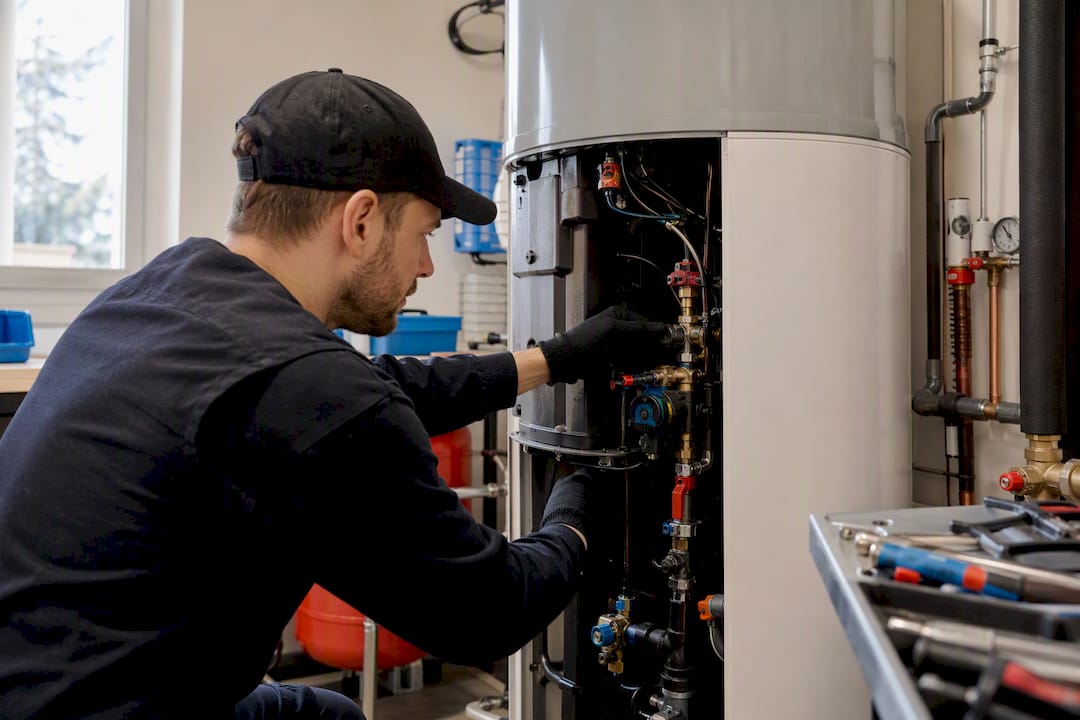
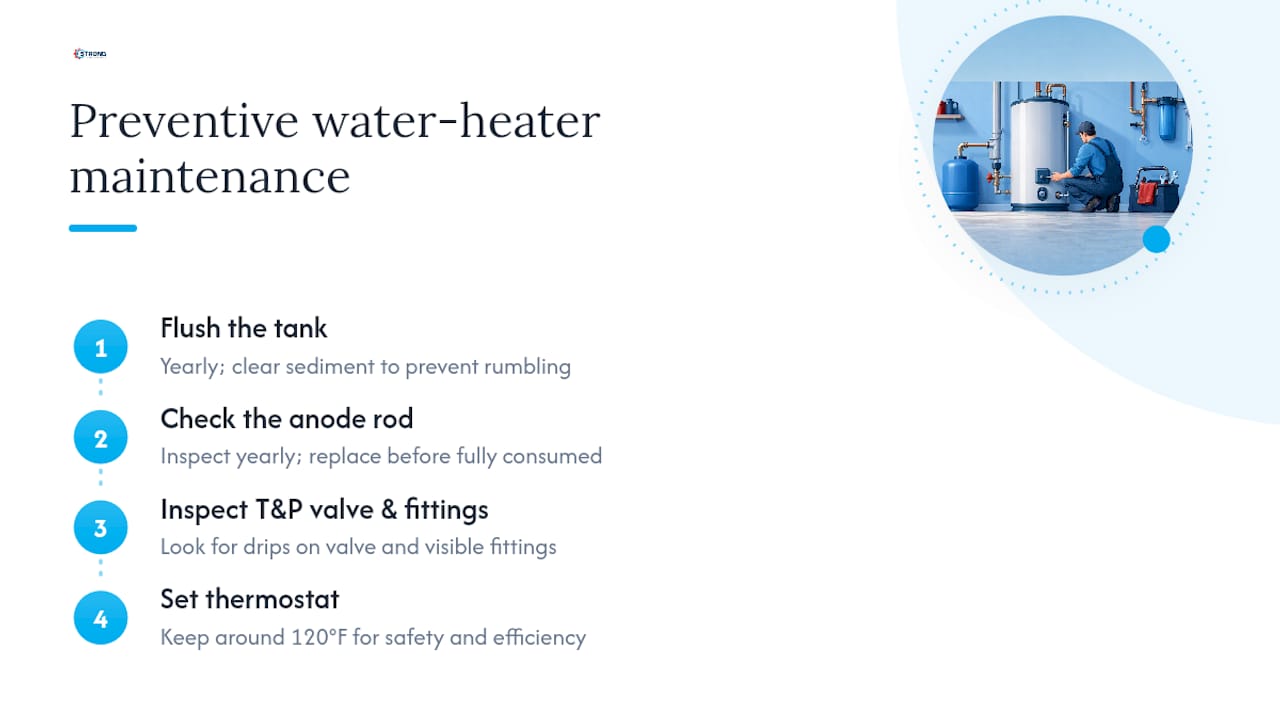
A little seasonal upkeep prevents most emergency calls. Flush the tank yearly to clear sediment, since [buildup under the elements causes rumbling and shortens element life](https://searchaplumber.com/blog/water-heater-repair-checklist-when-you have-no-hot-water). Check the anode rod on the same schedule and replace it before it’s fully consumed to slow internal corrosion. Inspect the T&P valve and visible fittings for drips, and keep the thermostat around 120°F for a safer, more efficient balance. A leak sensor near the tank, like the ones covered by LeakSense, catches slow failures before they flood a utility room.
What Field Technicians Notice About Sudden Hot Water Loss
After 40-plus years of combined field experience, the pattern holds up: sediment and age are behind most “it just stopped working” calls, not some mysterious defect. When you do call a technician, ask what diagnostics they ran, which specific part failed, why repair or replacement makes more sense for your unit, and what warranty covers the work. Those four questions separate a good repair from a guess.
— Owner
Get Fast, Honest Water Heater Help From Strong Heating And Cooling
If you’ve run through the checks above and still have no hot water, or you’d rather skip the troubleshooting and get it fixed today, Strongheatingandcooling offers same-day diagnostic and repair visits across Colorado Springs and the surrounding area, without the upsell pressure some larger chains are known for.

When you call, have your heater’s age, fuel type, and whatever you’ve already tried on hand. It helps our technicians diagnose faster and quote you honestly on the spot, whether that’s a simple part swap or a full heating installation. If your unit is aging out and needs replacing rather than repairing, ask about our financing options for HVAC replacement so a new system doesn’t strain your budget. For anything that can’t wait, our emergency HVAC repair line gets a technician to your door fast. Call today and get a straight answer about what’s wrong and what it’ll take to fix it.
FAQ
Why Would I Suddenly Have No Hot Water?
The most common causes are a tripped breaker or failed high-limit switch on electric tanks, an extinguished pilot or faulty thermocouple on gas tanks, or a clogged inlet filter on tankless units.
What Is the First Thing to Check When There Is No Hot Water?
Test more than one faucet first to confirm whether the problem affects a single fixture or the entire house, since that determines whether you’re dealing with plumbing or the heater itself.
How Do I Reset My Hot Water Heater?
On electric units, cut power at the breaker, press the red high-limit reset button inside the upper access panel, then restore power and wait 30 to 60 minutes; on gas units, follow the relighting instructions printed on the tank only if you smell no gas.
Why Is My Hot Water Not Coming Out But My Cold Water Is?
This usually means the water heater itself has lost power, gas, or ignition, while the cold line bypasses the heater entirely and keeps working regardless of the unit’s condition.
Recommended
Need expert HVAC help?
Colorado Springs' trusted, veteran-owned heating & cooling team — same-day service.