
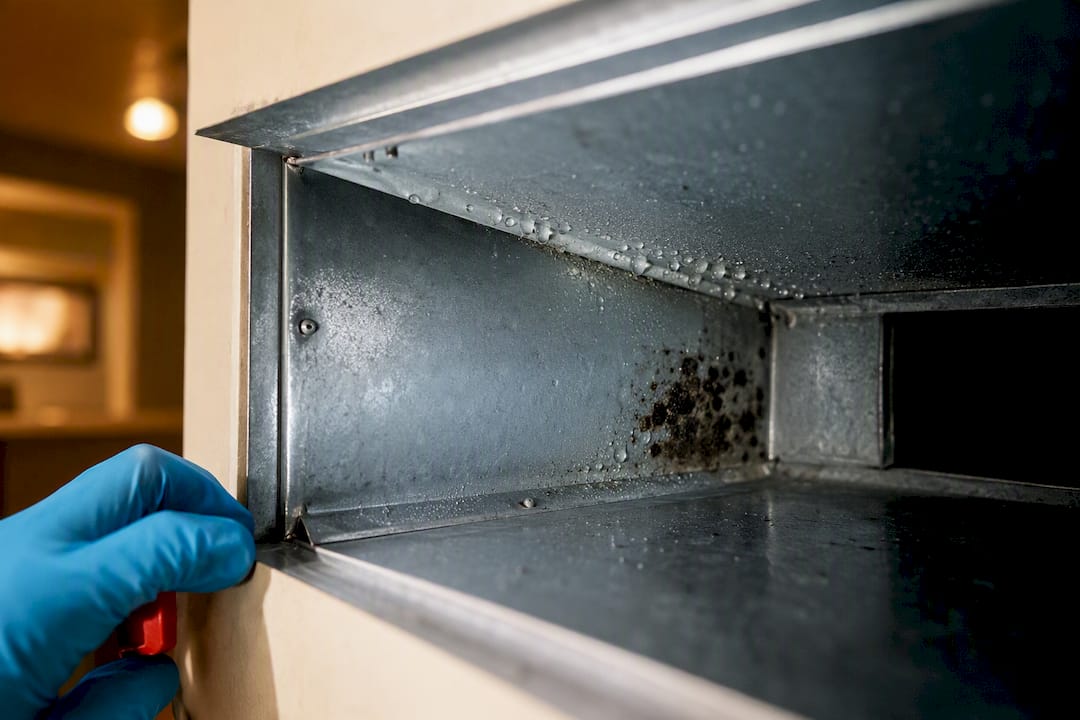
If you suspect mold in air ducts, shut the HVAC system off and stop running it until the source is confirmed. This keeps spores from circulating through every room. The EPA and CDC agree that moisture, not dust, is the real driver, so the lasting fix is drying out condensate pans, sealing leaks, and insulating cold duct runs. Professional remediation should follow ANSI/IICRC S520 standards rather than a quick wipe-down.
TL;DR:
- Moisture sources such as clogged drains, uninsulated cold ducts, and oversized AC units are the primary causes of mold growth in air ducts.
- Visible mold often appears as fuzzy patches or stains, accompanied by a persistent musty smell that intensifies near vents, indicating moisture issues.
- Contaminated ducts can cause health problems like respiratory irritation and worsen conditions such as asthma, especially in vulnerable populations like children and the immunocompromised.
- DIY cleaning is limited to metal surfaces and filters; porous duct liners exposed to mold require removal and professional remediation following industry standards.
- Addressing moisture and drainage problems first prevents mold recurrence; cleaning alone does not eliminate the underlying cause of contamination.
Table of Contents
- Signs of Mold in Ducts You Shouldn’t Ignore
- What Are the Health Risks of Mold in HVAC Systems?
- Why Does Mold Growth Happen in HVAC Ducts?
- How Do You Check for Mold in Air Ducts Safely?
- Removing Mold from Ducts: What Homeowners Can and Can’t Do
- When Should You Hire a Mold Remediation Professional?
- The Real Question Isn’t Cleaning. It’s Moisture.
- Get Your Ducts Inspected Before Mold Becomes a Bigger Problem
- Where This Guidance Comes From
- Sources
- FAQ
Signs of Mold in Ducts You Shouldn’t Ignore
Mold rarely announces itself quietly. Most homeowners notice it through smell before they ever see it, since visible growth tends to stay hidden behind grilles or inside the air handler.
Watch for these clues, especially if more than one shows up at once:
- Dark, speckled, or fuzzy patches around supply and return registers
- A persistent musty smell that gets stronger when the system kicks on
- Water stains or discoloration on ceiling tiles near vents
- Allergy or cold-like symptoms that ease up when you leave the house
If the odor fades in one room and strengthens in another, follow it toward the nearest vent. That’s usually where the moisture problem lives.
What Are the Health Risks of Mold in HVAC Systems?
Breathing air that’s circulated through contaminated ducts can trigger nasal congestion, coughing, sore throat, and eye irritation in otherwise healthy people. The CDC links mold exposure to worsened asthma and other respiratory symptoms, and the risk climbs sharply for certain occupants.
Statistic Callout: The CDC identifies hypersensitivity pneumonitis and opportunistic infections as serious outcomes tied to mold-contaminated indoor environments, particularly for people with weakened immune systems or existing lung disease.
People most at risk include:
- Infants and young children
- Older adults
- Anyone with asthma, COPD, or chronic respiratory conditions
- People undergoing chemotherapy or with compromised immune systems
If symptoms persist after you leave the building or worsen indoors, talk to a doctor. Skip DIY scrubbing or vacuuming near ducts when vulnerable people are in the house. Agitating mold without containment can spread far more than it removes.
Why Does Mold Growth Happen in HVAC Ducts?
Mold needs moisture to establish itself, and HVAC systems generate plenty of it. The EPA points to condensate pans, leaking coils, and condensation on uninsulated ductwork as the most common sources. Once moisture settles into a porous duct liner, it rarely dries out on its own.
A few specific culprits show up again and again:
- Clogged or improperly sloped condensate drain lines that let water pool
- Cold duct surfaces that sweat when warm, humid air hits them
- Oversized air conditioners that cool the air quickly but don’t run long enough to dehumidify it
- In-duct humidifiers with worn seals or overflow issues
Pro Tip: An oversized AC unit is one of the sneakiest causes of duct moisture. It cools a room fast, then shuts off before it pulls enough humidity out of the air, leaving damp conditions behind long after the temperature feels comfortable.
How Do You Check for Mold in Air Ducts Safely?
A careful inspection tells you whether you’re dealing with a minor issue or something that needs professional attention. Work through it in order:
- Turn off the HVAC system before opening any panels or registers.
- Remove accessible vent covers and shine a flashlight inside, looking for discoloration, fuzzy texture, or standing moisture.
- Check the air handler and drain pan for standing water or visible growth without disturbing insulation.
- If you see something suspicious but can’t confirm it’s mold, use clear tape to lift a sample and send it to a lab. The EPA notes this kind of testing typically costs around $50 and is worth it when the result would change your remediation plan.
- Wear gloves and an N95 mask any time you’re handling suspected mold, and photograph everything before touching it.
If a contractor visits, ask them to document what they find with photos and notes before starting any work. That record protects you if there’s ever a dispute about scope.
Removing Mold from Ducts: What Homeowners Can and Can’t Do
Once you’ve confirmed a mold problem, the order of operations matters. Acting too fast in the wrong direction can spread contamination instead of solving it.
- Turn off the HVAC system immediately if you haven’t already, and seal off affected vents with plastic sheeting to limit airflow through the contaminated section.
- Ventilate the room with open windows or a fan pointed outward, not toward other parts of the house.
- Handle only what’s genuinely accessible: wipe down metal grilles with soap and water, replace filters, and use a HEPA vacuum on loose debris around register openings.
- Stop there. Don’t attempt to clean inside insulated ductwork or porous liner material yourself.
Porous insulated duct liners that are wet or moldy can’t be effectively cleaned once contaminated. The EPA’s guidance is direct on this point: those materials need to be removed and replaced, not scrubbed.
Professional remediation follows a more structured path. Technicians assess the extent of contamination, set up containment to prevent spores from traveling, use HEPA-filtered vacuums throughout the process, and replace porous materials that can’t be salvaged. The industry benchmark for this work is ANSI/IICRC S520, paired with NADCA cleaning guidance for the ductwork itself. A qualified HVAC technician can also help determine whether a component needs cleaning or full replacement, which matters just as much for mold-damaged parts as it does for aging equipment.
When Should You Hire a Mold Remediation Professional?
Some situations call for a professional the moment you spot them, rather than after a failed DIY attempt.
- Visible mold covering a substantial area of ductwork or the air handler itself
- Contamination inside the air handling unit, not just at the register covers
- Occupants with ongoing respiratory symptoms that improve when they leave the house
- Any exposure following flooding or major water intrusion
A legitimate remediation company will document the job with photos, note any lab results, and lay out a containment plan before starting. Ask what standards they follow. ANSI/IICRC S520 and NADCA’s ACR guidance are the two names to listen for. Cost typically depends on the square footage affected, how accessible the ductwork is, and whether porous materials need replacing rather than cleaning.
The Real Question Isn’t Cleaning. It’s Moisture.
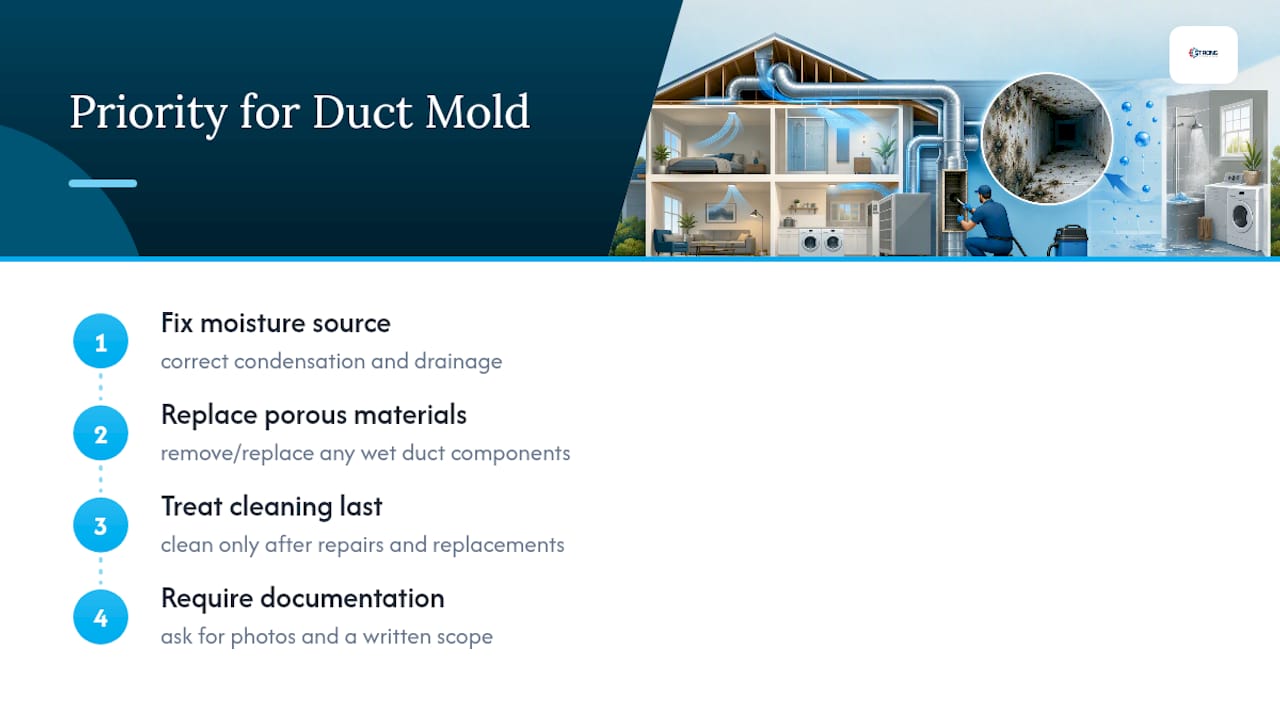
Most homeowners call about duct cleaning and end up needing a moisture fix instead. That’s the pattern worth understanding: cleaning ducts without correcting the underlying condensation or drainage problem is a temporary patch, not a solution. The mold comes back because the water never left.
A useful prioritization framework: fix the moisture source first, replace anything porous that got wet, and treat cleaning as the last step, not the first. With 40 years of combined experience in Colorado Springs HVAC systems, that order of operations shows up in every serious duct mold case worth solving. Homeowners deserve documentation, not guesswork, when deciding between a cleaning and a repair estimate. Ask for photos and a written scope before signing anything.
— Owner
Get Your Ducts Inspected Before Mold Becomes a Bigger Problem
A reputable HVAC service gives homeowners a technician who looks at the whole system, not just the ductwork, and provides an honest assessment of whether you need cleaning, a condensate repair, or new insulation.

A first appointment starts with a full diagnosis. That means checking the condensate pan, drain line, insulation condition, and any visible growth, then handing you a documented, prioritized list of what actually needs fixing. Sometimes that’s a simple duct cleaning. Other times it’s a drain repair or insulation swap that stops the mold from coming back at all. If your system needs more than a cleaning, our HVAC repair services cover the condensate and insulation fixes that actually address the root cause. Schedule an inspection with Strongheatingandcooling and get a straight answer about what your ducts need, not just a sales pitch for the most expensive option.
Where This Guidance Comes From
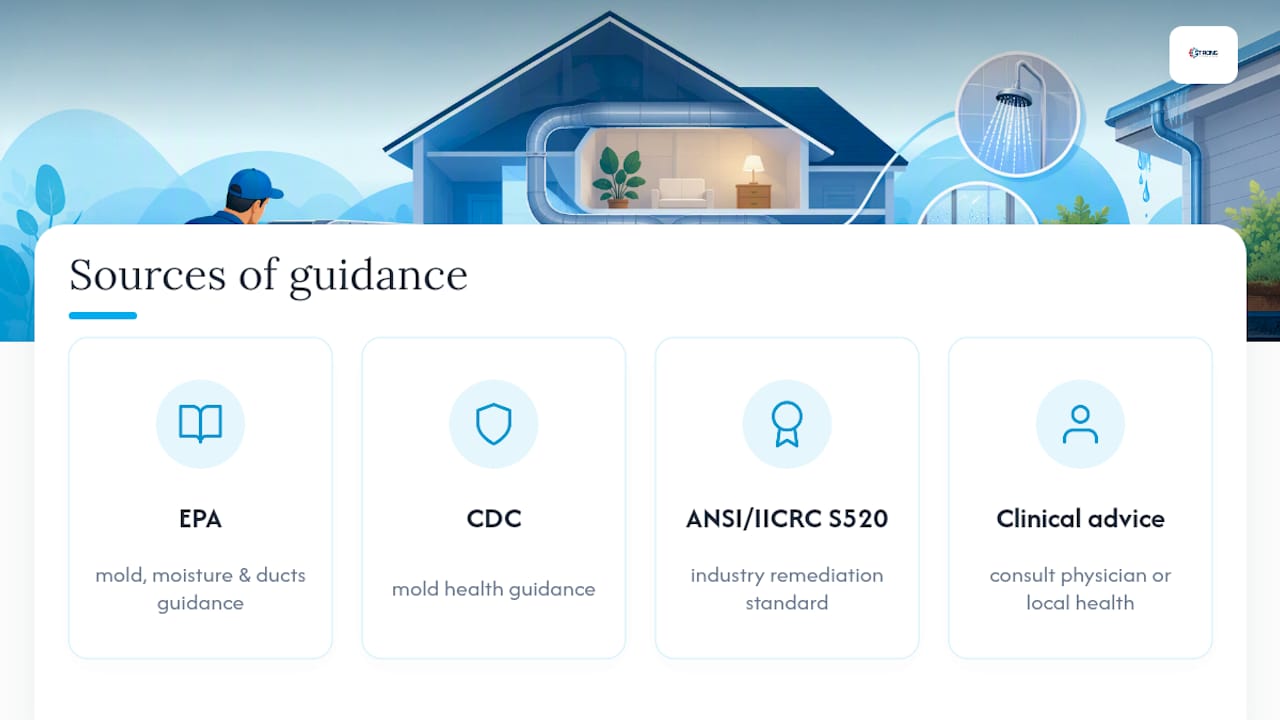
This article draws on the EPA’s mold and moisture guidance and its duct cleaning recommendations, the CDC’s mold health guidance, and industry remediation standards from ANSI/IICRC S520. For clinical symptoms, consult a physician or your local public health authority.
This article is general information, not a substitute for advice from a qualified doctor. Consult a qualified healthcare professional about your own circumstances before acting on anything here.
Sources
FAQ
How Do You Get Rid of Mold in Air Ducts?
Turn off the HVAC system, contain the affected area, and clean accessible metal surfaces with soap and water. Porous insulated liners that are moldy need to be removed and replaced by a professional following ANSI/IICRC S520 standards, since they can’t be effectively cleaned in place.
How Much Does It Cost to Get Rid of Mold in Air Ducts?
Cost depends on how much ductwork is affected, how accessible it is, and whether porous materials need replacing rather than cleaning. Lab confirmation of a suspected mold sample typically runs around $50, while full remediation costs vary widely based on scope.
What Are the Symptoms of Mold in the Air?
Common symptoms include nasal congestion, coughing, sore throat, and eye irritation, often easing when the person leaves the building. The CDC notes that people with asthma or weakened immune systems face a higher risk of more serious reactions, including hypersensitivity pneumonitis.
Can I Clean Air Ducts Myself If I Find Mold?
You can safely clean metal grilles, replace filters, and vacuum loose debris near register openings with a HEPA vacuum. Leave anything inside insulated ductwork or the air handler to a professional, since disturbing contaminated material without containment can spread spores.
Does Duct Cleaning Alone Stop Mold from Coming Back?
No. The EPA is clear that cleaning without fixing the moisture source just delays the next outbreak. Repairing condensate leaks, correcting drainage, and insulating cold duct surfaces are what actually keep mold from returning.
Recommended
Need expert HVAC help?
Colorado Springs' veteran-owned heating & cooling team — Mon–Sat, 8 AM–7 PM. Same-day service when available.