
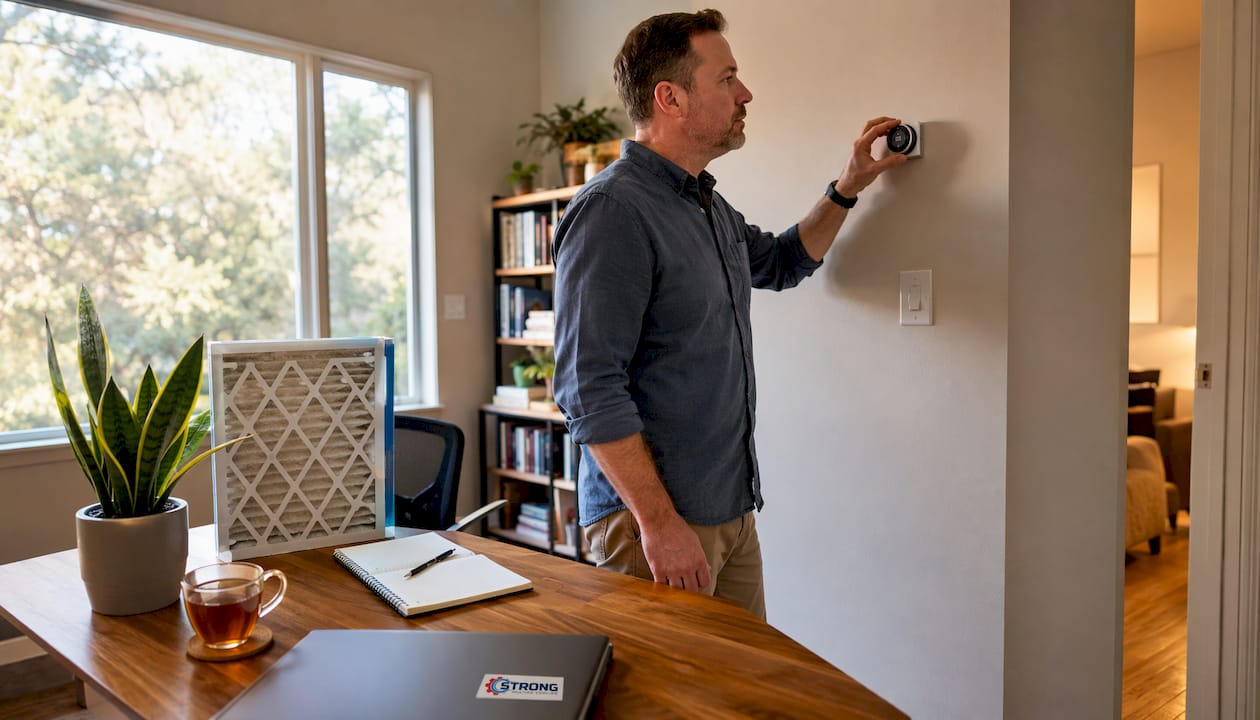
Improving Home Air Quality: An HVAC Guide for Homeowners
What are the best HVAC strategies for improving home air quality?
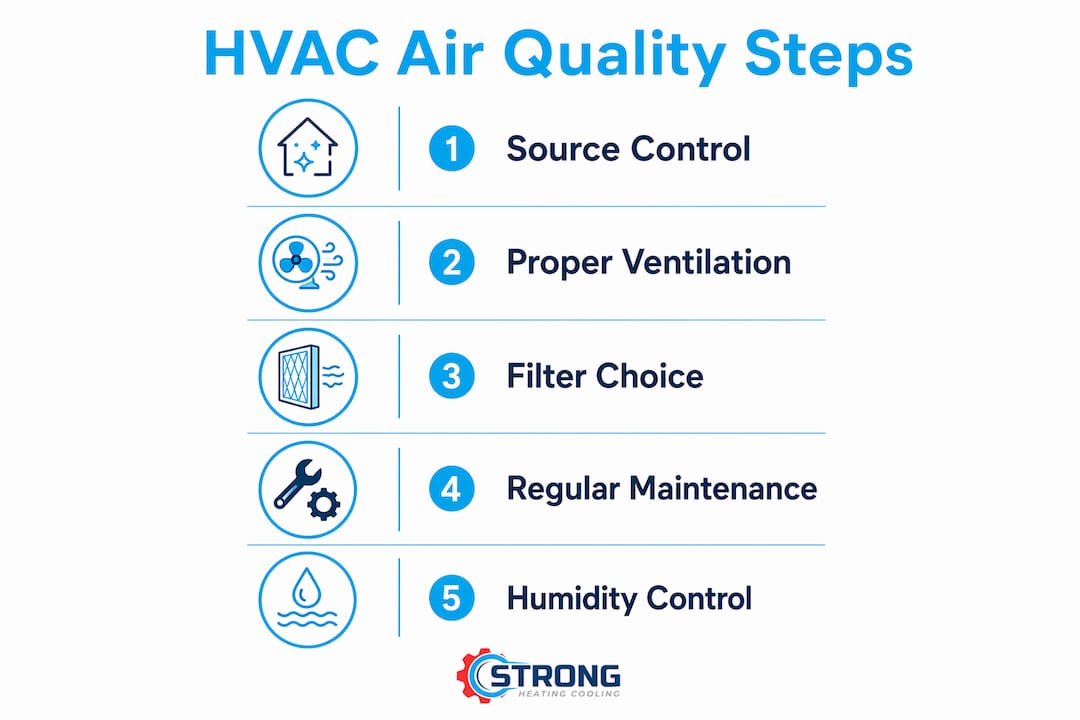
The EPA identifies three core strategies for improving indoor air quality: source control, improved ventilation, and air filtration. Your HVAC system plays a central role in all three. Routine maintenance keeps each strategy working as intended, so none of them operates in isolation.
Here is a quick summary of what works:
- Eliminate or reduce pollutant sources before they enter your air
- Increase fresh outdoor air through mechanical or natural ventilation
- Use properly rated filters and air cleaners to capture remaining particles
- Maintain your HVAC system with regular filter changes and annual inspections
- Monitor humidity levels to prevent microbial growth
These steps build on each other. Skipping one puts more pressure on the others.
Table of Contents
- How source control reduces the pollutants your HVAC has to fight
- Why ventilation does more than just circulate air
- Choosing the right air filters and cleaners for your HVAC system
- Routine HVAC maintenance that keeps your air clean year-round
- How humidity levels affect your indoor air quality
- How UV germicidal irradiation reduces microbial contaminants in HVAC systems
- Strongheatingandcooling brings cleaner air and honest service to Colorado Springs
- Key Takeaways
- FAQ
How source control reduces the pollutants your HVAC has to fight
Source control is the most cost-effective approach to cleaner indoor air. Reducing what enters your air in the first place means your filters and ventilation system do not have to work as hard. Common indoor pollutant sources include volatile organic compounds (VOCs) from paints, cleaning products, and adhesives; combustion byproducts from gas stoves and fireplaces; and biological allergens like pet dander and dust mites.
Practical steps you can take right now:
- Choose low-VOC or zero-VOC paints, sealants, and cleaning products
- Store chemicals, solvents, and pesticides in sealed containers outside living areas
- Run kitchen and bathroom exhaust fans during and after cooking or showering
- Keep combustion appliances properly maintained and vented
- Vacuum with a HEPA-filtered vacuum to reduce allergen buildup on floors and upholstery
Reducing indoor pollutant sources also lowers the load on your HVAC filtration, which extends filter life and protects equipment.
Why ventilation does more than just circulate air
Ventilation replaces stale indoor air with fresh outdoor air, which dilutes airborne contaminants that source control alone cannot eliminate. Most standard forced-air heating and cooling systems do not bring fresh outdoor air into the home mechanically. They recirculate existing indoor air, which means pollutants can accumulate over time without a dedicated ventilation strategy.
Pro Tip: Ceiling fans and standard HVAC circulation move air around the room, but they do not provide ventilation. Only systems with dedicated outdoor air intakes or mechanical ventilation components actually exchange indoor air with fresh air from outside.
Practical ways to improve ventilation in your home:
- Open windows and doors when outdoor air quality permits
- Run bathroom and kitchen exhaust fans that vent directly outdoors
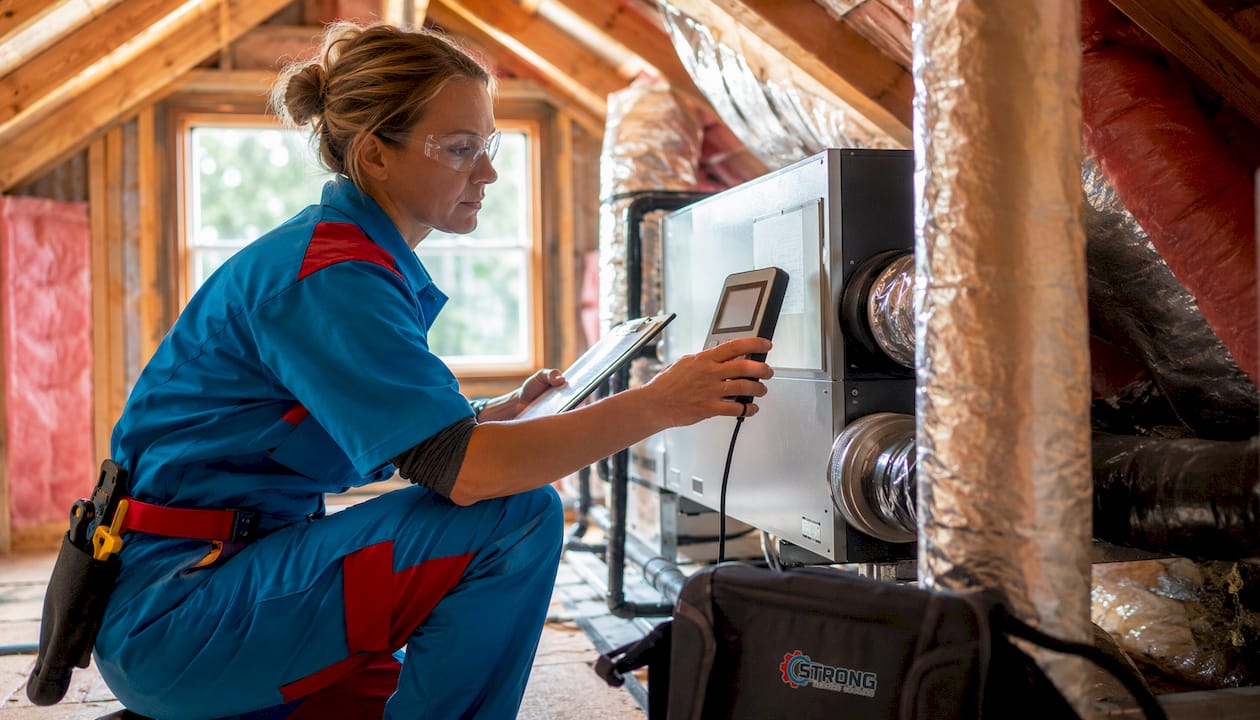
- Ask your HVAC technician about adding a heat recovery ventilator (HRV) or energy recovery ventilator (ERV) to your existing system
- Check that your HVAC system’s outdoor air intake damper is functioning and not blocked
HRVs and ERVs are particularly useful in tightly sealed homes, where natural infiltration is minimal. They exchange stale indoor air for fresh outdoor air while recovering most of the heating or cooling energy, keeping utility costs manageable.
Choosing the right air filters and cleaners for your HVAC system
Air filtration captures particles that ventilation and source control miss, including fine dust, pollen, mold spores, and pet dander. The key variable is the filter’s MERV rating, which measures how efficiently it removes particles of different sizes. MERV 13 filters can capture a high percentage of airborne particles, making them a strong choice for homes with allergy sufferers or pets. However, they create higher static pressure, which can stress older HVAC systems with PSC blower motors or undersized return air grilles.
Air filtration best practices:
- Match the MERV rating to your system’s capacity, not just your air quality goals
- Consult an HVAC technician before upgrading to MERV 13 if your system is more than 10–15 years old
- Replace filters based on condition, not just the calendar. Hold the filter up to light; if you cannot see through it, replace it
- Consider whole-house air purifiers for gaseous pollutants, since standard filters do not remove VOCs or odors
For more detail on how filters work within your system, the role of air filters in HVAC performance is worth understanding before you buy.
Routine HVAC maintenance that keeps your air clean year-round
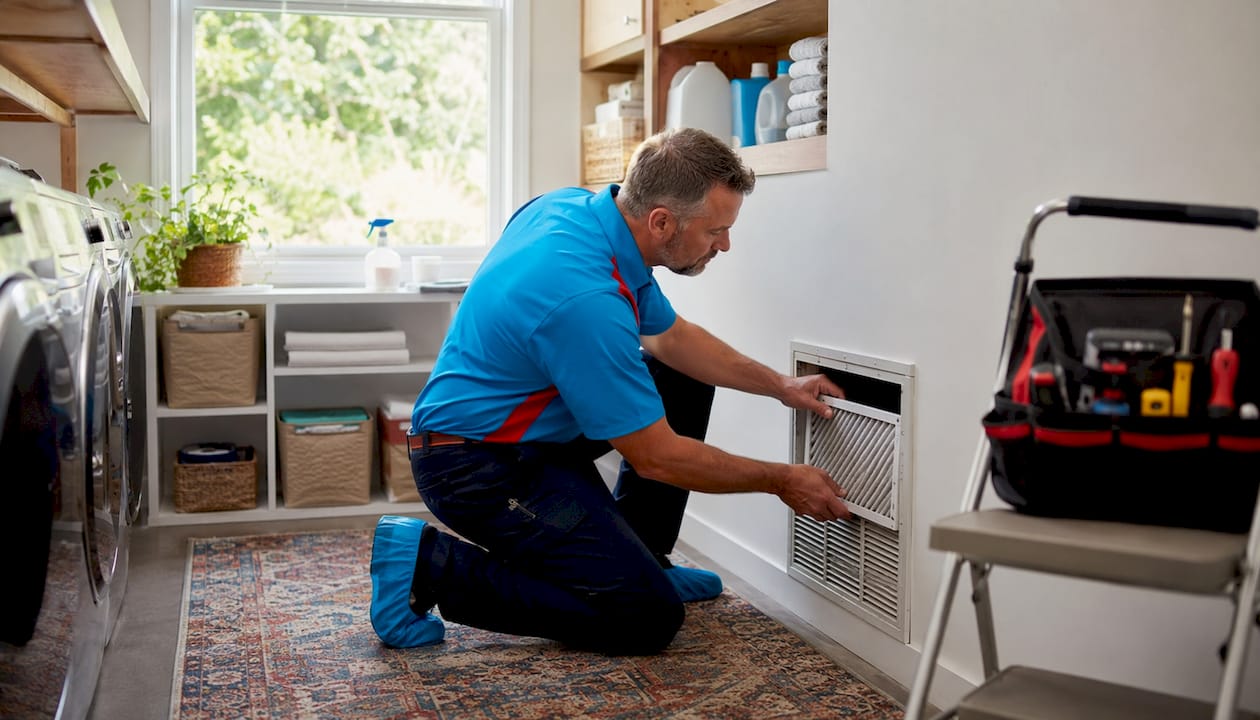
A well-maintained HVAC system is the foundation every other air quality strategy depends on. Without it, even the best filters and ventilation upgrades underperform. The EPA recommends annual inspections of heating equipment, regular filter changes, and routine cleaning of drain pans and cooling coils as the core of any preventive maintenance program.
Pro Tip: Duct cleaning is not a routine maintenance task. The EPA advises having ducts cleaned only when there is visible mold growth, pest infestation, or substantial debris clogging the system. Routine cleaning has not been shown to prevent health problems and can cause damage if done improperly.
Key maintenance tasks that directly affect air quality:
- Change filters on a condition-based schedule, checking monthly during heavy-use seasons
- Schedule a professional HVAC inspection every year before heating or cooling season
- Keep cooling coils and drain pans clean to prevent mold and bacterial growth
- Inspect duct insulation in attics and crawl spaces for moisture or damage
- Install CO detectors and test them regularly if you have any fuel-burning appliances
Smart thermostats and IAQ sensors can also help by tracking temperature, humidity, and particle levels in real time, giving you early warning when conditions shift.
How humidity levels affect your indoor air quality
Humidity has a direct effect on both comfort and air quality. When indoor humidity climbs too high, mold and dust mites thrive. When it drops too low, respiratory irritation increases and viruses spread more easily. Keeping humidity in a moderate range, neither too dry nor too damp, reduces microbial growth and makes your home more comfortable year-round.
Your HVAC system plays a central role here. A properly functioning air conditioner removes moisture from the air as it cools. If the system is oversized, it short-cycles and does not run long enough to dehumidify effectively. A whole-home humidifier or dehumidifier, integrated with your HVAC, gives you precise control across seasons. Sealing duct leaks in unconditioned spaces also prevents humid outdoor air from entering the system and causing condensation problems.
How UV germicidal irradiation reduces microbial contaminants in HVAC systems
UV germicidal irradiation (UVGI) uses ultraviolet light to neutralize bacteria, mold, and viruses inside HVAC equipment. Systems are typically installed near the cooling coil, where moisture creates conditions favorable to microbial growth. UVGI does not filter particles from the air; it inactivates microorganisms on surfaces and in the airstream passing through the unit.
UVGI is most effective as a complement to good filtration and humidity control, not a replacement for either. Coil-mounted UV lamps keep the coil surface cleaner between professional cleanings, which can improve system efficiency over time. In-duct air sterilization units treat the airstream directly and are better suited to homes with occupants who have compromised immune systems or chronic respiratory conditions. Both types require periodic lamp replacement, typically every 12–24 months, to maintain effectiveness.
Strongheatingandcooling brings cleaner air and honest service to Colorado Springs
Families in Colorado Springs and the surrounding communities have a straightforward option for cleaner indoor air: Strongheatingandcooling. With over 40 years of combined experience, the team handles everything from filter upgrades and humidity control to full system inspections and HVAC maintenance that keeps your equipment running efficiently and your air quality where it should be.

Every recommendation comes with honest pricing and clear communication, no upsells, no pressure. Whether you need a routine tune-up or a full system assessment to address air quality concerns, Strongheatingandcooling works within your budget to find the right solution. Contact the team today to schedule a maintenance visit or get a straight answer about your home’s air quality needs.
Key Takeaways
Improving home air quality through HVAC requires source control, proper ventilation, correctly rated filtration, and consistent maintenance working together as a system.
| Point | Details |
|---|---|
| Start with source control | Reducing pollutants at the source lowers the burden on your filters and ventilation system. |
| Ventilation replaces air | Ceiling fans circulate air; only mechanical ventilation systems exchange it with fresh outdoor air. |
| Match filters to your system | MERV 13 filters capture up to 95% of particles but can stress older HVAC equipment. |
| Maintain on condition, not calendar | Replace filters when you cannot see light through them, not on a fixed schedule. |
| Strongheatingandcooling | Serves Colorado Springs homeowners with maintenance, inspections, and air quality solutions backed by 40+ years of experience. |
FAQ
What is the most effective way to improve indoor air quality?
Source control is the most effective first step, according to the EPA. Eliminating or reducing pollutant sources costs less than increasing ventilation and puts less strain on your filtration system.
How often should I change my HVAC air filter?
Replace your filter based on its condition, not a fixed schedule. Check it monthly during heavy-use seasons and replace it when you can no longer see light through it.
Do ceiling fans improve indoor air quality?
No. Ceiling fans move air but do not introduce fresh outdoor air. Only mechanical ventilation systems with outdoor air intakes actually exchange indoor air with fresh air from outside.
When should I have my air ducts cleaned?
The EPA recommends duct cleaning only when there is visible mold, pest infestation, or substantial debris blocking airflow. Routine duct cleaning has not been shown to provide health benefits and can cause damage if done incorrectly.
Can my HVAC system control humidity?
Yes, to a degree. A properly sized air conditioner removes moisture during cooling cycles. For precise year-round control, a whole-home humidifier or dehumidifier integrated with your HVAC system gives you the most reliable results.
Recommended
Need expert HVAC help?
Colorado Springs' trusted, veteran-owned heating & cooling team — emergency service.