

HVAC Compliance Requirements for Businesses: Audit Checklist
TL;DR:
- U.S. businesses must comply with HVAC regulations covering air quality, energy efficiency, refrigerant handling, and safety through various agencies. Meeting code editions, maintaining documentation, and ensuring technician certifications are critical steps to avoid operational disruptions and penalties. Proper preparation involves verifying local requirements, updating maintenance records, and assessing refrigerant and energy systems before inspections.
U.S. businesses must meet HVAC compliance requirements across four core areas: ventilation and indoor air quality per ASHRAE 62.1, energy efficiency minimums under ASHRAE 90.1 and the IECC, refrigerant handling and technician certification under EPA Section 608, and workplace safety enforcement through OSHA’s General Duty Clause.
Here is a quick checklist of the six actions every business owner or facility manager should confirm:
- Verify which IECC and ASHRAE edition your local Authority Having Jurisdiction (AHJ) has adopted
- Confirm all HVAC technicians hold valid EPA Section 608 certification
- Maintain written maintenance logs, refrigerant service records, and commissioning reports
- Pull required permits before any installation, replacement, or major repair
- Run outdoor-air calculations (per ASHRAE 62.1) and load calculations before sizing new equipment
- Assemble inspection records and as-built documentation before any AHJ review
Two things you can do this week: call your local building department to identify the adopted code edition, then schedule an HVAC audit with an EPA 608-certified technician who can flag refrigerant and documentation gaps before an inspector does.
Table of Contents
- What do HVAC compliance requirements for businesses actually cover?
- Key federal and state regulations your business needs to check
- What refrigerant rules and certifications does your business need?
- How do energy codes apply to your commercial building?
- How do permits, inspections, and AHJ enforcement work?
- What operational records and maintenance programs does compliance require?
- What are the most common compliance pitfalls and what do they cost?
- A practical compliance checklist you can use today
- Expert tips that reduce enforcement risk and lifecycle cost
- Key Takeaways
- What working with local AHJs actually looks like
- Strongheatingandcooling makes commercial HVAC compliance straightforward
- Useful sources and how to confirm your local requirements
- FAQ
What do HVAC compliance requirements for businesses actually cover?
Commercial HVAC compliance is broader than most property managers expect. It spans indoor air quality, equipment efficiency, refrigerant management, fire and smoke damper integration, system commissioning, and ongoing recordkeeping. Each of those areas has its own enforcement body, and a gap in any one of them can stall a certificate of occupancy, trigger a fine, or shut down operations.
The agencies and bodies that enforce these requirements divide the territory roughly as follows:
- The AHJ (Authority Having Jurisdiction, usually the local building department) enforces adopted model codes at plan review and inspection
- The EPA enforces refrigerant rules under the Clean Air Act, including Section 608 technician certification and leak-monitoring requirements
- OSHA enforces workplace safety, including indoor air quality, through the General Duty Clause and references ASHRAE 62.1 ventilation rates when citing inadequate ventilation
- Local building departments issue permits, conduct inspections, and can place certificate-of-occupancy holds or issue red tags that legally prohibit equipment operation
The practical consequences of noncompliance include permit denials, certificate-of-occupancy holds, civil penalties, and liability when system failures affect occupant health. For a business already operating, the most immediate risk is a red tag that stops operations until corrections are verified, which can mean days or weeks of lost revenue.
Key federal and state regulations your business needs to check
No single federal law governs all commercial HVAC compliance. Instead, a layered set of model codes, federal regulations, and OSHA guidance creates the framework that most jurisdictions build on.
The core standards and authorities are:
- ASHRAE 62.1 sets minimum outdoor-air ventilation rates for commercial buildings; OSHA references it directly in IAQ enforcement
- ASHRAE 90.1 sets minimum energy efficiency requirements for commercial buildings and is the basis for most state energy codes
- IECC (International Energy Conservation Code) is the model energy code adopted by most states, often referencing ASHRAE 90.1 as a compliance path
- IMC (International Mechanical Code) governs mechanical system installation and, where adopted, may require documented maintenance programs aligned with ASHRAE 180
- NFPA 90A covers installation of air conditioning and ventilating systems, including fire and smoke damper requirements
- EPA Clean Air Act Section 608 mandates certified technician handling of refrigerants and bans venting
- OSHA General Duty Clause requires employers to maintain a workplace free of recognized hazards, including inadequate ventilation
- DOE equipment standards (10 CFR Part 431) set minimum efficiency ratings for commercial HVAC equipment sold in the U.S.
How adoption variability affects your project
The critical practical point is that jurisdictional adoption of IECC and ASHRAE 90.1 cycles varies by county and city. A rooftop unit installation that meets code in one municipality may be noncompliant a few miles away because the neighboring jurisdiction adopted a newer or older edition. This is not a theoretical risk; it is a common source of plan-review rejections and costly redesigns.
| What to ask your local building department | Why it matters |
|---|---|
| Which edition of the IECC is currently adopted? | Determines equipment efficiency minimums and documentation paths |
| Which edition of the IMC is in effect? | Affects mechanical installation requirements and ASHRAE 180 applicability |
| Are there local amendments to the adopted codes? | Local amendments can be stricter than the model code |
| Does the jurisdiction require COMcheck or an energy model? | Determines your documentation format for plan review |
| What permits are required for this scope of work? | Avoids stop-work orders and re-inspection fees |
Federal rules apply directly regardless of local adoption: EPA Section 608 certification is required nationwide for any technician handling regulated refrigerants, and DOE equipment efficiency minimums apply to all equipment sold in the U.S. Local code controls everything else, which is why confirming the adopted edition before design or retrofit is the single most time-saving step you can take.
What refrigerant rules and certifications does your business need?
EPA Section 608 requires that any technician who opens a system containing regulated refrigerants must hold a valid EPA 608 certification. Venting refrigerant to the atmosphere is prohibited. Recovery and recycling are mandatory before any service, repair, or disposal.
The charge size of a system determines additional obligations. Systems with a refrigerant charge of 50 pounds or more trigger leak-inspection and recordkeeping requirements under 40 CFR §82.157. For those systems, businesses must document leak inspections, repair timelines, and refrigerant additions. Failing to maintain those records is itself an enforcement violation, separate from the underlying leak.
What to require from every HVAC vendor before they touch your equipment:
- Written proof of current EPA Section 608 certification (Type I, II, or Universal as appropriate for the equipment)
- Refrigerant charge records for each service visit
- Documentation of any leak found, the repair made, and the date of re-verification
- Confirmation that recovery equipment is certified and calibrated
Phasedown planning for older refrigerants
R-22 (the refrigerant in many older commercial systems) has been phased out of production and import under the Montreal Protocol. Supplies are limited and prices have risen significantly. If your building still runs R-22 equipment, budget for replacement rather than continued repair. The AIM Act now drives a phasedown of HFCs (such as R-410A), meaning the next generation of refrigerants is already entering the market. Systems installed today should use refrigerants with a lower global warming potential to avoid another costly transition in the near term.
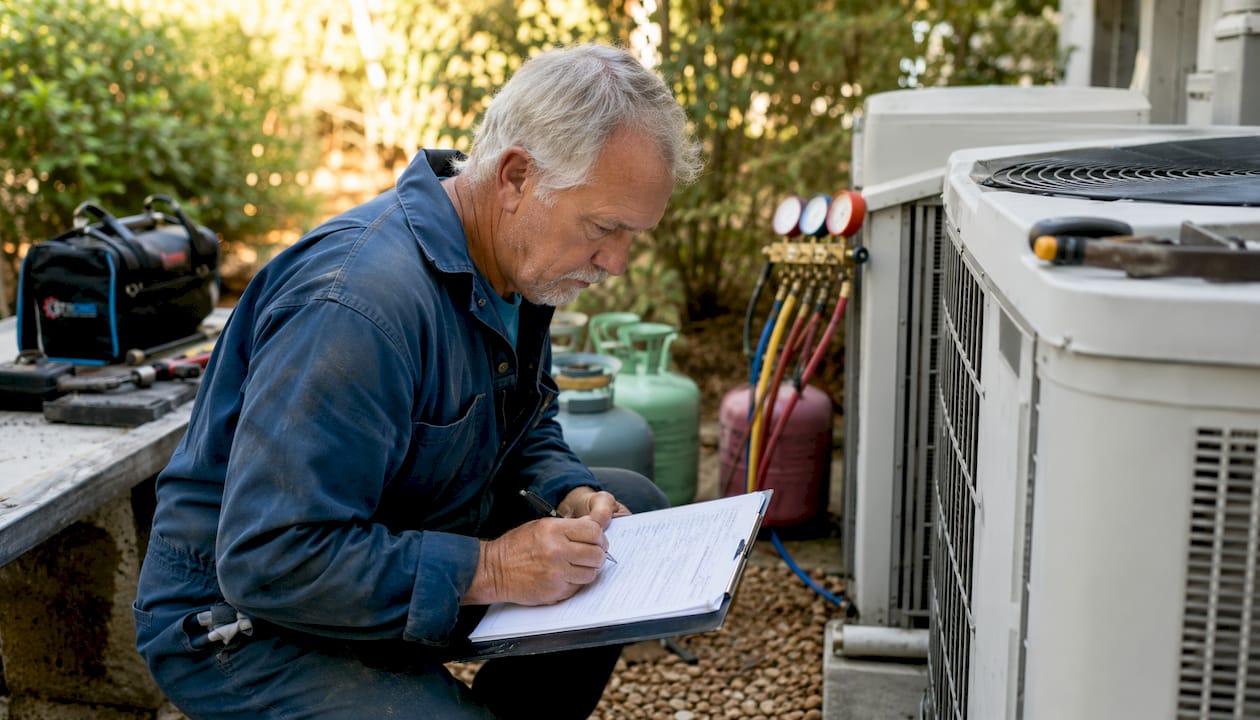
Pro Tip: When a technician recommends adding refrigerant to an older system, ask for the leak-inspection record first. A system that needs frequent top-offs has a leak, and repeatedly recharging it without repair is both an EPA violation and a sign the equipment is approaching end of life. At that point, replacement usually costs less over five years than continued service.
How do energy codes apply to your commercial building?
ASHRAE 90.1 is the benchmark energy standard for commercial buildings in the U.S., and the IECC references it as a compliance path for most commercial projects. Together, they set minimum efficiency ratings for equipment, controls requirements, and documentation obligations that apply at plan review and final acceptance.
The two main compliance paths are prescriptive and performance. Prescriptive compliance means each component (equipment efficiency, economizers, controls, duct leakage) meets the standard’s minimum values individually. Performance compliance uses an energy model (often following ASHRAE 90.1 Appendix G) to show the proposed building uses no more energy than a code-compliant baseline. A third tool, COMcheck (from the DOE’s energycodes.gov), automates prescriptive compliance checks for most commercial projects and is widely accepted by AHJs.
Reviewers typically check these HVAC items during plan review and final acceptance:
- Equipment IEER or SEER2 ratings against the adopted code minimums
- Economizer requirements (required above certain cooling capacities in most climate zones)
- Thermostat and control sequences (setback, occupancy sensing, demand-controlled ventilation)
- Duct leakage testing results
- Mandatory commissioning documentation for systems above the threshold size
A frequent problem: energy-code documentation is often compared to the design narrative rather than final construction drawings. If the controls installed in the field differ from what the COMcheck or energy model assumed, the building can fail final acceptance or utility incentive verification even though the paperwork looked correct. Reconcile control sequences and as-built settings before submitting for final sign-off.
How do permits, inspections, and AHJ enforcement work?
The permit and inspection process follows a predictable sequence for most commercial HVAC projects:
- Plan review submission — Submit drawings, equipment schedules, COMcheck or energy model, and load calculations to the AHJ before work begins
- Permit issuance — The AHJ approves the submittal and issues a permit; work may not begin legally until this step is complete
- Rough-in inspection — Inspector verifies ductwork routing, equipment placement, and rough mechanical connections before concealment
- Concealment check — Some jurisdictions require a separate inspection before walls or ceilings close in
- Final inspection — Inspector verifies equipment installation, controls, ventilation rates, and commissioning documentation
- Commissioning sign-off — For larger systems, a commissioning report from a qualified agent is required before the certificate of occupancy is issued
Realistic timelines vary by jurisdiction. Plan review alone can take two to six weeks in busy building departments. Budget for that lead time before scheduling contractors.
Local inspectors can issue a red tag that legally prohibits operation of equipment until corrections are verified. A red tag on a rooftop unit in summer is not just an inconvenience; it can mean a business interruption claim and a third-party verification requirement before the equipment can be restarted. Enforcement can also include certificate-of-occupancy holds that prevent a new tenant from occupying a space.
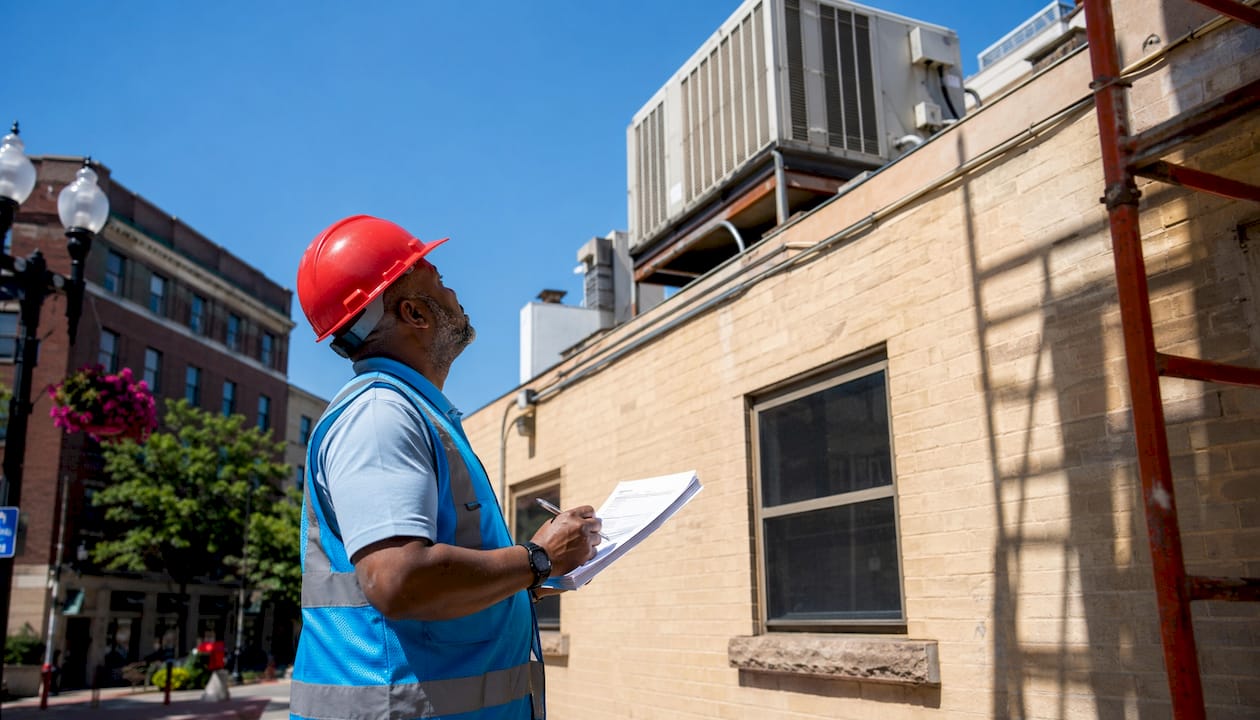
Pro Tip: When you receive an AHJ comment or violation notice, respond in writing within the stated deadline and document every correction with photos and updated drawings. Inspectors are more likely to schedule a prompt re-inspection when the response is organized and complete. Vague verbal assurances rarely move the process forward.
For a closer look at what inspectors flag most often, the HVAC red flags inspectors miss resource covers the most common documentation and installation gaps that lead to re-inspections.
What operational records and maintenance programs does compliance require?
When the 2024 IMC is adopted locally, documented preventive maintenance programs aligned with ASHRAE/ACCA/ANSI 180 become enforceable requirements, not just best practice. That means a written maintenance program is no longer optional in many jurisdictions; it is a legal obligation that an inspector can request.
The records businesses most commonly need to produce during inspections or utility incentive verification are:
| Record type | Minimum retention | Who may request it |
|---|---|---|
| Permits and approved drawings | Life of building | AHJ, insurance carrier |
| Commissioning report | Life of system | AHJ, utility program |
| Filter change log | 5 years | AHJ, OSHA |
| Refrigerant service log | Life of equipment | EPA, AHJ |
| Leak inspection and repair records | Life of equipment | EPA |
| Damper and fire/smoke test records | 5 years | AHJ, fire marshal |
| Control setpoint documentation | Current + prior year | AHJ, utility program |
| Vendor licenses and EPA 608 certificates | Current | AHJ, EPA |
Failing to document maintenance and service work is a frequent cause of enforcement action; logs are routinely requested during inspections and utility incentive verification. A missing filter-change log or an undated refrigerant service record can turn a routine inspection into a corrective-action process.
Routine operational tasks and suggested frequency:
- Monthly: inspect and replace filters as needed, check condensate drain pans, verify thermostat setpoints
- Quarterly: inspect economizer dampers, check belt tension and lubrication on air handlers, verify outdoor-air damper operation
- Annually: full system inspection per ASHRAE 180, damper and fire/smoke actuator testing, refrigerant leak check, controls calibration verification
- At each service visit: technician provides written service record with refrigerant charge data, findings, and corrective actions
For service contracts, require these clauses in writing: proof of current EPA 608 certification for all technicians, evidence of contractor licensing per state requirements, permit-handling responsibility, commissioning support for new or replaced equipment, and delivery of service records within five business days of each visit.
The commercial HVAC preventive maintenance resource explains how a documented program reduces both enforcement risk and lifecycle cost.
What are the most common compliance pitfalls and what do they cost?
Most compliance failures trace back to a short list of avoidable mistakes. Knowing them in advance lets you budget and plan rather than react.
Common pitfalls:
- Jurisdictional code mismatch: Assuming the code edition from a previous project applies to a new location; always confirm with the AHJ before design
- Equipment oversizing: Installing equipment without a Manual N load calculation leads to short-cycling, poor dehumidification, and potential IAQ and code problems
- Missing documentation: Submitting for final inspection without commissioning reports, COMcheck outputs, or refrigerant logs
- Unlicensed or uncertified technicians: Using a contractor whose technicians lack state licensing or EPA 608 certification exposes the business to EPA fines and voids equipment warranties
- Refrigerant phase-down planning failures: Continuing to invest in R-22 or R-410A equipment without a transition plan creates stranded costs
Cost considerations for common compliance-related work (these are editorial estimates based on industry ranges and should be confirmed with local contractors):
- Permit fees for a commercial HVAC replacement: typically a few hundred dollars, though complex projects in larger jurisdictions can run higher
- Economizer installation or retrofit: varies widely by unit size and access, but is often required for new cooling equipment above certain capacities
- Commissioning for a mid-size commercial system: typically a few thousand dollars, depending on system complexity and the commissioning agent’s scope
- Damper actuator repair or replacement: costs depend on the number of dampers and accessibility
- Full rooftop unit replacement (including permits and commissioning): a significant capital expense that varies by tonnage, equipment selection, and site conditions
Timeline expectations: a simple repair with no permit required can be completed in a day. A permitted retrofit with plan review, inspection, and commissioning sign-off typically takes four to ten weeks from submittal to final acceptance, depending on the AHJ’s workload. A full rooftop unit replacement on a larger building can extend to twelve weeks or more when equipment lead times are factored in.
Pro Tip: When deciding between repair and replacement, run the numbers on refrigerant availability and future phase-down costs alongside the repair estimate. A system that requires a refrigerant that is being phased down, needs a major component replaced, and is past its expected service life is almost always a better candidate for replacement. The AC sizing and efficiency factors that affect long-term cost are worth reviewing before committing to either path.
A practical compliance checklist you can use today
Use this checklist in three tiers: immediate actions this week, near-term fixes within 30–90 days, and capital planning items for the next budget cycle.
Tier 1: Immediate (this week)
- Contact your local building department and ask which edition of the IECC, IMC, and ASHRAE standards is currently adopted, including any local amendments
- Verify that every HVAC technician on your vendor roster holds a current EPA Section 608 certification and that your state’s contractor licensing requirements are met
- Identify all refrigerant-containing systems with a charge of 50 pounds or more and confirm leak-inspection and recordkeeping are current
- Pull your most recent commissioning report and verify it matches the current as-built system configuration
Tier 2: Near-term (30–90 days)
- Establish or update a written preventive maintenance program aligned with ASHRAE 180 if your jurisdiction has adopted the IMC
- Audit your documentation files: permits, commissioning reports, filter logs, refrigerant service records, and damper test records
- Confirm that outdoor-air delivery rates meet ASHRAE 62.1 minimums for each occupied zone
- Review energy-code documentation (COMcheck or energy model) against as-built controls and correct any mismatches before the next inspection
Tier 3: Capital planning (next budget cycle)
- Assess all R-22 and aging R-410A equipment for replacement priority, factoring in refrigerant availability and phase-down timelines
- Budget for economizer installation or verification on cooling equipment where required by the adopted code
- Schedule a full ASHRAE 180-aligned system inspection and commissioning re-verification for any system that has not been formally commissioned in the past three years
For facility managers preparing for an AHJ inspection or a lease negotiation, bring Tier 1 documentation (permits, commissioning report, EPA 608 certificates, and refrigerant logs) as a minimum package. Tenants in NNN leases should confirm in writing which maintenance obligations transfer to them and which capital repairs remain the landlord’s responsibility, since code-triggered upgrades can create disputes when the contract is ambiguous.
The commercial HVAC best practices for facility managers resource provides additional audit steps and documentation templates.
Expert tips that reduce enforcement risk and lifecycle cost
Three scenarios illustrate where compliance problems most often originate and what they cost in practice.
A retail property manager installs a new rooftop unit without a load calculation because the replacement unit matches the tonnage of the old one. The new unit short-cycles, humidity climbs, and tenants report air quality complaints. An OSHA inspection follows, referencing ASHRAE 62.1 ventilation rates. The fix requires a controls retrofit and a commissioning report, costing more than the original load calculation would have.
A small office building passes plan review with a COMcheck that shows prescriptive compliance. During final inspection, the inspector finds that the economizer damper is not wired to the control sequence shown in the submittal. The mismatch between documentation and as-built controls delays the certificate of occupancy by three weeks while the contractor corrects and re-documents the installation.
A warehouse adopts a written preventive maintenance program after the jurisdiction updates its IMC adoption. Because the program is documented and aligned with ASHRAE 180, the facility passes its next inspection without a corrective-action notice, and the maintenance records satisfy a utility incentive verification the following year.
The pattern across all three: documentation and verification prevent problems that equipment alone cannot.
Require every service contractor to deliver a written service record within five business days of each visit, including refrigerant charge data, findings, and corrective actions taken. That single contractual requirement closes the most common documentation gap that leads to enforcement action.
Pro Tip: Structure your service contract to require proof of EPA 608 certification for every technician assigned to your account, not just the company’s license on file. Technician-level certification is what the EPA audits, and a company certificate does not cover an uncertified individual who performs the work.
Key Takeaways
Commercial HVAC compliance for businesses requires confirming adopted codes with the AHJ, hiring EPA 608-certified technicians, maintaining written maintenance and refrigerant records, and reconciling energy-code documentation with as-built controls before any inspection.
| Point | Details |
|---|---|
| Confirm adopted codes first | Contact the AHJ before design or retrofit to verify the exact IECC, IMC, and ASHRAE edition in effect. |
| EPA 608 certification is non-negotiable | Every technician handling regulated refrigerants must hold current EPA 608 certification; verify at the individual level. |
| 50-lb refrigerant threshold triggers extra duties | Systems with 50 pounds or more of refrigerant require documented leak inspections and service records under 40 CFR §82.157. |
| Documentation gaps cause most enforcement actions | Maintain filter logs, commissioning reports, refrigerant records, and damper test records; inspectors request them routinely. |
| Strongheatingandcooling supports compliance in Colorado Springs | Strongheatingandcooling provides EPA 608-certified technicians, preventive maintenance plans, and permit assistance for commercial clients in the Colorado Springs area. |
What working with local AHJs actually looks like
Strong Heating & Cooling has over 40 years of combined industry experience serving Colorado Springs and the surrounding communities. That experience includes working directly with local building departments and AHJs on commercial HVAC projects, which means the team understands how local code adoption, inspection timelines, and documentation expectations work in this market.
Colorado Springs and El Paso County follow specific editions of the IECC and IMC, and local amendments can affect equipment requirements, permit scope, and inspection sequencing in ways that differ from neighboring jurisdictions. Knowing those specifics before a project starts saves time and avoids costly re-submittals.
If your business is preparing for an HVAC audit, a lease negotiation, or a system replacement, Strongheatingandcooling can walk through the compliance steps with you, identify documentation gaps, and connect you with the right resources for your situation.
Strongheatingandcooling makes commercial HVAC compliance straightforward
Navigating permits, refrigerant records, and energy-code documentation takes time that most business owners and property managers do not have. Strongheatingandcooling handles the compliance-related steps that matter most: commercial HVAC assessments, preventive maintenance plans, refrigerant service by EPA 608-certified technicians, commissioning support, and permit assistance for installations and replacements in Colorado Springs and surrounding areas.

The team brings over 40 years of combined experience to every project, with honest pricing and clear communication at each step. Whether you need a full system replacement with permit handling or a documented maintenance program that satisfies your AHJ, Strongheatingandcooling can help you get there without the guesswork.
For cooling system compliance or air conditioner services in the Colorado Springs area, contact Strongheatingandcooling to schedule a commercial assessment or request a compliance package.
Useful sources and how to confirm your local requirements
The authoritative sources for U.S. commercial HVAC compliance are:
- ASHRAE (ashrae.org): Standards 62.1, 90.1, and 180; the primary technical references for ventilation, energy efficiency, and maintenance programs
- EPA (epa.gov): Section 608 certification requirements, refrigerant regulations, and the AIM Act phasedown schedule
- OSHA (osha.gov): General Duty Clause enforcement, IAQ guidance, and ASHRAE 62.1 references for ventilation citations
- DOE energycodes.gov: COMcheck software, IECC adoption status by state, and commercial energy code resources
- Local building department / AHJ: The definitive source for adopted code editions, local amendments, permit requirements, and inspection scheduling
A two-step method to confirm local requirements: first, check your state energy office or the DOE’s energycodes.gov for the state’s current IECC adoption status. Second, call the local building department directly and ask the specific questions listed in the table earlier in this article. State adoption maps are a starting point, but local amendments and delayed adoptions mean the building department’s answer is the one that controls your project.
| Source | What to request or verify |
|---|---|
| Local building department | Adopted IECC, IMC, and ASHRAE edition; local amendments; permit scope for your project |
| EPA epa.gov | Section 608 certification verification; refrigerant charge thresholds; AIM Act phasedown schedule |
| OSHA osha.gov | IAQ enforcement guidance; General Duty Clause citations; ASHRAE 62.1 ventilation references |
| DOE energycodes.gov | State IECC adoption status; COMcheck software; commercial energy code compliance guides |
| ASHRAE ashrae.org | Standards 62.1, 90.1, and 180 text; compliance tools; technical resources |
When requesting documents from contractors during permit submission, ask for: the contractor’s state license number and EPA 608 certification for assigned technicians, the equipment submittals showing IEER or SEER2 ratings, the COMcheck output or energy model, the load calculation report, and the commissioning plan.
This article provides general information about U.S. commercial HVAC compliance requirements. It is not legal or professional advice. Confirm current requirements with your local AHJ, a licensed HVAC contractor, or a qualified compliance professional for your specific situation.
FAQ
What is HVAC compliance for commercial buildings?
HVAC compliance means a building’s heating, cooling, and ventilation systems meet the adopted codes and federal regulations for ventilation (ASHRAE 62.1), energy efficiency (ASHRAE 90.1/IECC), refrigerant handling (EPA Section 608), and workplace safety (OSHA General Duty Clause). Noncompliance can result in permit denials, red tags, fines, and certificate-of-occupancy holds.
What are the OSHA guidelines for HVAC in commercial buildings?
OSHA enforces indoor air quality through the General Duty Clause and references ASHRAE 62.1 ventilation rates when citing inadequate ventilation; failure to meet those rates can lead to citations for conditions associated with poor indoor air quality. OSHA does not publish a separate HVAC standard but uses recognized industry standards as the benchmark for what constitutes a recognized hazard.
What is the $5,000 rule for HVAC?
Some contractors informally suggest a rule that multiplies the system’s age by the estimated repair cost to help decide between repair and replacement, with higher totals often favoring replacement as a better financial decision. It is not a code requirement or a federal standard, but it can be a useful starting point alongside a load calculation and refrigerant phase-down assessment.
What triggers additional EPA recordkeeping for a commercial HVAC system?
A refrigerant charge of 50 pounds or more triggers leak-inspection and recordkeeping requirements under 40 CFR §82.157. Businesses with systems at or above that threshold must document leak inspections, repair timelines, and refrigerant additions, and those records must be available for EPA review.
How do you prepare for an AHJ HVAC inspection?
Assemble permits and approved drawings, the commissioning report, filter change logs, refrigerant service records, damper test records, and EPA 608 certificates for all technicians who serviced the equipment. Reconcile your energy-code documentation (COMcheck or energy model) against the as-built controls before the inspector arrives, since mismatches between documentation and installed equipment are a leading cause of failed final inspections.
Recommended
Need expert HVAC help?
Colorado Springs' trusted, veteran-owned heating & cooling team — emergency service.