
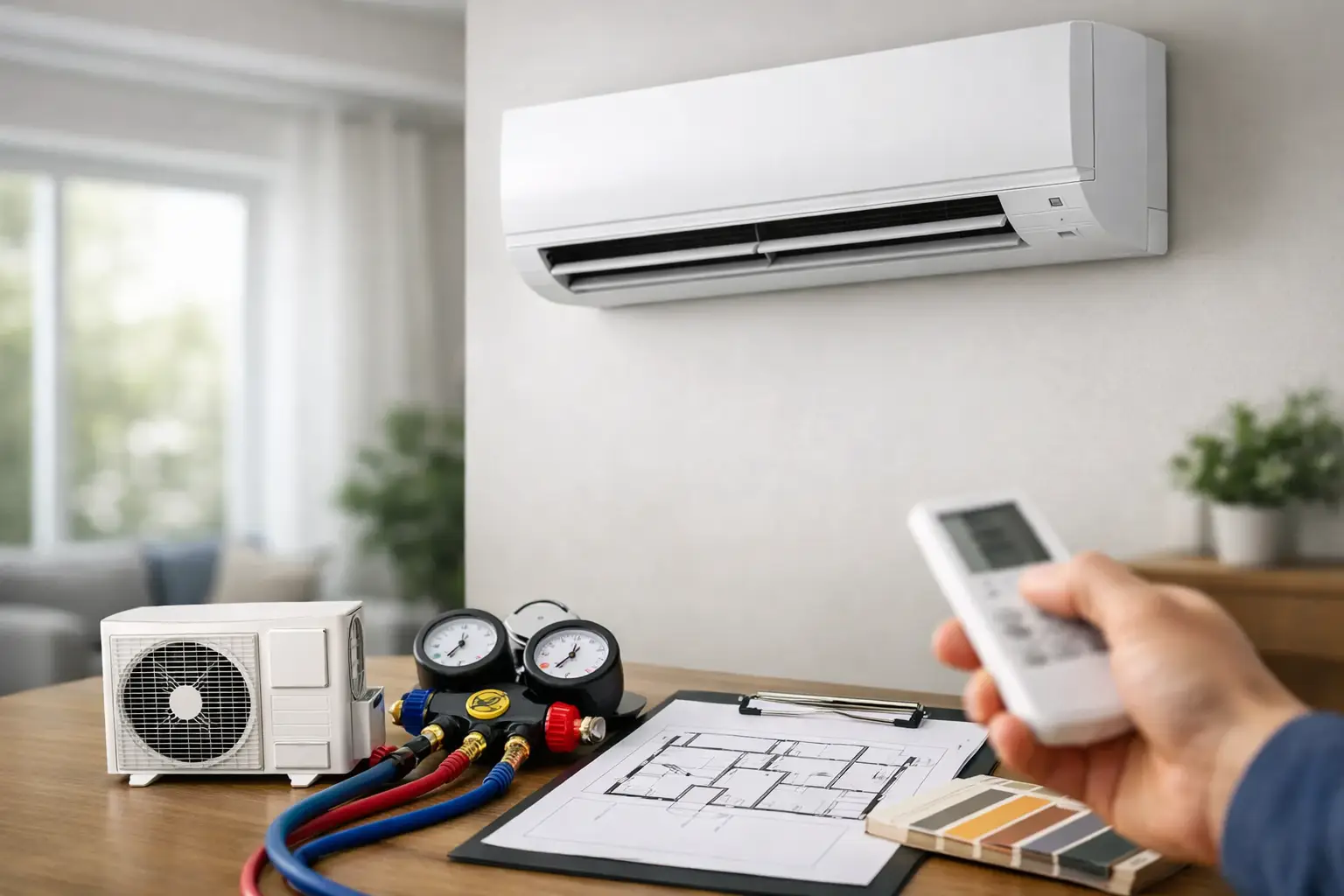
A mini split that is too small will struggle on the hottest or coldest days. One that is too large can short cycle, waste energy, and leave rooms feeling less comfortable than expected. If you are wondering how to choose mini split equipment that actually fits your space, the answer starts with more than square footage.
Mini splits are a smart option for many homes and light commercial spaces because they offer targeted heating and cooling without the need for ductwork. They can work well in additions, garages, basements, older homes, offices, and rooms that never seem to stay comfortable. But the right system depends on your layout, insulation, climate demands, and how you plan to use the space.
How to choose mini split for your space
The first question is simple: what problem are you trying to solve? Some people need to heat and cool one room that their central system cannot handle well. Others want an alternative for an older home with no ducts. Commercial property owners may need independent temperature control in offices, server rooms, or tenant spaces.
That use case matters because it affects the kind of system you need. A single-zone mini split is often enough for one room or one open area. A multi-zone setup makes more sense when you need separate indoor units in multiple rooms. More zones give you more control, but they also add equipment, installation complexity, and cost.
A room-by-room approach usually works best. Bedrooms, offices, and additions often benefit from separate temperature control. Large open-concept areas may do fine with one properly sized indoor unit. The goal is not just to heat or cool the area, but to do it evenly and efficiently.
Start with proper sizing, not guesswork
Sizing is where many mini split decisions go wrong. People often shop by tonnage or BTUs alone and assume bigger means better. In HVAC, that is rarely true.
A properly sized mini split should match the actual heating and cooling load of the space. That load depends on room size, ceiling height, insulation levels, window size and direction, sun exposure, air leakage, and how often the room is occupied. In Colorado Springs and surrounding areas, heating performance deserves close attention because winter conditions can put real demand on a system.
A basic online chart can give you a rough starting point, but it will not tell you everything. For example, a well-insulated 400-square-foot room may need a very different system than a drafty 400-square-foot garage conversion with west-facing windows. If you rely on a rough estimate, you risk paying for a system that underperforms or costs more to run.
That is why a load calculation or on-site assessment is worth it. It helps match the equipment to the space instead of relying on broad averages.
Why oversized systems can be a problem
An oversized mini split may cool a room quickly, but that does not always mean better comfort. Short run times can lead to uneven temperatures and less effective humidity control. While Colorado is generally dry, indoor comfort still depends on stable operation, not just fast cooling.
Oversizing can also mean higher upfront cost with no real payoff. You are buying more capacity than the space needs, and you may not see better performance for the extra expense.
Pay attention to heating performance
Many buyers focus on cooling specs first. That makes sense in summer, but mini splits are often expected to handle year-round comfort. If you plan to use the system for heat, low-temperature performance matters.
Not every mini split performs the same way in cold weather. Some standard models lose heating capacity as outdoor temperatures drop. Cold-climate models are designed to keep producing heat more effectively in lower temperatures. That can make a major difference if the system is your primary heat source or if the room gets cold enough to be uncomfortable without dependable backup.
This is one of the biggest trade-offs to consider. A less expensive unit may look attractive upfront, but if it struggles on cold mornings, the savings may disappear fast. For many local property owners, paying more for stronger winter performance is the better long-term decision.
Efficiency matters, but not in isolation
If you are comparing systems, you will likely see ratings like SEER2 and HSPF2. Higher numbers generally mean better efficiency, but efficiency should not be the only factor guiding your choice.
A very high-efficiency system can be a good investment when the space is used often and utility costs are a concern. But the highest rating on paper is not automatically the best value. You also need to consider installation quality, equipment reliability, and whether the system is properly sized. A perfectly installed mid-range system can outperform a poorly selected premium model.
It also helps to think about usage patterns. A mini split in a home office used every day may justify stronger efficiency. A unit in a workshop or occasional-use room may not need the top tier. Choose based on how the space actually functions.
Think about the indoor unit style
When people picture a mini split, they usually imagine a wall-mounted indoor unit. That is the most common option, but it is not the only one.
Ceiling cassette units can work well in certain commercial settings or finished spaces where appearance matters. Floor-mounted units can be a better fit where wall space is limited or where you want airflow lower in the room. Concealed ducted mini split options also exist for spaces where a less visible setup is preferred.
Each style has trade-offs. Wall-mounted systems are typically the most straightforward and cost-effective. Cassettes and concealed options may offer a cleaner look, but installation can be more involved. The best choice depends on the room layout, budget, and how important aesthetics are to you.
Installation quality affects everything
Even the best equipment can disappoint if the installation is rushed or poorly planned. Refrigerant line routing, electrical work, drainage, mounting location, and system commissioning all matter.
Indoor unit placement is especially important. If the unit blows directly on seating or sleeping areas, comfort can suffer. If it is tucked into a bad location, airflow may be blocked and temperature control may become uneven. Outdoor unit placement also deserves attention. It should allow for proper airflow, service access, and weather-appropriate installation.
This is one reason many property owners prefer working with a licensed HVAC contractor instead of treating mini splits like a simple appliance purchase. Good installation protects performance, warranty support, and long-term reliability.
Consider noise, controls, and everyday use
A mini split can look great on paper and still be annoying to live with if the controls are confusing or the unit is louder than expected. Day-to-day usability matters.
Look at sound ratings for both indoor and outdoor units, especially for bedrooms, nurseries, offices, and customer-facing business areas. Think about remote control features, scheduling, app access, and whether you want each room controlled independently. Some systems offer advanced features that sound useful but go mostly unused. Others keep controls simple, which many homeowners prefer.
The right choice often comes down to habits. If several people will use the system, straightforward controls may matter more than extra features. If you manage a rental or commercial property, easy operation can reduce service calls and complaints.
Cost is more than the equipment price
If you want to know how to choose mini split systems wisely, look beyond the sticker price. Total project cost includes the equipment, installation labor, electrical needs, line set length, condensate management, mounting requirements, and any finishing work needed to complete the job cleanly.
Cheaper equipment can become expensive if it is unreliable, inefficient, or hard to service. On the other hand, the most expensive system is not always necessary. The better question is what delivers dependable comfort for your space without overbuying.
It is also smart to ask about warranty coverage, maintenance needs, and the availability of replacement parts. A system should not just fit your budget on install day. It should make sense for the years that follow.
When professional guidance saves money
There is a point where comparison shopping stops being helpful and starts creating more confusion. If you are deciding between system sizes, multi-zone options, or cold-weather performance levels, a professional assessment can narrow the field quickly.
A contractor who works with mini split systems regularly can spot issues that are easy to miss, like poor insulation, awkward airflow patterns, or electrical limitations. That input can prevent the common mistake of buying based on marketing claims instead of real building conditions.
Strong Heating And Cooling works with homeowners and businesses that need clear recommendations, skilled installation, and honest pricing. The best mini split choice is the one that solves the comfort problem the first time.
Before you commit, think about how the space is used in July, how it feels in January, and what level of control you actually want every day. That practical view usually leads to a better system than chasing the biggest unit or the lowest price.
What Does This Mean for Colorado Springs Homeowners?
Choosing the right mini split system in Colorado Springs, Monument, Falcon, Fountain, Peyton, Black Forest, Manitou Springs, Security-Widefield, Palmer Lake, Stratmoor, Gleneagle, Flying Horse, Cimarron Hills, or Woodland Park has unique considerations. Our local climate and regulations significantly impact system performance and installation requirements. The general principles of sizing, efficiency, and heating performance are even more critical when facing our high-altitude, dry conditions, and often extreme temperature swings.
High Altitude and Heating Performance
Colorado Springs sits roughly 6,000–7,500 feet above sea level. This thinner air means about 20% less oxygen, which can affect the capacity of HVAC equipment. For mini splits, especially those intended for heating, it's crucial to select models designed to maintain strong performance in colder temperatures. The long heating season in our region demands a system that won't struggle when the temperatures drop. A "cold-climate" mini split is often a wise investment here, ensuring your chosen zone remains comfortable even on the coldest Colorado mornings. Relying on a system not rated for our specific conditions could lead to higher energy bills and inadequate heating when you need it most.
Local Regulations and Incentives
Any HVAC replacement in Colorado Springs, including mini split installations, generally requires a Pikes Peak Regional Building Department (PPRBD) permit. Our owner, Jeff Jennings, holds PPRBD license #26745, ensuring that all work is performed to local codes and standards. Additionally, local incentives can help offset the cost. Colorado Springs Utilities offers rebates for qualifying furnaces, heat pumps, boilers, and smart thermostats. While mini splits themselves don't always directly qualify for the same rebates as central systems, upgrading other HVAC components or adding a smart thermostat as part of a larger energy-efficiency plan could yield savings.
- Colorado Springs Utilities lists $900 for qualifying furnaces.
- Heat pumps under 3 tons/ENERGY STAR can receive $1,500.
- NEEP heat pumps 3+ tons qualify for $3,000.
- Smart thermostats can receive $50.
Protection Against Our Unique Climate
Our dry climate with low humidity means that humidity control, while less critical than in very humid regions, still benefits from a properly sized system that cycles appropriately. More importantly, hail storms are a common occurrence in our area and can damage outdoor AC coils. Ensuring your outdoor unit is robust or considering its placement for protection is a practical local concern. Our big day-night temperature swings also highlight the need for a system that can respond quickly and efficiently to changing demands throughout the day and night.
For expert advice on selecting and installing the ideal mini split for your Colorado Springs home, call Strong Heating And Cooling at (719) 960-7208 or request service on our contact page. Learn more about local incentives on our HVAC Rebates Colorado page.
Need expert HVAC help?
Colorado Springs' veteran-owned heating & cooling team — Mon–Sat, 8 AM–7 PM. Same-day service when available.