
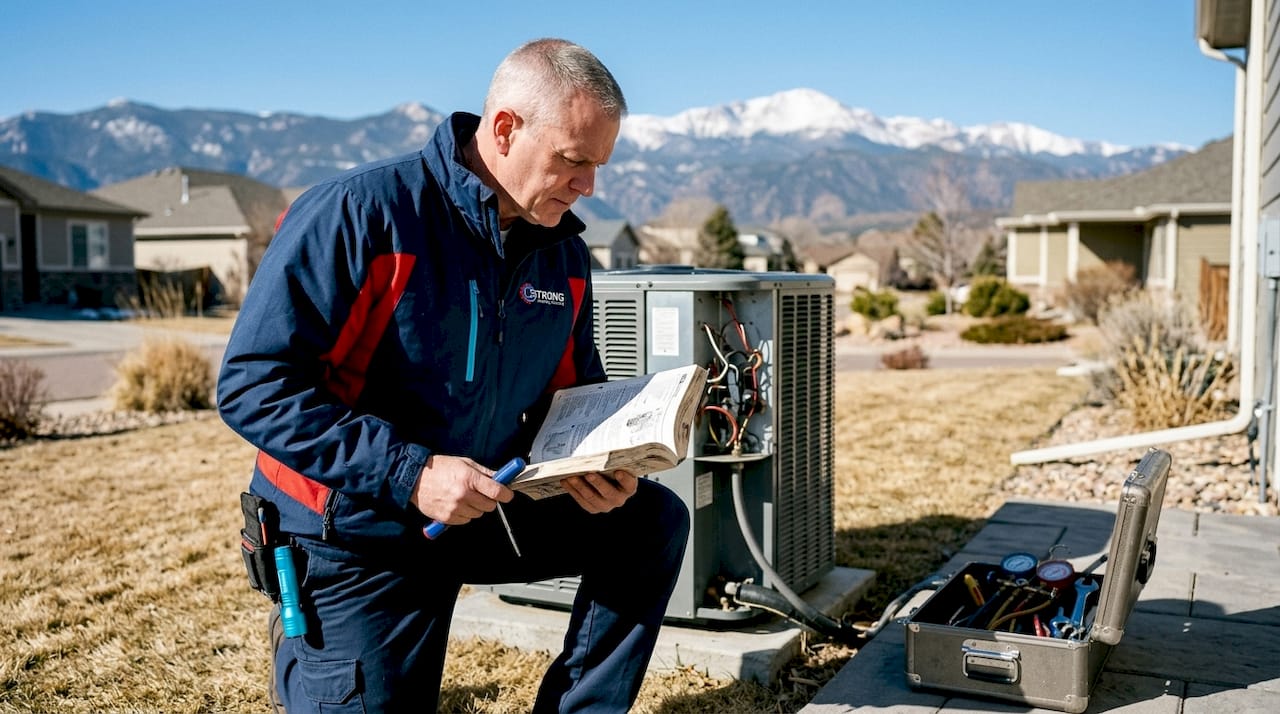
How Colorado Climate Affects Your HVAC System Choice
TL;DR:
- Colorado’s climate, characterized by extreme temperature swings and wildfire risks, demands specially selected HVAC systems. A dual-fuel system combining a cold-climate heat pump with a gas furnace offers reliable heating during cold snaps and power outages. Proper altitude-adjusted sizing and high-efficiency equipment are critical for optimal performance in Colorado’s unique conditions.
Colorado’s climate is defined by extreme temperature swings, wildfire-driven power outages, and high-altitude air that together set strict performance requirements for any heating or cooling system. Understanding how Colorado climate affects system choice is the first step toward selecting equipment that keeps your home or business comfortable year-round without failing when conditions get severe. The state’s unique combination of dry winters, rapid cold snaps, and increasing grid instability means that a system sized and specified for a milder region will underperform here. Getting this right from the start saves money, prevents early equipment failure, and protects your family when temperatures drop fast.
How Colorado climate affects system choice: the core climate factors
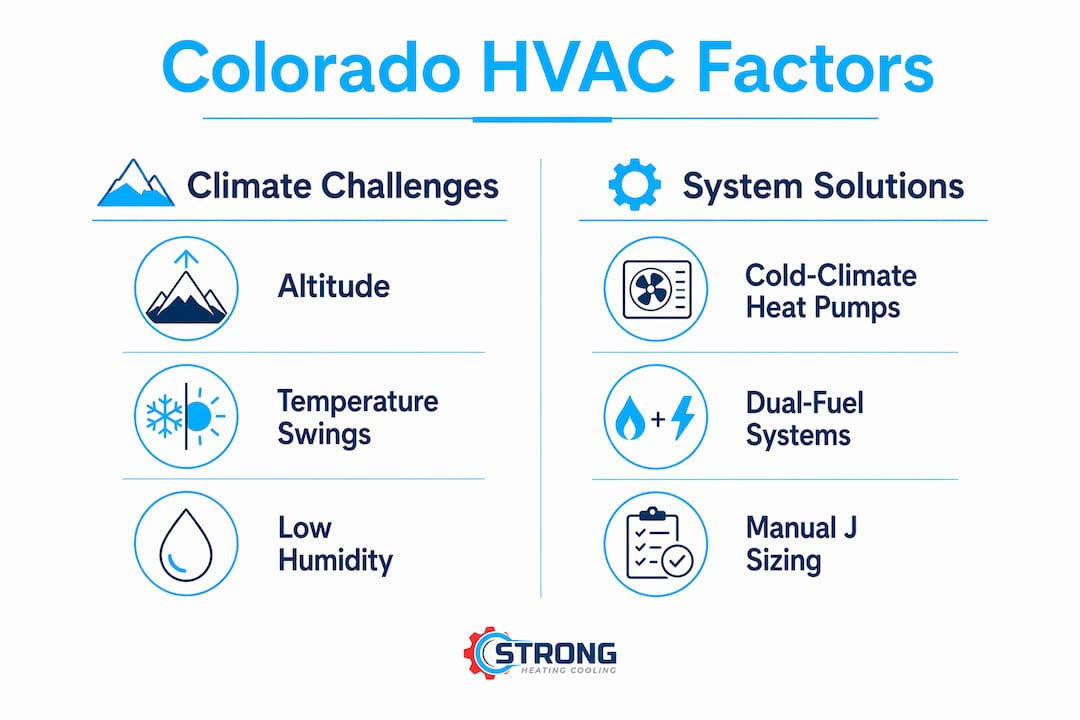
Colorado’s temperature swings are the defining challenge for any HVAC system. Temperatures can shift more than 40°F within a single day, moving from a mild afternoon to a freezing night in hours. That kind of rapid change puts mechanical stress on every component in your system, from the heat exchanger to the refrigerant lines.
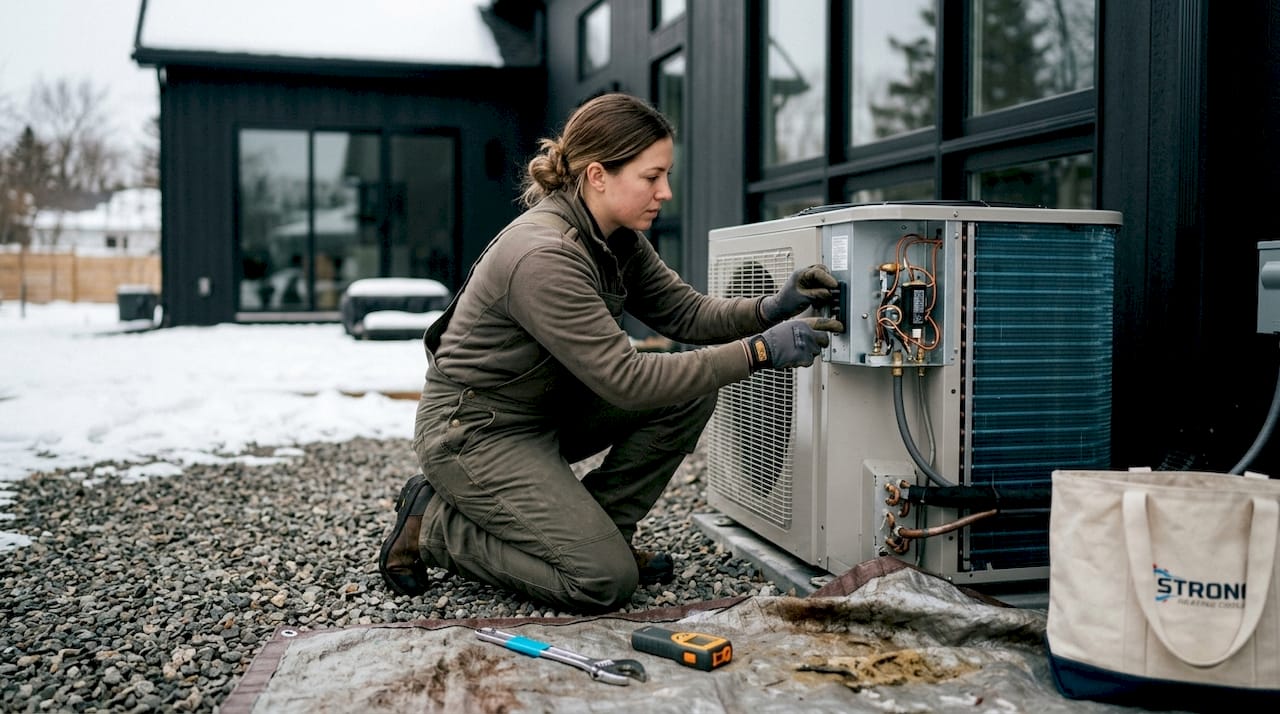
Altitude compounds the problem. Most of Colorado sits above 5,000 feet, where air density is roughly 20% lower than at sea level. Lower air density means your system moves less heat per cubic foot of air than the manufacturer’s sea-level ratings suggest. A furnace or heat pump sized using standard calculations will be undersized for actual Colorado conditions, running longer cycles and wearing out faster.
Dry winters create a different set of pressures. Low humidity reduces frost buildup on outdoor heat pump coils, which is a genuine advantage. However, dry air also increases static electricity and accelerates wear on certain components. The combination of cold and dry conditions means Colorado winters demand cold-climate rated equipment, not standard residential units.
Wildfire risk has added a newer layer of complexity. Colorado utilities now use Enhanced Powerline Safety Settings, which trigger Public Safety Power Shutoffs (PSPS) during high-wind and high-fire-risk conditions. PSPS events affect over 100,000 customers at a time, with outages lasting hours to days. An all-electric system with no backup heat source becomes useless during these events.
The key climate factors that shape system selection in Colorado are:
- Temperature swings exceeding 40°F in a single day, stressing mechanical components
- Altitude above 5,000 feet reducing effective air density and heating capacity
- Low humidity reducing frost but accelerating component wear
- Wildfire-driven PSPS outages cutting power for extended periods
- High solar gain during sunny days creating rapid indoor temperature changes
How do climate factors translate into system selection?
The most direct answer to system selection in Colorado is this: a dual-fuel system pairing a cold-climate electric heat pump with a natural gas furnace backup is the most reliable configuration for most Colorado homes and businesses. The heat pump handles moderate temperatures efficiently, and the gas furnace takes over when temperatures drop sharply or when a power outage makes the heat pump unavailable.
Modern cold-climate heat pumps maintain heating capacity down to -13°F and continue operating to -22°F. During the December 2022 polar vortex, properly installed units held indoor temperatures at 68–69°F without any backup heat. That performance data matters because Colorado homeowners often assume heat pumps cannot handle real cold. The technology has advanced well beyond that limitation.
Sizing is where most installations go wrong. Altitude-corrected Manual J load calculations are the industry standard for accurate sizing in Colorado. Standard sea-level calculations fail to account for reduced air density, leading to undersized systems that run constantly and oversized systems that short-cycle. Both outcomes reduce comfort and shorten equipment life.
Insulation and duct sealing matter as much as equipment selection. Even the best HVAC systems cannot perform efficiently in a drafty or poorly insulated home. Before upgrading equipment, address air sealing and insulation to reduce the load your new system must carry.
The recommended steps for system selection in Colorado follow a clear sequence:
- Audit your home’s insulation, air sealing, and duct condition before selecting equipment.
- Request altitude-corrected Manual J load calculations from your contractor.
- Specify a cold-climate heat pump with an HSPF2 rating of 8.5 or higher.
- Pair the heat pump with a natural gas furnace for backup in a dual-fuel configuration.
- Confirm the heat pump is rated to maintain capacity well below 0°F, not just operate at that temperature.
- Verify your contractor has experience with Colorado-specific installation requirements.
Pro Tip: Ask your contractor to show you the Manual J calculation printout before any equipment is ordered. If they cannot produce one, or if it does not include an altitude correction factor, find a different contractor.
What are the challenges of HVAC reliability during wildfire power outages?
Wildfire-related power outages are no longer rare events in Colorado. They are a predictable seasonal risk that should factor directly into your system choice. Homeowners often underestimate the impact of drought and wildfire risk on grid stability, treating outages as occasional inconveniences rather than recurring threats to home safety.
The practical consequence is straightforward. During a PSPS event, an all-electric heat pump stops working entirely. A dual-fuel system with a gas furnace backup continues heating your home as long as the gas supply is uninterrupted. Dual-fuel systems maintain heating continuity during PSPS events in ways that all-electric systems cannot, making them the more reliable choice in wildfire-prone areas of Colorado.
The financial stakes are real. Following the december 2025 windstorms in Colorado, some businesses reported losses exceeding $100,000 from extended outages. Residential losses from frozen pipes, spoiled food, and emergency hotel stays add up quickly when a home has no backup heat source.
“Utility companies in Colorado are investing in sectionalization devices and undergrounding power lines to reduce the scope and duration of future shutoffs. However, these infrastructure improvements will take years to complete and will not eliminate outage risk in the near term.”
Homeowners and business owners should take the following steps to prepare their HVAC systems for outage conditions:
- Choose a dual-fuel system with gas backup rather than an all-electric configuration in wildfire-prone areas.
- Confirm your gas furnace can operate on a standing pilot or battery-assisted ignition during a power outage.
- Schedule annual maintenance before wildfire season to confirm all backup heating components are functional.
- Know your utility’s PSPS notification process so you can prepare before an outage begins.
Utility investment in grid resilience is ongoing, but the timeline for meaningful improvement spans years. Planning your system around current grid reliability, not future projections, is the practical approach.
What practical considerations guide equipment selection for Colorado?
Equipment selection for Colorado requires specific performance thresholds, not just general quality standards. The ratings that matter most are HSPF2 and SEER2, which are the current federal efficiency measurement standards replacing the older HSPF and SEER metrics.
For Colorado conditions, target a heat pump with an HSPF2 rating of 8.5 or higher and a SEER2 rating of 16 or higher. These thresholds reflect the efficiency requirements for Colorado’s demanding climate and ensure the system delivers meaningful energy savings over its lifespan. A unit that meets these ratings in Colorado’s conditions will outperform a lower-rated unit even if both carry the same brand name.
Heat exchanger quality deserves specific attention. Colorado’s rapid temperature swings cause thermal cycling in heat exchangers, where metal expands and contracts repeatedly under stress. This accelerates fatigue and can cause premature cracking or failure. Choosing a furnace with a high-quality, thick-gauge heat exchanger is a direct response to this Colorado-specific risk. A failed heat exchanger is both a safety hazard and an expensive repair.
The table below summarizes the key equipment criteria for Colorado system selection:
| Criteria | Colorado requirement |
|---|---|
| Heat pump heating efficiency | HSPF2 rating of 8.5 or higher |
| Heat pump cooling efficiency | SEER2 rating of 16 or higher |
| Minimum operating temperature | Rated to maintain capacity at or below -13°F |
| Load calculation method | Altitude-corrected Manual J |
| Heat exchanger quality | High-gauge material rated for thermal cycling |
| System configuration | Dual-fuel with gas backup in wildfire-prone areas |
Contractor selection is as important as equipment selection. Proper sizing and installation matter more than brand recognition alone. A correctly installed mid-tier system will outperform a premium system installed by a contractor unfamiliar with Colorado’s altitude and climate conditions. Ask specifically whether your contractor uses altitude-corrected load calculations and has installed cold-climate heat pumps in Colorado before.
Pro Tip: Cold-climate rated is a minimum standard, not a recommendation. Verify that the specific unit you are considering has published capacity data at temperatures below 0°F, not just a rated operating range.
For homeowners weighing their options, the best heating systems for Colorado combine cold-climate heat pump technology with gas backup and are sized using Colorado-specific calculations. That combination addresses every major climate factor the state presents.
Key Takeaways
Colorado HVAC system selection requires altitude-corrected sizing, cold-climate heat pump specifications, and gas backup capability to handle temperature extremes and wildfire-driven power outages reliably.
| Point | Details |
|---|---|
| Altitude-corrected sizing | Request Manual J calculations adjusted for Colorado’s reduced air density above 5,000 feet. |
| Cold-climate heat pump specs | Choose units with HSPF2 of 8.5+ that maintain capacity at or below -13°F. |
| Dual-fuel configuration | Pair a heat pump with a gas furnace backup to maintain heat during PSPS outages. |
| Heat exchanger durability | Select furnaces with high-quality heat exchangers rated to withstand Colorado’s thermal cycling. |
| Home efficiency first | Seal ducts and improve insulation before upgrading equipment to reduce system load. |
What I’ve learned about Colorado HVAC after 40 years in the field
The most common mistake I see Colorado homeowners make is treating system selection as a brand decision rather than a climate engineering decision. They spend hours comparing brand names and warranty terms, then accept a quote from a contractor who never asked about their home’s altitude, duct condition, or proximity to wildfire risk areas. The brand on the box matters far less than whether the system was sized correctly for Colorado conditions.
Cold-climate heat pumps are consistently undervalued here. Homeowners hear “heat pump” and assume it will fail in a Colorado winter. That assumption was reasonable fifteen years ago. Today, a properly specified cold-climate unit can hold your home at a comfortable temperature through a polar vortex event without backup heat. The technology is there. The gap is in how these systems are sold and installed locally.
The dual-fuel approach is what I recommend for most Colorado homes outside of urban areas with stable grid access. It is not the cheapest option upfront, but it is the most reliable over a ten to fifteen year ownership period. Gas backup costs very little to maintain and provides genuine peace of mind when a PSPS event hits in january or february.
Home efficiency improvements are the step most homeowners skip. I have seen excellent equipment installed in homes with leaking ducts and poor attic insulation, and the system never performs as expected. Fix the building before you fix the equipment. That order of operations is not optional in Colorado’s climate.
— Owner
Strongheatingandcooling’s Colorado climate expertise
Strongheatingandcooling has served Colorado Springs and the surrounding communities for over 40 years, and every system we install is sized and specified for Colorado’s actual conditions, not sea-level defaults.
Whether you need a new HVAC installation designed around Colorado’s altitude and wildfire risk, or a heating system replacement that pairs cold-climate heat pump technology with reliable gas backup, our team brings the local knowledge to get it right. We also offer financing options to make upgrading to a properly specified system more manageable, along with current coupons and deals to reduce your upfront cost. Contact Strongheatingandcooling for a consultation and get a system built for Colorado, not just rated for it.
FAQ
How does Colorado’s altitude affect HVAC system sizing?
Colorado’s elevation above 5,000 feet reduces air density by approximately 20% compared to sea level. Standard load calculations undersize systems as a result, so contractors must use altitude-corrected Manual J calculations to select the right equipment.
Do heat pumps work in Colorado winters?
Modern cold-climate heat pumps maintain heating capacity down to -13°F and continue operating to -22°F, making them effective for Colorado winters. During the December 2022 polar vortex, properly installed units held indoor temperatures at 68–69°F without backup heat.
What is a dual-fuel HVAC system and why does it suit Colorado?
A dual-fuel system pairs an electric heat pump for moderate temperatures with a natural gas furnace for backup during cold snaps or power outages. This configuration provides both energy efficiency and heating reliability during Colorado’s wildfire-driven PSPS events.
What HSPF2 and SEER2 ratings should I look for in Colorado?
For Colorado’s climate, target a heat pump with an HSPF2 rating of 8.5 or higher and a SEER2 rating of 16 or higher. These thresholds reflect the efficiency and capacity requirements of Colorado’s demanding temperature range.
Why do heat exchangers fail faster in Colorado homes?
Colorado’s rapid and extreme temperature swings cause repeated thermal cycling in heat exchanger metal, accelerating fatigue and cracking. Choosing a furnace with a high-quality, thick-gauge heat exchanger directly reduces this risk and extends equipment life.
Recommended
Need expert HVAC help?
Colorado Springs' trusted, veteran-owned heating & cooling team — same-day service.