

Handling Tenant HVAC Complaints Professionally in 2026
TL;DR:
- Handling tenant HVAC complaints professionally involves a structured process of acknowledgment, diagnosis, resolution, and documentation within legal timeframes. Property managers and landlords who treat these complaints seriously protect themselves from liability and foster tenant trust. Consistent, documented procedures turn stressful issues into manageable workflows while ensuring compliance with habitability standards.
Handling tenant HVAC complaints professionally is defined as the structured process of acknowledging, diagnosing, resolving, and documenting heating and cooling issues within legally required timeframes while maintaining clear communication throughout. Property managers and landlords who treat HVAC complaints as both a service and a legal obligation protect themselves from liability and build lasting tenant trust. Habitability standards in many states set firm temperature thresholds and repair deadlines, making a casual approach genuinely risky. The good news is that a consistent, documented process turns even the most stressful complaint into a manageable workflow. This guide covers the legal framework, communication best practices, diagnostic procedures, and proactive maintenance strategies that make professional HVAC complaint management achievable for any property operation.
What are the legal responsibilities of landlords for HVAC maintenance?
Landlords are legally required to maintain HVAC systems that keep rental units at habitable temperatures, and failure to do so carries real consequences. Most states tie this obligation to implied warranty of habitability standards, which courts interpret broadly to include functional heating and cooling. The specific thresholds and timelines vary by jurisdiction, but the direction is consistent: landlords must act promptly when a system fails.
Some of the clearest examples come from Arizona. Phoenix and Tucson rental units cannot exceed 82°F in habitable rooms, and landlords must act within 5 days of receiving written notice when an HVAC failure affects tenant health. That 5-day window is not a suggestion. It is a legal deadline with potential rent withholding and lease termination consequences attached.
Landlords who ignore written HVAC complaints do not just risk a repair bill. They risk losing the tenancy, facing rent escrow claims, and in some jurisdictions, paying tenant attorney fees. The written notice date is the clock that starts running.
The distinction between emergency and routine repairs matters here. A complete loss of heat in winter or cooling during extreme heat qualifies as an emergency. Routine complaints, such as uneven airflow or a noisy unit, follow standard repair timelines. Property managers should define these categories clearly in their lease agreements, because ambiguity in lease agreements about HVAC repair responsibilities is one of the most common sources of landlord-tenant disputes.
Tenant notification requirements also apply in both directions. Tenants must submit complaints in writing to trigger legal timelines. Landlords must provide advance notice before entering a unit for repairs, typically 24 to 48 hours depending on state law. Documenting every step of this exchange protects both parties.
Key legal obligations property managers should track include:
- Written complaint receipt date and method (email, portal, certified mail)
- Jurisdiction-specific temperature thresholds and response deadlines
- Emergency versus routine repair classification for each complaint
- Required tenant notification before unit entry
- Repair completion date and technician sign-off records
How to effectively communicate with tenants about HVAC issues
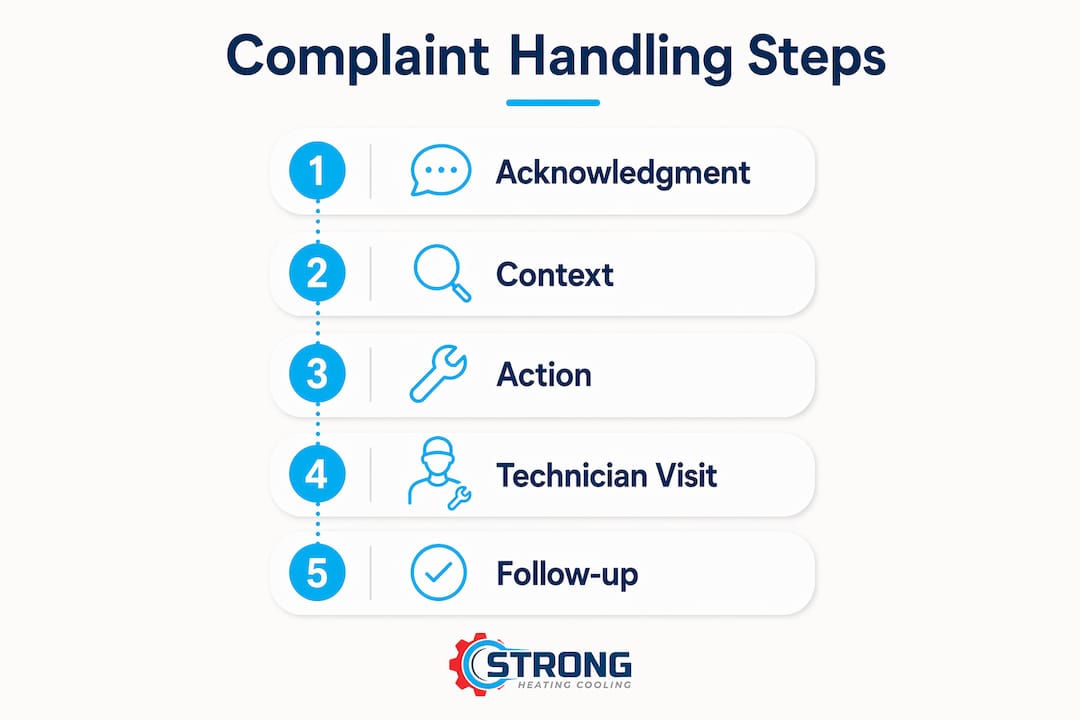
Effective tenant communication during HVAC complaints follows a five-part framework: Acknowledgment, Context, Action, Timeline, and Next Steps. This structured approach prevents tenant frustration and signals that their concern is being taken seriously. Skipping any one of these steps, especially the timeline, leaves tenants feeling ignored even when work is actively underway.
Acknowledgment comes first and costs nothing. A property manager who responds within two hours of a complaint with a simple confirmation message, “We received your report and are scheduling a technician,” sets a professional tone immediately. That message does not need to promise a fix. It needs to confirm the complaint was heard.
Context and action follow together. Tenants want to understand why the issue happened and what is being done about it. Saying “your air handler is showing a fault code and we have a technician scheduled for tomorrow morning” is far more reassuring than “we are looking into it.” Specific language builds confidence. Vague language builds anxiety.
Complaint handling succeeds best when property managers listen fully without interrupting before committing to action plans with clear timelines. This applies to phone calls as much as written exchanges. Letting a tenant explain the full problem before responding prevents misdiagnosis and shows respect.
Pro Tip: Log every tenant communication in a single thread, whether by email, property management software, or a dedicated phone log. A complete communication record is your best protection if a complaint escalates to a legal dispute.
Consistent updates matter even when there is no new information. A brief message saying “the part is on order and we expect delivery by Thursday” keeps tenants informed and prevents repeated follow-up calls. Transparency about delays is far less damaging to the relationship than silence.
- Confirm receipt of the complaint within 2 hours during business hours
- Classify the issue as emergency or routine and communicate that classification to the tenant
- Schedule a technician visit and share the appointment window with the tenant
- Update the tenant after the diagnostic visit with findings and a repair timeline
- Confirm completion and ask the tenant to verify the system is working correctly
What are the best practices for diagnosing and resolving tenant HVAC complaints?
The most effective approach to resolving HVAC complaints starts with a technician visit, not a phone diagnosis. Scheduling a diagnostic visit within 24 hours of a complaint prevents escalation and signals to the tenant that the issue is being taken seriously. The speed of that first visit influences tenant satisfaction more than the speed of the final repair.
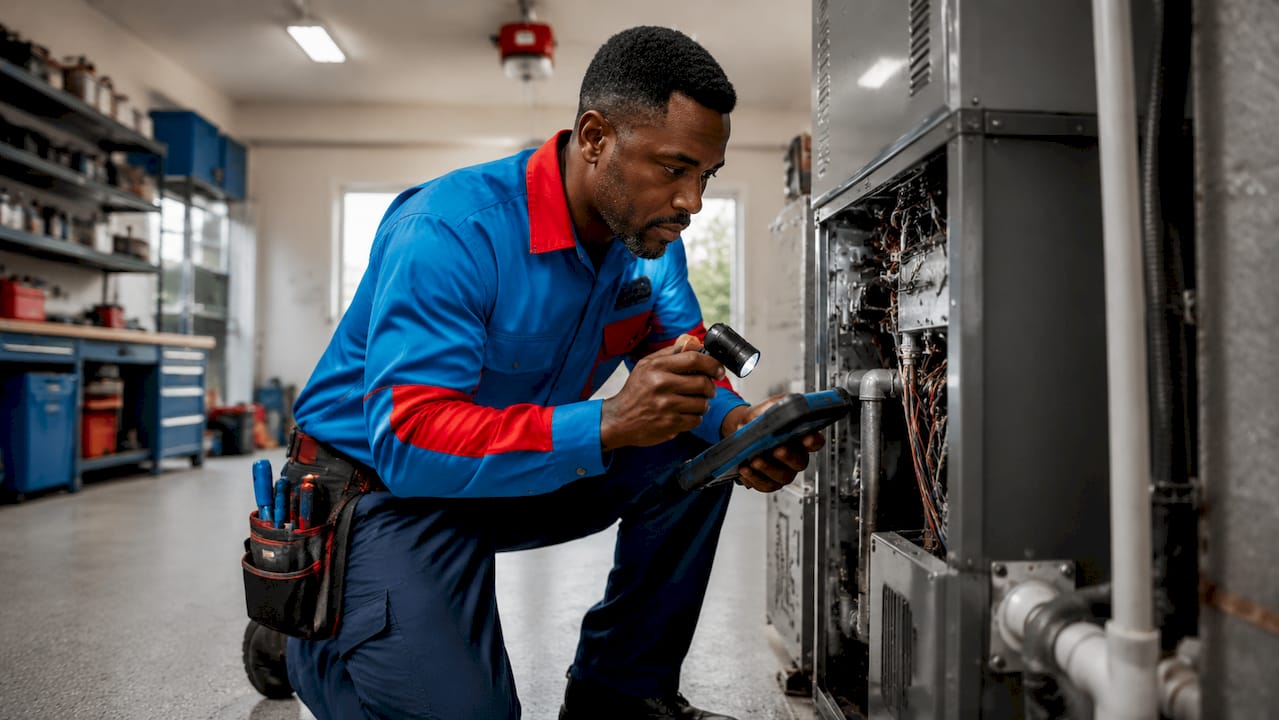
Emergency calls require faster action. After-hours emergency HVAC diagnostics typically carry fees ranging from $150 to $300 or more, with target response times of 2 hours for urgent heating or cooling failures. That cost is real, but it is far lower than the legal and reputational cost of a tenant who loses heat overnight in January. Property managers should budget for emergency service as a standard operating expense, not a surprise.
Recognizing warning signs that require emergency repair helps you triage complaints accurately before the technician arrives. A complete system shutdown, burning smells, or carbon monoxide alerts are never routine. Uneven temperatures in one room or a slightly elevated utility bill can wait for a scheduled visit.
Common diagnostic steps a qualified technician should complete include:
- Checking thermostat calibration and settings
- Inspecting air filters and airflow restriction
- Testing refrigerant levels and checking for leaks
- Examining electrical connections and capacitors
- Reviewing error codes on the control board
- Inspecting ductwork for leaks or blockages
Masking HVAC symptoms without identifying the root cause, such as replacing a filter without checking for mold or VOC contamination behind it, creates liability and erodes tenant trust. A filter change that takes 10 minutes is not a resolution if the underlying air quality issue remains.
| Complaint type | Priority level | Target first visit |
|---|---|---|
| No heat or cooling in extreme weather | Emergency | Within 2 hours |
| System running but not reaching set temperature | High | Within 24 hours |
| Unusual noises or odors | High | Within 24 hours |
| Uneven temperatures between rooms | Routine | Within 3–5 business days |
| Increased energy bills without system changes | Routine | Within 5 business days |
Pro Tip: Keep a log of complaints by unit, zone, and complaint type. Patterns, like the same unit reporting insufficient cooling every summer, point to systemic issues such as undersized equipment or duct leaks rather than one-off failures.
Repeat complaints often indicate systemic issues such as failing dampers or zone controls. Tracking complaints by location and category lets you identify root causes early, before a pattern becomes a crisis.
How can proactive maintenance reduce tenant HVAC complaints?
Proactive maintenance is the single most effective way to reduce the volume and severity of tenant HVAC complaints. Annual spring maintenance typically costs $150–$200 per unit, and mobile complaint management systems can reduce HVAC response times by 70% and repeat complaints by 84%. Those numbers represent real savings in technician dispatch costs, tenant turnover, and legal exposure.
A planned HVAC maintenance schedule for rental properties should cover at minimum two service visits per year: one in spring before cooling season and one in fall before heating season. Each visit should include filter replacement, coil cleaning, refrigerant checks, and a full system performance test. Skipping these visits does not save money. It defers costs into emergency repairs that cost three to five times more.
The benefits of a structured maintenance program extend beyond equipment reliability. Tenants who receive advance notice of scheduled maintenance visits feel cared for. That perception reduces the emotional intensity of complaints when issues do arise, because tenants already have evidence that the property is being managed attentively.
Proactive maintenance priorities for property managers include:
- Scheduling biannual service visits and notifying tenants in advance
- Replacing air filters on a fixed schedule, typically every 60–90 days
- Tracking equipment age and planning replacements before failure
- Using property management software to log maintenance history by unit
- Reviewing complaint data quarterly to identify units with recurring issues
A comparison of reactive versus proactive maintenance approaches shows a clear difference in outcomes:
| Approach | Average cost per incident | Tenant complaint rate | Emergency call frequency |
|---|---|---|---|
| Reactive (repair on failure) | High, unpredictable | Elevated | Frequent |
| Proactive (scheduled maintenance) | Low, predictable | Reduced | Rare |
The financial case for proactive maintenance is straightforward. Predictable costs allow for accurate budgeting. Reduced emergency calls lower after-hours labor expenses. Fewer complaints mean less time spent on tenant communication and dispute management. A preventive maintenance schedule pays for itself within the first year in most multi-unit properties.
Clear lease language defining which HVAC components the landlord maintains and which the tenant is responsible for, such as filter replacements, reduces disputes and sets expectations before a complaint ever occurs. A lease clause that specifies the landlord services the compressor and air handler while the tenant replaces filters monthly eliminates a common source of conflict.
What I’ve learned about professionalism under pressure with HVAC complaints
After years of working alongside property managers and landlords in Colorado Springs, one pattern stands out clearly. The managers who handle HVAC complaints best are not the ones with the fastest repair crews. They are the ones who show up first.
Speed of the initial technician visit matters more than most property managers realize. A tenant who sees a technician at their door within 24 hours of filing a complaint feels heard, even if the part needed for the repair takes three more days to arrive. That first visit sets the emotional tone for everything that follows. Delay it, and even a perfect repair feels like an afterthought.
HVAC issues trigger emotional responses in tenants that go beyond physical discomfort. A family without heat in February is not just cold. They are anxious, frustrated, and questioning whether they made the right choice renting from you. Professionalism in that moment means calm, specific communication, not just a work order number.
The documentation habit is the one I see skipped most often, and it is the one that costs the most when things go wrong. Every call, every text, every email about an HVAC issue should be logged with a timestamp. That record is not bureaucracy. It is your defense if a tenant claims you never responded.
One more thing: never let a technician close a ticket with a symptom fix. Replacing a filter when the complaint is about air quality is not a resolution. It is a delay. Covering symptoms without root cause investigation leads to repeat complaints, tenant dissatisfaction, and potential liability. Require your service providers to document root cause findings on every visit, not just the action taken.
— Owner
Strongheatingandcooling supports property managers with reliable HVAC service
Property managers in Colorado Springs and surrounding communities rely on Strongheatingandcooling for the kind of responsive, documented HVAC service that keeps tenants comfortable and complaints manageable.

Strongheatingandcooling offers professional HVAC repair with rapid response times, full diagnostic documentation, and honest pricing that fits property management budgets. For landlords planning system upgrades or replacements, financing options are available to spread the cost of major equipment investments without delaying necessary work. With over 40 years of combined experience, the team understands the urgency that comes with tenant comfort calls and delivers the kind of clear communication that property managers can pass directly to their tenants.
Key Takeaways
Professional HVAC complaint management requires fast first response, thorough root cause diagnosis, consistent tenant communication, and proactive maintenance to prevent repeat failures.
| Point | Details |
|---|---|
| Legal deadlines are firm | Jurisdictions like Phoenix require landlord action within 5 days of written HVAC notice. |
| First visit speed matters most | Scheduling a diagnostic within 24 hours reduces escalation more than repair speed alone. |
| Root cause over symptom fixes | Closing a complaint without identifying the underlying cause leads to repeat calls and liability. |
| Proactive maintenance cuts costs | Annual service visits reduce emergency call frequency and keep complaint volumes low. |
| Documentation protects everyone | Logging every communication and repair creates a legal record and builds tenant trust. |
FAQ
What is the legal deadline for fixing a tenant’s HVAC issue?
Legal deadlines vary by state, but Arizona law requires landlords to act within 5 days of written notice when an HVAC failure affects tenant health. Always check your jurisdiction’s specific habitability statutes.
How quickly should a landlord respond to an HVAC complaint?
A landlord should acknowledge the complaint within 2 hours during business hours and schedule a technician visit within 24 hours for high-priority issues. Emergency failures, such as no heat in winter, require a 2-hour response target.
What should a landlord document when handling an HVAC complaint?
Document the date and method of the tenant’s complaint, the technician’s diagnostic findings, the root cause identified, the repair completed, and the date the tenant confirmed the system was working. Every communication should be timestamped and stored.
How does proactive maintenance reduce tenant HVAC complaints?
Scheduled biannual maintenance catches failing components before they cause system shutdowns, reducing both emergency calls and tenant complaints. Properties with structured maintenance programs see significantly fewer repeat complaints than those operating on a repair-only basis.
Who is responsible for HVAC repairs in a rental property?
The landlord is generally responsible for maintaining the HVAC system in working order. Tenants are often responsible for routine tasks like filter replacement when specified in the lease. Clear lease language defining each party’s duties prevents the most common disputes.
Recommended
Need expert HVAC help?
Colorado Springs' trusted, veteran-owned heating & cooling team — same-day service.