
Furnace Replacement Quotes: A Step-by-Step Guide for Homeowners
Get at least three written, itemized quotes before you choose a contractor, and gather four or five if the job will likely run past $10,000. That’s the standard recommendation among HVAC industry sources, and it exists for a practical reason: a single bid gives you a price, not a basis for comparison.
The getting furnace replacement quotes process works best when every contractor starts from the same information and performs the same core diagnostic: a Manual J load calculation. This is the industry-standard method for sizing heating equipment to your home’s actual heat loss, not a rough guess based on square footage. Any bid that skips it is incomplete, regardless of how competitive the price looks.
Before you sign anything, confirm each quote includes a written scope of work, the exact equipment model and AFUE (efficiency rating), separate labor and parts warranty terms, who is pulling permits, and whether contingency allowances are spelled out. Look for signs of a properly run visit: a duct inspection, not just a walk-through, and language that references Energy Star efficiency standards where relevant.
Here’s the short version to keep handy:
- Collect at least three itemized quotes (four to five for larger projects).
- Require a Manual J load calculation and duct inspection on every visit.
- Compare identical scopes, not just bottom-line prices.
- Confirm labor and parts warranties, permit handling, and any contingency language before signing.
- Keep every quote and permit document for warranty claims and future resale.
Key Takeaways
Getting reliable furnace replacement quotes requires at least three itemized bids, a Manual J load calculation on every visit, and a side-by-side comparison of identical scopes before you sign.
| Point | Details |
|---|---|
| Collect enough bids | Get at least three itemized quotes, four to five for projects over $10,000 or with complex scope. |
| Require load calculations | Insist on a documented Manual J heat-loss calculation and duct inspection during every assessment. |
| Read the full quote | Confirm separated equipment and labor costs, permit handling, and clear warranty terms before comparing prices. |
| Normalize before comparing | Add back excluded items like permits or disposal so every bid reflects the same true total. |
| Choose installer skill first | Strong Heating And Cooling performs in-home load calculations, full duct inspections, and documented startup testing on every furnace replacement quote. |
Table of Contents
- How Many Furnace Replacement Quotes Should You Collect?
- What to Prepare Before You Contact Contractors
- What Happens During an In-Home Furnace Assessment?
- What Questions Should You Ask Furnace Contractors?
- What Should a Trustworthy Furnace Quote Include?
- How Do You Compare Furnace Quotes Side-by-Side?
- What Red Flags Should You Watch for in Furnace Quotes?
- What Are Typical Permits, Timelines, and Cost Categories?
- What Rebates and Financing Options Should You Ask About?
- How Do You Choose the Right Furnace Installation Contractor?
- What Happens After You Pick a Furnace Replacement Bid?
- Why the Installer Matters More Than the Furnace Brand
- A Contractor’s Honest Advice on Getting Furnace Quotes
- How Strong Heating And Cooling Handles Furnace Replacement Quotes
- Sources
- FAQ
How Many Furnace Replacement Quotes Should You Collect?
Three is the floor, not the target. Every major homeowner guidance resource, including Trane’s contractor guide, points to three itemized bids as the baseline for a standard furnace swap. That number gives you enough data to spot an outlier without dragging the process out for weeks.
Complexity changes the math. If your project involves ductwork modifications, a gas line change, or any structural work, push to four or five bids. Larger, more complicated jobs produce wider price spreads, and comparing itemized scopes is the only reliable way to catch a bid that quietly excludes permits or disposal fees.
- Standard replacement: three itemized quotes minimum.
- Complex scope or over $10,000: four to five quotes.
- Never accept a same-day sign-up discount that pressures you to skip comparison shopping entirely.
More bids reveal more than price. They expose differences in warranty length, what counts as “included,” and whether a contractor is willing to document their sizing method in writing.
What to Prepare Before You Contact Contractors
Contractors give you better, faster estimates for furnace replacement when you arrive with information ready. Vague requests get vague quotes. Specific requests get specific numbers.
Before you make your first call, gather:
- Approximate home square footage and ceiling heights.
- Age, fuel type, and model number of your current furnace, if visible on the data plate.
- Duct layout basics: how many supply and return runs, and where they’re routed (attic, crawlspace, basement).
- Date of last service or tune-up, plus any recurring comfort problems (cold rooms, short cycling, loud startup).
- Photos of the furnace itself, the surrounding clearance, and any visible duct connections.
Take five minutes with your phone before the first visit. Photograph the furnace from multiple angles, the venting where it exits the house, and any spot where ductwork is exposed. This alone speeds up phone consultations and helps a contractor flag potential access issues before they show up.
Pro Tip: Share a candid budget range with each contractor upfront. Homeowners who hide their budget often get generic proposals; homeowners who share a realistic range get options actually built around it.
Have a rough timeline in mind, too. If your furnace is still functioning but aging, you have room to shop carefully. If it failed in January, say so. Contractors work differently under emergency conditions than under planned-replacement conditions.
What Happens During an In-Home Furnace Assessment?
A legitimate assessment takes 30 to 60 minutes for a straightforward replacement. If a “contractor” quotes you a price over the phone or after a five-minute walk-through, that’s not an assessment. That’s a sales pitch wearing an assessment’s clothes.
During a proper visit, the contractor should perform:
- A Manual J heat-loss/load calculation, which measures your home’s actual heating demand room by room.
- A duct inspection checking for leaks, disconnections, and inadequate insulation.
- A combustion appliance safety check, especially important if you have a gas furnace and other combustion appliances sharing venting.
- A review of your supply and return layout relative to the proposed equipment capacity.
- An inspection of existing electrical and gas connections for code compliance.
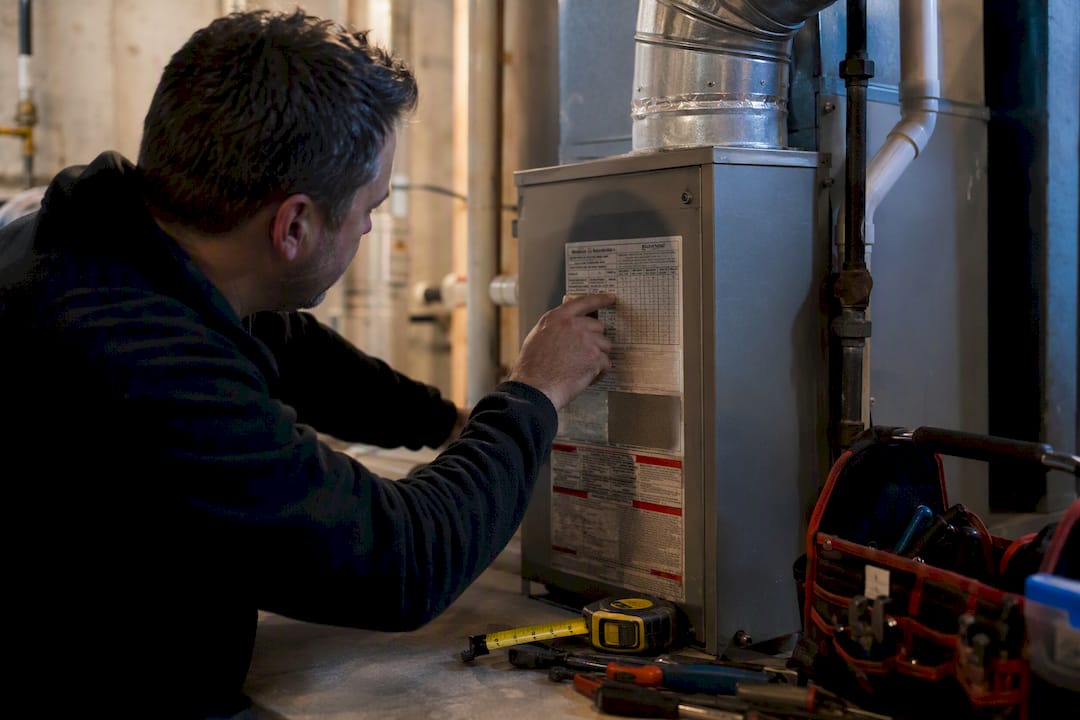
A competent installer leaves you with documentation: measured load calculation results, a recommended equipment capacity in BTUs, a list of any required duct or venting changes, and a note on code-required upgrades specific to your home. If a visit produces a number but no paperwork explaining how they got there, that’s worth flagging.
Rule-of-thumb sizing, where a contractor eyeballs your old unit’s capacity and quotes the same size without measuring anything, is one of the more common shortcuts in the industry. It often leads to oversized equipment that short-cycles and wears out faster.
What Questions Should You Ask Furnace Contractors?
The questions you ask during the visit matter as much as the number on the final page. Ask these five before anything else:
- Will you perform a Manual J load calculation, and can I see the results in writing?
- Which specific equipment model and AFUE rating are you proposing, and why that one for my home?
- Is the equipment cost broken out separately from labor?
- Are permits and inspections included in this price, and who is responsible for pulling them?
- What are the exact labor and parts warranty terms, including duration and any registration requirements?
Beyond the must-asks, a few more questions separate a strong contractor from an average one:
- Who will actually perform the installation, in-house crew or subcontractors?
- Do you run startup testing, including temperature rise, static pressure, and combustion analysis?
- Are utility rebates or manufacturer incentives factored into this quote, or will you help me apply for them separately?
Watch how a contractor answers. If they dodge specifics on the model number, avoid explaining their sizing method, or shrug off who’s responsible for permits, treat that as a real quality concern rather than a minor gap. As you compare answers across bids, sort them into three buckets: must-have, negotiable, and deal-breaker. A missing Manual J calculation belongs in the deal-breaker column every time.
What Should a Trustworthy Furnace Quote Include?
A fully itemized quote is the single clearest signal of a contractor who has nothing to hide. Vague language like “install furnace” with no supporting detail leaves too much room for the final invoice to drift upward.
Here’s what belongs in every legitimate written quote:
| Line Item | What It Should Specify |
|---|---|
| Equipment | Brand, model number, capacity (BTU), AFUE rating |
| Labor | Installation cost separated from equipment cost |
| Materials | Venting, fittings, thermostat or control upgrades |
| Permit fees | Who pulls the permit and who pays the fee |
| Old-unit removal | Disposal cost, included or itemized separately |
| Warranty | Parts coverage duration, labor coverage duration, registration steps |
| Contingency | Percentage or flat allowance and what triggers its use |
Warranty terms deserve close reading. Parts and labor warranties are almost never the same length, and some manufacturer warranties require online registration within a set window after installation, usually 60 to 90 days, or the coverage defaults to a shorter base term.
Contingency language is where a lot of homeowners get surprised. A percentage-based allowance for “unforeseen conditions” isn’t inherently a red flag, but the quote should state what triggers it, how the contractor will notify you before doing the extra work, and how it gets documented and priced. Ask for the payment schedule and change-order process in writing, too. A clear itemized breakdown protects you from disputes after the crew is already in your basement.
How Do You Compare Furnace Quotes Side-by-Side?
Comparing three quotes with three different scopes isn’t really comparing anything. The fix is normalizing every bid to the same baseline before you look at the bottom line.
Line them up using these columns: total installed price, equipment model and AFUE, capacity in BTUs, labor warranty length, whether permits and inspections are included, ductwork scope, contingency allowance, and stated timeline.
If one contractor’s price excludes permit fees and another’s includes them, add the missing cost back into the lower bid before comparing totals. The same goes for disposal fees, duct repairs, or thermostat upgrades. Separating equipment and labor costs on each bid makes this adjustment far easier, since you can compare unit pricing independently of installer markup.
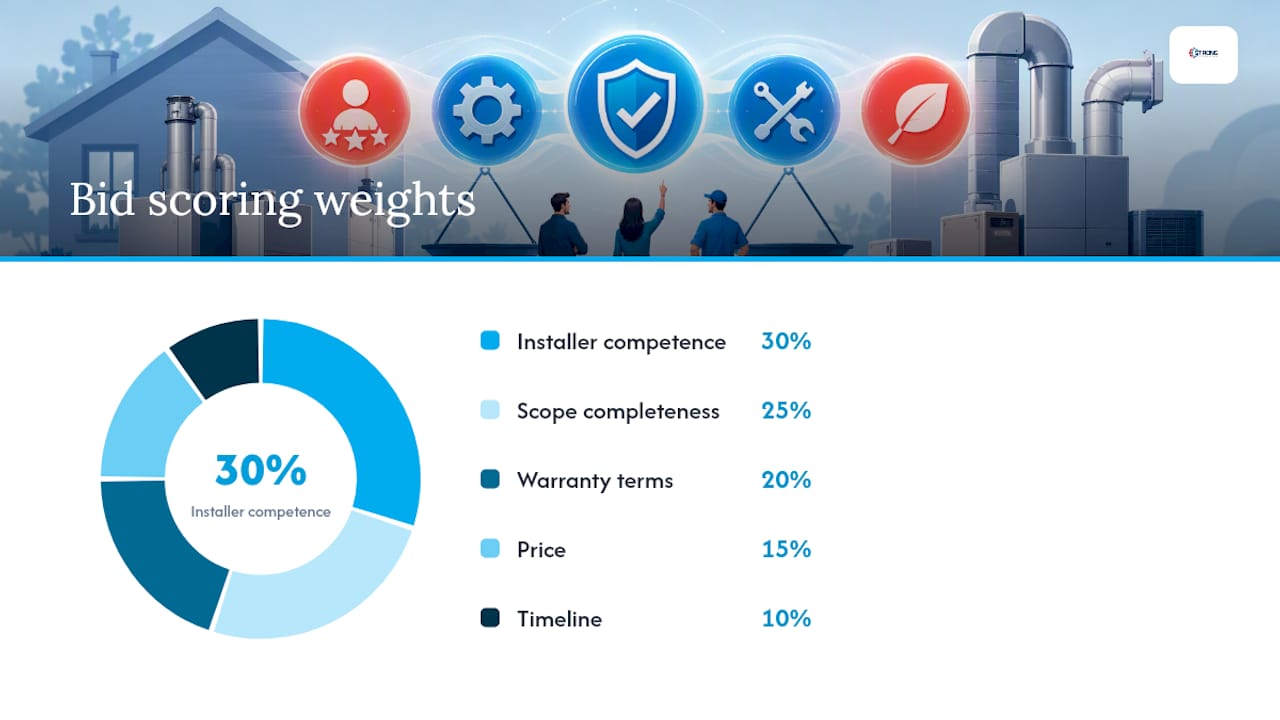
A simple scoring approach works better than picking the lowest number:
- Weight installer competence and documented sizing at roughly 30%.
- Weight scope completeness (permits, disposal, ductwork) at 25%.
- Weight warranty terms at 20%.
- Weight price at 15%.
- Weight timeline at 10%.
Under this method, a bid that’s $500 cheaper but skips duct sealing and offers a shorter parts warranty often scores lower than a full-scope bid at a higher price. Think of it as bid A: full-scope with ductwork and permits included, versus bid B: bare equipment and labor only. The cheaper number on paper isn’t automatically the better value.
What Red Flags Should You Watch for in Furnace Quotes?
A handful of warning signs show up again and again in furnace replacement bids, and they’re worth memorizing before your first contractor walks through the door.
- Vague scope language like “install furnace” with no model number, capacity, or inclusions listed.
- Large percentage-based contingency fees with no explanation of what triggers them.
- Separate “unknowns” or allowance line items that aren’t defined anywhere in the written quote.
- Pressure tactics: same-day sign-up discounts, scare pricing tied to code compliance, or reluctance to leave you a written estimate to review at your own pace.
- Missing mentions of permits, disposal, startup testing, or post-install documentation.
That last one deserves attention. Professionals in the field note that a vague quote leaves room for add-ons to appear later, precisely because nothing was pinned down in writing at the outset. If a contractor can’t tell you what happens after installation, in terms of testing and paperwork, assume nothing happens.
What Are Typical Permits, Timelines, and Cost Categories?
Most municipalities require a permit and follow-up inspection for furnace replacement. Contractors typically handle the permit submission themselves, but confirm upfront who’s actually pulling it and who’s paying the fee. Don’t assume it’s bundled in unless the quote says so.
On timing, expect roughly one to two weeks to schedule your initial assessments, then 24 to 72 hours after each visit for a written quote to arrive. Actual installation scheduling varies by season. Off-season months, typically spring or early fall, tend to bring better pricing and shorter lead times because demand drops.
Budget planning breaks down into these categories:
- Equipment (the furnace unit itself).
- Installation labor.
- Materials like venting and fittings.
- Permit fees.
- Old-unit disposal.
- Ductwork repairs or replacement, if needed.
- Electrical or gas service upgrades, if your existing setup doesn’t meet current code.
- Contingency allowances for unforeseen conditions.
Installed cost ranges vary by region and scope, but current planning estimates commonly put full furnace replacement between $4,000 and $10,000, with simple swaps at the lower end and jobs requiring ductwork or system upgrades running higher. If your schedule has any flexibility, getting quotes during a slower season can work in your favor on both price and installer availability.
What Rebates and Financing Options Should You Ask About?
Before you sign, ask every contractor about rebates and incentives that might apply to your equipment choice. Utility rebates, manufacturer rebates, and Energy Star qualifying programs are worth checking case by case, since eligibility rules shift by region and by model.
Note: the federal Energy Efficient Home Improvement Credit (Section 25C) ended for equipment installed after December 31, 2025, so it no longer applies to new HVAC installations. For the rebates still available to Colorado Springs homeowners, see our 2026 Colorado HVAC rebates guide.
A few practical questions to add to your list:
- Does the contractor handle rebate paperwork, or is that on you?
- Is warranty registration required to qualify for a manufacturer rebate?
- What financing options are available, and how do the APRs compare to a home equity loan or a straightforward installment loan?
Compare total cost of financing, not just the monthly payment. A longer term with a lower payment can cost more overall than a shorter term at a slightly higher monthly rate.
How Do You Choose the Right Furnace Installation Contractor?
Brand loyalty gets too much attention in furnace shopping. Installer competence tends to matter more for long-term performance than which manufacturer’s logo is on the unit.
Before signing, verify:
- Active license and insurance, confirmed directly rather than taken on faith.
- References from customers with similar installations, not just a generic testimonial page.
- Direct experience with the specific equipment and installation complexity your home requires.
- Evidence in the bid itself of a thorough Manual J calculation and duct assessment, not a rounded-off estimate.
- A stated commitment to startup testing and documentation after the install is complete.
When you call references or read reviews, listen for whether past customers mention measurement-based recommendations. A contractor who explains why they sized your system a certain way, backed by numbers, is a different category from one who just quotes a price and moves on. A high-efficiency furnace performs the way it’s supposed to only when it’s sized and installed correctly, regardless of what’s printed on the cabinet.
What Happens After You Pick a Furnace Replacement Bid?
Once you’ve chosen a contractor, the contract itself needs the same scrutiny as the quote. It should specify exact equipment model numbers, AFUE rating, total cost with a full breakdown, start and completion dates, payment schedule, warranty details, and a written change-order approval process.
Track these milestones as the project moves forward:
- Permit pulled and confirmed with the local building department.
- Equipment delivery date.
- Removal of the old unit.
- Installation start and expected completion.
- Startup testing, including combustion and carbon monoxide checks.
- Final inspection and paperwork handoff.
Consider holding back a small final payment until the startup testing and final inspection are documented in writing. If unexpected work comes up mid-installation, insist on a written change order with your approval before the contractor proceeds. Verbal agreements about scope changes are where cost disputes usually start.
Why the Installer Matters More Than the Furnace Brand
Industry consensus is fairly consistent on this point: installation quality and correct sizing through a Manual J calculation predict long-term comfort and efficiency better than brand selection alone. A premium furnace installed without proper duct review or load calculation can underperform a mid-range unit installed correctly.
- Prioritize contractors who document their sizing method over ones who lead with brand names.
- Ask for proof of duct assessment, not just a verbal assurance that “the ducts looked fine.”
- Treat startup testing as non-optional, not an upsell.
Pro Tip: Insist on documented startup testing, including temperature rise, static pressure, and combustion analysis where applicable. These numbers confirm the system is actually running the way it was designed to, not just that it turns on.
Owner, Owner at Strong Heating And Cooling, draws on a team with more than 40 years of combined HVAC experience across Colorado Springs installations, a background reflected throughout this guide’s emphasis on measurement over guesswork.
A Contractor’s Honest Advice on Getting Furnace Quotes
What I wish more homeowners knew is this: the contractor who takes 45 minutes to measure your ducts and run the numbers isn’t slower or pricier for no reason. They’re building a quote you can trust. Keep every document, quotes, permits, and test reports, because they matter again at resale and for warranty claims.
How Strong Heating And Cooling Handles Furnace Replacement Quotes
Getting a furnace quote from Strong Heating And Cooling means starting with the same in-home Manual J load calculation and full duct inspection this guide recommends for every contractor you consider, not just the ones you hope will do it right.

We provide a written, itemized quote with equipment, labor, permits, and disposal broken out clearly, handle permit submission ourselves, and confirm documented startup testing before we call the job finished. Warranty terms, parts versus labor, get spelled out in plain language before you sign anything. If you’re comparing bids for a heating installation or replacement in the Colorado Springs area, reach out for an in-home assessment and see how a fully documented quote compares to the others on your list.
Sources
- Trane: Choosing an HVAC contractor
- Energy Trust of Oregon: How to read a gas furnace bid from contractors
- ENERGY STAR
FAQ
How much does it cost to replace a furnace in a 2,000-square-foot house?
Installed furnace replacement costs commonly range from about $4,000 to $10,000, depending on equipment efficiency, ductwork condition, and regional labor rates. A typical home with straightforward ductwork typically falls in the middle of that range.
How many quotes should I get for furnace replacement?
Get at least three itemized, written quotes for a standard replacement, and expand to four or five if your project exceeds roughly $10,000 or involves ductwork and gas line changes.
What do you do if you can’t afford a new furnace right now?
Ask contractors about financing options, utility rebates, and manufacturer incentives, and compare those against a home equity or installment loan. If your current system still functions, a repair versus replacement evaluation can also buy you time to plan the larger expense.
Recommended
- What to Ask During HVAC Replacement: A Homeowner’s Guide | Strong Heating And Cooling
- Furnace Repair Versus Replacement | Strong Heating And Cooling
- Selling Your Home: Should You Replace the AC or Furnace First? | Strong Heating And Cooling
- Why Furnace + AC Replacement Together Saves You Money | Strong Heating And Cooling
Need expert HVAC help?
Colorado Springs' trusted, veteran-owned heating & cooling team — same-day service.