
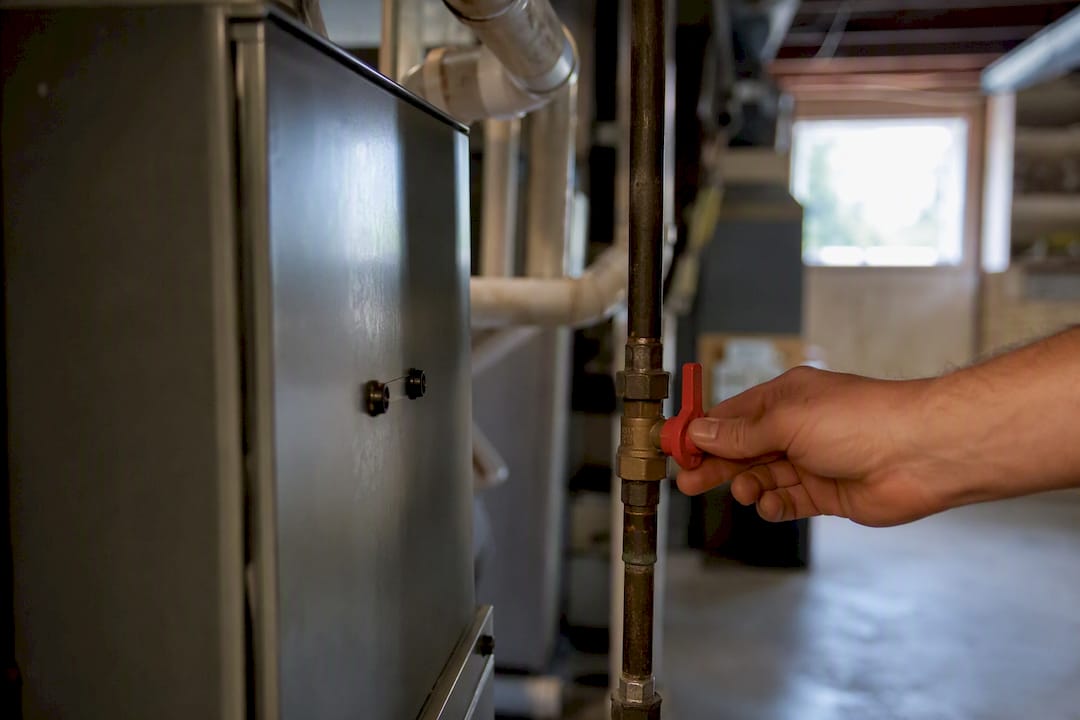
Furnace Smells Like Gas? Here’s What to Do Right Now
A persistent rotten-egg or sulfur smell near your furnace, especially with hissing or physical symptoms like dizziness, means treat it as a possible gas leak. Evacuate the house and call 911 or your gas utility’s emergency line from outside. Do not flip switches, light anything, or search for the source yourself.
There’s one narrow exception. A faint whiff at the exact moment your furnace fires up, one that clears within a few seconds, can be normal system behavior. Anything that lingers, grows stronger, or returns each cycle is not normal.
- Get everyone and every pet outside immediately.
- Call 911 or your gas utility’s emergency number from a safe distance, not from inside the house.
Pro Tip: Utilities usually send someone free of charge to check a suspected leak, so there’s no cost barrier to calling. Never let uncertainty about a bill stop you from reporting a strong odor.
Key Takeaways
A persistent rotten-egg odor near a furnace signals a possible gas leak that requires immediate evacuation and a call to 911 or your gas utility, while a brief startup whiff that vanishes in seconds is usually normal.
| Point | Details |
|---|---|
| Trust persistent odor, not brief whiffs | Evacuate for lingering rotten-egg smells; a startup whiff gone in seconds can be normal. |
| Never search for the source yourself | Avoid switches, phones, and flames indoors; leave that to trained responders. |
| Common mechanical causes exist | Delayed ignition, loose fittings, and faulty valves are frequent, fixable culprits. |
| CO and gas leaks need separate detectors | Carbon monoxide alarms don’t detect combustible gas, so install both types. |
| Annual tune-ups catch problems early | A pre-season inspection checks burners, ignition, and leak points before they become emergencies. |
Table of Contents
- Immediate Safety Steps When You Smell Gas
- Why Does My Furnace Smell Like Gas? Common Causes
- How Technicians Diagnose and Fix a Gas Odor Problem
- Preventing Future Gas Odor Problems
- Strong Heating And Cooling’s Approach to Gas Odor Emergencies
- What Homeowners Get Wrong About Gas Odors
- Sources
- FAQ
Immediate Safety Steps When You Smell Gas
Once you notice a strong or ongoing smell, move fast and stick to this order.
- Evacuate first. Get people and pets out to a safe distance, ideally across the street or several houses down. Don’t stop to grab belongings, and don’t re-enter for any reason until officials clear the home.
- Skip anything that sparks. Don’t flip light switches, don’t use your phone or a garage door opener inside, and don’t light a match to “check” the smell. Static electricity or a spark from a switch is enough to ignite gas that’s built up.
- Shut off the gas at the meter only if you already know how and can do it in seconds. If you hesitate or don’t know the valve’s location, skip this step. Waiting for trained responders is safer than fumbling near a leak source.
- Call from outside. Dial 911 and your gas utility’s emergency line. Give your address, describe the smell’s strength, and mention any symptoms like headache or nausea.
- Only crack windows if it costs you no time. If you can open a window on your way out without delaying your exit, do it. If not, leave it closed and get out.
This same sequence applies whether you smell gas when the furnace starts or notice a gas odor from vents throughout the house. The response doesn’t change based on where the smell seems strongest.
Why Does My Furnace Smell Like Gas? Common Causes
Natural gas itself has no smell. Utilities add mercaptan, a chemical that smells like rotten eggs, specifically so leaks get noticed before they become dangerous. Once you understand that, the rest of the puzzle gets easier to read.
Startup odor that fades fast. A furnace cycling on can push out a tiny puff of unburned gas before the burner catches. If it’s gone within a few seconds and doesn’t repeat every cycle, it’s usually not a fault.
Delayed ignition. Dirty burners or a weak ignitor can cause gas to build up briefly before catching, sometimes with a dull “whoomph” sound. Repeated delayed ignition points to a component that needs service, not a leak, but it still deserves a technician’s attention soon.
Loose fittings or damaged connectors. If the smell is localized right at the piping near the furnace rather than spread through the room, a fitting may have loosened over time.
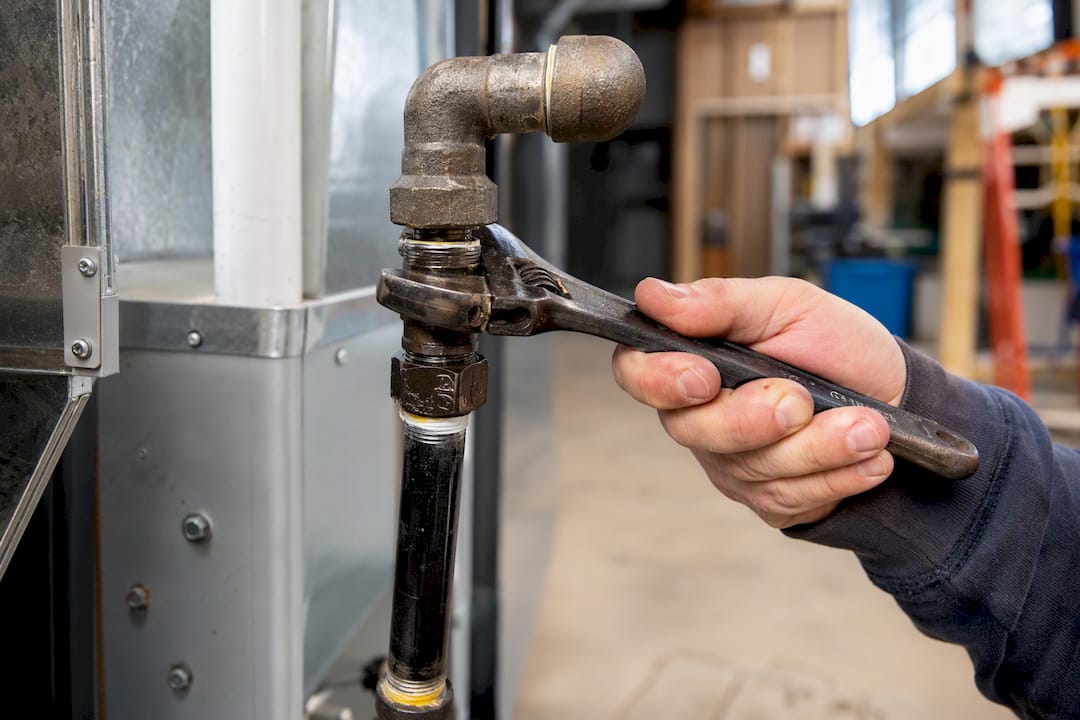
A faulty gas valve or stuck safety device. These can allow a small continuous flow even when the burner isn’t firing. This is one of the more serious mechanical causes and shows up as a persistent, not intermittent, odor.
Pilot light problems on older units. If your furnace still uses a standing pilot, don’t attempt to relight it yourself if you smell gas. Let a licensed technician handle it.
Upstream supply leaks. Sometimes the odor traces back to the line outside your home rather than the furnace itself, which is exactly why utility involvement matters, not just an HVAC visit.
Vent or flue spillage. This tends to smell like combustion exhaust rather than raw gas and points to venting issues instead of a fuel leak.
Mistaken identity. Burning dust on a furnace that’s been idle, a sewer gas smell from a dry drain trap, or even a dead rodent near ductwork can all mimic a gas odor. A quick way to differentiate: sewer and dust smells usually stay constant and don’t intensify near the furnace cabinet the way a real leak does.
| Cause | Typical Sign |
|---|---|
| Startup unburned gas | Brief whiff, gone in seconds, doesn’t repeat |
| Delayed ignition | Dull popping sound, recurring odor at startup |
| Loose fitting or connector | Smell concentrated right at the pipe joint |
| Faulty gas valve | Persistent odor even when burner is off |
| Upstream line leak | Odor present even away from the furnace itself |
How Technicians Diagnose and Fix a Gas Odor Problem
Licensed technicians don’t guess. On an emergency call, they isolate the fuel source first, then sweep every joint, union, and connection with an electronic combustible-gas detector calibrated to catch leaks invisible to the nose.
From there, the diagnostic and repair process typically includes:
- Pressure and leak testing on fittings, flexible connectors, valves, and unions to pinpoint the exact failure point.
- Ignition system service, including replacing a worn ignitor, cleaning burners, and correcting gas pressure to stop delayed ignition.
- Gas valve replacement and a check of safety interlocks that are supposed to shut off flow automatically.
- Heat exchanger inspection, since a cracked exchanger raises carbon monoxide concerns and can mean the furnace needs to be shut down until repaired or replaced.
- Utility crews isolating and testing supply lines when the leak traces upstream, then purging and repressurizing the line safely.
Experts are consistent on one point: don’t attempt DIY repairs on a gas line or valve. Licensed technicians use calibrated equipment and code-compliant procedures that a home toolkit simply can’t replicate.
A technician documents the leak location, the corrective action taken, and retests the system at working pressure before signing off. That paper trail matters if you ever need it for insurance or a future service call, and it’s part of an emergency furnace repair visit done right.
Preventing Future Gas Odor Problems
Most gas odor emergencies trace back to skipped maintenance, not bad luck.
- Schedule an annual tune-up before heating season. A proper visit covers burner cleaning, an ignition test, a leak check on all fittings, and verification of safety controls. This is the single most effective habit for catching problems before they smell.
- Change your filter on schedule and keep the furnace area clear. Dust buildup contributes to delayed ignition and can produce a burning smell that’s easy to confuse with gas.
- Install carbon monoxide alarms on every level of your home, and consider a combustible-gas detector near the furnace or in the basement. Carbon monoxide is odorless and completely different from mercaptan, so a CO alarm alone won’t catch a gas leak, and a gas detector won’t catch CO. You need both.
- Save your utility’s emergency number where you can find it fast, and keep records of past inspections and repairs.
- Know when to call same-day versus wait for a routine appointment. Any persistent odor, hissing, or symptom warrants same-day service. A faint smell that never recurs can usually wait for your next scheduled maintenance visit.
Pro Tip: Odor alone isn’t a reliable early-warning system. Mercaptan can be masked by other household smells or a diminished sense of smell, so a detector catches what your nose might miss.
Strong Heating And Cooling’s Approach to Gas Odor Emergencies
With more than 40 years of combined experience serving Colorado Springs and nearby communities, our technicians treat every gas odor call as urgent until proven otherwise.
A typical emergency visit follows a consistent workflow:
- A safety assessment the moment we arrive, checking for hissing, odor strength, and any signs pointing to an active leak.
- Isolating the suspected source and running a calibrated leak detector across joints, valves, and connectors.
- Repairing the fault, whether that’s a valve, ignitor, or loose fitting, or recommending a safe shutdown if the heat exchanger is compromised.
- Retesting at working pressure and providing a written report before we leave.
We believe in straightforward communication and honest pricing, especially in a moment that already feels stressful.
What Homeowners Get Wrong About Gas Odors
Most advice on this topic swings too far in one direction or the other. Some guides make every whiff sound like a five-alarm emergency, which trains homeowners to panic over a normal startup puff and ignore the guidance the next time it matters. Others undersell the risk, treating a lingering rotten-egg smell as a minor annoyance to “keep an eye on.”
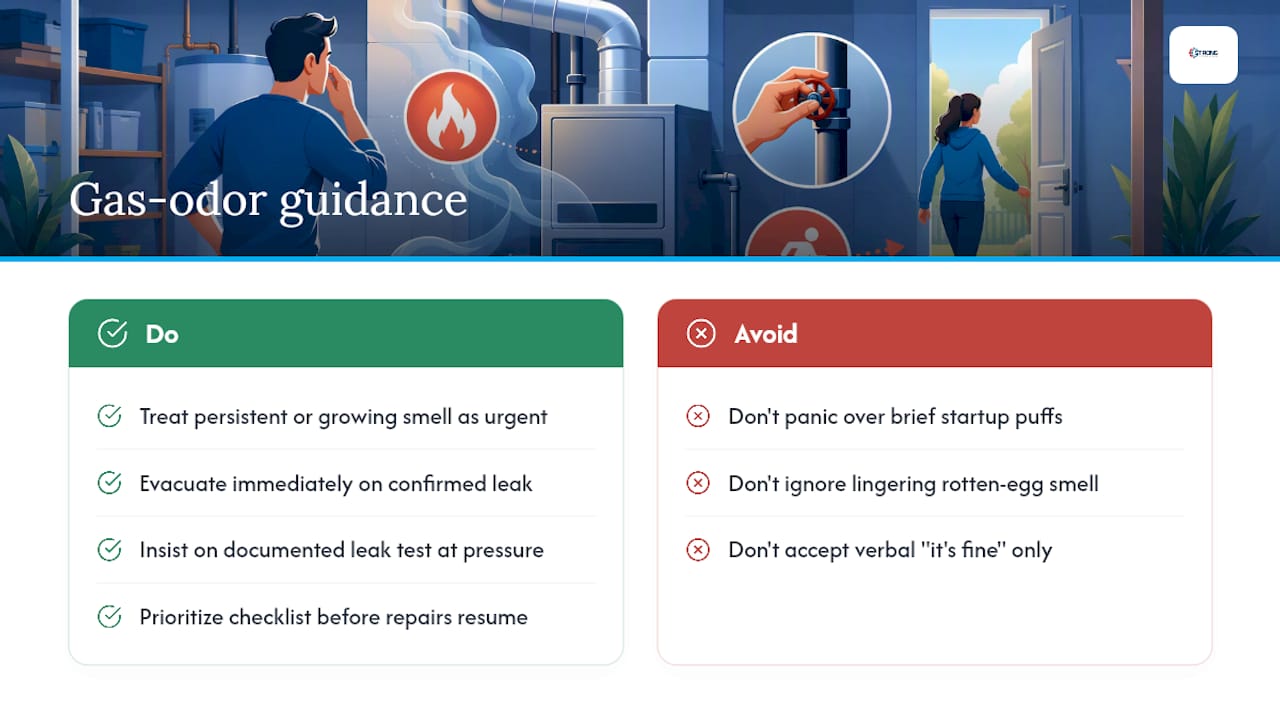
Neither instinct serves you well. The distinction that actually matters is duration and pattern, not intensity alone. A smell that fades in seconds and doesn’t return each cycle is background noise. A smell that persists, grows, or comes with hissing or a headache is a different category entirely, and it deserves the same urgency every time.
Where conventional advice really falls short is in what happens after the emergency call. Homeowners get told to evacuate, and that’s correct, but they rarely hear what “safe again” actually looks like: a documented leak test at working pressure, not just a technician’s opinion. If a service call ends without that verification step, ask for it. Prioritize the checklist first, then insist on proof before anyone calls the furnace fixed.
— Owner
Sources
Call 911 first, then your gas utility’s emergency line, listed on your utility’s safety FAQ page or Poison Control’s guidance.
- Tennessee Gas Association — Natural gas facts
- Duke University preparedness — gas leak guidance
- CPS Energy — natural gas safety FAQ
FAQ
Is It Okay to Smell a Little Gas From a Furnace?
A very brief whiff at the moment the furnace ignites can be normal if it clears within seconds and doesn’t repeat every cycle. Anything that lingers or returns each time the furnace starts should be checked by a professional.
Is It Normal to Smell a Small Amount of Gas?
A faint, fleeting odor tied only to furnace startup can happen in some systems, but a small smell that keeps recurring or grows stronger over hours or days is not normal and needs evaluation.
Is It Safe to Run a Furnace That Smells Like Gas?
No. If the odor is strong, persistent, or paired with hissing or symptoms like dizziness, shut down use of the furnace, evacuate, and call your gas utility or 911 rather than continuing to run it.
How Can You Tell if Your Furnace Is Leaking Gas?
Watch for a rotten-egg smell that doesn’t fade, a hissing sound near gas lines or the furnace cabinet, and physical symptoms like headache or nausea. Any of these signs means treating it as a leak until a technician confirms otherwise.
Recommended
Need expert HVAC help?
Colorado Springs' trusted, veteran-owned heating & cooling team — same-day service.