
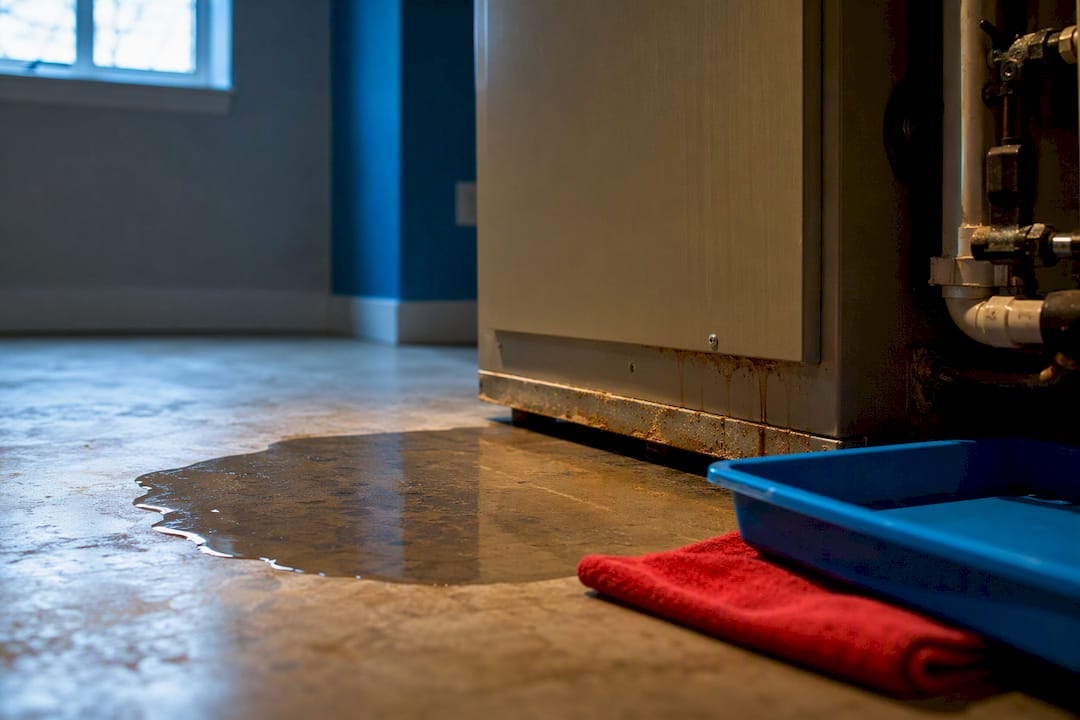
Furnace Leaking Water? Safety Steps in 5 Minutes for Homeowners
If you see water pooling around your furnace, the most likely culprit is a clogged condensate drain or a failed condensate pump, though a leaking AC evaporator coil is common in summer months. Turn the furnace off at its power switch and the breaker, contain the water with towels, and check for soot or a carbon monoxide alarm before doing anything else. A cracked heat exchanger is rare but serious enough to warrant an immediate call to a licensed technician.
TL;DR:
- The most common cause of water pooling around furnaces is a clogged condensate drain or failed pump, which can often be fixed with simple cleaning or part replacement.
- Seasonal factors influence the source of leaks, with condensate issues more common in summer that are linked to AC coils and in winter to drain or pump problems.
- Repair costs vary widely, from inexpensive drain cleaning to expensive heat exchanger replacements, with the latter requiring immediate professional attention.
- Homeowners should prioritize safety by shutting off power and inspecting for soot, odors, or alarms before attempting repairs or calling a technician.
- Regular maintenance such as filter changes, drain flushing, and annual inspections significantly reduce the risk of leaks and costly repairs.
Table of Contents
- What to Do First When Your Furnace Is Leaking Water
- How Do I Know What’s Causing the Water Around My Furnace?
- Common Causes of Furnace Water Leaks and What Each One Means
- Step-by-Step DIY Fixes for a Leaking Furnace
- When Should You Call a Professional for a Furnace Leak?
- Preventing Furnace Water Leaks Before They Start
- Why Field Experience Matters When Diagnosing a Furnace Leak
- Our Take: Don’t Overcomplicate a Furnace Leak
- Get Help From Strong Heating And Cooling for a Leaking Furnace
- Sources
- FAQ
What to Do First When Your Furnace Is Leaking Water
Before you troubleshoot anything, protect your home and your family. These steps take five minutes and prevent a small puddle from becoming a bigger problem.
- Switch off power at the furnace’s dedicated wall switch, then flip the breaker at your electrical panel.
- If you smell gas, hear popping or hissing near the burners, or see soot around the unit, shut off the gas supply too.
- Soak up standing water with old towels and a shop bucket, and move anything electrical, cardboard, or valuable off the floor near the unit.
- Run a fan or dehumidifier in the space to dry it out. Damp basements grow mold within 24 to 48 hours, so don’t skip this step.
- Do not restore power until the area around the furnace is fully dry.
- If a carbon monoxide alarm is sounding or you notice a burning or metallic odor, leave the house and call 911 or your gas company before doing anything else.
Water and electrical components are a dangerous combination, and industry safety guidance is consistent on this point: if the leak has reached a control board, blower motor, or exposed wiring, cut power first and let a technician handle the rest.
Pro Tip: Snap a few photos of the puddle location and any rust or staining before you clean up. If you end up calling a technician or filing an insurance claim, that visual record saves time and often speeds up diagnosis.
How Do I Know What’s Causing the Water Around My Furnace?
Tracing the water back to its source tells you whether you’re dealing with a simple drain clog or something that needs a professional. Start by looking at what kind of furnace you have and where the puddle actually sits.
- Check the vent pipes. If your furnace vents through white PVC pipe instead of metal flue pipe, you have a high-efficiency condensing furnace that produces condensate as a normal part of combustion. Water around this type of unit almost always points to a drainage problem.
- Note the season. Water appearing during heating season on a condensing furnace usually means the condensate drain, trap, or pump. Water showing up when the air conditioner runs points to the evaporator coil and its drain pan instead, since that coil normally sheds water into a pan and drain line that can clog or overflow just like a furnace drain.
- Follow the drain line. Trace the plastic tubing from the furnace to where it exits, whether that’s a floor drain, a utility sink, or a small condensate pump with its own discharge tube. Puddling right at the pump usually means pump failure; puddling along the line suggests a clog or bad pitch.
- Inspect the humidifier. If you have a whole-home humidifier mounted on the ductwork, check its water supply line and drain saddle valve for a slow drip that mimics a furnace leak.
- Look for red flags. Rust streaks, a sour or musty smell, scorch marks, or any sign the water has touched wiring all mean you should stop troubleshooting and call a professional.
Common Causes of Furnace Water Leaks and What Each One Means
Most furnace leaks trace back to one of a handful of causes, and each one comes with its own level of urgency. Water leaks commonly stem from a clogged condensate drain, a broken condensate pump, a cracked drain pan, humidifier issues, or frozen condensate lines, and knowing which one you’re facing changes how you respond.
Clogged condensate drain or trap. Algae, mold, and mineral sediment build up inside the small drain line over time, especially in humid climates. You’ll usually see slow dripping near the furnace base or a full shutdown if your unit has a safety switch. This is one of the more homeowner-friendly fixes, tackled with a wet/dry vacuum or a vinegar flush.
Condensate pump failure. If your furnace is in a basement without a nearby floor drain, it likely relies on a small pump to push condensate uphill to a drain. When the pump’s motor dies or its float switch sticks, water backs up and overflows the reservoir even while the furnace keeps running.
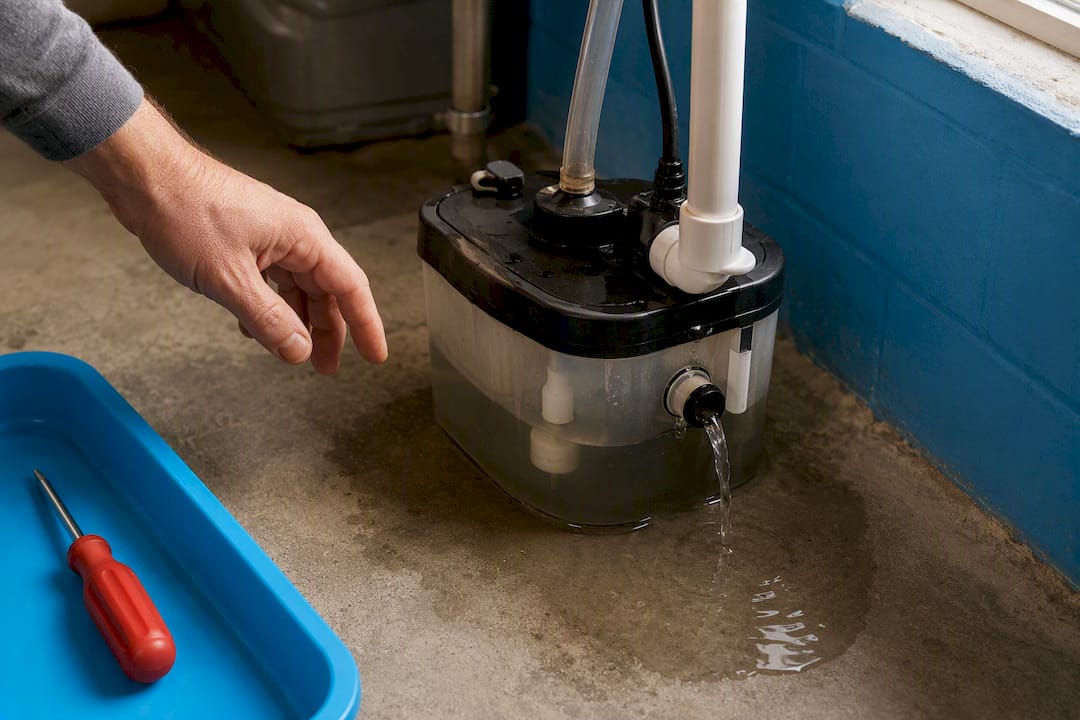
Cracked or corroded drain pan. Metal drain pans corrode over years of constant moisture exposure, and a corroded pan can hide slow leaks that quietly damage the blower motor or control board before you notice standing water. A flashlight inspection and a light tap on the metal will reveal thin, brittle spots that need planned replacement rather than a patch job.
Humidifier leaks. A worn water panel, a loose supply line, or a clogged drain saddle can all send water dripping down the ductwork and onto the furnace cabinet below, making the leak look like it’s coming from the furnace itself.
Frozen or overflowing evaporator coil. A dirty air filter restricts airflow across the AC coil, causing it to ice up. When that ice melts, it often overwhelms the drain pan. Swap the filter, shut the AC off, and give the coil several hours to thaw completely before running it again.
Frozen condensate line. In unheated garages or crawl spaces during cold snaps, the condensate line itself can freeze solid, backing water up into the furnace. Pipe insulation or a short length of heat tape prevents most repeat occurrences.
Cracked heat exchanger or poor flue installation. This is the cause that demands immediate professional attention. A cracked heat exchanger can let carbon monoxide leak into your living space, and no homeowner fix applies here. Soot, a metallic smell, or a triggered CO alarm alongside water means shut the system down now.
Nearby plumbing or appliance leaks. Before you assume the furnace is guilty, rule out a leaking water heater, sump pump, or overhead pipe. A water heater leak in the same mechanical room produces a very similar puddle and gets misdiagnosed often.
Step-by-Step DIY Fixes for a Leaking Furnace
Once you’ve confirmed the leak is condensate-related and not a safety hazard, these steps handle most clogs and pump issues without a service call.
- Cut the power and dry the floor. Confirm the furnace switch and breaker are both off before you touch anything, and wipe up standing water so you’re not working in a puddle.
- Locate the condensate drain outlet, typically a small PVC pipe near the base of the furnace or running to a floor drain. Attach a wet/dry vacuum to the open end, sealing the connection with a rag or tape for suction, and run it for 30 to 60 seconds to pull out clogs.
- Flush the line with warm water mixed with white vinegar through the service port or trap opening. This loosens algae and mineral buildup without harsh chemicals that could corrode PVC fittings.
- Remove and clean the condensate trap if your furnace has an accessible one. It’s a small U-shaped fitting that catches debris, similar to a sink trap, and it unscrews by hand on most models.
- Test the condensate pump by pouring a cup of water into its reservoir and watching whether the pump activates and clears the water. If it stays silent, check the float switch for debris, since a stuck float is one of the more common reasons a furnace shuts down for no obvious reason.
- Inspect the drain pan for cracks or rust-through. A temporary patch with epoxy buys you time, but plan on replacing a corroded metal pan rather than repairing it repeatedly.
- Restore power and monitor the unit for the next full heating or cooling cycle, checking that water drains properly and doesn’t return to the same spot.
Pro Tip: Avoid feeding a drain snake or power auger into the condensate line. The tubing is thin and full of tight elbows, and an aggressive tool can puncture it, turning a quick fix into a full line replacement.
If you’re not confident working around the trap or pump, our guide to clearing a condensate drain clog safely walks through the same steps with more detail on tool choice.
When Should You Call a Professional for a Furnace Leak?
Some signs mean it’s time to stop troubleshooting and pick up the phone. A CO alarm, visible soot, a scorched smell, or any suspicion of a cracked heat exchanger calls for an immediate professional inspection, not a DIY attempt. The same goes for water that keeps returning after you’ve cleared the drain and cleaned the trap, or any leak that has already reached electrical wiring or the control board.
- CO alarm activation, soot around the burners, or flame rollout: shut down and call immediately.
- Repeated clogs despite cleaning, or a pump that won’t hold a prime after cleaning the float: schedule a service visit.
- Rust-through on a metal drain pan or visible cracks in a plastic one: plan for replacement rather than another patch.
- Any water contact with wiring, breakers, or the circuit board: treat as an electrical hazard until a tech confirms it’s safe.
Repair costs vary by scope. Clearing a stubborn drain line or replacing a condensate pump tends to be a modest repair. Replacing a corroded drain pan runs higher because it usually means partial disassembly of the cabinet. A cracked heat exchanger sits at the top of the cost scale, and depending on the furnace’s age, a technician may recommend comparing repair against full replacement rather than sinking money into an aging unit. When you call, ask for a licensed and insured technician, a clear inspection process, a written estimate before work begins, and a stated warranty on parts and labor.
Preventing Furnace Water Leaks Before They Start
Most condensate leaks are preventable with a handful of habits spread across the year. Routine maintenance, including annual tune-ups, regular filter changes, and periodic drain flushing, heads off the majority of condensate-related leaks before they cause damage.
- Replace your furnace filter every 1 to 3 months. A clogged filter restricts airflow, which can freeze the AC coil and overload the drain pan.
- Pour a cup of diluted vinegar down the condensate drain every few months during heavy-use season to keep algae from building back up.
- Consider a condensate pan tablet, sold at most hardware stores, to slow slime and mineral growth between cleanings.
- Book an annual furnace and AC inspection so a technician catches pan corrosion or drain pitch problems before they cause a leak.
- Ask about a condensate pump with a built in fail safe float switch and audible alarm, especially if your furnace sits somewhere a small leak could go unnoticed for days.
Pro Tip: If your basement has flooded before or your condensate line has a long run with several elbows, ask your technician about adding a secondary drain pan with its own alarm. It’s a low-cost add that catches the next leak before it reaches your floor.
A residential maintenance plan that bundles these checks into a single annual visit tends to catch small issues while they’re still cheap to fix.
Why Field Experience Matters When Diagnosing a Furnace Leak
Strong Heating And Cooling brings more than 40 years of combined experience to furnace and AC service calls across Colorado Springs and the surrounding communities. That experience shows up in how quickly a technician can spot the difference between a routine condensate clog and a pan on the verge of failing.
The repairs our technicians perform most often on leaking furnaces include condensate drain clearing, condensate pump replacement, drain pan repair or replacement, humidifier servicing, and heat exchanger inspection when carbon monoxide risk is on the table. Calling a professional for the riskier issues on this list, rather than repeating DIY attempts, usually costs less than the water damage and repeated service calls that follow a missed diagnosis.
Our Take: Don’t Overcomplicate a Furnace Leak
Most of the fear around a leaking furnace is misplaced. The overwhelming majority of cases trace back to a clogged drain, a tired pump, or a dirty filter freezing up the AC coil. None of that requires panic, and a homeowner with a wet/dry vacuum and twenty minutes can often solve it outright.
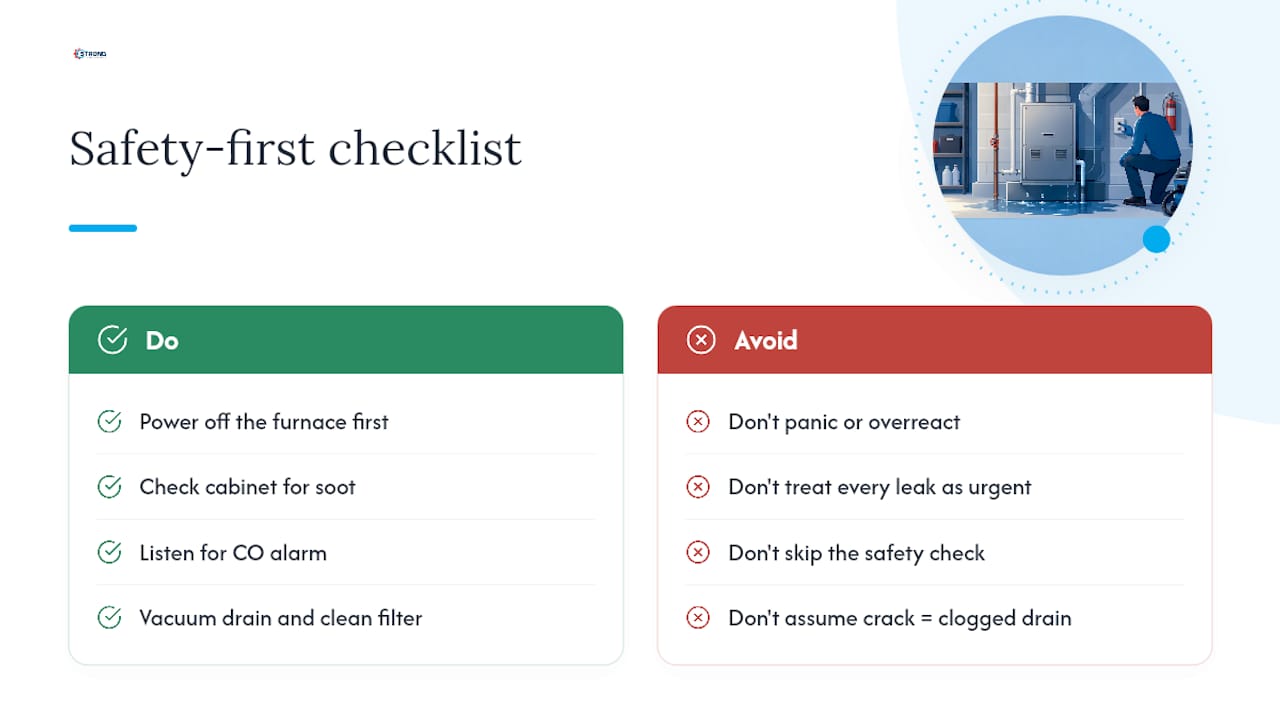
Where conventional advice falls short is in treating every furnace leak with the same urgency, whether it’s a slow drip or a soot streaked cabinet. That flattens the real risk spectrum. The single most useful thing a homeowner can do is separate condensate problems, which are usually a nuisance, from combustion problems, which are never something to wait on.
Prioritize the safety check first: power off, look for soot, listen for the CO alarm. Only after clearing that hurdle should you reach for the vacuum and the vinegar. Skip that order, and you risk treating a heat exchanger crack like a clogged drain, which is the one mistake on this list that actually matters.
— Owner
Get Help From Strong Heating And Cooling for a Leaking Furnace
Strong Heating And Cooling gets you a real fix instead of a repeat visit, because our technicians diagnose the actual cause on the first trip rather than guessing at symptoms over the phone. We handle emergency furnace repair, condensate pump replacement, drain cleaning, humidifier servicing, and heat exchanger inspections across Colorado Springs and the surrounding communities.

Before you call, jot down where the water is pooling, whether any alarm has gone off, and roughly when the leak started. That handful of details helps our team arrive prepared and often shortens the visit. Reach us by phone or through our online request form, and if you’re still deciding between a repair and a full system replacement, our furnace installation and replacement page breaks down what that decision usually involves. For homeowners near Divide, our furnace services page has current availability and direct scheduling. Get a technician out this week and stop guessing at what’s under your furnace cabinet.
Sources
For deeper detail on the safety and repair claims in this guide, see Lennox on cracked heat exchangers, PickComfort on leak danger levels, and Family Handyman’s condensate drain walkthrough.
- Lennox — Furnace cracked heat exchanger
- PickHVAC — Why is my furnace leaking water?
- Family Handyman — Clear a clogged condensate drain
- Carrier — Furnace leaking water: causes, signs, and repair steps
FAQ
How do you unclog a furnace condensate drain?
Disconnect the drain line, run a wet/dry vacuum over the outlet to pull out debris, then flush the line with warm water mixed with white vinegar to break up any remaining buildup.
Why is there water coming out of the furnace?
Water around a furnace almost always comes from a clogged condensate drain, a failed condensate pump, a cracked drain pan, or an overflowing AC evaporator coil during cooling season.
Is leaking water from a furnace expensive to fix?
Clearing a drain or replacing a condensate pump is typically a modest repair, while a corroded drain pan or a cracked heat exchanger costs considerably more since both often involve deeper cabinet work.
Is it normal for water to come out of a furnace?
No. High-efficiency furnaces produce condensate internally, but that water should drain away through a sealed line, so any visible pooling means the drainage system has a fault that needs attention.
Recommended
Need expert HVAC help?
Colorado Springs' trusted, veteran-owned heating & cooling team — same-day service.