
Homeowners: 2 Minute Fan Test When Your Furnace Trips the Breaker
A furnace that keeps tripping its breaker is telling you one of three things: an electrical overload, a short or ground fault, or a breaker that’s simply worn out. Resetting it over and over won’t fix any of those. Switch your thermostat’s fan setting to “On” and see if the blower alone trips the panel. That single test tells you whether the problem lives in the blower circuit or the heating side, and it costs you nothing but two minutes.
TL;DR:
- A furnace that keeps tripping its breaker often indicates airflow restrictions, a shared circuit overload, electrical faults, or worn-out breaker components.
- Testing the blower motor on fan-only mode helps determine if the issue originates in the blower or heating elements, guiding appropriate repairs.
- Most trips caused by airflow issues come from dirty filters or closed vents, which can be fixed with simple cleaning and maintenance, avoiding unnecessary repairs.
- Instant trips typically point to electrical shorts, while delayed trips suggest overloads, helping diagnose whether the fault is in the blower or heating components.
- Regular maintenance, including filter replacement, torque checks, and electrical inspections, can prevent recurring breaker trips and ensure system safety.
Table of Contents
- Why Does My Furnace Trip the Breaker? Common Causes
- Step-by-Step Checks Before You Call a Pro
- When to Call an HVAC Technician vs. an Electrician
- Maintenance That Prevents Repeat Trips
- What Strong Heating And Cooling Technicians See Most
- An Owner’s Take on Breaker Trips
- Get Your Furnace’s Electrical System Checked Right
- Sources
- FAQ
Why Does My Furnace Trip the Breaker? Common Causes
Airflow trouble is the most common culprit, and it usually shows up as a delayed trip. A clogged filter, closed supply vents, or a coil caked in dust force the blower motor to work harder than its design allows. That extra strain pulls more current, and the breaker trips after the furnace has been running for several minutes rather than the instant you power it on. If your furnace runs fine for a while and then cuts out, check the filter before you check anything else. Simple filter swaps and reopened vents resolve a surprising share of these overload-style trips.
A shared circuit tells a different story. If your furnace sits on the same breaker as a sump pump, garage outlets, or kitchen appliances, the combined draw can exceed the circuit’s rating even when the furnace itself is healthy. Watch for other devices losing power or tripping at the same time the furnace runs. That pattern points to circuit capacity, not the furnace itself.
Furnace electrical faults tend to trip the breaker fast, often the instant the unit calls for heat or blower operation. A seized blower motor, a failing capacitor, a shorted heat strip, or a faulty igniter or inducer motor can pull a surge of current that a healthy breaker interprets as a fault. You may hear a hum without the blower actually spinning, or catch a faint electrical smell near the unit. Weak capacitors and seized bearings push amperage well past normal running levels, which is exactly what a breaker is designed to stop.
Panel and breaker issues round out the list. A breaker that feels warm to the touch, buzzes, or shows discoloration around the panel slot has likely degraded internally. Loose lugs, aged breakers, or a breaker with the wrong amperage for the furnace’s nameplate rating can all cause nuisance trips that have nothing to do with the furnace’s own components.
Trip timing is your best diagnostic clue. An instant trip usually means a short; a delayed trip usually means an overload. Keep that distinction in mind as you work through the checks below.
Step-by-Step Checks Before You Call a Pro
If you smell burning, see arcing, or the breaker trips instantly every single time you reset it, stop. Cut power at the panel and call a professional. Do not attempt any of the following steps under those conditions.
- Replace the filter and open every vent. A fresh filter and fully open supply and return vents remove the most common source of airflow strain in minutes.
- Run the thermostat fan on its own. Set it to “On” without calling for heat. If the breaker trips on fan-only, the fault is in the blower motor or capacitor, not the heating components.
- Isolate shared loads. Turn off anything else that might share the furnace’s circuit, then run the furnace alone and watch what happens.
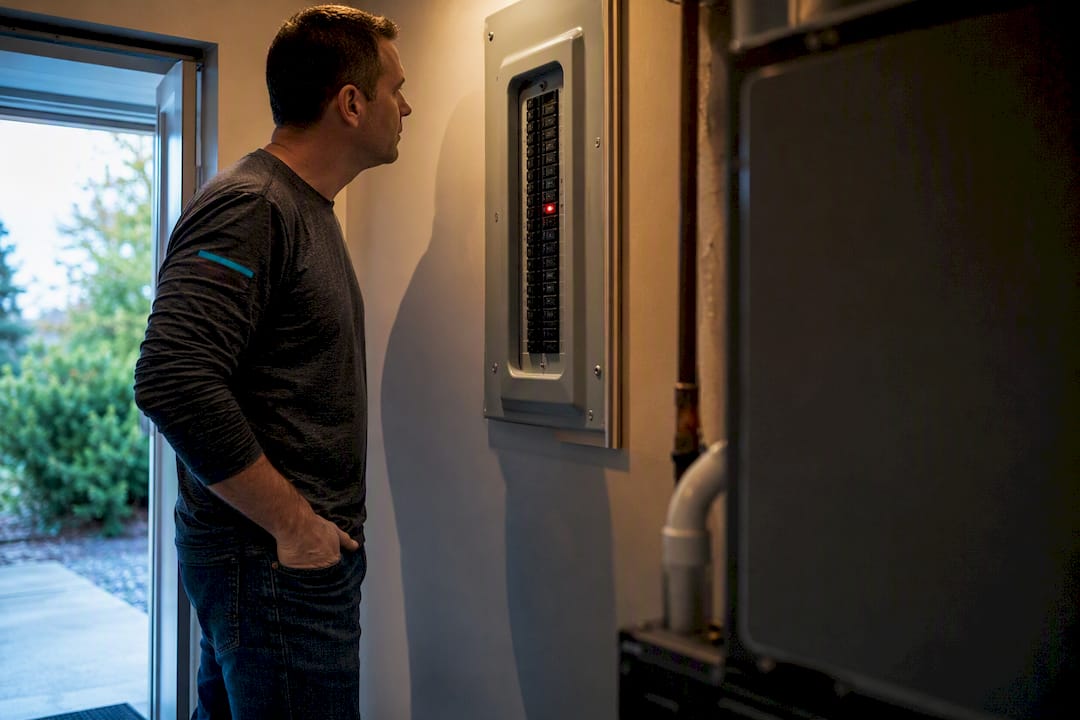
- Look, don’t touch, at the panel. Check the breaker from outside the panel cover for warmth, a buzzing sound, or scorch marks. Do not open the panel yourself.
- Scan the furnace visually. Without removing any covers, look for burned wiring, a swollen or leaking capacitor, or a condensate pump that looks like it’s failed.
If fan-only triggers the trip, suspect the blower motor or capacitor. If the trip only happens on a heat call, suspect the heat strips, igniter, or inducer motor.
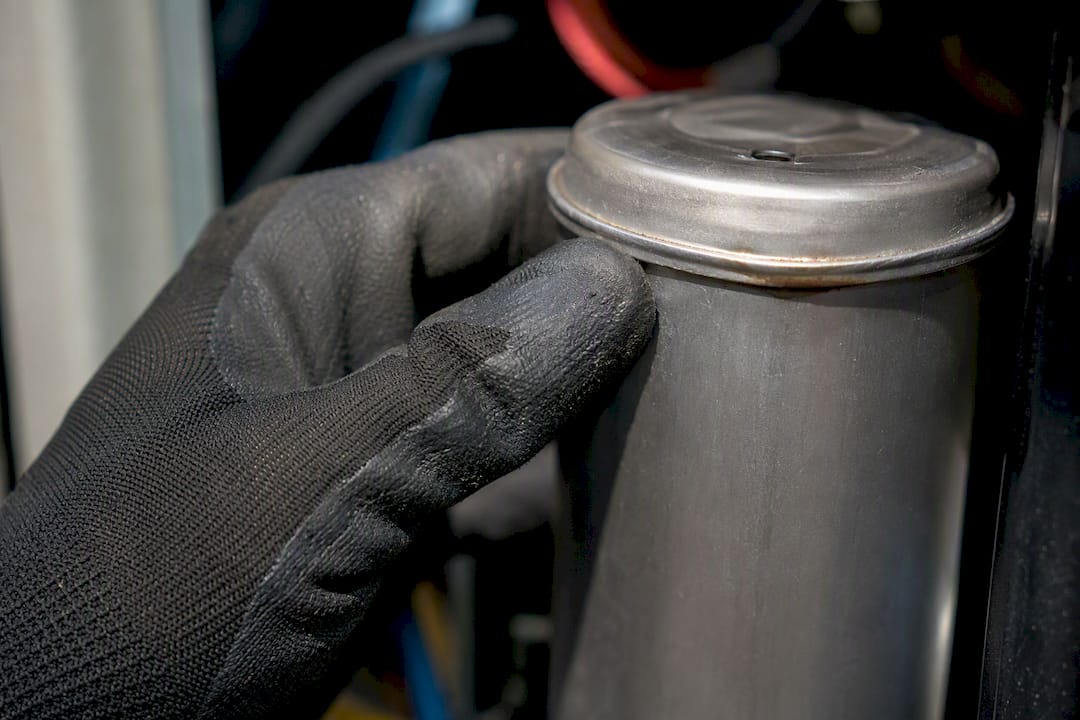
Pro Tip: A healthy capacitor looks like a smooth metal can. If yours is bulging on top or has a crusty residue near the seams, that’s oil leakage, and it’s almost always the reason a blower pulls too much current on startup.
Once you’ve isolated the fan-only test result and ruled out a shared circuit, you’ve done everything a homeowner safely can. Anything beyond this point involves opening the furnace cabinet or the electrical panel, and that’s where a licensed technician takes over.
When to Call an HVAC Technician vs. an Electrician
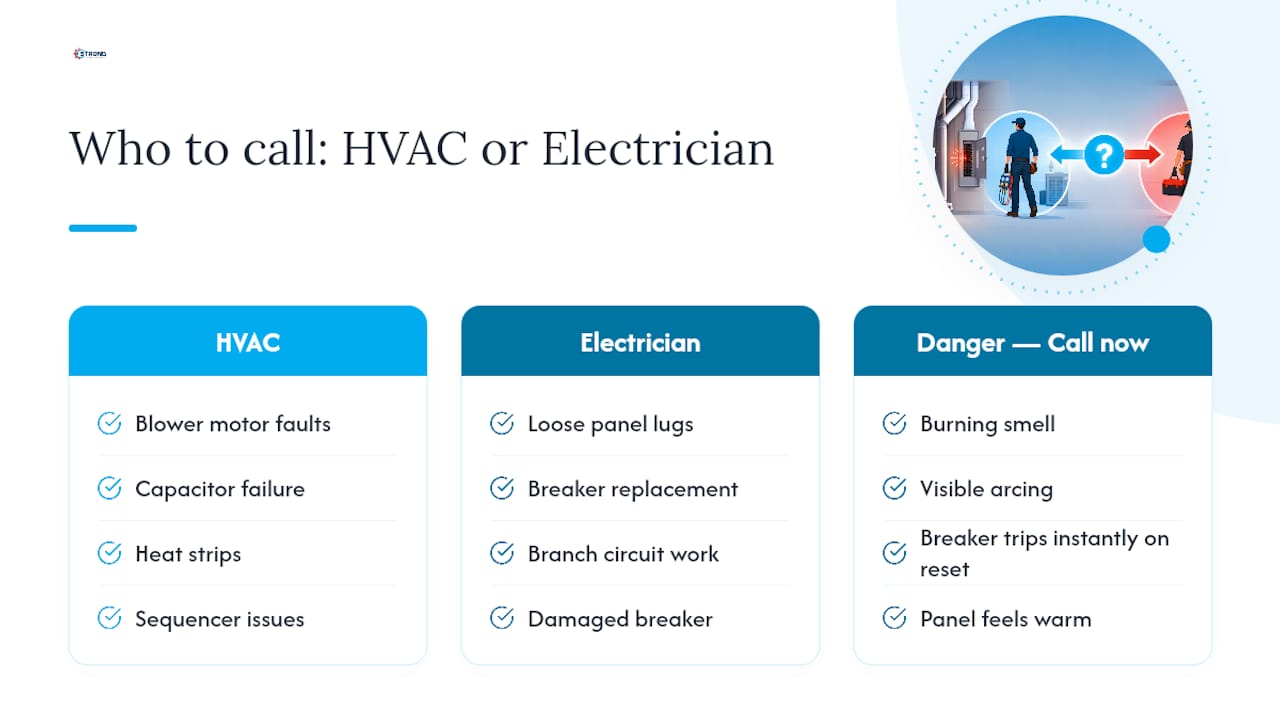
Call immediately if you notice a burning smell, visible arcing at the panel or furnace, a breaker that trips the instant you reset it every time, or a panel that feels warm. None of those are DIY situations.
An HVAC technician handles the furnace side: blower motors, capacitors, heat strips, sequencers, and igniters. An electrician handles the wiring side: loose panel lugs, breaker replacement, and branch circuit work. If your fan-only test trips the breaker, start with an HVAC tech. If the breaker itself looks damaged or the panel shows heat stress, you need an electrician.
When you call, describe the trip timing (instant or delayed), any noises or smells, recent repairs, and whether you’ve seen scorch marks. That information helps the right pro show up prepared the first time, rather than diagnosing from scratch on-site.
Maintenance That Prevents Repeat Trips
Most repeat trips trace back to deferred maintenance rather than a single dramatic failure. A few habits keep the electrical side of your furnace stable year to year:
- Replace the filter regularly, following manufacturer recommendations, and match the MERV rating to what your blower was designed to handle. A filter rated too high restricts airflow just like a dirty one.
- Schedule an annual tune-up that includes an amp draw test, motor and shaft lubrication, and a capacitor inspection.
- Have loose electrical connections tightened during that same visit. Loose lugs heat up under load and are a frequent hidden cause of intermittent trips.
- Match the breaker to your furnace’s nameplate MCA and MOCP ratings. Never upsize a breaker to make trips stop. That masks a real fault and creates a fire risk.
- Inspect the system before your heaviest-use months, so a marginal component fails on your schedule, not during the coldest week of the year.
What Strong Heating And Cooling Technicians See Most
We check the capacitor visually before anything else. A swollen top or oily residue is often the answer right there. The thermostat fan-only test is our go-to first move on every service call because it separates blower problems from heat-stage problems in under a minute. We also find plenty of hidden culprits: shorted condensate pumps, pinched thermostat wires, and insulation chewed through by rodents. Before we touch any wiring, we read the unit’s nameplate for its MCA and MOCP ratings, because that number, not guesswork, determines what breaker and wiring the furnace actually needs.
An Owner’s Take on Breaker Trips
Most of the calls we get for tripping breakers turn out to be a fifteen-dollar filter or a fifty-dollar capacitor, not a full system replacement. That’s the good news. The part that worries me is homeowners who reset the breaker five or six times hoping it sticks. If it trips more than once, stop resetting it and get eyes on the problem. Acting early almost always keeps the repair small.
— Owner
Get Your Furnace’s Electrical System Checked Right
A breaker that keeps tripping isn’t a problem you want to keep managing with resets and guesswork. Strongheatingandcooling sends a technician who reads your furnace’s nameplate ratings, runs an amp draw test, and pinpoints the exact component pulling excess current, rather than swapping parts and hoping one sticks.

A diagnostic visit includes a full safety check at the panel and furnace, an amp draw measurement against your unit’s rated capacity, and a written estimate before any repair begins. If the fault turns out to be blower motor, capacitor, or heat strip related, we handle it directly. If it’s a panel or wiring issue, we coordinate with a licensed electrician so the fix is code compliant from the start. Flexible financing options are available if the repair turns into something bigger than expected. If your furnace has tripped its breaker more than once, schedule an HVAC repair visit today and get a straight answer instead of another reset.
Sources
- Furnace Breaker Keeps Tripping? Causes, Fixes, and Safety Tips - PICKHVAC
- Furnace Keeps Tripping Breaker: Troubleshooting Tips - Trane
- Engineerskill
FAQ
What Are the Signs of a Dying Furnace?
Frequent breaker trips, short cycling, rising energy bills, uneven heating, strange odors, and an aging furnace are clear warning signs that a replacement may be closer than a repair.
How Many Times Can a Breaker Trip Before It Needs Replacing?
You should only reset a tripped breaker once to clear a possible nuisance trip. If it trips again, that’s a sign of a persistent fault, and continued resetting raises fire risk rather than solving the problem.
Why Does My Furnace Run for a Few Seconds and Then Stop?
This usually points to a safety switch shutting the unit down, often triggered by restricted airflow, a failing igniter, or a component drawing abnormal current right at startup.
What Is the Most Common Cause of a Tripped Breaker?
For furnaces specifically, restricted airflow from a dirty filter or closed vents causes the most trips, since it forces the blower motor to draw more current than the circuit was designed to carry.
Recommended
Need expert HVAC help?
Colorado Springs' trusted, veteran-owned heating & cooling team — same-day service.