
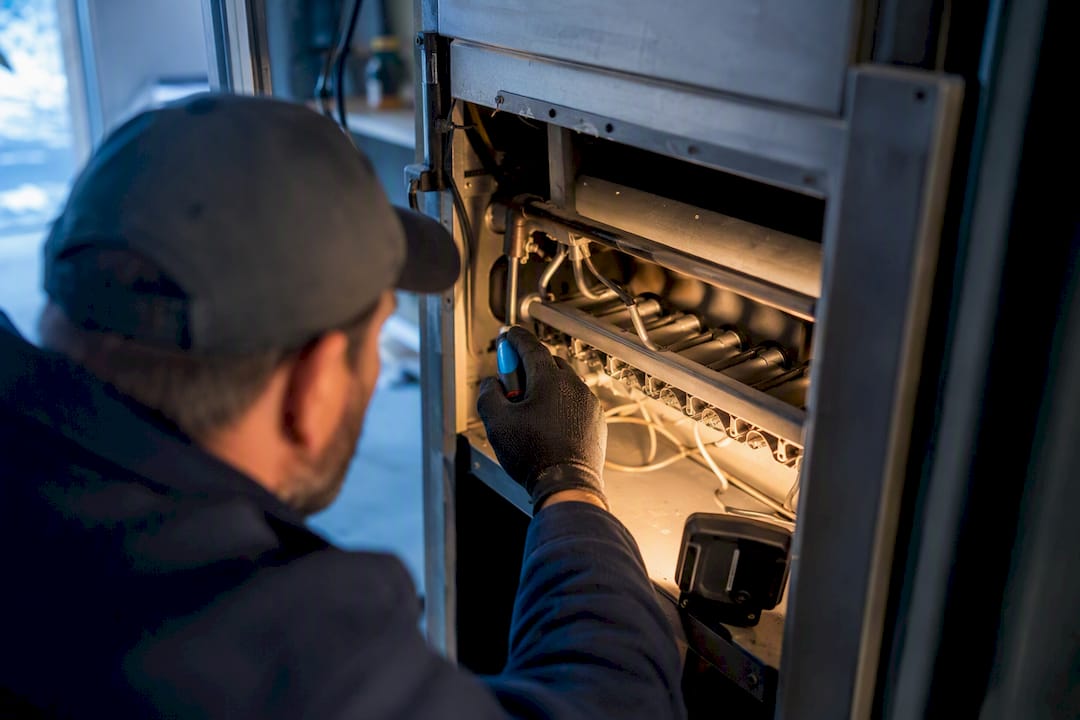
15 Point Fall Furnace Tune Up Homeowners Should Demand
Yes, schedule an annual professional fall furnace tune-up now. It protects your family’s safety, prevents winter breakdowns, and preserves both energy efficiency and warranty coverage. The best window is late summer through early September, before the season’s first cold snap sends everyone scrambling for the same limited appointments.
TL;DR:
- A comprehensive furnace tune-up involves about 15 tasks, including heat exchanger inspection, combustion analysis, CO testing, and safety checks, taking one to two hours.
- Scheduling the tune-up from late summer to early September ensures availability, better pricing, and early detection of issues before peak demand.
- Full service typically costs between $80 and $200, with lower prices often skipping critical diagnostics like combustion analysis and heat exchanger inspection.
- Heat exchanger cracks pose the greatest safety risk as they can leak carbon monoxide without warning, making safety checks essential each fall.
- Homeowners should handle basic filter changes and vent clearing but leave combustion analysis, heat exchanger inspection, and gas pressure testing to licensed professionals.
Table of Contents
- What Does an HVAC Tune-Up Include?
- When Is the Best Time to Schedule a Furnace Tune-Up?
- How Much Does a Furnace Tune-Up Cost?
- Why Do Safety Checks Matter More Than Anything Else?
- What Happens During a Furnace Tune-Up Appointment?
- What Furnace Maintenance Can Homeowners Do Themselves?
- How Do You Choose a Qualified HVAC Technician?
- Why Trust Strong Heating & Cooling for Your Fall Tune-Up?
- A Homeowner-First Take on Fall Furnace Maintenance
- Ready to Book Your Fall Furnace Tune-Up?
- Sources
- FAQ
What Does an HVAC Tune-Up Include?
A real fall furnace tune-up is not a five-minute filter swap. ENERGY STAR’s maintenance checklist and industry guides describe a full service that typically runs through about 15 distinct tasks, and a comprehensive tune-up usually takes one to two hours to complete.
Here’s what should happen during a legitimate visit:
- Burner cleaning and inspection for proper flame pattern
- Heat exchanger inspection using a mirror or camera to spot hairline cracks
- Combustion analysis and carbon monoxide (CO) testing
- Flame sensor and igniter inspection
- Blower wheel and motor cleaning
- Filter inspection and replacement if needed
- Electrical connection tightening and voltage checks
- Gas pressure testing
- Draft and flue inspection for proper venting
- Thermostat calibration
- Lubrication of moving parts
- Condensate line and vent checks
- Safety control testing (limit switches, rollout switches)
- A written service report with findings and readings
Combustion analysis, CO testing, and heat exchanger inspection are the three items most often missing from bargain “specials.” If a technician skips these, you’re getting a superficial once-over, not a real fall hvac tune up.
When Is the Best Time to Schedule a Furnace Tune-Up?
Late August through early September is the sweet spot. It’s early enough to beat the rush and late enough that the furnace has sat idle all summer, which is exactly the window ENERGY STAR points to for pre-season maintenance.
Booking early pays off in more than one way:
- Technicians have open calendars, so you get your preferred appointment time
- Parts are easier to source before demand spikes with the first freeze
- Some companies offer lower pre-season pricing to fill schedules
Annual furnace maintenance is the standard recommendation for most systems. Furnaces older than 12 to 15 years, or ones that have had recent repairs, often benefit from a mid-season check too, since aging components wear faster once the heat exchanger and blower run for months straight.
How Much Does a Furnace Tune-Up Cost?
National pricing for a full furnace tune-up typically falls between $80 and $200, though the exact number depends on fuel type, your region, and how much diagnostic work the job includes.
Fact: Full tune-ups covering roughly 15 inspection points commonly cost $80–$170 for gas furnaces, $100–$200 for oil systems, and $70–$130 for electric furnaces, according to national HVAC pricing data.
Several factors push the price up or down:
- Combustion analysis and CO testing (should be standard, but some low-cost offers exclude them)
- Replacement parts like igniters, flame sensors, or capacitors
- Travel distance and regional labor rates
- Furnace age and access difficulty (attic units cost more to service than basement units)
Be cautious with advertised prices under $60. Furnace notes that ultra-low specials often limit the visit to a basic safety check and skip the combustion analysis and heat exchanger inspection that make a tune-up worth paying for.
Why Do Safety Checks Matter More Than Anything Else?
Heat exchanger cracks are the hidden danger every fall furnace tune-up is designed to catch. A cracked heat exchanger can leak carbon monoxide into your home’s air supply, and it produces no smell and no visible warning sign from outside the cabinet. The Department of Energy confirms this inspection requires a mirror, camera, or combustion readings, not a visual glance.
Combustion analysis works alongside that inspection. A technician runs a combustion analyzer to measure CO, CO2, and oxygen levels in the flue gas, catching unsafe burn conditions before they become a hazard.
Efficiency and safety travel together here. A furnace burning cleanly wastes less fuel, runs its components under less strain, and lasts longer between major repairs.
Manufacturers frequently tie warranty coverage to documented annual service, so the written report from your tune-up isn’t just paperwork. It’s your proof of maintenance if a covered part fails down the road.
What Happens During a Furnace Tune-Up Appointment?
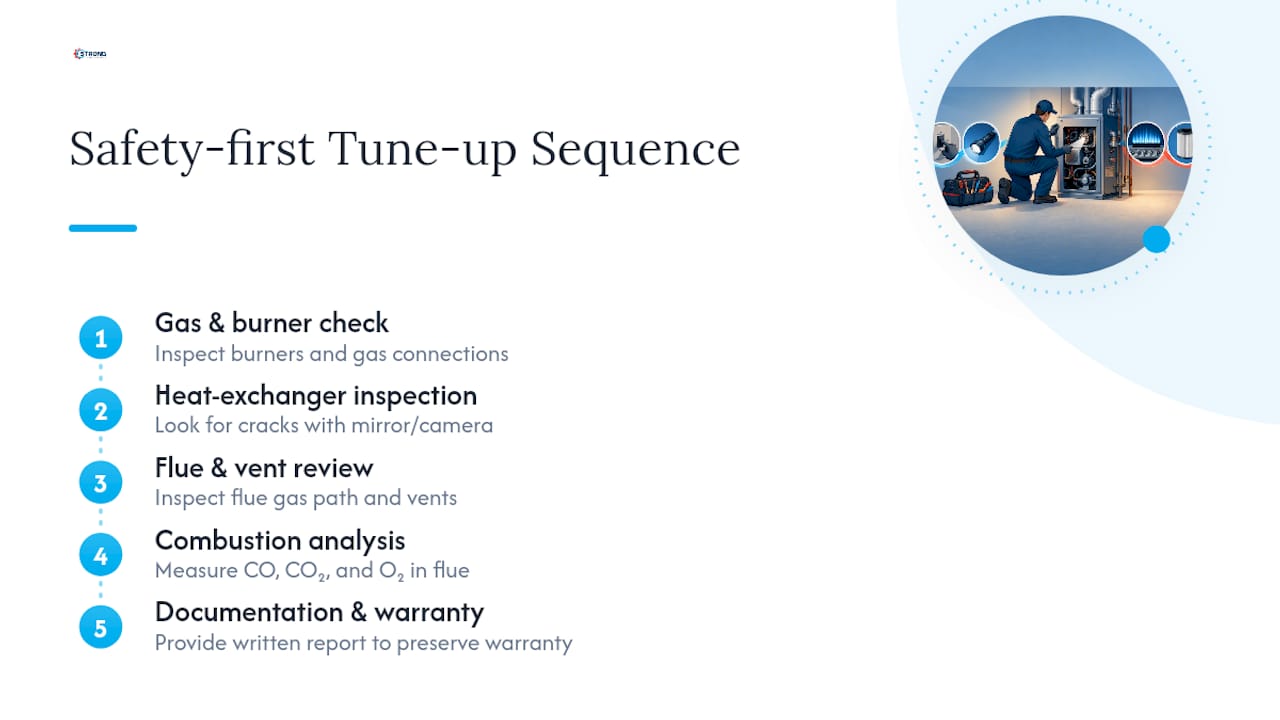
A full-service visit generally lasts one to two hours, longer if the technician finds a part that needs replacing. Here’s the typical sequence:
- Arrival and initial safety check, including shutting off gas and power before opening the cabinet
- Visual inspection of the burner assembly, blower, and wiring
- Heat exchanger inspection with mirror or camera
- Combustion analysis, checking CO levels, temperature rise, and static pressure
- Cleaning of burners, blower wheel, and flame sensor
- Testing of safety controls, thermostat calibration, and final system cycle
- Review of the written report with you before they leave
Pro Tip: Ask to see the actual combustion analyzer readings, not just a verbal “everything looks good.” A technician performing a genuine inspection will have numbers to show you, and comparing them year over year can flag a furnace that’s starting to lose efficiency.
What Furnace Maintenance Can Homeowners Do Themselves?
Plenty of upkeep doesn’t require a license, and doing it consistently makes your professional tune-up more effective, not less necessary.
Safe for homeowners:
- Changing or cleaning the air filter every one to three months
- Keeping vents and returns clear of furniture and clutter
- Checking the thermostat batteries
- Clearing a visibly clogged condensate line on high-efficiency units
- Visually inspecting the flame color (should be blue, not yellow or flickering)
Leave to a professional:
- Combustion analysis and CO testing
- Heat exchanger inspection
- Gas pressure testing and adjustment
- Electrical safety and control testing
The Department of Energy is direct about this split: filter changes are fine for anyone, but the diagnostics that catch real hazards need equipment most households simply don’t own.
How Do You Choose a Qualified HVAC Technician?
Not every company advertising a furnace tune-up performs the same depth of service. Before you book, confirm a few basics.
Ask to see:
- A current license and proof of insurance
- A written checklist or report template they’ll fill out on-site
- References or reviews specific to maintenance work, not just installs
Ask directly about the estimate:
- Exactly which tasks are included, and whether combustion analysis and CO testing are part of the base price
- What happens if they find a failing part mid-visit (labor rates, part costs, approval process)
- Whether a maintenance plan includes priority scheduling for emergency repairs
Red flags worth walking away from: no written checklist offered, resistance to explaining what combustion testing involves, or a quoted price so low it couldn’t reasonably cover an hour of skilled labor plus diagnostic equipment.
Why Trust Strong Heating & Cooling for Your Fall Tune-Up?
The company brings extensive industry experience to every furnace tune-up performed for Colorado Springs area homeowners. Every visit follows the same safety-first sequence outlined above, heat exchanger inspection, combustion analysis, and a written report you keep for your records.
Beyond the technical work, the company supports the community through partnerships with organizations like the Humane Society and Wounded Warrior Project, plus free furnace placements for families in need. That commitment shapes how the team treats every job, whether it’s a routine tune-up or a full system replacement.
A Homeowner-First Take on Fall Furnace Maintenance
Most articles on this topic treat a furnace tune-up like an oil change: routine, forgettable, done. That framing undersells what’s actually at stake. The checklist matters, but the two items that separate a real tune-up from a rubber-stamp visit are the heat exchanger inspection and combustion analysis, and those are exactly the steps that get quietly dropped from bargain offers.
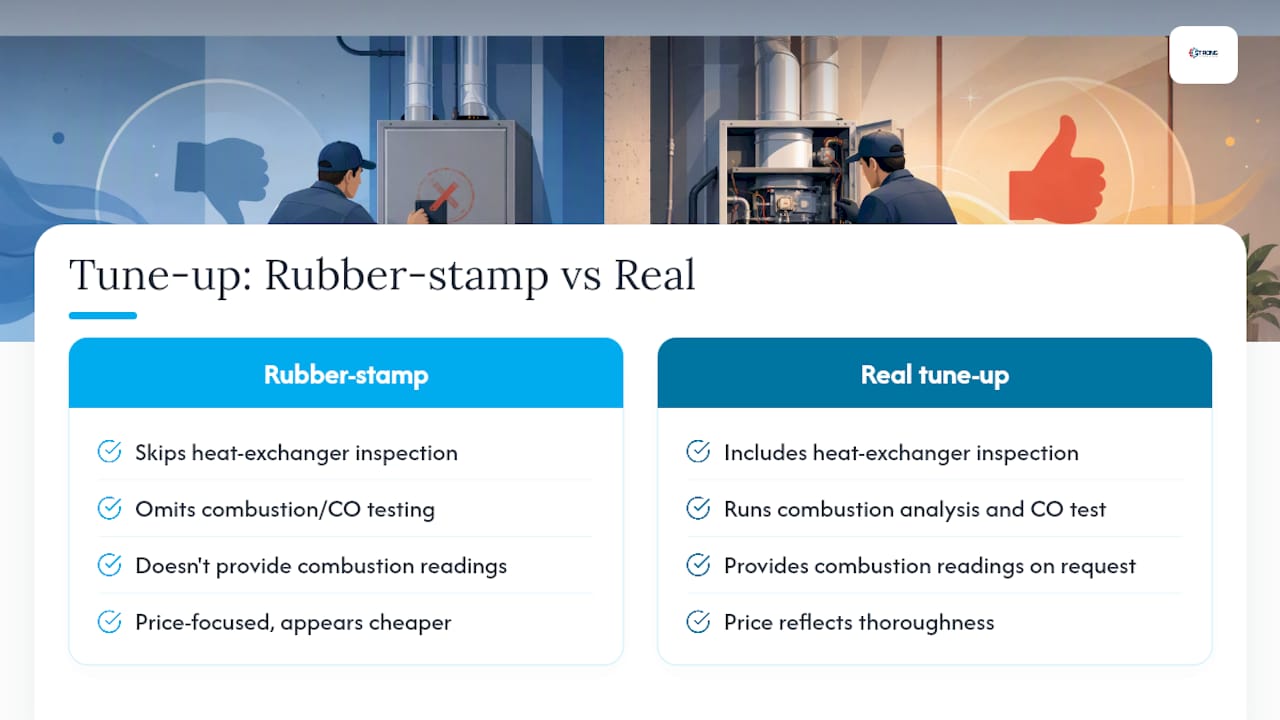
Conventional advice tells you to “get your furnace checked before winter” without telling you what to verify once the technician arrives. That’s backwards. The smarter approach is to walk in already knowing which diagnostics matter, ask for the combustion readings by name, and treat a refusal to run them as a dealbreaker, not a minor omission.
If you prioritize one thing this fall, make it this: don’t judge a tune-up offer by its price tag alone. A $60 special that skips CO testing isn’t cheaper than a $150 visit that catches a cracked heat exchanger. It’s a different, riskier product wearing the same name. Ask the right questions, get the number, and let that decide who works on your furnace.
— Owner
Ready to Book Your Fall Furnace Tune-Up?
This company offers a service that includes a full checklist, combustion analysis and CO testing, plus a written report you can keep for warranty purposes, not a bare-bones visual check dressed up as a full service.

Booking is simple. Have your furnace’s age, brand and model number, and any recent problems ready when you call, that information helps the technician arrive prepared rather than diagnosing from scratch. Homeowners who want recurring coverage can ask about a maintenance plan that bundles this fall visit with spring AC service and priority scheduling if something breaks mid-winter.
Ready to get on the schedule before the season fills up? Visit Strongheatingandcooling’s furnace services page to book your fall tune-up, or explore heating installation and replacement options if your furnace is closer to the end of its life than its next check-up. While you’re prepping the home for the season, it’s also worth looking at door winterization to keep the heat your furnace produces from leaking right back out.
Sources
FAQ
What should a furnace tune-up include?
A full tune-up should include roughly 15 tasks: burner and heat exchanger inspection, combustion analysis and CO testing, blower cleaning, electrical checks, thermostat calibration, and a written service report.
How much does it cost to tune up a furnace?
National pricing typically runs $80 to $200, depending on fuel type, region, and whether the technician needs to replace any parts during the visit.
How often should you get a furnace tune-up?
Once a year is the standard recommendation, ideally scheduled in late summer or early fall before the first cold snap of the season.
What is the $5,000 rule for HVAC?
Definitions vary by contractor, but a common version multiplies the furnace’s age by the estimated repair cost. If that number is high, replacement usually makes more financial sense than another repair.
Can I do my own furnace tune-up?
You can safely handle filter changes, clearing vents, and basic visual checks, but combustion analysis, CO testing, and heat exchanger inspection require professional equipment and training.
Recommended
Need expert HVAC help?
Colorado Springs' trusted, veteran-owned heating & cooling team — emergency service.