
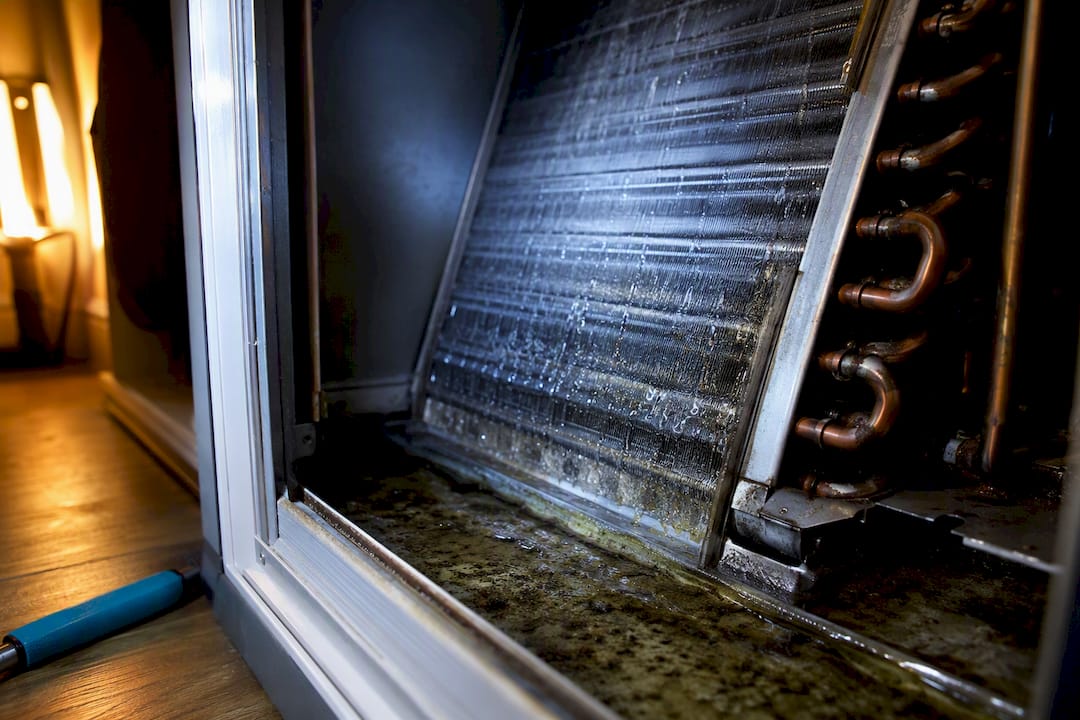
That musty, dirty sock smell coming from your vents is almost always microbial growth on your evaporator coil or drain pan, not a dirty sock stuck somewhere in the ductwork. Change your air filter, run the fan for 20 to 30 minutes to flush stale air, and note when the odor shows up. Most cases clear up with coil cleaning or UV light; if the smell keeps returning, it’s time to call a technician.
TL;DR:
- Microbial growth on the evaporator coil and drain pan causes musty odors, especially in homes with heat pumps, humid climates, or poor filtration.
- DIY fixes like filter replacement and drain line clearing can help temporarily, but persistent smells often require professional coil cleaning and humidity management.
- Proper UV-C light placement on the coil, combined with regular maintenance, significantly reduces microbial regrowth and odor recurrence.
- Maintaining indoor humidity between 30% and 50% and sealing duct leaks are critical for preventing microbial development long-term.
- Full odor elimination typically needs system inspection, professional cleaning, and humidity control, not just chemical sprays or surface treatments.
Table of Contents
- What Causes Dirty Sock Syndrome in Your HVAC System?
- What DIY Steps Can You Try Before Calling a Technician?
- When Should You Call a Professional for Dirty Sock Syndrome?
- How Do You Prevent Dirty Sock Syndrome From Coming Back?
- What Have We Learned From Years of Fixing This Problem?
- Why the “Just Spray Something” Advice Misses the Point
- Ready to Get Rid of That Musty Smell for Good?
- Sources
- FAQ
What Causes Dirty Sock Syndrome in Your HVAC System?
The smell comes from a simple chemistry problem hiding inside your air handler. Every time your air conditioner or heat pump runs in cooling mode, moisture condenses on the evaporator coil. That water, mixed with dust, skin cells, and organic debris pulled in through the return air, gives mold and bacteria exactly what they need to grow. Those microbes release volatile compounds as they metabolize, and that’s the odor you’re smelling. Trane’s own support documentation identifies this coil and drain pan microbial growth as the direct source of the problem.
Heat pumps make the issue worse than standard air conditioners do. During shoulder seasons, when a heat pump cycles between heating and cooling several times a day, the coil temperature swings without ever getting hot enough or dry enough to sterilize the surface. That inconsistent cycling creates ideal breeding conditions, which is why field technicians report the smell shows up more often in humid climates and in homes running heat pumps rather than gas furnaces paired with straight AC.
A few conditions tend to make things worse:
- Low-quality or infrequently changed filters let more organic debris reach the coil.
- Leaky return ducts pull in air from crawl spaces, attics, or garages loaded with extra moisture and particulates.
- Standing water in a clogged drain pan or line gives bacteria a permanent reservoir.
- Tightly sealed, low-ventilation homes trap humidity instead of exhausting it.
- Undersized or restricted-airflow systems run longer cycles, giving moisture more time to linger on the coil.
What DIY Steps Can You Try Before Calling a Technician?
Before you pick up the phone, there’s a short list of safe checks that either fix the smell outright or give a technician useful information. Work through them in order.
- Replace the air filter. A MERV 8 to MERV 11 filter offers a good balance of filtration and airflow for most residential systems, but confirm your equipment can handle that rating without restricting airflow too much. A clogged or wrong-fit filter lets debris bypass straight to the coil.
- Check and clear the drain pan and condensate line. Look for standing water, sludge, or a musty film in the pan. A wet/dry vacuum at the drain line’s outdoor termination can sometimes clear a minor clog, but stop if you see corrosion, cracked plastic, or if water backs up into the unit.
- Run the fan in fan-only mode for 20 to 30 minutes. This flushes stagnant air out of the ducts and can noticeably cut down the smell in the short term.
- Note exactly when the smell happens. Does it hit hardest at startup, right after a mode switch from heat to cool, or does it linger constantly? Consumer HVAC guidance points to startup and mode-change odor as a strong sign of coil-based microbial growth rather than a duct or filter issue.
- If you use a coil cleaner, stick to products labeled safe for evaporator coils. Household bleach and other corrosive cleaners can pit aluminum fins and damage coil coatings, which shortens the coil’s life and can void a warranty.
Pro Tip: Keep a simple log on your phone: date, time, which room smelled it worst, and whether the system had just switched modes. That log turns a vague “it smells bad sometimes” call into diagnostic information a technician can actually use.
When Should You Call a Professional for Dirty Sock Syndrome?
Some signs mean the DIY checklist isn’t going to cut it, and pushing past them just delays a fix that a technician handles in one visit.
- The odor returns within days of a filter change and fan flush.
- You can see visible mold or a slimy film on the coil, drain pan, or nearby ductwork.
- Anyone in the house reports coughing, congestion, or headaches that ease up when they leave the house.
- The smell has been present for more than one full heating or cooling season without improvement.
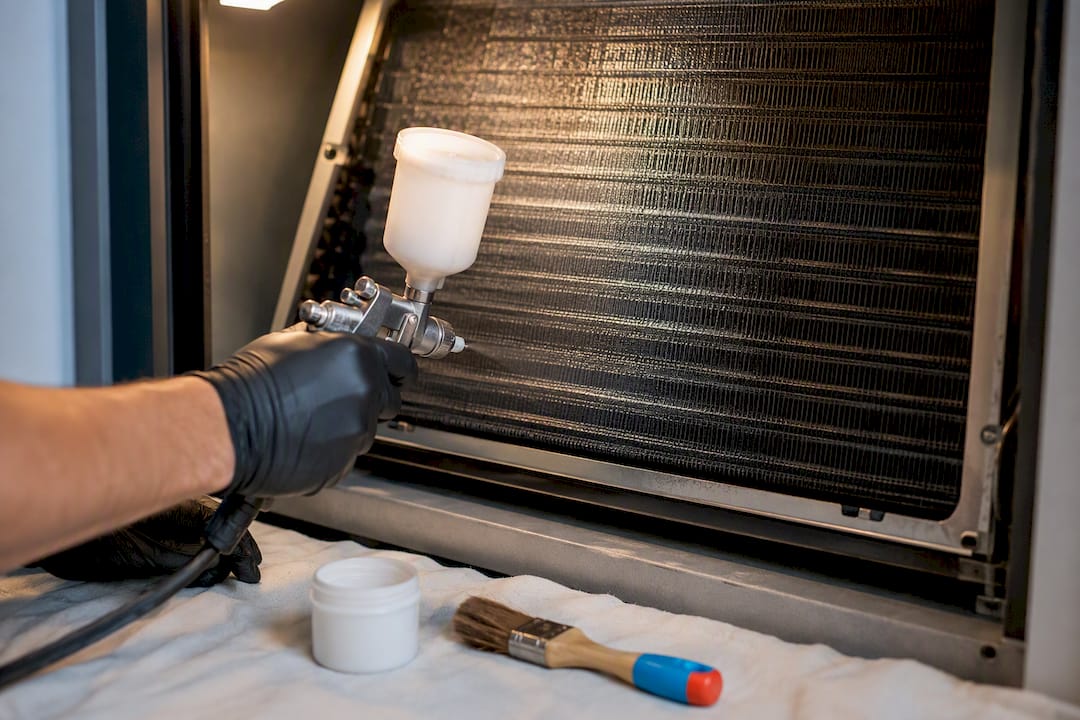
A reputable technician typically works through a specific sequence: full coil and drain pan inspection, a deep coil cleaning using manufacturer-approved solutions rather than generic sprays, and an assessment of whether UV-C (ultraviolet germicidal) lighting makes sense for your system. Correct UV-C placement matters more than most homeowners realize. Trade analysis from ACHR News notes that the lamp needs to mount on the supply side, directly above the coil, running continuously with the correct wattage. Mount it downstream or run it only part-time, and the effectiveness drops sharply.
Some technicians also apply antimicrobial coil coatings, which slow regrowth but need periodic reapplication. In severe or long-neglected cases, coil replacement, or in rare instances a full system swap, may be the more cost-effective long-term fix. Ask about warranty coverage and whether a follow-up visit is included, since coil cleaning quality varies a lot between providers.
How Do You Prevent Dirty Sock Syndrome From Coming Back?
Controlling moisture is the real long-term fix, not a one-time cleaning. The EPA states plainly that there’s no practical way to eliminate all indoor mold, which means prevention has to focus on keeping conditions unfavorable for it to grow in the first place. That starts with humidity: EPA indoor air quality guidance recommends keeping indoor relative humidity between 30% and 50%. A whole-house dehumidifier or an energy recovery ventilator (ERV) can hold that range steady even in humid climates or tightly sealed homes.
Beyond humidity control, a few habits make a measurable difference:
- Replace filters on a fixed schedule rather than waiting until they look dirty.
- Seal obvious return duct leaks, especially runs through attics or crawl spaces.
- Run bathroom and kitchen exhaust fans during and after showers or cooking.
- Schedule annual coil and drain pan cleaning, ideally before your system’s heaviest season of use.
- If UV-C is installed, replace the lamp annually. UV output degrades well before the bulb visibly fails.
Pro Tip: If you had recent renovation or door replacement work done and the smell appeared afterward, check for construction dust that made its way into the return air. A low-dust door replacement process limits how much debris lands in your HVAC system during a remodel.
Antimicrobial coatings sound like a permanent fix, but field technicians caution that buildup can insulate the coating over time, cutting its effectiveness until it’s reapplied. Moisture control and a real maintenance schedule do more long-term work than any single coil treatment.
What Have We Learned From Years of Fixing This Problem?
In our experience, the combination that actually resolves dirty sock syndrome for good is coil cleaning paired with humidity control and, where the system supports it, a properly placed UV-C light. Cleaning alone often buys a homeowner a few months before the smell creeps back, especially in humid climates or with heat pumps that cycle heavily.
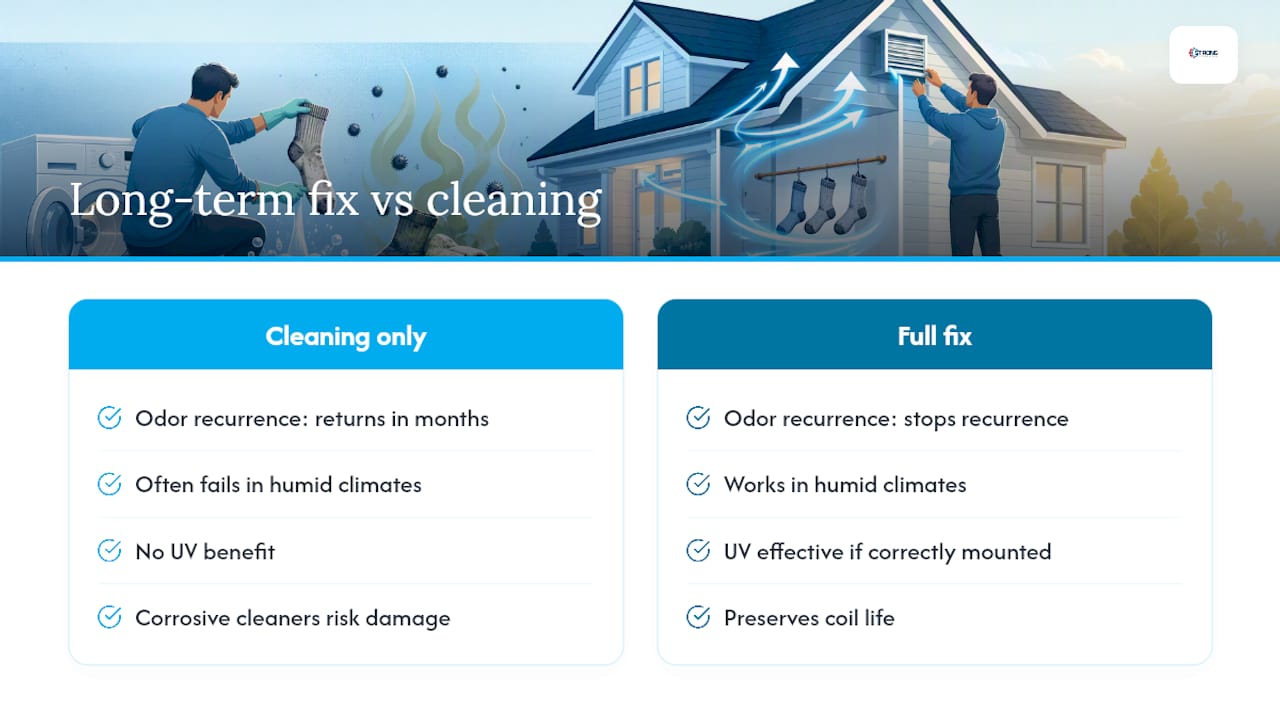
The most common mistake we see isn’t a homeowner’s DIY attempt. It’s a previous UV-C install mounted in the wrong spot or wired to run only when the compressor runs, which cuts its effectiveness dramatically. We also see corrosive cleaners used on coils, which trades a short-term smell fix for a shorter coil lifespan.
When you’re vetting a technician, ask direct questions: what cleaning method and solution do they use, where exactly will a UV lamp mount and at what wattage, what’s the re-lamping schedule, and does the visit include any follow-up or warranty. Straight answers to those four questions tell you a lot about who you’re hiring.
Why the “Just Spray Something” Advice Misses the Point
The internet’s favorite fix for dirty sock syndrome is a coil spray and a hope that it stays gone. That advice isn’t wrong, exactly. It’s just incomplete, and it ignores the actual mechanism driving the smell.
Spraying a coil treats a symptom. The coil and drain pan are wet, organic debris is present, and airflow moves that smell through your whole house. Unless you address the moisture, the microbes causing the odor will find their way back, often within a season. The EPA’s own position on mold reinforces this: you can’t sterilize your way to a permanent fix, you can only make conditions unfavorable for growth. That’s a humidity and airflow problem before it’s a cleaning problem.
Where conventional advice really falls short is UV-C. Homeowners hear “install a UV light” and assume any UV light in any location solves it. Placement and continuous operation matter as much as the purchase itself. A poorly mounted lamp is closer to a placebo than a fix.
Prioritize humidity control and correct filtration first. Treat coil cleaning and UV-C as the professional layer that locks in what the DIY steps start.
— Owner
Ready to Get Rid of That Musty Smell for Good?
If the smell keeps coming back no matter what you try, a qualified HVAC service provider can diagnose the real cause instead of guessing at another spray fix. They inspect the evaporator coil, drain pan, and airflow path, then provide a written estimate before any work starts, whether that’s a deep coil cleaning, a properly placed UV-C install, or a whole-house dehumidifier to hold your humidity in the 30 to 50 percent range.

Technicians in Colorado Springs and surrounding communities handle coil cleaning, air conditioner and heat pump inspections, UV-C installation, indoor air quality upgrades, and ongoing maintenance plans that catch moisture problems before they turn into a recurring odor. Every visit includes a straightforward inspection, an honest estimate, and a recommendation for follow-up if your system needs it. If you’re ready to stop chasing the smell with sprays and filters, schedule an inspection with an air conditioner services team and get a real diagnosis instead of another guess.
Sources
- Mold and Health — EPA
- Mold and Health — CDC
- Dirty Sock Syndrome — Trane support
- Dirty sock syndrome: What it is, how to prevent it — ACHR News
FAQ
How Do You Fix Dirty Sock Syndrome?
Start with a filter change and a fan-only flush, then check the drain pan for standing water. If the smell persists, a professional coil cleaning paired with humidity control and, where appropriate, a properly placed UV-C light resolves most cases.
Is Dirty Sock Syndrome Harmful to Your Health?
The CDC links mold exposure to respiratory symptoms like coughing and congestion, and some people are more sensitive than others. The smell itself isn’t a health emergency, but ongoing microbial growth in your HVAC system is worth addressing rather than ignoring.
How Long Does It Take for Dirty Sock Syndrome to Go Away?
A fan flush and filter change can reduce the smell within hours, but that’s usually temporary. A professional coil cleaning typically resolves the odor within one visit, though recurrence is possible without humidity control and regular maintenance.
What’s the Best Spray to Eliminate Dirty Sock Syndrome?
Use only coil cleaners labeled safe for evaporator coils, never household bleach or generic corrosive cleaners, which can damage coil fins and coatings. A manufacturer-approved, professionally applied treatment lasts longer than any consumer spray you’d apply yourself.
Recommended
Need expert HVAC help?
Colorado Springs' veteran-owned heating & cooling team — Mon–Sat, 8 AM–7 PM. Same-day service when available.