
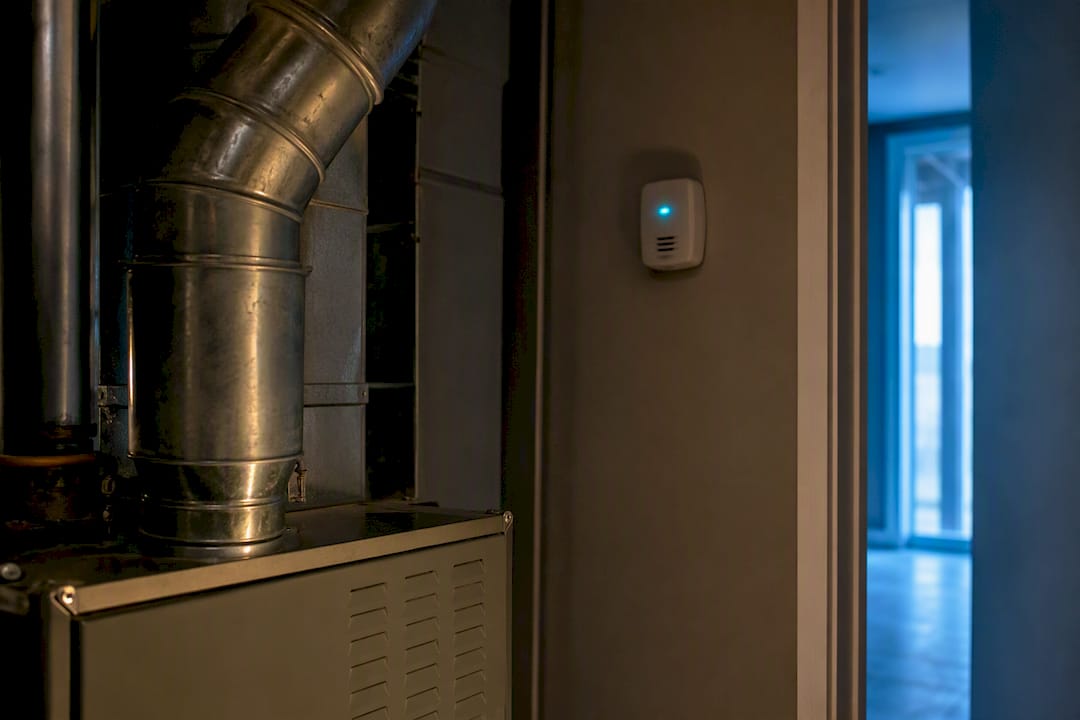
Yes — any furnace that burns fuel can produce dangerous carbon monoxide, and it can leak into your home if combustion or venting fails. If an alarm sounds or someone in your house feels sick with no clear cause, get everyone (pets included) outside into fresh air and call 911 immediately. Do not go back inside until responders or a qualified technician say it’s safe.
TL;DR:
- Carbon monoxide can leak from a furnace due to cracks in the heat exchanger, blocked vents, or backdrafting, often caused by mechanical failures or outdated systems.
- A carbon monoxide alarm placed on every level and outside sleeping areas is crucial for early detection, but it does not replace regular professional inspections.
- Symptoms of CO poisoning are flu-like and include headache, nausea, dizziness, and fatigue, especially if multiple household members and pets feel ill simultaneously.
- Higher-risk groups such as infants, pregnant women, and seniors are more vulnerable to lower CO levels and should treat even mild symptoms as urgent.
- Annual professional furnace inspections and proper vent maintenance are essential for preventing dangerous leaks, and immediate action is necessary if CO alarm sounds or symptoms appear.
Table of Contents
- Signs and Symptoms of Carbon Monoxide From a Furnace
- How and Why Furnaces Produce or Release Carbon Monoxide
- How to Detect Carbon Monoxide in Your Home
- What to Do the Moment You Suspect a Carbon Monoxide Leak
- Preventing a Carbon Monoxide Leak From Your Furnace
- Red Flags That Mean More Than a Simple Repair
- Why Homeowners Trust Strong Heating And Cooling With This
- Where This Information Comes From
- Get Your Furnace Checked Before CO Becomes a Problem
- Sources
- FAQ
Signs and Symptoms of Carbon Monoxide From a Furnace
Carbon monoxide poisoning starts quietly. The early symptoms of CO exposure mimic a mild flu, but without a fever, which is exactly why so many people miss them until the situation gets serious.
Watch for these furnace CO poisoning symptoms:
- Headache, often described as dull and constant
- Nausea or vomiting
- Dizziness or confusion
- Fatigue that feels heavier than normal tiredness
- Shortness of breath
At higher concentrations, symptoms can progress to loss of consciousness and, in severe cases, death. One of the most reliable clues has nothing to do with any single symptom: it’s the pattern. If several people, or the family dog and you, all feel sick at the same time, and everyone feels better once they step outside, that’s a strong signal pointing to CO exposure rather than a stomach bug making the rounds.
Infants, pregnant women, older adults, and anyone with heart or lung disease absorb CO faster and suffer more severe effects at lower concentrations. If you fall into one of those groups, treat even mild symptoms as urgent.
How and Why Furnaces Produce or Release Carbon Monoxide
A furnace produces carbon monoxide through incomplete combustion, meaning the fuel isn’t burning fully because the air-to-fuel mix is off. One visible warning sign is flame color: a healthy gas furnace burns with a crisp blue flame. A yellow flame on a gas furnace usually means the burner isn’t getting enough air, and it’s a sign the appliance is likely also producing more CO than it should.
Furnaces can leak carbon monoxide through several mechanical failure points:
- Cracked heat exchanger: metal fatigue from repeated heating and cooling cycles opens gaps that let combustion gases mix with the air your ducts circulate.
- Blocked or damaged venting: debris, animal nests, or corroded flue pipe stop exhaust gases from escaping outside.
- Backdrafting: exhaust fans, tight home construction, or a malfunctioning draft inducer can pull air back down the flue instead of pushing it out.
- Shared flues or pilot/valve leaks: connected appliances can backfeed CO into a system even when your furnace itself is running clean.
A furnace doesn’t have to be actively burning fuel to be dangerous. CO from an earlier cycle can linger in ductwork, and backdrafting triggered by another appliance, like a water heater on the same flue, can push gas into the house while the furnace sits idle.
How to Detect Carbon Monoxide in Your Home
A working CO alarm is the only reliable way to catch a leak before symptoms start, since carbon monoxide has no smell, color, or taste to warn you.
Follow these placement and maintenance basics:
- Choose alarms certified to the UL 2034 standard; electrochemical sensors tend to give the most consistent readings over time.
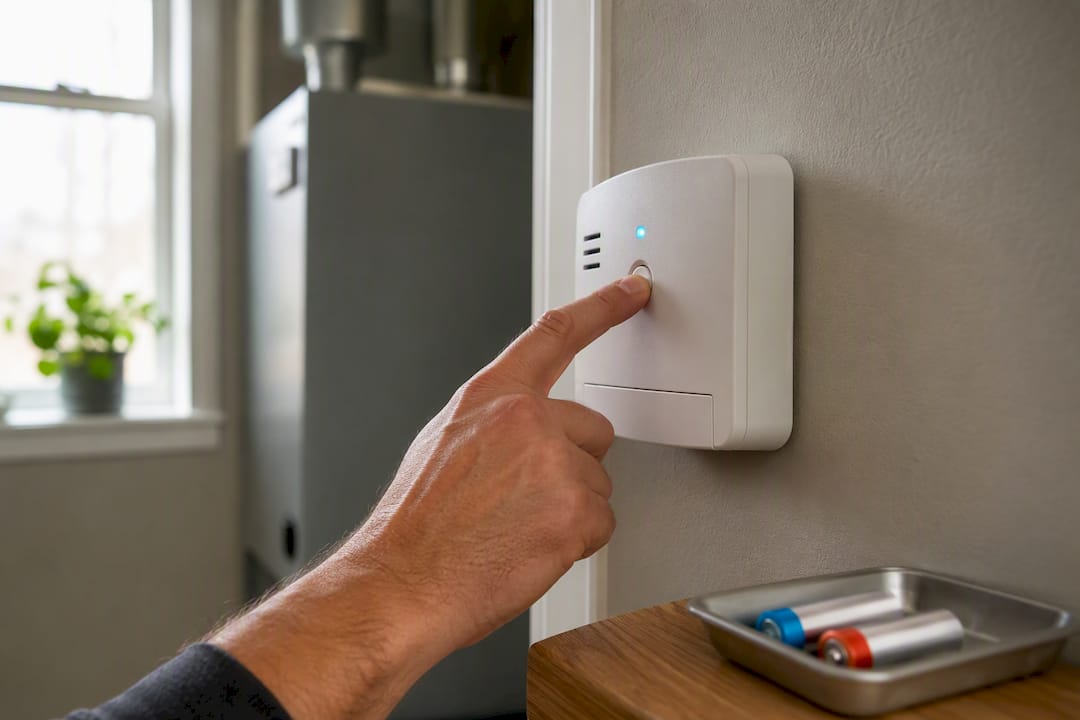
- Install one on every level of the home, including the basement, and place one outside each sleeping area.
- Test alarms monthly and replace batteries on schedule, even in units with battery back-up.
- Replace the entire alarm per the manufacturer’s timeline, typically every five to seven years, since sensors degrade even if the unit still “works.”
A basic alarm tells you there’s a problem. A digital-display model tells you roughly how bad it is, which can help you describe the situation to a 911 dispatcher, but it still isn’t a diagnostic tool. If an alarm has ever gone off, or you just have a nagging feeling something’s wrong, a licensed technician can run combustion analysis and draft testing that a home alarm simply can’t replicate.
Pro Tip: Keep a written log of when you test your alarms and swap batteries. Techs use that history to help rule out a false alarm versus an actual combustion problem.
What to Do the Moment You Suspect a Carbon Monoxide Leak
If your alarm sounds or symptoms hit multiple people at once, move fast and in this order:
- Get everyone, including pets, outside into fresh air immediately. Don’t stop to open windows or hunt for the source first.
- Call 911 (or your local emergency number) from outside the home. If you also smell gas, call your gas utility.
- Stay outside. Do not re-enter until fire department personnel or a qualified technician confirms it’s safe.
- Get medical attention for anyone showing symptoms, and tell responders you suspect CO exposure so they can treat accordingly.
If you’re dealing with a suspected gas odor alongside CO symptoms, our guide on what to do when a furnace smells like gas covers the parallel steps worth knowing.
Preventing a Carbon Monoxide Leak From Your Furnace
Annual professional inspection is the single most effective thing you can do to prevent furnace-related CO, and it’s a recommendation backed directly by the CDC. A thorough visit should include a heat exchanger check, flue and vent inspection, combustion testing, and draft or spillage testing under real operating conditions, not just a quick visual glance.
Between professional visits, a few household habits matter more than people expect:
- Keep vent terminations outside clear of snow, leaves, and debris.
- Never idle a car in an attached garage, even with the door open.
- If your home is tightly sealed for energy efficiency, ask a technician whether you need dedicated make-up air for safe combustion.
- Change furnace filters on the schedule your manufacturer recommends; a clogged filter can restrict airflow enough to affect combustion.
Your alarm program is part of prevention, not just detection. Place alarms correctly, test monthly, and treat the manufacturer’s replacement date as a hard deadline, not a suggestion.
Pro Tip: If your furnace has needed heat exchanger repairs more than once, or it’s pushing past the 15 to 20 year mark, ask your technician for a straight comparison of repair costs versus replacement before you spend more money patching an aging system.
The EPA is clear that well-maintained, properly vented appliances generally don’t produce hazardous CO levels. It’s the malfunctioning or neglected ones that create the risk. For a deeper walkthrough of what an annual visit should cover, our residential HVAC maintenance guide breaks it down further. If a leak has already been detected and a new system makes more sense than another repair, financing options for HVAC replacement can make that decision less stressful.
Red Flags That Mean More Than a Simple Repair
Some furnace problems call for immediate professional intervention rather than a wait-and-see approach. Take these seriously:
- Visible cracks, rust, or scorch marks on or near the heat exchanger
- Soot buildup around the furnace cabinet or vent connections
- A CO alarm that has triggered more than once, even after a technician checked it
- Frequent burner shutdowns or a furnace that seems to be short-cycling
- An older unit with any of the above symptoms
When any of these show up, don’t try to diagnose it yourself. A professional draft and combustion test will tell you whether the fix is a repair or a full replacement, and that’s not a call worth guessing on. Our piece on HVAC red flags home inspectors often miss covers a few more signs that tend to slip past homeowners during a routine walkthrough.
Why Homeowners Trust Strong Heating And Cooling With This
Some HVAC providers bring decades of combined experience to inspections, emergency repairs, and replacements. An effective approach includes straightforward pricing, honest repair-versus-replace guidance, and maintenance plans that catch problems before they become emergencies.
— Owner
Where This Information Comes From
This guide draws on the CDC’s furnace safety fact sheet, the CDC’s overview of carbon monoxide exposure, and the EPA’s guidance on indoor air quality and CO. All three are federal public health sources built specifically around combustion safety in homes.
Get Your Furnace Checked Before CO Becomes a Problem
A licensed technician running combustion and draft testing on your specific furnace offers more thorough evaluation than a DIY inspection checklist or a generic walkthrough.

Whether you’re due for an annual inspection, dealing with a furnace that just tripped a CO alarm, or weighing repair against replacement on an aging unit, our team handles it with straightforward pricing and no pressure. We offer emergency HVAC repair for situations that can’t wait, along with full heating installation and replacement services when a furnace has reached the end of its safe life. If cost is the hurdle, our financing options are built to keep a safety-critical repair from turning into a financial emergency too. Schedule an inspection today and know exactly where your furnace stands before winter puts more strain on it.
This article is general information, not a substitute for advice from a qualified doctor. Consult a qualified healthcare professional about your own circumstances before acting on anything here.
Sources
FAQ
How do I know if my furnace is leaking carbon monoxide?
Watch for a yellow furnace flame instead of blue, soot near the unit, and a CO alarm going off. Since carbon monoxide from a gas furnace is invisible and odorless, a properly placed, working CO alarm is the only dependable early warning.
Can carbon monoxide come from a furnace that is off?
Yes. Lingering CO from a previous burn cycle can remain in ductwork, and backdrafting from another appliance on a shared flue can push carbon monoxide into your home even while the furnace itself sits idle.
What are two warning signs of carbon monoxide in a house?
A CO alarm sounding and multiple people or pets in the home feeling sick at the same time, especially with symptoms that ease once everyone steps outside, are two of the clearest warning signs.
How quickly will you know if you have carbon monoxide poisoning?
Symptoms can appear within minutes to hours depending on concentration, often starting with headache, dizziness, and nausea that resemble the flu but without fever. Higher concentrations bring on confusion and loss of consciousness much faster.
Should I still get my furnace inspected if I have a CO alarm?
Yes. An alarm only detects CO once it’s already in the air; annual professional inspection, including heat exchanger and combustion testing, catches the mechanical problems before they produce dangerous levels in the first place.
Recommended
Need expert HVAC help?
Colorado Springs' veteran-owned heating & cooling team — Mon–Sat, 8 AM–7 PM. Same-day service when available.