

Calling Emergency HVAC After Hours in Colorado Springs
TL;DR:
- Calling emergency HVAC after hours is necessary when safety, habitability, or property are at risk due to system failure. Most after-hours calls involve true emergencies like complete heat loss, AC failure during extreme heat, gas leaks, or CO alarms, which require immediate professional attention. Proper preparation, clear communication, and safety precautions help ensure quick response and safe waiting until help arrives.
Calling emergency HVAC after hours is the process of reaching a licensed technician outside of standard business hours to restore heating or cooling when a failure creates a safety risk or makes your home uninhabitable. In Colorado Springs, where winter temperatures can drop well below freezing and summer heat waves push well past 90°F, a failed furnace or air conditioner at midnight is not a minor inconvenience. It is a situation that demands a fast, informed response. This guide walks you through how to recognize a true HVAC emergency, what to do when you call, what to expect from the technician and the bill, and how to stay safe while you wait.
When should you call emergency HVAC after hours?
An HVAC emergency is defined by safety risk, habitability risk, or potential property damage. Not every HVAC problem qualifies. Understanding the difference saves you from paying unnecessary after-hours fees while also making sure you act fast when it truly counts.
The following situations justify an immediate after-hours call:
- Complete heat loss when outdoor temperatures are at or near freezing, creating pipe-freeze risk and danger for children, elderly residents, or anyone with a medical condition
- Total AC failure during a heat advisory or extreme heat event, particularly in homes with infants, seniors, or people with heart or respiratory conditions
- Gas smells or burning odors coming from your furnace or air handler, which signal combustion or electrical hazards
- A triggered carbon monoxide (CO) alarm, which requires immediate evacuation before any HVAC call is made
- Visible smoke, water leaking near electrical components, or sparking near your system
HVAC emergencies include complete heat loss in freezing conditions, AC failure during heat waves, gas or burning smells, and CO alarms. Each of these scenarios carries a direct threat to health, safety, or structural integrity.
On the other hand, a system that is running but cycling frequently, making a new noise, or producing slightly uneven temperatures is not an emergency. Only about 15–20% of emergency calls actually require after-hours intervention. That means the majority of calls could wait until morning without any real risk. Calling after hours for a non-urgent issue costs you significantly more without any added benefit.
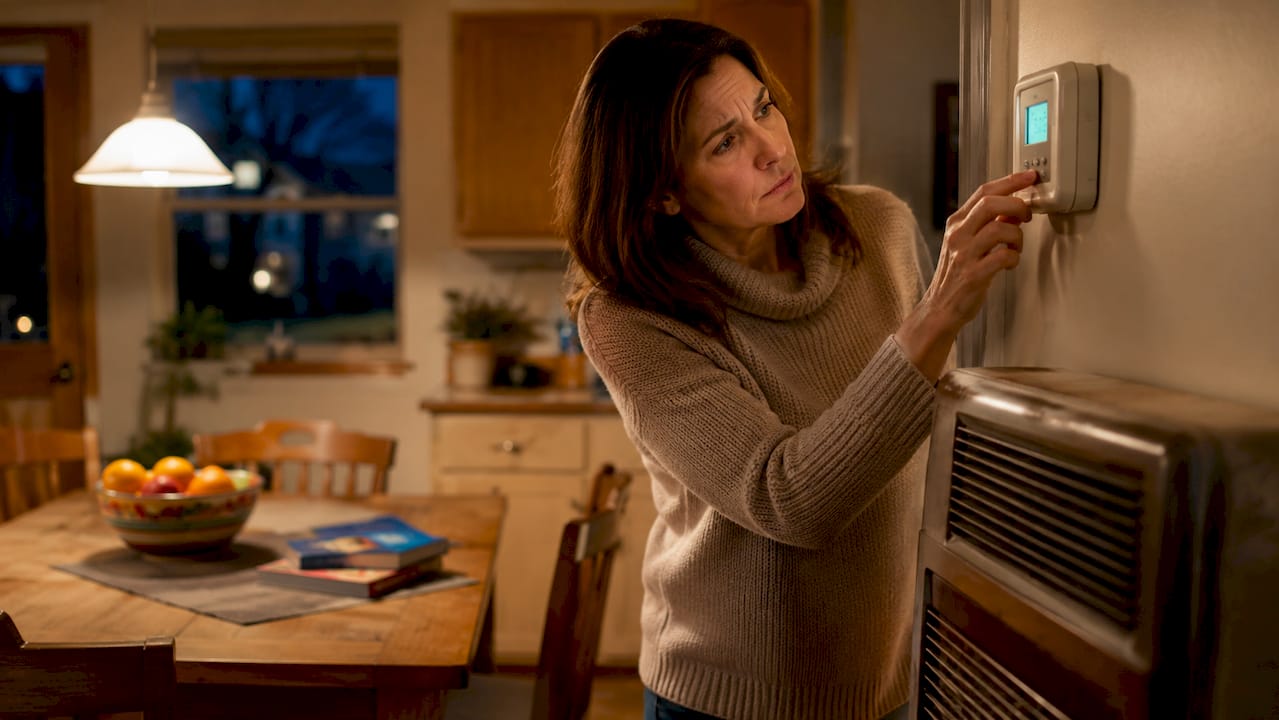
Pro Tip: Before you call, write down the exact symptoms you are experiencing: what the system is doing or not doing, any sounds or smells, the current indoor temperature, and your thermostat setting. This information helps the dispatcher route your call correctly and speeds up the technician’s diagnosis.
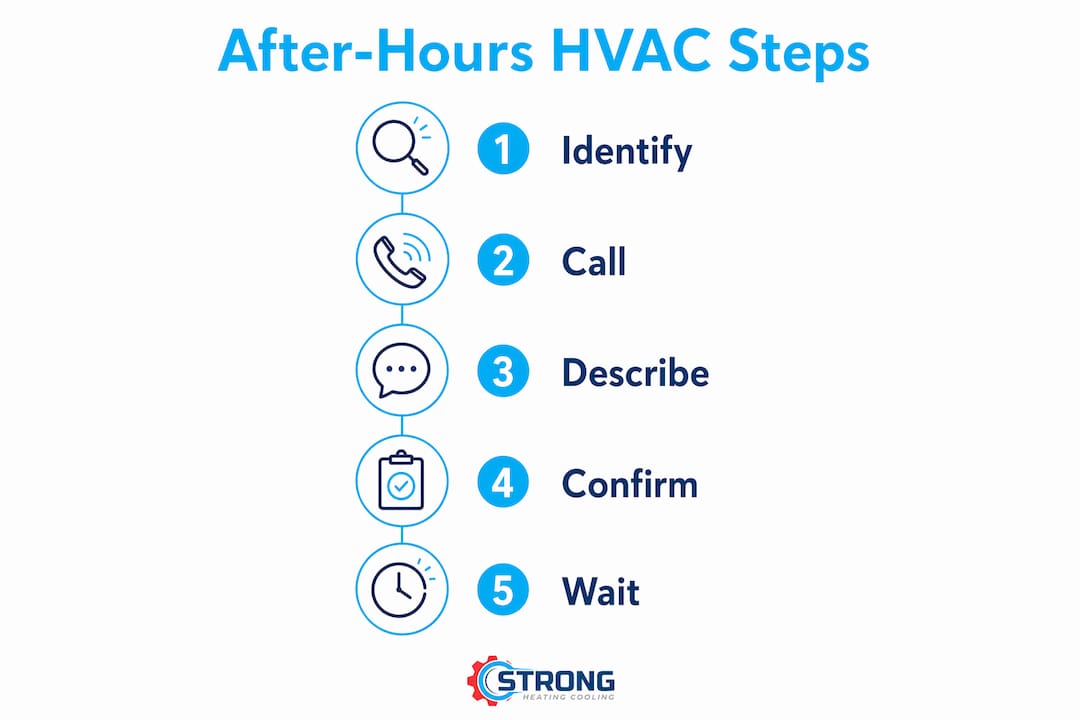
How to call for after-hours HVAC repair: step by step
The process of calling for after-hours HVAC repair is straightforward when you know what to prepare. Following these steps reduces confusion, speeds up dispatch, and helps the technician arrive ready to fix the problem.
-
Confirm it is a true emergency. Use the criteria above. If your situation involves a gas smell or CO alarm, do not call HVAC first. Evacuate your home immediately, move everyone to fresh air, and call your gas utility or 911. Only after emergency authorities have cleared the scene should you contact an HVAC service.
-
Gather your system information. Know your HVAC system type (gas furnace, heat pump, central AC, etc.), the brand and model if accessible, and the age of the equipment. This helps the technician prepare the right parts before arriving.
-
Note your exact address and any access details. If your home has a gated entry, a dog in the yard, or equipment in an unusual location, mention it when you call. Dispatchers route technicians based on location, and clear access information prevents delays.
-
Call a trusted 24/7 HVAC emergency hotline. When you reach the dispatcher, describe your symptoms clearly and calmly. State the indoor temperature, what the system is or is not doing, and any unusual smells or sounds. Dispatchers route emergency calls based on safety and comfort urgency, then provide an estimated technician arrival window.
-
Ask about fees before confirming dispatch. Request a breakdown of the after-hours surcharge, the diagnostic fee, and the minimum labor charge before the technician is sent. Request detailed quotes covering all three fee categories so there are no surprises when the invoice arrives.
-
Confirm the technician’s estimated arrival time. Most reputable services provide a window of 1–2 hours for after-hours calls. Keep your phone nearby and make sure someone is home to provide access.
The quality of information you give the dispatcher directly affects how quickly help arrives. Accurate symptom descriptions allow dispatchers to route the right technician with the right parts, cutting down total repair time.
What to expect from after-hours HVAC service and pricing
After-hours emergency HVAC service follows a predictable structure once you understand how providers bill for it. The cost is higher than a standard daytime call, and that difference is driven by technician overtime and dispatch overhead rather than the complexity of the repair itself.
A typical after-hours service call includes three cost components:
- An after-hours surcharge of $100–$300, applied simply because the call falls outside normal business hours
- A diagnostic fee of $65–$150 to cover the technician’s assessment of the problem
- A minimum labor block of 1–2 hours, billed regardless of how long the actual repair takes
Emergency HVAC service costs include a $100–$300 after-hours surcharge, a $65–$150 diagnostic fee, and a 1–2 hour minimum labor charge. That means even a simple fix can cost $300–$600 or more before parts are factored in.
| Cost Component | Typical Range | Notes |
|---|---|---|
| After-hours surcharge | $100–$300 | Applied to all calls outside business hours |
| Diagnostic fee | $65–$150 | Covers technician assessment |
| Minimum labor block | 1–2 hours | Billed regardless of actual repair time |
| Parts | Varies | Common parts often stocked on truck |
One factor that works in your favor is that technicians arrive prepared with common replacement parts stocked on their trucks, which means most repairs are completed in a single visit. Waiting for a part to be ordered is less common with reputable emergency providers.
Before the technician begins any work, ask for written or verbal confirmation of all fees. Reputable providers offer upfront approval, meaning you agree to the cost before work starts. If a company refuses to give you a clear fee breakdown before dispatch, that is a signal to call someone else.
Pro Tip: Ask the dispatcher whether the diagnostic fee is waived or applied toward the repair cost if you proceed with the fix. Many providers credit the diagnostic fee against the total bill, which can reduce your out-of-pocket cost by $65–$150.
You can also learn more about what drives HVAC service pricing before you call, so you are not caught off guard when the technician quotes the job.
How to stay safe while waiting for the technician
The time between your call and the technician’s arrival is when homeowners are most likely to make costly or dangerous mistakes. Knowing what to do and what to avoid keeps your family safe and prevents additional damage to your system.
Follow these steps while you wait:
-
For gas smells or CO alarms: Evacuate immediately. Do not flip any light switches, use your phone inside the home, or attempt to locate the source of the smell. For suspected gas leaks or CO exposure, evacuate and contact emergency authorities before calling HVAC. Once outside, call your gas utility’s emergency line and 911 if needed.
-
For burning smells or smoke from your HVAC unit: Turn off the system at the thermostat and shut off power at the breaker. If burning smells, smoke, or water leakage near electrical components occur, turn off the HVAC system and power for safety. Do not restart the system until the technician has inspected it.
-
For heat loss in winter: Layer up with blankets and warm clothing. Close off rooms you are not using to concentrate warmth. If indoor temperatures drop below 55°F and you have young children, elderly family members, or anyone with a medical condition, consider moving to a neighbor’s home, a hotel, or a warming center while you wait.
-
For AC failure in summer: Move to the lowest level of your home, where temperatures are cooler. Use battery-powered fans to circulate air. Stay hydrated. If outdoor temperatures are extreme and indoor temperatures climb above 85°F, the same rule applies: relocate anyone who is vulnerable.
Do not attempt to repair or bypass any component of your HVAC system while waiting for a technician. Tampering with gas lines, electrical connections, or refrigerant components without proper licensing is dangerous and can void your warranty or make the repair more expensive.
The goal while waiting is to maintain safety and comfort with the resources you have, not to fix the problem yourself.
Common mistakes when calling for after-hours HVAC help
Homeowners under stress make predictable errors when dealing with HVAC emergencies after hours. Recognizing these mistakes in advance helps you avoid paying more than necessary and gets you better service.
The most common mistake is treating a non-emergency as an emergency. A system that is running but underperforming, a thermostat that seems off, or a filter that needs changing does not justify an after-hours call. As noted earlier, the majority of after-hours calls do not require immediate intervention. Calling unnecessarily means paying $300 or more for a problem that could have waited until morning.
The second most common mistake is failing to ask about fees before dispatch. Some homeowners assume all HVAC companies charge similar rates, but after-hours pricing varies widely. Always ask for the surcharge amount, the diagnostic fee, and the minimum labor block before you confirm. This takes 60 seconds and can save you from a bill that is $200 higher than expected.
A third mistake is providing vague information to the dispatcher. Saying “my heat isn’t working” tells the dispatcher very little. Saying “my gas furnace stopped producing heat two hours ago, the thermostat reads 58°F, and I can hear the inducer motor running but the burners are not igniting” gives the technician a clear picture before they arrive.
| Scenario | Emergency Call Needed? | Reason |
|---|---|---|
| No heat, outdoor temp below 32°F | Yes | Pipe-freeze risk, habitability risk |
| AC not cooling, heat advisory in effect | Yes | Health risk for vulnerable occupants |
| System running but cycling frequently | No | Can wait for daytime service |
| Thermostat display not working | No | Non-urgent, no safety risk |
| Gas smell or CO alarm triggered | Yes, evacuate first | Immediate safety threat |
| Unusual noise, system still functioning | No | Schedule next-day appointment |
Finally, some homeowners delay evacuation when they smell gas or hear a CO alarm because they want to troubleshoot first. This is the most dangerous mistake of all. No HVAC repair is worth risking carbon monoxide exposure. The standard protocol is clear: evacuate first, call emergency services second, and call HVAC third.
Pro Tip: Save the number of a trusted local 24/7 HVAC emergency hotline in your phone before you ever need it. Searching for a provider at midnight during a crisis leads to rushed decisions and a higher chance of choosing a company with poor pricing transparency.
Reviewing emergency HVAC repair guidance specific to Colorado Springs before an emergency occurs puts you in a much stronger position when one does.
Key takeaways
Calling emergency HVAC after hours requires knowing which situations are true emergencies, preparing clear information before you call, and confirming all fees upfront to avoid unexpected costs.
| Point | Details |
|---|---|
| Define the emergency first | Only call after hours for safety risks, habitability loss, or potential property damage. |
| Evacuate before calling for gas or CO | Leave the home and contact emergency services before reaching any HVAC provider. |
| Prepare your system details | Know your system type, symptoms, and indoor temperature before you call the dispatcher. |
| Confirm all fees before dispatch | Ask for the surcharge, diagnostic fee, and minimum labor block before the technician is sent. |
| Stay safe while waiting | Shut off the system if you smell burning, layer up in winter, and relocate vulnerable occupants if needed. |
What years of colorado springs HVAC calls have taught me
Colorado Springs is not a forgiving climate for HVAC failures. I have seen what happens when a furnace quits at 2 a.m. in january with temperatures in the teens outside, and I have also seen homeowners spend $400 on an after-hours call for a tripped circuit breaker they could have reset themselves. Both experiences shaped how I think about emergency HVAC service.
The most important thing I have learned is that preparation is the real emergency plan. Homeowners who know their system, have a trusted provider’s number saved, and understand basic safety steps handle these situations with far less stress and far less cost. The ones who scramble at midnight with no information end up making rushed decisions that cost them more money and sometimes put them at risk.
I also believe cost transparency is non-negotiable. After-hours HVAC emergency costs are driven by overtime and dispatch overhead, not by the difficulty of the repair. That means a good provider should be able to quote you the structure of those fees before sending anyone out. If a company cannot or will not do that, they are not the right company for the job.
The other piece of advice I give every homeowner is this: routine maintenance dramatically reduces the likelihood of an emergency. A furnace that gets a tune-up every fall is far less likely to fail in february than one that has been ignored for three years. A residential HVAC maintenance plan is not an upsell. It is the most cost-effective way to avoid the scenario you are reading about right now.
Stay calm, stay safe, and call someone you trust.
— Owner
Strongheatingandcooling is ready when you need us most
When your heat goes out on a cold Colorado Springs night or your AC fails during a summer heat advisory, Strongheatingandcooling is available around the clock to get your home back to a safe and comfortable temperature.

Our technicians arrive with fully stocked trucks, ready to handle the most common emergency repairs in a single visit. We serve Colorado Springs and surrounding communities including Monument, Divide, Security-Widefield, Ellicott, and beyond. Whether you need emergency heating repair or urgent air conditioning service, our team provides upfront pricing with no hidden fees before any work begins. Call us any time, day or night, and we will treat your family’s comfort like it is our own.
FAQ
What qualifies as a true HVAC emergency after hours?
A true HVAC emergency involves a safety risk, habitability loss, or potential property damage, such as complete heat loss in freezing temperatures, total AC failure during a heat advisory, gas smells, or a triggered CO alarm.
How much does calling emergency HVAC after hours typically cost?
After-hours HVAC service typically includes a $100–$300 surcharge, a $65–$150 diagnostic fee, and a minimum labor block of 1–2 hours, meaning total costs often start at $300 before parts are added.
Should i call HVAC first if i smell gas or my CO alarm goes off?
No. If you suspect a gas leak or carbon monoxide, evacuate your home immediately and call your gas utility or 911 first. Only contact an HVAC provider after emergency authorities have cleared the situation.
What information should i have ready before calling an HVAC emergency hotline?
Have your system type, brand, current indoor temperature, exact symptoms, and your address with any access details ready before you call. Clear information helps dispatchers route the right technician faster.
Can i do anything to manage the situation before the technician arrives?
Yes. Shut off the system at the thermostat and breaker if you smell burning or see smoke near electrical parts. In winter, close off unused rooms and layer up. In summer, move to the coolest part of your home and stay hydrated. Never attempt to repair the system yourself.
Recommended
Need expert HVAC help?
Colorado Springs' trusted, veteran-owned heating & cooling team — emergency service.