

Budgeting Annual HVAC Maintenance Costs: 2026 Guide
TL;DR:
- Planning annual HVAC maintenance costs between $150 and $450 helps homeowners protect warranties and reduce emergency repairs. Regular tune-ups and comprehensive service plans can extend system lifespan, improve energy efficiency, and save money over time. Choosing plans with repair discounts, clear coverage, and documented reports offers the best value and peace of mind.
Budgeting annual HVAC maintenance costs means planning for tune-ups, inspections, and minor repairs that typically range between $150 and $450 per year for most homeowners. The industry term for this practice is planned preventive maintenance budgeting, and it covers both heating and cooling systems across two seasonal service visits. Getting this right protects your warranty, keeps energy bills in check, and prevents the kind of surprise breakdowns that cost far more than any annual plan. Strongheatingandcooling has worked with Colorado Springs homeowners for over 40 years, and the pattern is consistent: those who plan ahead spend less overall.
What are typical annual HVAC maintenance costs?
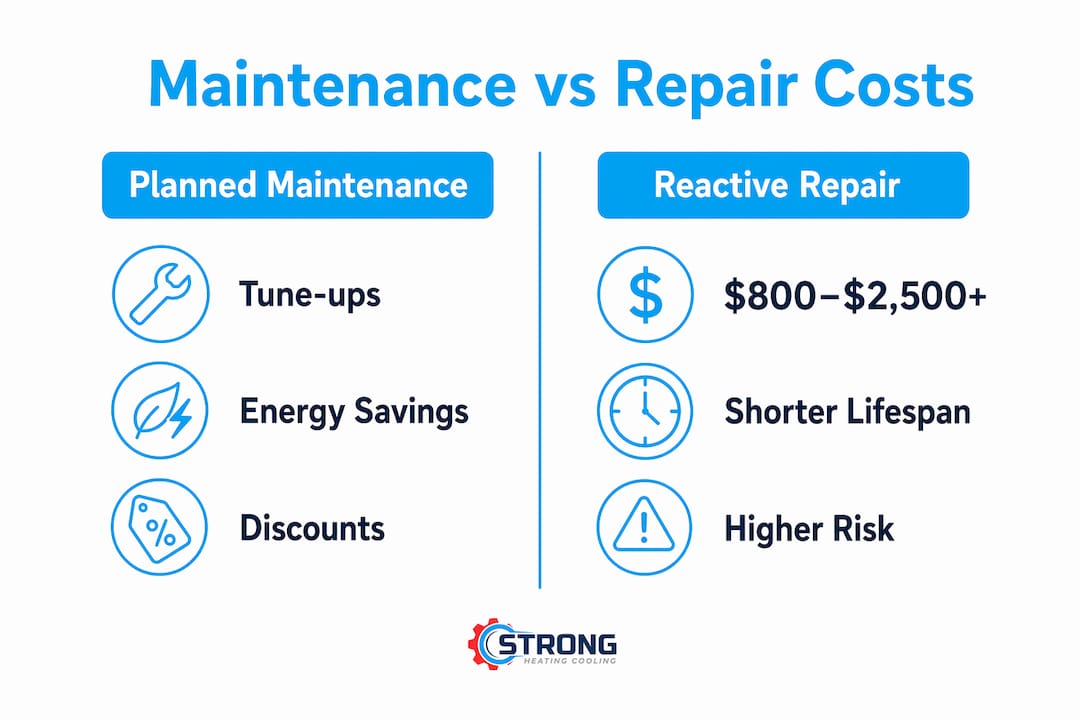
Annual professional tune-ups cost $75–$250 per visit, with annual plans ranging from $150 to $450. That range reflects a wide variety of service levels, system types, and regional labor rates. Understanding where your situation falls within that range is the first step toward realistic HVAC upkeep expense planning.
Several factors push costs toward the higher end of the range. Older systems require more thorough inspections because worn components need closer attention. Larger homes with multi-zone systems or dual units require more technician time. Systems that have gone without service for more than a year often need additional cleaning and calibration, which adds to the visit cost.
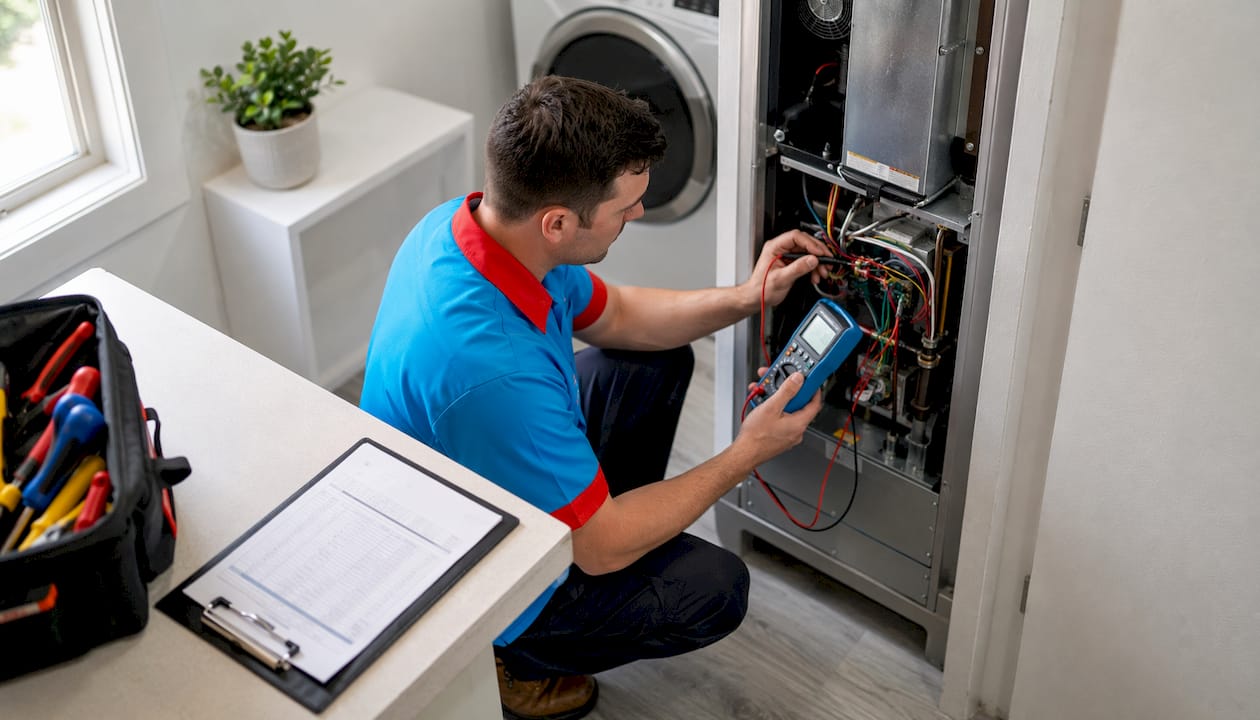
What gets included in a standard tune-up matters as much as the price. A complete visit covers filter replacement, coil cleaning, refrigerant level checks, thermostat calibration, electrical connection inspection, and a safety check of the heat exchanger. Visits typically last 60–90 minutes. A visit that takes less than 30 minutes is almost certainly incomplete.
Annual service plans are often 15–25% cheaper than paying for two separate seasonal tune-ups. That savings comes from bundling spring and fall visits into a single contract, which also locks in your pricing against mid-year rate increases.
Pro Tip: Schedule your spring AC tune-up in march or april and your fall furnace check in september or october. Peak season can mean 2–3 week wait times for technicians, and off-peak scheduling often comes with shorter wait times and more flexible appointment windows.
Why does regular HVAC maintenance save you money?
Regular professional maintenance improves energy efficiency by 5%–15% and can reduce energy waste by $200–$400 annually. That is not a minor benefit. For a household spending $1,800 per year on heating and cooling, a 10% efficiency gain returns $180 every year, which covers a significant portion of the maintenance plan cost itself.
System lifespan is the other major financial argument. A well-maintained HVAC system can last 15–20 years compared to the 10–12 year lifespan of a neglected system. Replacing a central air conditioning system or furnace costs thousands of dollars. Extending that replacement date by five to eight years through consistent service is one of the highest-return investments a homeowner can make.
Poorly maintained systems face a 40% higher risk of major failure. Breakdowns most often trace back to clogged filters, dirty coils, and worn components that routine service would have caught. Emergency repair calls carry premium labor rates, and parts replaced under crisis conditions cost more than parts ordered during a scheduled visit.
Many manufacturers require documented annual maintenance as a condition of warranty eligibility. A single missed service year can void coverage on a system that still has years of warranty protection remaining, leaving the homeowner responsible for repair costs that would otherwise be covered.
The table below summarizes the financial case for planned maintenance versus reactive repair.
| Scenario | Estimated annual cost | System lifespan |
|---|---|---|
| No maintenance | $800–$2,500+ in repairs | 10–12 years |
| Annual tune-up only | $150–$250 per visit | 12–15 years |
| Full maintenance plan | $150–$450 per year | 15–20 years |
| Emergency breakdown | $500–$3,000+ per event | Shortened significantly |
Maintenance plans with repair discounts of 10%–20% on services and parts add another layer of financial protection. When a capacitor or contactor needs replacement during a scheduled visit, that discount applies directly to the repair cost.
How to budget for annual HVAC service costs step by step
Effective annual HVAC service budgeting starts with knowing what you have. Before you set a number, gather the following information about your system.
- Identify your system type. A standard split system with one furnace and one air conditioner is the baseline. Heat pumps, dual-fuel systems, and multi-zone setups each carry different service costs.
- Note the system age. Systems under five years old typically need less intensive service. Systems over ten years old warrant a more thorough inspection and a slightly larger repair reserve.
- Count the number of units. Each additional air handler, mini-split zone, or furnace adds to your annual service cost. Budget separately for each unit.
- Check your current warranty status. If your system is still under manufacturer warranty, confirm what documentation is required to keep it valid. This determines whether a basic tune-up or a full documented inspection is necessary.
- Review last year’s service records. If a technician flagged any components as marginal, budget for those repairs in the coming year rather than waiting for a failure.
Once you have that baseline, set your budget in three layers. The first layer covers your planned maintenance visits, either two separate tune-ups or an annual plan. The second layer is a repair reserve, typically $200–$500 set aside for minor repairs identified during service. The third layer is an emergency fund of $500–$1,000 for unexpected failures outside of scheduled visits.
Pro Tip: A preventive maintenance schedule aligned with spring and fall visits gives you predictable costs and keeps your system ready before the seasons when it works hardest.
The table below outlines a practical budget framework for different household situations.
| Household type | Planned maintenance | Repair reserve | Emergency fund | Annual total |
|---|---|---|---|---|
| Single unit, system under 5 years | $150–$250 | $100–$200 | $300–$500 | $550–$950 |
| Single unit, system 5–10 years | $200–$350 | $200–$400 | $500–$750 | $900–$1,500 |
| Single unit, system over 10 years | $300–$450 | $400–$600 | $750–$1,000 | $1,450–$2,050 |
| Multi-unit or multi-zone property | $450–$900 | $500–$1,000 | $1,000–$2,000 | $1,950–$3,900 |
Pay-as-you-go service works for newer systems in good condition where repair risk is low. For systems over seven years old, an annual plan with repair discounts and priority scheduling delivers better value. The financial benefits of planned upkeep become most visible when a repair is needed and the plan discount applies immediately.
Monthly HVAC maintenance costs are a useful way to think about the budget if annual numbers feel large. A $300 annual plan works out to $25 per month. Framed that way, the cost is comparable to a single streaming subscription and protects an asset worth $5,000–$12,000 or more.
How do you choose the right HVAC maintenance plan?
The right maintenance plan delivers three things: cost transparency, repair discounts, and priority scheduling. Any plan that cannot clearly state what is included and what costs extra is not worth signing.
Cost transparency means the contract specifies exactly which services are covered, what the diagnostic fee is (or whether it is waived for plan members), and what labor rates apply to repairs. Plans that list only “inspection” without detailing the components checked are often incomplete. Ask for a written checklist before committing.
Repair discounts are the financial differentiator between plans. Plans with 10%–20% repair discounts on parts and labor pay for themselves quickly when even a minor repair is needed. A $200 repair with a 15% discount saves $30, which is meaningful when added to the savings from bundled visits.
NATE certification is the standard credential for HVAC technicians in the United States. Contractors who employ NATE-certified technicians demonstrate a commitment to verified technical competency. Certification alone does not guarantee good service, but it sets a meaningful baseline. When selecting a commercial or residential provider, ask directly whether the technicians who will service your system hold current NATE certification.
Documentation is non-negotiable for warranty compliance. Every service visit should produce a written report listing what was inspected, what was found, what was adjusted or replaced, and the technician’s name and certification number. Without that paper trail, a warranty claim can be denied even if service was performed.
The table below compares key features across plan types to help you evaluate what you are being offered.
| Feature | Basic plan | Mid-tier plan | Premium plan |
|---|---|---|---|
| Annual visits | 1 | 2 | 2 |
| Diagnostic fee | Charged separately | Waived | Waived |
| Repair discount | None | 10%–15% | 15%–20% |
| Priority scheduling | No | Sometimes | Yes |
| Written service report | Basic | Detailed | Detailed |
| Typical annual cost | $100–$150 | $200–$350 | $350–$500+ |
Premium plans over $500 without clear labor or parts discounts often deliver low return on investment. The price point alone does not signal value. A mid-tier plan with documented service, repair discounts, and priority scheduling frequently outperforms an expensive plan that covers only inspections.
Watch for contract pitfalls. Auto-renewal clauses, cancellation fees, and vague language around what constitutes a “covered” repair are the most common traps. Read the contract before signing, and ask the provider to clarify any term that is not specific.
Pro Tip: Insist on documented maintenance reports after every visit. Keep these records in a folder with your system’s warranty paperwork. If you ever sell your home, documented service history adds credibility and can support the home’s value.
Key Takeaways
Planned preventive maintenance budgeting is the most cost-effective way to manage HVAC expenses, protect your warranty, and avoid emergency repair costs.
| Point | Details |
|---|---|
| Know your baseline costs | Annual plans cost $150–$450 and are typically 15–25% cheaper than two separate visits. |
| Maintenance extends system life | Regular service can extend system lifespan from 10–12 years to 15–20 years. |
| Budget in three layers | Allocate funds for planned visits, a repair reserve, and an emergency fund separately. |
| Choose plans with real discounts | Plans offering 10%–20% repair discounts and priority scheduling deliver the most value. |
| Documentation protects your warranty | Written service reports are required by most manufacturers for warranty eligibility. |
What I’ve learned about HVAC budgets after 40 years in the field
The homeowners who call us in a panic in july are almost always the ones who skipped their spring tune-up. That is not a coincidence. Systems that go into peak cooling season without a refrigerant check, coil cleaning, and electrical inspection are running at a disadvantage from day one. When temperatures hit 95°F, that disadvantage becomes a breakdown.
What I find most telling is how often homeowners underestimate the repair reserve. They budget for the maintenance visit but leave nothing for the minor repairs that come out of it. A capacitor that is reading low, a contactor showing wear, a blower motor drawing too much current. These are not emergencies yet, but they will be if ignored. Setting aside $200–$400 specifically for repairs identified during service visits changes the entire dynamic. You fix the small problem on your schedule, not the big problem on the system’s schedule.
The other pattern I see regularly is homeowners choosing the cheapest plan available without reading what it covers. A $100 annual plan that includes one inspection with no repair discount and no priority scheduling is not a maintenance plan. It is a single visit with a contract attached. The mid-tier plans, typically $200–$350, are where the real value lives for most single-unit homes.
My honest advice is to treat your HVAC budget the same way you treat your car budget. You plan for oil changes, you set aside money for tires, and you keep a reserve for the unexpected. Your heating and cooling system runs harder than your car engine for more hours per year. It deserves the same level of financial planning.
— Owner
Strongheatingandcooling’s approach to HVAC maintenance planning
Strongheatingandcooling serves Colorado Springs and the surrounding communities with maintenance plans built around honest pricing and real technician expertise. Our team holds the certifications and experience to service every major system type, and every visit produces a detailed written report you can keep for warranty documentation.

Whether you need a single tune-up or a full annual plan with repair discounts and priority scheduling, Strongheatingandcooling offers options that fit different budgets without cutting corners on service quality. Homeowners across Colorado Springs, Monument, Divide, and Security-Widefield rely on us for heating services and HVAC maintenance plans that keep systems running efficiently year-round. Contact us to get a clear quote and build a maintenance budget that works for your home and your household.
FAQ
What is the average annual cost of HVAC maintenance?
Most homeowners spend $150–$450 per year on a maintenance plan covering two seasonal visits. Single tune-ups cost $75–$250 each, making annual plans the more cost-effective choice for most households.
How much should I budget for unexpected HVAC repairs?
A repair reserve of $200–$500 covers most minor repairs identified during routine service. For systems over ten years old, a reserve of $500–$1,000 is more realistic given the higher likelihood of component wear.
Does skipping HVAC maintenance void my warranty?
Many manufacturers require documented annual maintenance as a condition of warranty eligibility. Skipping service, or failing to keep written records of visits, can result in denied warranty claims even when the system is still within the coverage period.
When is the best time to schedule HVAC maintenance?
Schedule heating system service in september or october and cooling system service in march or april. Off-peak scheduling avoids the 2–3 week technician wait times that occur during peak summer and winter demand.
Are premium HVAC maintenance plans worth the higher cost?
Plans over $500 without clear labor or parts discounts often deliver low return on investment. Mid-tier plans at $200–$350 that include repair discounts of 10%–20%, priority scheduling, and detailed service reports typically offer the best value for single-unit residential systems.
Recommended
Need expert HVAC help?
Colorado Springs' trusted, veteran-owned heating & cooling team — same-day service.