
TL;DR:
- A proper HVAC maintenance agreement reduces emergency repairs, extends equipment life, and protects manufacturer warranties. It provides priority service, lowers repair costs, improves energy efficiency, and offers documented maintenance records for warranty claims and resale confidence. Costs vary based on system type, coverage level, and region, but a structured plan is a valuable long-term investment.
A properly structured HVAC maintenance agreement usually pays for itself by reducing emergency repairs, protecting manufacturer warranties, and extending equipment life well beyond what a neglected system can manage.
For most homeowners and property managers, enrolling in a service agreement is a straightforward financial decision:
- Predictable costs and real ROI. Emergency repair rates run significantly higher than planned repairs, and reactive approaches can cost several times more over time. A maintenance plan converts that unpredictable exposure into a fixed annual expense.
- Priority response when it matters most. Plan members typically move ahead of non-members during peak summer and winter demand, reducing the wait when your system fails at the worst possible time.
- Warranty protection and resale documentation. Most manufacturer warranties require documented professional maintenance to stay valid. Those same service records reassure buyers during a home sale and can support a higher perceived property value.
Regular preventive maintenance can lower energy consumption by 10–25% in systems that were previously poorly maintained, keeping your equipment operating near its factory efficiency rating.
Table of Contents
- What are the benefits of HVAC maintenance agreements, exactly?
- Key benefits you actually gain from a service agreement
- What should a good HVAC maintenance agreement include?
- How much do maintenance agreements cost, and what changes the price?
- How do you choose the right maintenance agreement?
- What does the research say about maintenance agreement ROI?
- Key Takeaways
- Why maintenance agreements are worth more than most homeowners realize
- Dependable HVAC maintenance for Colorado Springs homeowners and property managers
- Further reading and authoritative sources
- FAQ
What are the benefits of HVAC maintenance agreements, exactly?
An HVAC maintenance agreement, sometimes called a service contract or preventive maintenance plan, is a written arrangement between a homeowner or property manager and an HVAC contractor. The contractor commits to scheduled inspections and tune-ups in exchange for a recurring fee, and the customer receives defined service benefits in return.
Most residential plans schedule two visits per year: a spring tune-up focused on the cooling system before peak demand, and a fall tune-up that prepares the heating system for winter. Some plans add a third visit or quarterly filter checks, particularly for larger homes or properties with multiple systems.
Beyond the physical inspections, well-structured plans typically include:
- Automated scheduling reminders so visits never get missed
- Documented service logs that satisfy manufacturer warranty requirements
- Waived or reduced diagnostic fees on service calls
- Priority scheduling that moves enrolled customers ahead of the general queue
- Discounts on parts and labor when repairs are needed
The difference between plan types usually comes down to scope. A basic plan covers the inspection checklist only. A premium plan adds labor discounts, waived diagnostic fees, and a written service-level agreement (SLA) that specifies emergency response windows. Knowing which tier you are buying matters before you sign.
Key benefits you actually gain from a service agreement
Priority service and faster emergency response
When a furnace fails in January or an air conditioner quits during a Colorado heat wave, the queue at most HVAC companies stretches for days. Plan members receive priority dispatch, moving ahead of non-members and cutting wait times during exactly the periods when demand is highest. For property managers overseeing multiple units, that faster response directly protects tenant relationships and reduces liability exposure.
Lower repair costs and fewer surprise bills
Planned repairs cost significantly less than emergency fixes. Emergency labor rates run significantly higher than standard rates, and after-hours calls often add expedited parts-shipping fees on top of that. Most agreements also include parts and labor discounts, so when a repair is needed, enrolled customers pay less than they would on a pay-per-service basis.
Longer equipment life and fewer breakdowns
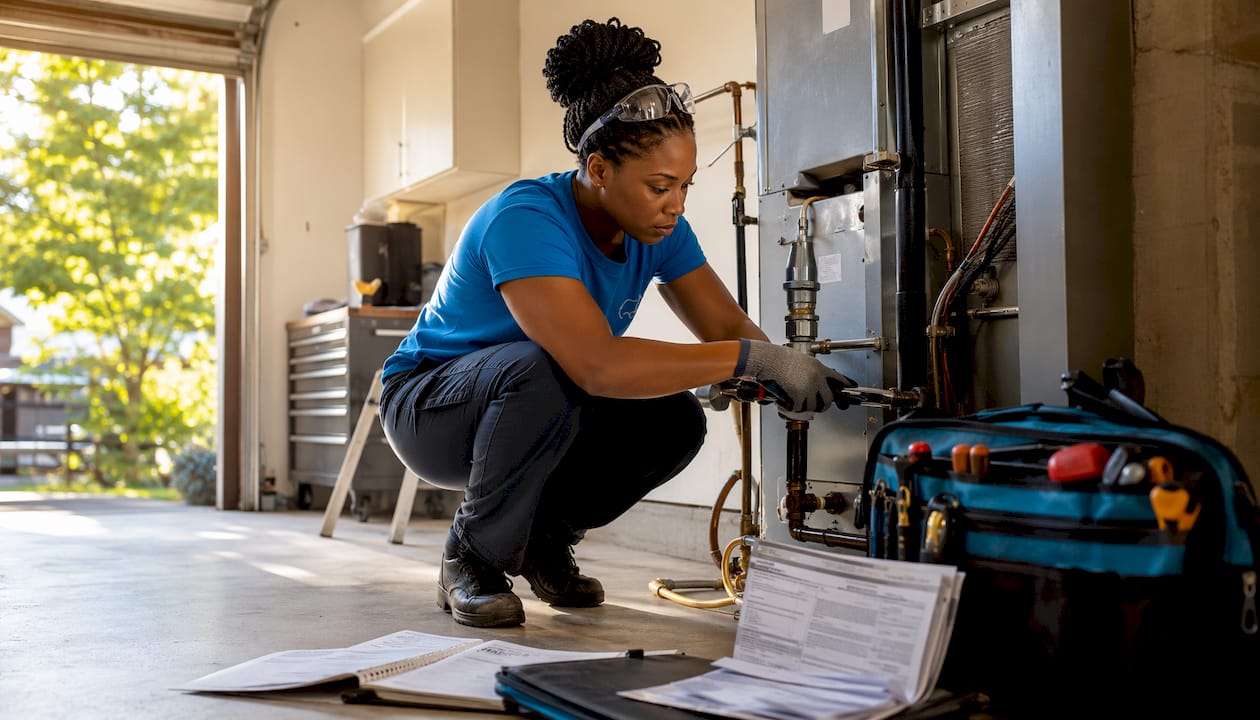
A well-maintained system lasts considerably longer than one that only sees a technician when something breaks. Wear tends to spread: a failing capacitor stresses the motor, which stresses the compressor, and a repair that could have cost very little becomes a major component replacement. Scheduled maintenance interrupts that chain before it starts. The importance of HVAC upkeep shows up most clearly in the long-term cost comparison between maintained and neglected systems.
Improved energy efficiency and lower monthly bills
Dirty coils, clogged filters, and low refrigerant all force a system to work harder than it should. Filter and coil maintenance alone can deliver notable energy savings, and refrigerant management prevents efficiency losses. Across a full year, that reduction shows up on your utility bill in a way that is easy to measure.
Warranty protection through documented service history
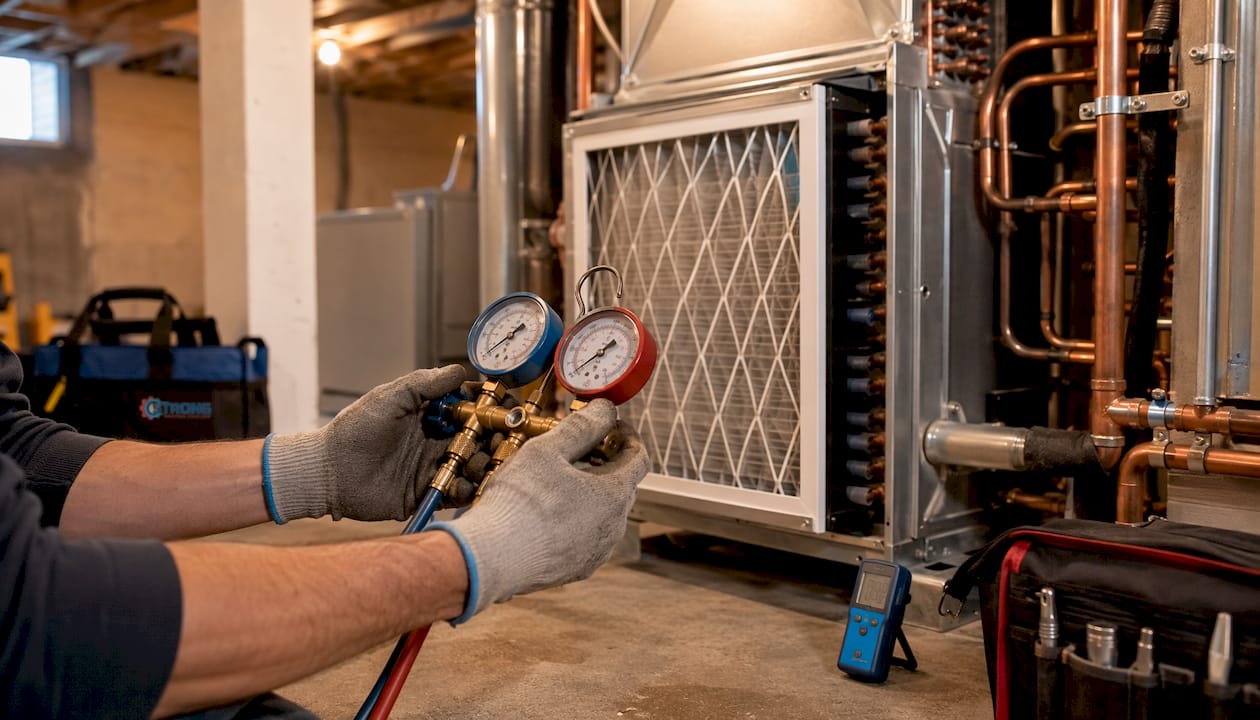
Manufacturer warranties are conditional. Missing documented annual professional maintenance can be grounds for denial of major component claims, including heat exchangers and compressors that cost thousands of dollars to replace. A maintenance agreement generates the service logs that satisfy those requirements automatically.
Resale value and buyer confidence
Documented maintenance history acts as a system’s medical record. Buyers and their inspectors notice when a seller can produce years of dated service logs versus when they cannot. That paper trail supports buyer confidence and can contribute to a smoother sale, particularly when the HVAC system is relatively new and the warranty is still active. Pairing HVAC documentation with other home improvements, like interior door upgrades, builds a stronger overall case for property value.
Pro Tip: Ask your technician to measure amp draw on the blower motor and compressor during every maintenance visit. A reading outside the nameplate range flags a component that is working too hard, often a capacitor nearing failure. Replacing a $20–$50 capacitor proactively prevents a $1,000+ motor or compressor replacement down the road.
| Approach | Typical repair cost | Emergency premium | Equipment stress |
|---|---|---|---|
| Preventive maintenance | Lower, planned | None | Minimal |
| Reactive (pay-per-service) | Higher, unplanned | 40% surcharge | Compounding |
What should a good HVAC maintenance agreement include?
Not every plan is built the same way. A checklist of what to expect on each visit, and what the contract itself should spell out, keeps you from signing something that delivers little real value.
Each maintenance visit should cover:
- Coil cleaning (evaporator and condenser)
- Filter inspection and replacement or cleaning
- Refrigerant level check
- Electrical connection tightening and amp-draw testing
- Thermostat calibration
- Condensate drain inspection and clearing
- Blower motor and belt inspection
- Safety control testing
On the contract side, look for these specific terms before signing:
- Exact scope of work per visit. A vague “tune-up” description is a red flag. The contract should list every task performed on each visit.
- Visit frequency. Biannual is standard for most residential systems; confirm whether both heating and cooling systems are covered.
- Parts and labor discount levels. Know the exact percentage or flat discount you receive on repairs.
- Diagnostic fee policy. Premium plans typically waive the diagnostic fee on service calls for enrolled customers.
- Emergency response window. A written SLA should state the maximum response time for emergency calls, not just “priority service.”
- Cancellation policy. Understand the notice period and any fees for early termination.
- Transferability. A transferable contract adds value when selling the property.
- Exclusions. Major component replacements (compressors, heat exchangers) are usually excluded; confirm what is and is not covered.
Service logs should be formatted to satisfy manufacturer warranty requirements and should include the date, technician name, tasks performed, and any readings taken. Keep copies in a dedicated folder, physical or digital.
How much do maintenance agreements cost, and what changes the price?
Residential HVAC maintenance agreements typically range from around $150 to $500 per year for a single system, with premium plans that include labor discounts and waived diagnostic fees sitting toward the higher end of that range. Multi-system properties and commercial buildings cost more, reflecting the additional equipment and visit time involved.
Several factors move the price up or down:
- System type and age. Older systems or specialty equipment (geothermal, dual-fuel, evaporative coolers) often cost more to service.
- Number of systems covered. A home with separate heating and cooling units, or a property with multiple zones, will pay more than a single-system household.
- Visit frequency. A plan with three or four visits per year costs more than a standard biannual plan.
- Coverage level. A checklist-only plan is cheaper but provides less financial protection than a plan that includes labor discounts and waived fees.
- Region and local labor rates. Markets with higher labor costs, or areas with extreme seasonal demand like Colorado Springs, can see higher plan pricing.
- Add-ons. Indoor air quality services, duct cleaning, or humidifier maintenance added to a base plan increase the annual cost.
For budgeting purposes: a basic biannual plan at around $150–$200 per year covers inspections and keeps warranty documentation current. A premium plan with a higher annual cost adds labor discounts and priority SLA terms, which typically deliver better ROI for systems over five years old or for property managers who cannot afford extended downtime. For a deeper look at annual HVAC maintenance budgeting, the math on when a premium plan breaks even is worth running before you commit.
Plans costing an elevated amount that lack real labor discounts or checklist-based inspections often return poor value. Price alone does not indicate quality.
How do you choose the right maintenance agreement?
The right plan depends on your specific situation, not just the price. Work through these criteria before contacting providers.
Decision criteria to assess first:
- System age: systems over 7–10 years old benefit most from proactive maintenance because component wear accelerates.
- Climate stress: Colorado Springs’ temperature swings and altitude put above-average demand on both heating and cooling equipment.
- Occupancy type: a rental property or multi-unit building has less tolerance for downtime than a single-family home.
- Warranty status: if your system is still under manufacturer warranty, documented maintenance is not optional.
- Budget: weigh the plan cost against your realistic exposure to emergency repair bills.
Questions to ask every provider:
- What specific tasks are performed on each visit, and can you provide a written checklist?
- What is the written emergency response time in your SLA?
- How are service records formatted, and will they satisfy my manufacturer’s warranty documentation requirements?
- What parts and labor discount do enrolled customers receive, and does it apply to all repairs?
- Is the contract transferable if I sell the property?
- Are your technicians NATE-certified, and is your company ACCA-member and state-licensed?
- What is the cancellation policy?
Red flags to watch for:
- Vague scope of work with no itemized checklist
- Plans with no labor discount or diagnostic fee waiver at any price point
- No written SLA specifying emergency response time
- Service records that are informal notes rather than structured logs
- Technicians without NATE certification or a verifiable state contractor license
Trust signals to request and verify:
- NATE certification for technicians
- State contractor license number (verifiable through your state’s licensing board)
- ACCA membership
- Sample service log format
- Written SLA with response time commitments
- Better Business Bureau rating or equivalent
Pro Tip: Ask to see a sample service log before signing. If the provider cannot show you a structured, dated record that lists tasks and readings, their documentation will not hold up when you need to make a warranty claim.
For a detailed walkthrough of HVAC contract language and what each clause means, reviewing that before your provider conversations will save time.
What does the research say about maintenance agreement ROI?
The financial case for preventive maintenance is well-documented across both residential and commercial settings. Research from Jones Lang LaSalle shows structured preventive maintenance delivers 545% ROI through reduced repairs, lower energy costs, avoided downtime, and extended equipment life, with most facilities seeing positive returns within 6–12 months.
For property managers specifically, proactive maintenance programs deliver roughly $3–$5 in avoided costs for every $1 invested, a return driven by reduced emergency repairs, energy savings, and deferred equipment replacement. That ROI argument is why budget predictability is one of the most consistent reasons property managers cite for enrolling.
The predictive diagnostics piece is where the day-to-day value becomes concrete. Technicians measure amp draw on motors and compressors during each visit. A reading outside the nameplate range flags a component under stress, often a capacitor that costs $20–$50 to replace. Catching that part early prevents a $1,000+ motor or compressor failure and the emergency call that comes with it.
| Metric | Preventive maintenance | Reactive only |
|---|---|---|
| Energy savings | 10–25% annually | Minimal |
| Filter/coil energy impact | notable savings | significant waste |
| Emergency repair premium | Avoided | 40% surcharge |
| ROI (commercial, structured) | Up to 545% | Negative over time |
| Equipment life | Extended | Shortened |
For property managers who want a structured approach to HVAC budget forecasting, converting maintenance into a predictable line item is one of the clearest financial wins available.
Key Takeaways
A well-structured HVAC maintenance agreement reduces emergency repair costs, protects manufacturer warranties, and extends equipment life, making it a sound investment for most homeowners and property managers.
| Point | Details |
|---|---|
| Emergency repairs cost far more | Reactive repair rates run significantly higher than planned repairs, making a maintenance plan a direct cost offset. |
| Warranty documentation is non-negotiable | Most manufacturer warranties require dated professional service records; missing them risks claim denial on major components. |
| Energy savings are measurable | Filter and coil maintenance alone can deliver notable energy savings; refrigerant management prevents efficiency losses. |
| Vetting the plan matters | Plans over $500 with no labor discounts or itemized checklists often return poor value; always request a sample service log. |
| Strongheatingandcooling serves Colorado Springs | Strongheatingandcooling offers documented maintenance plans with priority service for homeowners and property managers across Colorado Springs and surrounding communities. |
Why maintenance agreements are worth more than most homeowners realize
The conventional framing around HVAC maintenance agreements focuses almost entirely on breakdown prevention. That is a real benefit, but it undersells the case. The more durable argument is documentation.
A system that has been professionally serviced twice a year, with dated logs showing coil cleaning, refrigerant levels, and amp-draw readings, is a fundamentally different asset than an identical system with no records. The first one has an active manufacturer warranty. The second one may not, even if the equipment is the same age and in the same physical condition. That gap can represent thousands of dollars in exposure on a single component claim.
Property managers understand this intuitively because they deal with the consequences at scale. A missed warranty claim on a commercial rooftop unit is a budget event. For a homeowner, a denied claim on a compressor or heat exchanger carries the same weight proportionally. The maintenance agreement does not just prevent breakdowns. It builds the paper trail that makes the warranty real.
The energy savings argument is also underrated for Colorado Springs specifically. The altitude and temperature swings here push systems harder than in milder climates, which means coil fouling and refrigerant drift happen faster. A system that might go two years between efficiency losses in a moderate climate may need attention every season here. That local context changes the math on whether a biannual plan is sufficient or whether a more frequent schedule makes sense.
Dependable HVAC maintenance for Colorado Springs homeowners and property managers
Strongheatingandcooling brings over 40 years of combined industry experience to every maintenance visit, with documented service records formatted to satisfy manufacturer warranty requirements and a priority-response commitment for enrolled customers across Colorado Springs and surrounding communities.

The maintenance plans cover the full inspection checklist: coil cleaning, refrigerant checks, electrical testing, thermostat calibration, condensate drain clearing, and amp-draw diagnostics on motors and compressors. Every visit produces a structured service log you can use for warranty claims or home resale documentation. For homeowners weighing heating system decisions alongside a maintenance plan, the residential HVAC maintenance guide covers plan details and what each visit includes. Property managers and homeowners across the region can also review air conditioner services in Colorado Springs or contact Strongheatingandcooling directly to get a maintenance plan quote matched to your system type and budget.
Further reading and authoritative sources
These resources provide additional depth on warranty requirements, ROI analysis, and maintenance planning for homeowners and property managers.
- EPA: Heating, Ventilation, and Air Conditioning Systems and Indoor Air Quality — foundational guidance on HVAC system performance and indoor air quality standards.
- LegalClarity: HVAC Maintenance Requirements, Codes, Warranties, and Rules — detailed breakdown of manufacturer warranty conditions, code obligations, and landlord-tenant maintenance responsibilities.
- Oxmaint: How to Calculate HVAC Maintenance ROI — commercial ROI framework with energy savings benchmarks and cost-comparison data.
- Williams Air Solutions: How Preventive Maintenance Protects Warranties — practical explanation of how maintenance records support warranty claims.
- Strongheatingandcooling: What Our Maintenance Plan Actually Covers — service-level detail on the company’s residential maintenance offering.
- Strongheatingandcooling: A Facility Manager’s Guide to Planned HVAC Maintenance — decision framework and budgeting guidance for property managers.
- Strongheatingandcooling: HVAC Maintenance Plan Colorado Springs — local plan details and service area information for Colorado Springs homeowners.
When making a warranty claim, always present service logs that include the visit date, technician name, tasks performed, and any measurements taken. Manufacturer warranty departments routinely request this level of detail before approving major component claims.
FAQ
Are HVAC maintenance agreements worth it?
For most homeowners and property managers, yes. A well-structured plan reduces emergency repair costs, keeps manufacturer warranties valid through documented service records, and typically delivers measurable energy savings of 10–25% annually (depending on initial system condition and climate).
What should be included in an HVAC maintenance contract?
Every contract should specify the exact tasks performed on each visit (coil cleaning, refrigerant check, electrical testing, thermostat calibration), the visit frequency, parts and labor discount levels, a written emergency response time, and a clear cancellation and transferability policy.
What is the $5,000 rule for HVAC?
A common decision guideline considers the system’s age and repair costs, with replacement often being more cost-effective when repair expenses grow large. A maintenance agreement helps delay costly repairs by catching small problems early.
How much does a residential HVAC maintenance plan typically cost?
Most residential plans range broadly in annual cost for a single system. Basic biannual inspection plans sit at the lower end; premium plans that include labor discounts, waived diagnostic fees, and a written SLA sit toward the higher end.
Can a maintenance agreement protect my manufacturer warranty?
Yes. Most manufacturers require documented professional maintenance to keep warranty coverage valid, and missing those records can result in denied claims on major components like compressors and heat exchangers. A maintenance agreement generates those records automatically on each visit.
Recommended
Need expert HVAC help?
Colorado Springs' veteran-owned heating & cooling team — Mon–Sat, 8 AM–7 PM. Same-day service when available.