
Homeowners, Try These 6 Checks Before Calling for AC Blowing Warm Air
If your AC is blowing warm air, the cause is either restricted airflow (a dirty filter, blocked vents, or a dirty outdoor unit) or a mechanical, electrical, or refrigerant problem that needs a licensed technician. Start with the easy checks: thermostat mode and fan setting, filter condition, and whether the outdoor condenser is actually running. If you spot ice on the coil, hear hissing, or the breaker keeps tripping, shut the system off and call a professional.
TL;DR:
- Restricted airflow from dirty filters or blocked vents remains the most common and easily fixable cause of AC blowing warm air.
- Outdoor condenser issues, such as debris blocking fins or a malfunctioning fan, often prevent heat dissipation and stall the cooling cycle.
- Electrical failures outside the system, like tripped breakers or faulty contactors, frequently stop the outdoor unit from functioning without affecting the indoor blower.
- Low refrigerant levels caused by leaks require professional repair, as refrigerant does not deplete naturally and handling pressurized chemicals is hazardous.
- Ice buildup on the evaporator coil indicates airflow restriction or refrigerant problems and must thaw before diagnosing the true cause.
Table of Contents
- How Central Air Conditioning Actually Cools Your Home
- What’s Really Causing Your AC Not to Cool
- What to Check Before You Call for Repair
- When Does AC Blowing Warm Air Become an Emergency?
- Preventing the Next Warm-Air Breakdown
- What 40 Years of HVAC Calls Have Taught Us About Warm-Air Complaints
- Get Your AC Diagnosed Right the First Time
- Useful Resources for AC Troubleshooting and Maintenance
- Sources
- FAQ
How Central Air Conditioning Actually Cools Your Home
A central AC system has two working halves: the indoor evaporator coil (usually sitting above your furnace or air handler) and the outdoor condenser and compressor. Refrigerant cycles between them, absorbing heat from the air inside your house and releasing it outside.
The indoor blower pulls warm room air across the cold evaporator coil, which is why steady airflow matters so much. If that airflow gets choked off, or if the refrigerant loop or outdoor unit stops doing its job, the coil can’t pull heat out of the air the way it should.
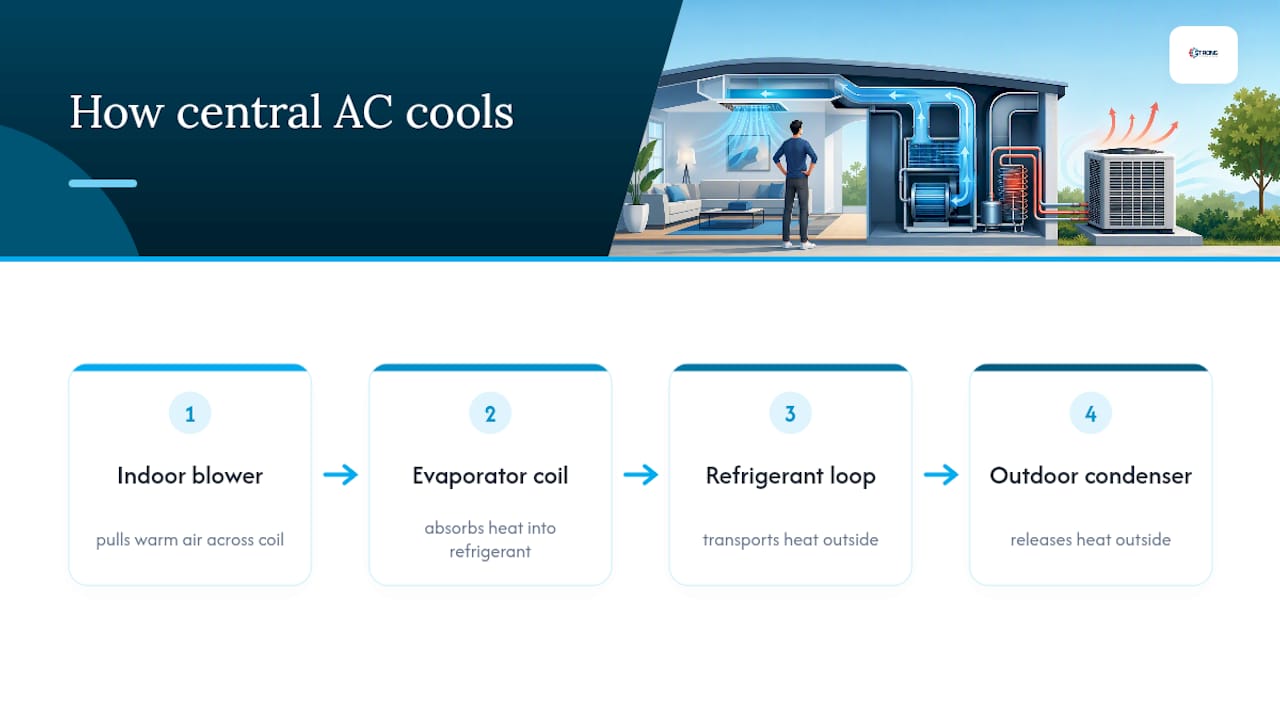
This explains a confusing symptom homeowners report constantly: the indoor fan runs fine, air comes out of the vents, but it’s warm. That almost always means the outdoor half of the system isn’t working, or the refrigerant side has failed, even though the indoor blower has no idea anything is wrong.
What’s Really Causing Your AC Not to Cool
Most AC not cooling but running complaints trace back to one of seven culprits, and they’re not equally likely. Airflow problems are the most common and the easiest to fix yourself. Mechanical and electrical failures come next, and they’re strictly professional territory.
- Thermostat set wrong or malfunctioning. A thermostat stuck in “on” instead of “auto,” a schedule glitch on a smart thermostat, or dead batteries can all trick the system into blowing warm air even though nothing mechanical is broken.
- Dirty or blocked outdoor condenser. Grass clippings, leaves, and mulch packed against the condenser fins block the unit from releasing heat outside, so the whole cycle stalls.
- Electrical failure outside. A tripped breaker, a flipped outdoor disconnect, or a bad contactor keeps the outdoor unit from powering on. Energy points straight to breakers and disconnects as a first check when the indoor blower runs but nothing happens outside.
- A failed capacitor. Capacitors take a beating on hot days and are a frequent reason the outdoor unit hums but the compressor never actually starts.
- Low refrigerant from a leak. Refrigerant doesn’t get “used up.” A low charge means a leak somewhere in the sealed loop, and locating and repairing that leak requires a certified technician, not a recharge kit from a hardware store.
- Frozen evaporator coil. Ice buildup is usually a downstream symptom of restricted airflow or low refrigerant, and it needs to thaw before you can even diagnose what caused it.
- Compressor failure. This is the most expensive scenario. A failing compressor often shows up as a hard start, a loud clunk, or a humming outdoor unit that trips its breaker repeatedly.
What to Check Before You Call for Repair
Run through these in order. Each one rules out a cause before you move to the next.
- Confirm the thermostat is set to COOL, with the fan on AUTO, and the target temperature is a few degrees below room temperature. Swap the batteries if the display looks dim or unresponsive.
- Pull the filter and hold it up to a light. If light barely gets through, replace it. A clogged filter restricts airflow badly enough to freeze the coil, so this step alone fixes a surprising number of warm-air calls.
- Walk outside and check the condenser. Is the fan spinning? Clear leaves, grass, or debris, and keep at least two feet of clearance on all sides. You can rinse the coils gently with a garden hose, but never use a pressure washer, since that can bend the delicate fins.
- Check your electrical panel and the outdoor disconnect. Reset a tripped breaker once. If it trips again immediately, stop and call a technician, since a repeat trip signals an electrical fault, not a fluke.
- Look at the indoor coil for ice. If you see frost or ice, turn the system off completely and let it thaw for a few hours. Running the fan-only mode during this time helps speed up thawing safely.
- Walk your home and open any closed vents or dampers. Aim for at least 80% of your registers open and unobstructed by furniture or rugs.
Pro Tip: Check your condensate drain line too. A clogged drain can trip a safety float switch that shuts the compressor down while the indoor blower keeps running, which mimics a refrigerant problem but is often a five-minute fix.
Stop there. Refrigerant handling, gauge readings, and capacitor testing involve pressurized chemicals and high-voltage components. That work belongs to a licensed technician, not a weekend project.
When Does AC Blowing Warm Air Become an Emergency?
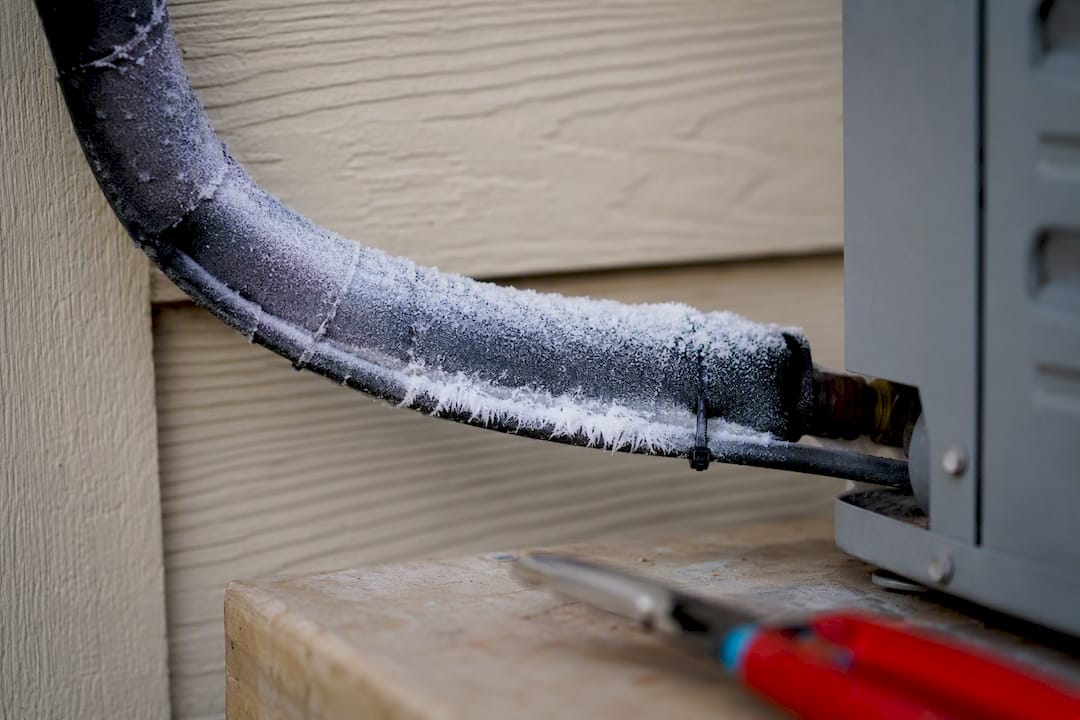
Some signs mean stop troubleshooting and call now. Hissing or bubbling sounds near the indoor unit or refrigerant lines point to a leak under pressure. Ice that keeps reforming after thawing, a breaker that trips more than once, loud grinding from the outdoor unit, or an outdoor unit that stays completely silent while the indoor blower runs all suggest refrigerant, compressor, or electrical faults that DIY steps can’t touch.
When you call, have a few details ready: your system’s age, the last time it was serviced or recharged, and exactly what you’re seeing and hearing, including when it started. That information helps a technician arrive with the right parts and diagnose faster.
Preventing the Next Warm-Air Breakdown
Most AC cooling problems are preventable with a short list of habits. Change standard filters every 1 to 3 months, more often if you have pets or run the system constantly during Colorado Springs summers.
- Schedule an annual tune-up that includes coil cleaning, electrical connection checks, refrigerant pressure verification, and capacitor testing.
- Keep two feet of clearance around the outdoor unit and clear the condensate drain line each spring.
- Straighten bent condenser fins with a fin comb rather than letting airflow stay restricted all season.
- Watch for a system over 12 to 15 years old that needs frequent repairs; that pattern often signals it’s cheaper to replace than keep patching.
Regular maintenance genuinely prevents the majority of warm-air service calls, and a maintenance plan catches worn capacitors and low refrigerant before they leave you sweating through a July afternoon.
What 40 Years of HVAC Calls Have Taught Us About Warm-Air Complaints
Homeowners tend to assume a warm-air complaint means the whole system is dying. In industry experience, it’s far more often a $15 filter or a tripped breaker than a $4,000 compressor.
That said, refrigerant and electrical work is not a place to gamble. EPA certification exists because refrigerant handling carries real environmental and safety rules, and a licensed technician protects you from both a botched repair and a voided warranty. When you’re vetting anyone for AC repair, ask directly about their EPA certification, whether there’s a diagnostic fee, and what warranty backs the repair itself. Straight answers to those three questions tell you a lot about who you’re hiring.
— Owner
Get Your AC Diagnosed Right the First Time
A reliable HVAC service is the alternative to guessing your way through a warm-air problem: one visit gets you an honest diagnosis, a written estimate before any work starts, and a technician who explains exactly what failed and why.

Whether it’s a refrigerant leak, a failed capacitor, or a compressor on its way out, our team handles emergency HVAC repair with same-visit answers, not guesswork over the phone. A typical service call includes a full system inspection, a clear timeline for repair, and a workmanship warranty you can actually rely on. If your filter and breaker checks came back clean and the outdoor unit still isn’t running right, it’s time to get it looked at.
Book a diagnostic through our cooling services page and get your system back to actually cooling your home, not just running.
Useful Resources for AC Troubleshooting and Maintenance
For deeper reading, Energy, ENERGY STAR’s maintenance checklist, and InspectApedia’s AC diagnostic guide cover the technical details in more depth.
Sources
FAQ
How do I fix my AC blowing warm air?
Start by checking the thermostat mode and fan setting, then inspect the air filter and confirm the outdoor condenser is running. If those checks pass and the air is still warm, the issue is likely refrigerant, electrical, or compressor related and needs a licensed technician.
Should I turn off the AC if it’s blowing warm air?
Yes, if you see ice on the coil, hear hissing, or the breaker keeps tripping, turn the system off immediately to avoid further damage. If it’s simply blowing warm air with no unusual sounds or ice, you can run it briefly while you complete the basic checks.
How do I reset an AC that isn’t blowing cold air?
Reset the thermostat by switching it off for a few minutes, then back to COOL with the fan on AUTO. You can also reset a tripped breaker once, but if it trips again right away, stop and call a technician instead of resetting repeatedly.
Is AC blowing hot air an emergency?
It becomes urgent when paired with hissing sounds, repeated breaker trips, grinding noises, or a completely silent outdoor unit, since those point to refrigerant, electrical, or compressor failure. A simple warm-air issue tied to a dirty filter or wrong thermostat setting isn’t an emergency, but it’s still worth fixing quickly before it strains the system further.
Recommended
Need expert HVAC help?
Colorado Springs' trusted, veteran-owned heating & cooling team — emergency service.